Polski


Basic Dwarf Hamster Set-Up – Start Smart with a Habitat, Deep Digging Layer & Shopping List
Basic setup for a dwarf hamster – a smart, safe and organized start
A dwarf hamster may seem small, but it has big needs: digging, foraging, hiding, and being active in the evening. On this inspiration page, we've created a practical basic setup for one dwarf hamster (Roborovski, Russian, Campbell, or Chinese). You'll find clear choices, a handy checklist, and a shopping list at the bottom so you can immediately add anything you need.
1) Accommodation & dimensions – approach quietly and plenty of ground space
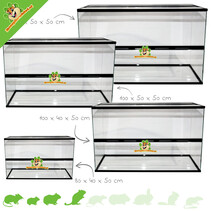
For dwarf hamsters, an enclosure with ample floor space and room for a deep digging layer works best. Many owners therefore choose a glass terrarium or a hamster cage with plenty of floor space. An added benefit of a front opening (sliding doors) is that you can approach your hamster calmly from the front .
Want to shop right away? Check out: Hamster Cages & Terrariums and Hamsterscaping .
2) Ground cover & deep excavation layer – the most important “building block”
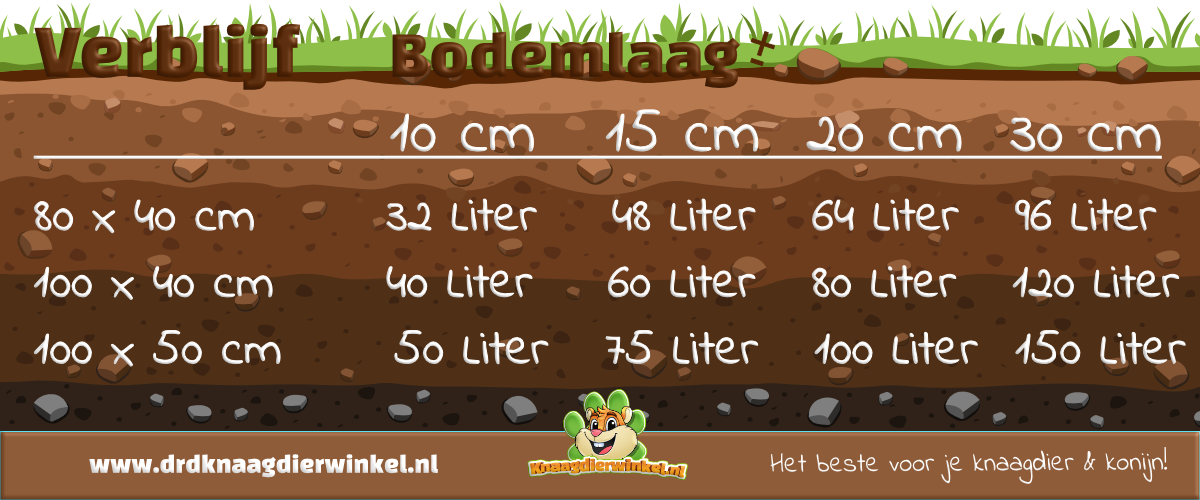
The digging layer isn't decorative; it's an essential part of daily behavior. Therefore, choose bedding that is dust-free , can hold tunnels , and feels pleasant on paws and fur. Ideally, work with layers : an absorbent base, a sturdy digging layer, and a playful foraging top layer.
Shop inspiration by item: Hamster bedding and Hamsterscaping materials .
3) Hiding places & tunnels – from “open” to “safe”
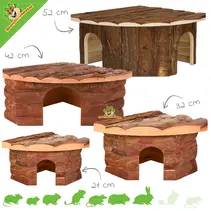
Dwarf hamsters thrive when they can quickly retreat . Therefore, set up multiple "stations": at least one main sleeping area (where the nest will be) and additional hiding places/tunnels scattered throughout the enclosure. Practical tip: a corner or multi-room enclosure utilizes space efficiently and keeps the enclosure organized.
Useful categories: Houses for dwarf hamsters and Tunnels for hamsters .
4) Nesting material – building, dragging and “arranging”
Nesting material isn't just warmth for dwarf hamsters; it's also a behavioral component: dragging, sorting, and perfecting a nest. Always provide plenty of nesting material and refill it as soon as it runs out. Ideally, keep it in a fixed location (near the sleeping house) so cleaning is easier and less stressful.
View: Hamster nesting material .
5) Running wheel – choose one that is large enough and easy to clean
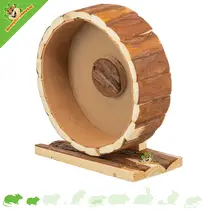
An exercise wheel is an important activity center for many dwarf hamsters. Pay particular attention to: sufficient diameter (back remains as straight as possible), a solid running belt , and a stable, quiet construction. Wood can look beautiful in a natural setting, but often requires more maintenance.
Shop: Hamster exercise wheels . For "smart cleaning," you can use (if necessary) tools like CSI Spray and (for wooden items) a suitable protective layer like clear varnish .
6) Sand bath – daily coat care and additional activity
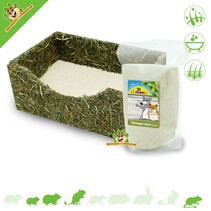
Many dwarf hamsters enjoy using a sand bath: it's good for grooming and a nice place to roll around or dig. Choose a sandbox that's sturdy (not prone to tipping over) and large enough for comfortable bathing.
View: Hamster sand & sand bath .
7) Food, herbs & snacks – variety without anxiety
A good foundation consists of appropriate hamster/dwarf hamster food, supplemented with small amounts of suitable herbs, seeds, and snacks. Smart feeding also supports natural behavior: scatter feeding turns every meal into a foraging activity.
More inspiration: Want to go from "basic" to a more elaborately furnished enclosure? Then also check out Hamsterscaping and Playing & Foraging .
8) Drinking water – provide clean and stable
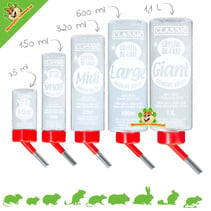
Always provide fresh drinking water. Many owners choose a water bottle because it keeps the water cleaner longer. A water bowl is also an option, as long as it's stable and checked daily (and not used as a "digging bucket").
View: Drinking bottles & water bowls .
9) Play & Forage – A Mini-Adventure Every Day
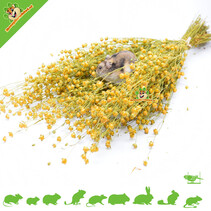
Dwarf hamsters are often real foragers. By scattering food, hiding it, and interspersing it with safe foraging items, you encourage searching, digging, and "working for your food." This provides both peace and activity, without having to completely rearrange the enclosure every week.
Shop: Hamster play & foraging and tunnels .
Maintenance & smart cleaning – keep it fresh without “resetting everything”
Dwarf hamsters are attached to their familiar scents. Cleaning them completely bare can cause anxiety. Therefore, it's best to work with a smart cleaning routine :
- Spot clean (several times a week): remove wet spots/corners, sift/replace sand where necessary.
- Partial change (periodic): replace only the most used piece of bedding, leave some of the clean bedding.
- Accessories : clean the exercise wheel, sandbox and feeding area with a suitable cleaner and allow to dry thoroughly.
- Wood : protect with a suitable varnish if necessary and clean specifically (do not soak in water).
View useful products for hygiene: Hamster cleaning products .
Checklist basic setup for dwarf hamsters
- ✔ Spacious accommodation with sufficient ground surface ( shop )
- ✔ Deep, stable digging layer + suitable ground cover ( shop )
- ✔ Main sleeping house + extra hiding places/tunnels ( shop )
- Nesting material ( shop )
- ✔ Running wheel with the correct size/construction ( shop )
- ✔ Sand bath + suitable sand ( shop )
- ✔ Suitable food + foraging variety ( shop )
- ✔ Drinking water (bottle or stable container) ( shop )
FAQ – Basic Dwarf Hamster Setup
How many hiding places does a dwarf hamster need?
At least one good sleeping house (where the nest will be) and several additional hiding places/tunnels throughout the enclosure. More "stations" often provide more peace and quiet.
Should there always be a sand bath in the enclosure?
Many dwarf hamsters enjoy using it. Choose a spacious, stable sandbox and keep the sand clean by regularly sifting or partially replacing it.
How do I clean without stress?
Use spot cleaning and partial changes. Always leave some of the clean bedding in place to maintain a familiar scent in the enclosure.
I want more "hamsterscape" than basic. Where do I start?
Start with the basics (dig layer, hiding places, sand bath) and then build on this with natural materials and foraging items through Hamsterscaping .
Read more: Which dwarf hamster do you have?
Each species has its own nuances. Check out our information pages: Roborovski , Russian , Campbell , and Chinese dwarf hamsters , or go to the overview page: Hamster information .
✔ Need help with your design (including dimensions/photos)? Feel free to send it to us through our service page – we'll be happy to help you.