 Polski

Rat Bedding – Low-Dust, Absorbent & Comfortable for Pet Rats



- Voor 17 uur besteld, dezelfde dag verzonden!
- Rodent specialist since 2011
- Dispatched from our own stock






- Voor 17 uur besteld, dezelfde dag verzonden!
- Rodent specialist since 2011
- Dispatched from our own stock
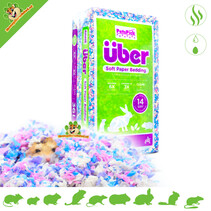
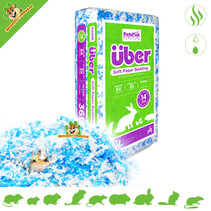



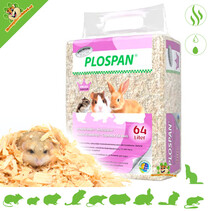
Rat Bedding – low-dust, fresh, and practical for the rat cage
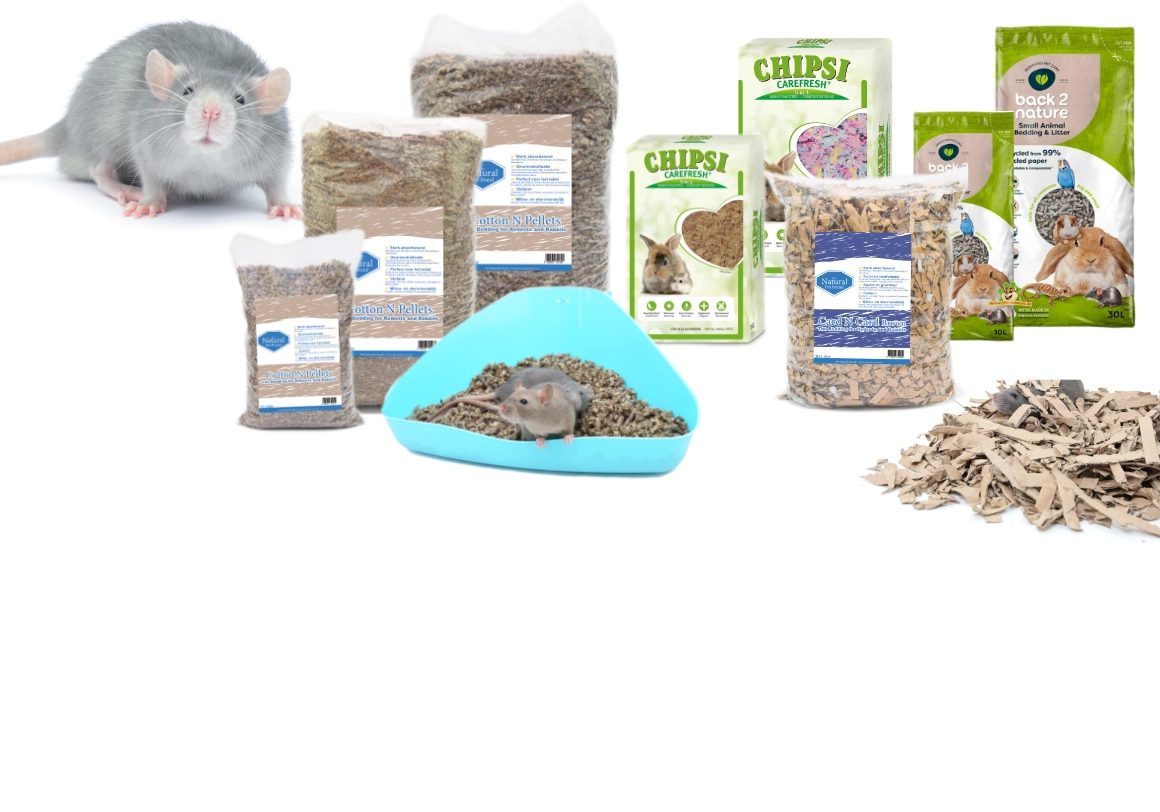 Good rat bedding helps keep the rat cage fresh, comfortable, and practically clean. Rats are smart, active animals that enjoy messing around, dragging things, sniffing, and choosing specific spots to urinate. Therefore, DRD looks not only at the substrate but, above all, at low dust levels, absorption, ventilation, hygiene, and how the bedding suits the behavior of pet rats.
DRD opts for bedding that works logically in a real rat cage: a low-dust base on the bottom, a clear toilet area , optional pee pads on platforms, and a separate burrowing box for extra enrichment. This not only makes the cage easier to clean but also more interesting for your rats.
In short
✓ Preferably choose a low-dust, highly absorbent bedding for rats.
✓ Combine bedding with a toilet zone to remove wet spots faster.
✓ Do not use chinchilla sand, fine sand, or a sand bath for rats; rats do not need this.
Quick links
Why good bedding is important · Choosing rat bedding · Types of bedding · Toilet area & pee pads · Digging box & Ratscaping · How many liters needed? · Checklist · Shopping routes · FAQ
Low-dust base
Rats have sensitive airways. A low-dust base helps keep the cage more comfortable, especially when you also pay attention to ventilation and a calm cleaning routine.
Fresh toilet area
Many rats choose specific spots to urinate. With a litter box and suitable litter, you can remove wet spots more quickly and keep the base substrate fresh for longer.
More enrichment
Bedding can also enhance your rats' behavior. Think of sniffing, searching, dragging, and digging in a separate digging box or Ratscaping zone.
Why good bedding is important for rats
Bedding serves multiple functions in a rat cage. It absorbs moisture, provides grip on the floor, makes the cage more comfortable to move around in, and helps you see more quickly where cleaning is needed. Because rats move around their enclosure a lot and often lie on platforms, in hammocks, and in houses, bedding works best as part of a complete cage layout.
A rat cage does not stay fresh simply by using a lot of bedding. The combination is more important: a low-dust floor, good ventilation, clearly defined toilet corners, washable materials in the right places, and regular checks for moisture and food remnants. This prevents wet spots from remaining for too long.
Choosing rat bedding: what to look for?
When choosing bedding for rats, pay particular attention to low dust content, absorbency, odor control, and ease of cleaning. Good bedding should be comfortable for daily use but also remain clear enough to spot wet areas. This is especially important with multiple rats, as urine stains can quickly form in favorite corners, under platforms, or around sleeping areas.
- Choose a low-dust bedding suitable for small animals.
- Pay attention to absorption: the substrate must be able to absorb moisture well.
- Do not use strongly scented bedding to mask odors.
- Check if wet spots remain visible enough for daily inspection.
- Combine with toilets and pee pads for a cleaner cage layout.
Do you want to learn how to choose step by step? Then also read our Rat Bedding Selection Guide .
Which types of bedding are suitable for rats?
There is no single bedding material that is automatically the best choice for every rat cage. The right choice depends on your cage, the number of rats, the ventilation, your cleaning routine, and how you have set up the cage.
Paper and cardboard
Paper and cardboard bedding is often chosen for rats because it is lightweight, practical, and easy to inspect. Wet spots are usually more noticeable, allowing for targeted cleaning. It is also pleasant material for rats that enjoy dragging, rummaging, and altering their environment.
Soft bedding and nesting material
Soft materials can provide extra comfort in houses, baskets, and sleeping nooks. For rats, you usually use this as a supplement to the basic bedding. Rats enjoy dragging materials around and creating their own comfortable resting spots, especially when there are multiple sleeping places in the cage.
See also Rat Nesting Material, Cushions & Baskets for this.
Toilet filling
Toilet filler is primarily used specifically in a rat toilet. This makes it easier to quickly remove wet spots. Especially in multi-level cages, a toilet in the right place can make a big difference in freshness and maintenance.
Digging and sniffing materials
For extra enrichment, you can create a separate digging box or sniffing zone. This is different from a sand bath. Rats do not need a sand bath like chinchillas or degus. Therefore, do not use chinchilla sand or fine sand, but choose rat-suitable materials that are low in dust and easy to check for moisture and soiling.
Toilet area, urinals and hygiene
Rats are smart animals and often choose recognizable spots to urinate. You can take advantage of this. Place a litter box in the spot where your rats already like to urinate and use a highly absorbent filling inside. This way, the rest of the bedding stays fresh longer.
- Place a toilet in your rats' favorite corner.
- If necessary, use multiple toilets in a large cage or on multiple levels.
- Remove wet spots and old food residues daily.
- Wash pee pads and fleece on time, especially in favorite resting spots.
- Replace the toilet filling more often than the entire base.
Useful follow-up categories are Rat Toilets and Rat Pee Mats .
Bucket & Ratscaping: ground cover as enrichment
Rats enjoy using their cage actively. They run routes, climb, drag materials, and explore new structures. A separate digging box or Ratscaping zone can therefore be a nice addition to the basic bedding. This provides your rats with a place where they can sniff, search, and dig without the entire cage immediately becoming messy.
Would you like to approach this in a more natural way? Then check out Ratscaping and the information page Ratscaping for beginners .
Good to know
✓ A rat digging box is intended for sniffing, searching, and exploring.
✓ A digging box for rats is not a sand bath.
✓ Do not use chinchilla sand or fine sand for rats, as this is not suitable for their coat care and respiratory system.
How much bedding do you need?
Ground Cover Calculation Tool
Do you want to estimate how many liters of bedding you need? Then use this formula:
(length × width × layer thickness in cm) ÷ 1000 = liters of bedding
Example: a tray of 80 × 50 cm with a layer of 5 cm requires approximately 20 liters of bedding.
- Use a practical base coat when you work primarily with toilets and urinals.
- Use a thicker layer if your rats like to rummage or if the litter tray allows it.
- Create a separate digging bucket if you want to offer a deeper digging zone.
Want to compare more broadly? Then also check out Bedding & Nesting Material .
Checklist: how to choose the right bedding
✓ The bedding is low-dust and suitable for rats.
✓ Wet spots are easy to recognize and remove.
✓ The base matches the cage, base tray, platforms, and ventilation.
✓ There is a designated toilet area for urine stains.
✓ Soft resting areas, hammocks, and pee mats are checked separately.
✓ Fine sand, chinchilla sand, heavily dusty substrates, and scented materials are avoided.
Handy shopping routes for the rat cage
A good rat cage consists of more than just bedding. With these routes, you can quickly build a logical combination of bedding, hygiene, and interior design.
Basics & hygiene
Start with a low-dust base and then create clear areas for urinating and lying down.
Natural interior design
Add more behavior and variety with a separate digging box or Ratscaping zone.
Complete cage
Combine bedding with routes, resting places, and challenges in the cage.
Rat cages
Rat Hammocks
Rat Tunnels & Tubes
Rat Platforms & Ladders
Learn more about rat bottoms and maintenance
Do you want more guidance on setting up and cleaning the rat cage? These information pages are a good match for this category:
FAQ – frequently asked questions about rat bedding
What is the best bedding for rats?
The best bedding for rats is low-dust, absorbent, and practically easy to keep clean. For many cages, a paper or cardboard base works well, especially in combination with a toilet area and pee pads in places where rats often lie down or urinate.
Why is low-dust bedding important for rats?
Rats can be sensitive to dust. Because they move around the cage a lot and bring their noses close to the bedding, a low-dust base is a sensible foundation. Good ventilation and regular cleaning remain important in addition.
Can I use sawdust for rats?
Do not use dusty or strongly scented sawdust. If you want to use a woody bedding, choose only a variety that is low-dust and suitable for small animals. Many rat owners prefer paper, cardboard, or other low-dust alternatives.
Do rats need a sand bath?
No, rats do not need a sand bath for grooming. Therefore, do not use chinchilla sand or fine sand for rats. If you want to encourage more digging or sniffing behavior, choose a rat digging box with suitable material.
How often should you change rat bedding?
That depends on the cage, the number of rats, and the bedding used. Remove wet spots and old food remnants daily. You usually check toilet fill and pee pads more often than the entire base bedding.
Which bedding should I choose for rats with sensitive airways?
Choose very carefully regarding low dust levels, avoid perfumed or clearly dusty materials, and keep the cage well ventilated. In case of persistent sneezing, shortness of breath, or other abnormal behavior, consulting a veterinarian is the right course of action.
DRD chooses bedding that suits rats and your routine.
At DRD Knaagdierwinkel®, we consider the role that bedding plays within the entire rat cage. It is not just the bedding itself that counts, but also the combination with litter boxes, pee pads, hammocks, platforms, tunnels, and digging zones. This way, you provide your rats with an enclosure that is more pleasant, cleaner, and more interesting.
Are you unsure about which type of bedding to choose, or do you want to organize your rat cage more practically? Then check out the Rat Webshop or contact us via Service & Contact . We are happy to help you.
✓ Low-dust bedding for pet rats
✓ Smartly combined with toilets, urinals, and excavator buckets
✓ Specialist since 2011
✓ Ordered before 17:00, shipped the same day from our own stock
