 Polski

Rat information – everything about care, nutrition, cage & setup











Rat information: care, cage, diet, and behavior
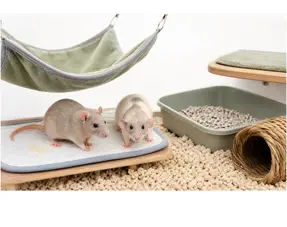
 If you want to take good care of pet rats, everything starts with the basics: companions, a spacious cage, dust-free bedding, safe routes, soft sleeping areas, appropriate food, drinking water, hygiene, daily checks, and sufficient enrichment. Rats are social, intelligent, and curious animals. They want to be able to climb, sleep, lie together, retreat, search, gnaw, explore, and make contact.
At DRD Knaagdierwinkel®, we look at rat information from the perspective of behavior, welfare, and practical daily use. DRD selects products and advice not only based on appearance, but above all on product fit: does it suit social rats, sensitive airways, hygiene, cage setup, foraging, cleaning, and safe application? On this information page, you will find all rat selection guides together, with direct routes to rat cages , rat bedding , Ratscaping , rat food , and care.
✓ In short: rats are social group animals and need conspecifics, space, height, resting places, hygiene, and daily challenges.
✓ A good rat basic consists of a spacious cage, low-dust bedding, food, water, hammocks, tunnels, litter boxes, and enrichment.
✓ Pay extra attention to the respiratory system of rats: do not use chinchilla sand or fine sand as a sand bath and consciously choose low-dust materials.
Quick links:
Where do you start? · Cage & bedding · Ratscaping & enrichment · Nutrition · Behavior & handling · Hygiene & health · Useful shopping routes · FAQ
Start with the basics
Use the checklist to complete the cage, bedding, food, water, sleeping areas, routes, toilet, and enrichment.
Select by application
A product must be suitable for rats: social behavior, climbing, sleeping, foraging, sensitive airways, and grooming.
Learn to recognize signals
Appetite, behavior, breathing, weight, coat, and activity tell a lot about how your rats are doing.
Where do you start with rat information?
Are you new to rats or do you want to check if your basics are right? Then don't start with individual products, but with complete care. Rats need companions, a well-furnished cage, dust-free bedding, food, water, resting places, routes, hygiene, and daily enrichment.
The starting pages below help you lay a solid foundation. After that, you can delve deeper into cage, bedding, nutrition, behavior, Ratscaping, and health.
Start here
✓ What do you need for rats? – complete starter checklist for pet rats.
✓ Rat as a pet – what can you expect from tame rats?
✓ Rat webshop – all commercial rat routes conveniently grouped together.
Rat cage, bedding and cleaning
A good rat cage is spacious, well-ventilated, and cleverly designed with height, platforms, tunnels, hammocks, and multiple safe routes. The bedding must be suitable for rats and your cleaning routine. Because rats have sensitive airways, choosing low-dust is important.
Hygiene is part of the basics. Rats often have designated urination spots and favorite hammocks. By making smart use of litter boxes, pee pads, and spot cleaning, you keep the enclosure fresher without constantly turning everything upside down.
Choosing a rat cage
For cage, height, ventilation, bar spacing, platforms, hammocks, and safe routes.
Choosing ground cover
For low-dust bedding, absorption, odor, hygiene, and respiratory system.
Cleaning & odor
For urinals, toilets, pee pads, washing hammocks and reducing odor.
Ratscaping, digging box and enrichment
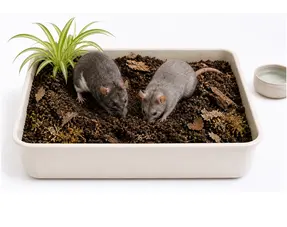
Ratscaping is the natural and functional furnishing of a rat enclosure. You create zones for sleeping, climbing, routes, a toilet, eating, drinking, foraging, gnawing, and optionally a digging or sniffing area. This suits rats well because they are curious and enjoy exploring.
A digging box for rats is intended for sniffing, searching, and digging with suitable material. It is not a sand bath. Do not use chinchilla sand or fine sand for rats, as rats do not need a sand bath and fine dust can be harsh on their sensitive airways.
Understanding Ratscaping
For natural design, zones, routes, hammocks, tunnels, foraging, and grooming.
choose an excavator bucket
For sniffing, searching, and digging with rat-suitable material without sand bath positioning.
Playing & foraging
For searching, puzzling, gnawing, snack boards, demolition material, and daily challenges.
Rat food and snacks
Rats require appropriate basic nutrition. In addition, you can use snacks, herbs, seeds, dried vegetables, and fruit as supplements or small rewards. It is wise not to view food merely as “filling the bowl,” but also as enrichment. For example, part of the daily portion can be hidden in a foraging product or distributed throughout the cage.
The selection tool helps you better understand the basics, extras, and snack times. This allows you to combine feeding with behavior, rewarding, taming, and foraging.
Nutritional routes
✓ Rat food selection guide – understanding basic food, pellets, snacks, and extras.
✓ Rat Food and Rat Pellets – choosing suitable basic nutrition.
✓ Rat Snacks – small rewards and foraging moments.
✓ Rat Herbs and Seeds and Dried Fruit and Vegetables Rat – additional variety.
Behavior, bonding, taming, and house training
Rats are social animals. They should live together with other rats and benefit greatly from clear routines, calm handling, and an enclosure where they can both seek each other out and avoid one another. Pairing, taming, and litter training therefore require patience, observation, and a practical setup.
Not every rat reacts the same way. Some rats are immediately curious, while others need more time. By working in small steps, using positive moments of contact, and arranging the cage logically, you make care calmer and more predictable.
Pairing rats
For social groups, introduction, neutral space, signals, and gradual build-up.
Litter training rats
For toilet areas, urinals, urinals, cleaning, and realistic expectations.
Hygiene, care and health signs
Rats do not always clearly show signs of discomfort. Therefore, daily checks are important. Pay attention to appetite, breathing, weight, coat, activity, posture, wounds, lumps, and changes in behavior. Respiratory issues, in particular, require extra attention in rats.
Health pages on the webshop are intended to help you better recognize signs and properly support care. They do not replace a veterinarian specializing in rats. In case of shortness of breath, wheezing, persistent sneezing, lethargy, loss of appetite, weight loss, wounds, bumps, or high levels of porphyrin, contact a veterinarian specializing in rats.
Care and signals
✓ Cleaning the rat cage – odor, urine spots, litter boxes, hammocks, and hygiene.
✓ Rat health signs – respiratory tract, porphyrin, behavior, weight, and daily check.
✓ Rat Care – products for daily care.
✓ Rat Health – products suitable for care and control.
Handy shopping routes for rats
Do you want to go directly from the information to suitable products? Below you will find the most important rat routes clearly listed.
Cage & furnishings
Rat cages
Rat Cage Accessories
Rat Platforms & Ladders
Rat Tunnels & Tubes
Soil & hygiene
Sleeping & resting
Food & snacks
Ratscaping & enrichment
Ratscaping
Rat Digger Box
Rats Playing & Foraging
Rat Chewing Material
Care & practical
Frequently asked questions about rat information
What do you need for rats?
For rats, you need companions of their own kind, a spacious cage, low-dust bedding, rat food, drinking water, hammocks, tunnels, platforms, litter boxes, pee pads, a transport box, and daily enrichment.
Are rats social animals?
Yes, rats are social pack animals. Keeping a single rat alone does not suit their behavior. Therefore, choose at least two rats or a suitable group with sufficient space.
What information is useful if you are getting rats for the first time?
Start with the pages What you need for rats, Rat as a pet, and Rat cage selection guide. After that, you can continue with bedding, food, taming, litter training, and Ratscaping.
Which bedding is suitable for rats?
For rats, preferably choose low-dust bedding. Rats have sensitive airways, so heavily dusty materials are not a pleasant basis for daily use.
Do rats need a sand bath?
No, rats do not need a sand bath like chinchillas or degus. Do not use chinchilla sand or fine sand for rats, as fine dust can be harsh on their sensitive airways.
What is Ratscaping?
Ratscaping is the natural and functional furnishing of a rat enclosure. You create zones for sleeping, climbing, routes, a toilet, eating, drinking, foraging, gnawing, and optionally a digging or sniffing area.
How do you keep a rat cage clean?
Use low-dust bedding, litter boxes, pee pads, and daily spot cleaning. Wash hammocks regularly and check for wet spots, old food residue, and sources of odor.
When should you take a rat to a vet?
Contact a veterinarian specializing in rats if your rat experiences shortness of breath, wheezing, persistent sneezing, lethargy, loss of appetite, weight loss, wounds, lumps, high levels of porphyrin, or if your rat is clearly different from normal.
Rat information at DRD Knaagdierwinkel®
At DRD Knaagdierwinkel®, you will find not only products for pet rats, but also explanations to help you make better choices. From cages, bedding, food, and Ratscaping to bonding, taming, litter training, cleaning, and health signs: we help you choose, step by step, what suits your rats and your situation.
✓ All rat information and selection guides conveniently in one place
✓ Direct routes to cage, bedding, food, Ratscaping, behavior, and health
✓ Extra attention to low-dust choices, sensitive airways, and practical hygiene
✓ No sand bath or chinchilla sand positioning for rats
✓ Specialist since 2011
✓ Delivered from our own stock
