 Polski

Cage Furnishings for Rodents & Rabbits – Houses, Running Wheels, Tunnels, Platforms, Food & Water Bowls


Cage furnishing for rodents and rabbits
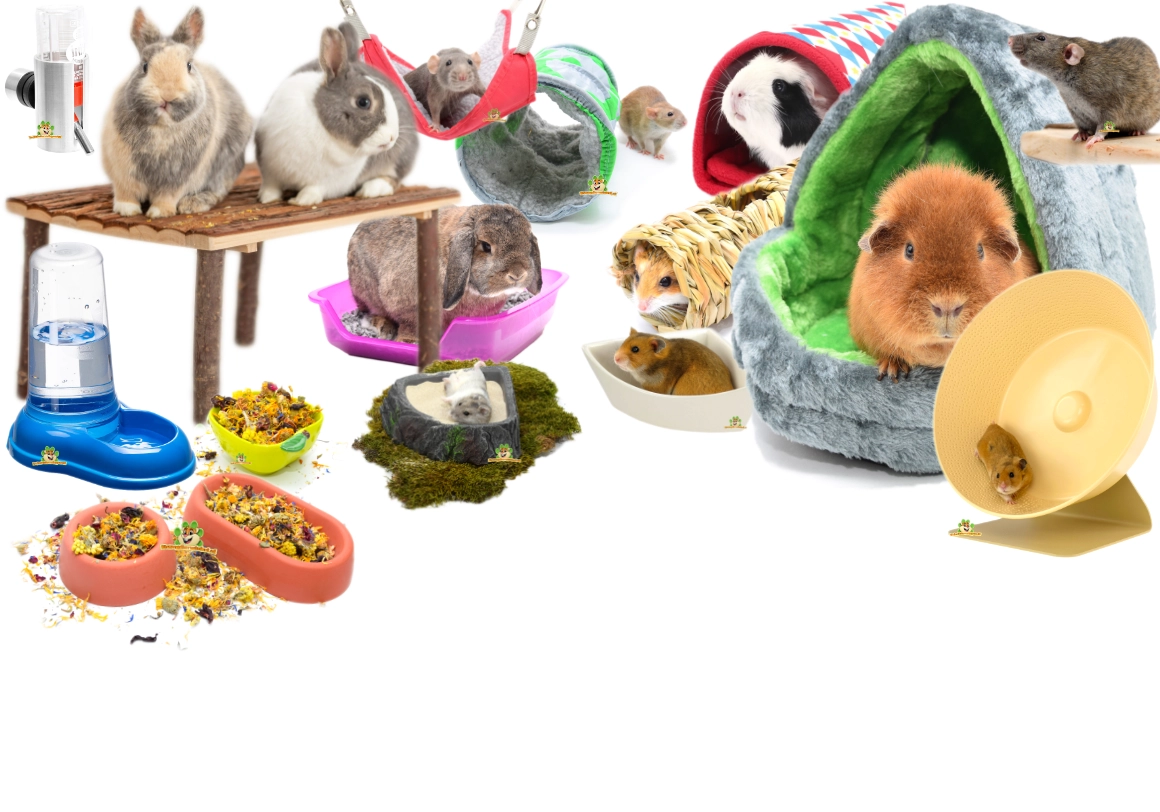 Do you want to properly furnish the cage, run, or enclosure for your rodent or rabbit? In the Cage Furnishing category, you will find everything to build a practical, comfortable, and species-appropriate enclosure: from houses , tubes and tunnels , and running wheels to platforms, hammocks, sand baths, food bowls, drinking fountains, and litter boxes.
When designing cages, DRD looks not only at individual accessories but, above all, at their function within the enclosure. A small house provides calm, a tunnel creates a route, a running wheel offers exercise, a platform utilizes height, and a feeding or drinking area makes daily care straightforward. This way, you don't build a cluttered cage, but an enclosure that works logically for your animal.
In short
✓ A good cage setup provides your animal with resting places, routes, exercise, feeding areas, and practical grooming zones.
✓ Always choose species-appropriately: a hamster, rat, guinea pig, rabbit, mouse, or gerbil uses its furnishings differently.
✓ A well-designed enclosure is spacious enough for behavior, but remains manageable for cleaning and daily checks.
Quick links
Subcategories | Basic setup | By animal species | Creating zones | Combining | Checklist | Good to know | FAQ
Houses
Hiding places for rest, naps, and a good overview. Choose by size, material, entrance, and use per animal species.
Running wheels
For animals that like to run, such as hamsters and some other small rodents. Pay attention to diameter, running surface, and stability.
Hammocks
Soft resting places for climbers such as rats and some other animals. Check textiles regularly for wear.
Sandboxes
For animals that use sand for grooming or a sand zone, such as hamsters, gerbils, chinchillas, and degus.
Platforms & ladders
For extra levels, routes, and stepping stones. Especially useful for animals that use height safely and actively.
Tubes & tunnels
For shelter, connecting zones, and exploration. Pay attention to diameter, stability, and sufficient openings.
Feeding bowls
For kibble, pellets, herbs, vegetables, or snacks. Choose by size, weight, material, and ease of cleaning.
Drinking bottles & water bowls
For a clearly marked drinking spot. Choose what suits your pet, enclosure, and daily care routine.
Toilets
For animals that use a designated potty or toilet area. Handy for hygiene, a clear overview, and more targeted cleaning.
Cushions & baskets
Soft resting places, caves, baskets, and vet beds for animals where textiles suit the use and care.
Basic furnishings: what belongs in a good accommodation?
A good basic setup consists of more than one house and a food bowl. Your animal needs various functions in the enclosure: a place to rest, a place to eat and drink, a route to move around, a place to shelter, and, where appropriate, a place for sand, a toilet, climbing, running, or foraging.
Therefore, start with the question: which behavior do you want to support? For hamsters and gerbils, hiding, digging, tunnels, sand, and a good running wheel are often important. For rats and pygmy rats, routes, hanging spots, platforms, and interaction count. For guinea pigs and rabbits, it is mainly about floor space, hiding places, a hay corner, a feeding area, a drinking area, and a clear view.
Always combine cage furnishings with the right bedding and nesting material , suitable games and foraging, and, where appropriate , natural decor . This creates cohesion rather than separate accessories.
Cage layout by animal species
Hamsters and dwarf hamsters
Hamsters benefit greatly from houses, tunnels, a sand bath, a well-fitting exercise wheel, feeding areas, and natural routes through the bedding. For hamsterscaping, a low, stable setup is important so that heavy components cannot sink when the hamster digs.
Gerbils
Gerbils actively use their enclosure: they enjoy digging, gnawing, moving things around, and destroying them. Therefore, choose sturdy houses, tunnels, sandboxes, and chew-resistant materials. A running wheel can be suitable if it is spacious enough and stands stably.
Mice
Mice love cover, small routes, tunnels, nesting material, houses, platforms, and safe climbing opportunities. When dealing with mice, pay extra attention to small openings, the risk of trapping, and sufficient hiding places within a group.
Rats and pygmy rats
Rats enjoy using height, hammocks, tunnels, platforms, feeding areas, toilets, and foraging spots. Among dwarf rats, size can vary, so always choose the enclosure setup based on the actual body build and usage of the individual animal.
Guinea pigs
Guinea pigs are ground animals. They primarily need low hiding places, spacious tunnels, hay racks, food bowls, drinking points, soft resting spots, and clear routes. High climbing structures do not make sense for guinea pigs; floor space and shelter are more important.
Rabbits
Rabbits use cage furnishings primarily for rest, eating, drinking, litter training, and enrichment. Consider a sturdy house, tunnel, hay rack, food bowl, water bowl, litter box, digging area, and safe play or foraging products. Always choose based on size and stability.
Chinchillas and degus
Chinchillas and degus use height, platforms, sandboxes, houses, tunnels, and gnawing material. For these animals, sturdy placement, good ventilation, wear and tear monitoring, and sufficient space are especially important.
Divide the accommodation into zones
An enclosure becomes much more logical when you think in zones. For example, create a rest zone with houses and tunnels, a feeding zone with a food bowl and hay, a drinking zone, a sand zone, a toilet zone, and an active zone with a running wheel, platforms, or foraging toys. This way, your animal has a choice, and the enclosure remains easier for you to monitor.
For small rodents, it often works well to create routes along edges, through tunnels, and past hiding places. For guinea pigs and rabbits, however, it is preferable to create low, open zones with sufficient room to move. For rats, chinchillas, and degus, you can utilize height with safe platforms, ladders, and hanging spots.
Rest area
Little houses, tunnels, baskets, or hammocks give your pet a place of its own to retreat to.
Active zone
Running wheels, platforms, ladders, and foraging products enable movement and exploration.
Service zone
A feed bowl, drinking station, toilet, sandpit, or hay corner make daily care more manageable.
Combines nicely with cage furnishings
Ground cover
The basis for comfort, hygiene, digging, walking, and creating zones.
Natural design
For cork, bamboo, willow, bark wood, and natural routes with extra structure.
Playing & foraging
Make the stay more active by adding searching, sniffing, and problem-solving.
Chewing material
For animals that like to gnaw and destroy. Handy alongside houses, tunnels, and other furnishings.
Checklist: choosing cage furnishings
✓ Does your animal have at least one good hiding place, and for social animals, preferably several?
✓ Does the house, tunnel, or accessory fit the size of your pet?
✓ Is there a clear feeding and drinking area that is easy to keep clean?
✓ Does the layout support your animal's behavior: digging, climbing, running, hiding, or foraging?
✓ Is everything stable, even when your animal digs, jumps, pushes, or gnaws?
✓ Can you still easily check wet spots, food residue, and wear?
✓ Is the decor rich enough, but not so cluttered that your pet or you lose track?
Good to know regarding cage setup
Adjust the setup to the animal
Choose a setup based on size, body build, and usage. A tunnel that is spacious for a dwarf hamster may be too small for a Syrian hamster, guinea pig, or rabbit. With dwarf rats, the size can vary, so always consider the individual animal.
Place heavy parts stably
For burrowing animals, such as hamsters and gerbils, it is preferable to place heavy houses, ceramics, and stone accessories on the bottom of the enclosure or on a sturdy support. This prevents sinking while digging.
Check textiles and rope
Hammocks, baskets, cushions, and fabric tunnels can be nice for certain animals, but check them regularly for fraying, loose threads, and chew damage. Replace them when they are no longer neat and safe to use.
Keep cleaning practical
A richly furnished enclosure is beautiful, but you must still be able to find wet spots, food remnants, and wear and tear. Therefore, create zones and leave enough space to inspect properly.
Frequently asked questions about cage design
What belongs in a rodent cage?
A good rodent cage has at least a hiding place, feeding area, drinking area, suitable bedding, and enrichment. Depending on the species, you can add tunnels, a running wheel, a sand bath, platforms, hammocks, toilets, or foraging products.
How many houses does a rodent need?
At least one good hiding place is important. For group animals or larger enclosures, multiple houses, tunnels, or resting places are better, so that animals have a choice and can avoid each other.
Which cage setup is suitable for hamsters?
For hamsters, houses, tunnels, a spacious running wheel, sand bath, feeding area, drinking point, and natural routes are important. In hamsterscaping, you combine this with deep bedding and stable furnishings.
Which cage setup is suitable for rats?
Hammocks, tunnels, platforms, ladders, houses, food bowls, drinking fountains, litter boxes, and foraging products are popular with rats. Rats enjoy using height and multiple routes through their enclosure.
Are exercise wheels suitable for all rodents?
No, a running wheel is primarily suitable for animals that can use it in a natural and comfortable way. Always ensure sufficient diameter, a closed running surface, and stable placement.
Are hammocks suitable for all animals?
Hammocks are especially popular with rats and other animals that use height. For guinea pigs and rabbits, low baskets, cushions, or hiding places are usually more logical than hanging resting spots.
What is better: a water bottle or a water bowl?
That depends on the animal species, the enclosure, and the usage. A water bowl can support natural drinking, but it must be placed firmly and kept clean. A water bottle can be useful to limit spillage. Always check daily to ensure your animal can drink properly.
How do you organize a stay?
Work with zones: a rest zone, feeding area, drinking area, toilet or sand zone, and an active zone. This way, your animal can choose, and the enclosure remains easier to keep clean.
Buy cage equipment at DRD Knaagdierwinkel®
At DRD Knaagdierwinkel®, you will find cage furnishings for rodents and rabbits that help make the enclosure richer, more practical, and more species-appropriate. We select based on functionality: rest, exercise, hiding, climbing, feeding, drinking, hygiene, and enrichment.
Do you want to look further specifically? Then go to Houses , Running Wheels , Tubes & Tunnels , Platforms & Ladders , Food Bowls , or combine with Play & Foraging .
✓ Specialist in cage equipment for rodents and rabbits since 2011
✓ Carefully selected assortment: DRD chooses what is truly right for the animal, enclosure, and use
✓ Delivered from our own stock and shipped from the Netherlands to the Netherlands, Belgium, Germany, and other EU countries
