 Polski


Rabbit food selection guide: which food suits your rabbit?
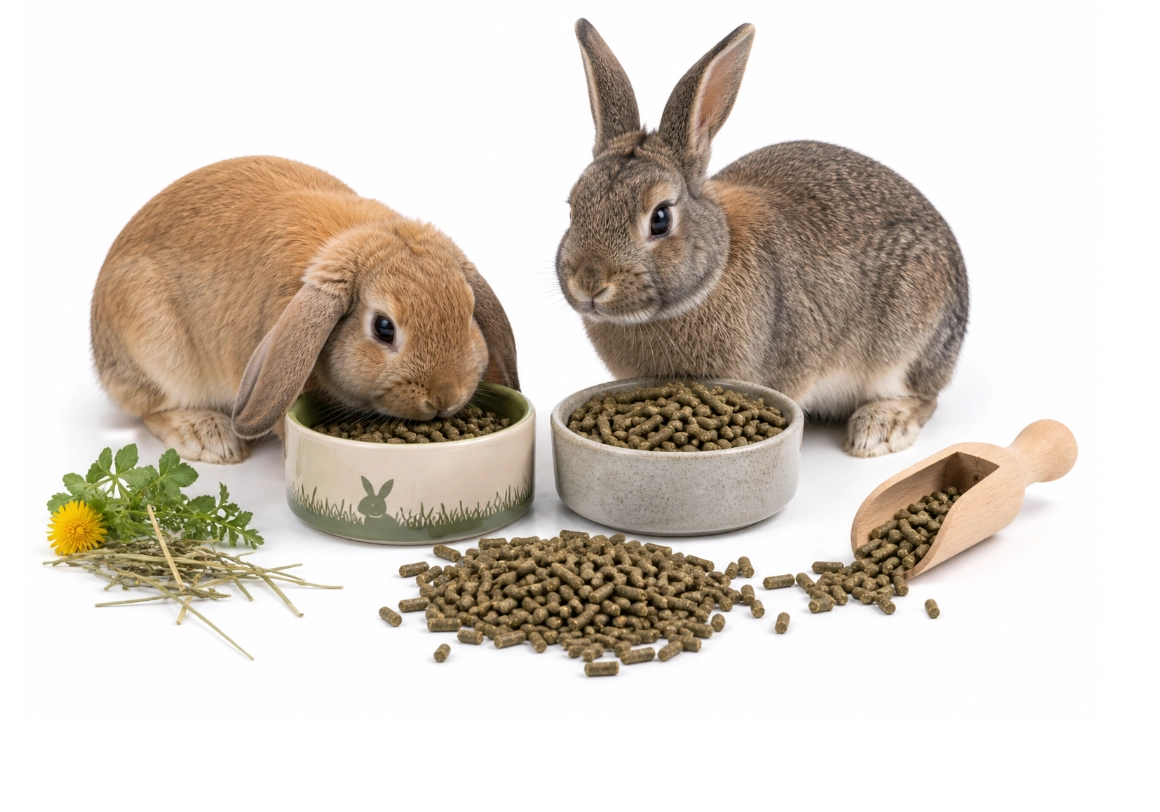 Which rabbit food suits your rabbit? That depends on age, condition, sensitivity, eating habits, and especially on whether your rabbit eats hay well in addition. After all, rabbit food is not intended as the main meal over hay, but as a targeted supplement to the daily diet.
This selection guide is part of our Rabbit Information and helps you choose between kibble, pellets, all-in-one food, mixed feed, and special diets. You will also read what to look out for regarding portions, picky eating, switching to different food, and combining it with rabbit hay .
✓ In short: choose rabbit food that suits your rabbit, but always keep hay as a daily staple.
✓ A uniform kibble or pellet provides a clear overview, because every kibble has the same composition and selective eating is less likely.
✓ The correct portion depends on weight, age, condition, activity, hay intake, and the feeding advice on the packaging.
Quick links:
The basics · Types of food · Kibble & pellets · Mixed feed · How much food? · Selective eating · Switching · Checklist · FAQ
Hay remains the basis
Rabbit food is supplementary, but should not replace hay. So always check if your rabbit continues to eat plenty of hay as well.
Uniformity provides an overview
With a complete kibble or pellet, your rabbit receives the same composition with every bite. This is convenient for picky eaters.
Portion with care
Too much feed can make hay less attractive. Therefore, it is better to weigh it out rather than refilling without limit.
The basics: rabbit food alongside hay
Rabbit food is an important part of the feeding routine, but it is inseparable from hay. Hay should always be available and forms the fiber-rich base. Rabbit food is used as a supplement to make the daily diet complete and practically portionable.
Good food suits your rabbit *and* the rest of its diet. Does your rabbit eat plenty of hay, produce normal droppings, and remain in good condition? Then the food is supporting the basics well. Is your rabbit eating less hay, are there many food remnants left behind, or does the droppings change? Then it is wise to review the portion size, the type of food, and the overall routine.
Convenient shopping routes: Rabbit food · Rabbit hay · Food bowls · Drinking bottles & water bowls
What types of rabbit food are there?
Rabbit food comes in various forms. The best-known types are uniform kibble, pellets, all-in-one foods, and mixed foods. Additionally, there are foods for specific life stages or situations, such as young rabbits, adult rabbits, senior rabbits, or rabbits requiring extra support, in consultation with a veterinarian.
The shape of the food doesn't tell the whole story, but it does help with the selection process. With a uniform kibble or pellet, every single piece is the same. Mixed food contains various components. This can look and smell appealing, but it does require you to keep a close eye on whether everything is being eaten.
Choosing rabbit food based on function
✓ Uniform kibble or pellet: provides a clear overview and helps with picky eaters.
✓ All-in-one food: convenient when you want every bite to have the same composition.
✓ Mixed feed: requires extra monitoring to ensure your rabbit does not only choose the favorite parts.
✓ Junior or adult food: tailored to life stage and needs.
✓ Special diet: use specifically when the situation calls for it, possibly in consultation with a veterinarian.
Kibble, pellet and all-in-one rabbit food
A complete kibble, pellet, or all-in-one food is a practical choice for many rabbit owners. The biggest advantage is clarity: every kibble has the same composition. As a result, your rabbit cannot simply pick the tastiest pieces from the food and leave the rest.
This is especially useful for rabbits that are picky, quickly become selective eaters, or for which you want to strictly portion their food. You can easily weigh out the daily portion and divide it over several feeding times if necessary, or use it in a food ball, snuffle mat, or other foraging toy.
Convenient shopping routes: Rabbit food · All-in-one food · Training & foraging toys
Mixed rabbit food: what to look out for?
Mixed rabbit food contains various components. This can be appealing to rabbits who enjoy foraging and picking. However, it does require you to carefully check whether the food is being eaten completely. Does your rabbit consistently leave the same parts behind? Then your rabbit may not be consuming everything as intended.
With mixed feed, feeding with attention is therefore especially important. Give a measured portion, do not keep refilling while leftovers remain, and check if your rabbit eats the hay well afterwards. Do you notice that your rabbit is mainly selecting? Then a uniform type of kibble or pellet can provide more calm and clarity.
Check on mixed feed
- See if all parts are eaten.
- Do not automatically refill the container if there are still leftovers.
- Pay attention to hay intake and normal droppings.
- Use a fixed portion so you can better see what is actually being eaten.
- Switch gradually when you want to switch to a different food.
How much rabbit food do you give per day?
The correct amount of rabbit food depends on a healthy weight, age, activity level, condition, neutering, the type of food, and how much hay your rabbit eats. Many foods include feeding recommendations. Use that as a starting point and then observe your own rabbit.
A commonly used general guideline for adult rabbits is approximately 20 grams of pellets or kibble per kilogram of body weight per day. This is not a fixed rule for every rabbit. Some rabbits need less, for example, when they are gaining weight quickly or eating hay very well. Young, growing, pregnant, sick, or recovering rabbits, on the other hand, may have different needs.
Determine portion size in 5 steps
✓ Check the feeding advice on the packaging.
✓ Weigh out your daily portion, especially with multiple rabbits.
✓ Check if your rabbit is also eating plenty of hay.
✓ Pay attention to weight, fitness, and activity.
✓ Adjust the portion when you notice that hay is being left uneaten or your rabbit is becoming too heavy or too thin.
Tip: distribute a portion of the pellets throughout the enclosure or inside foraging toys. This way, the portion becomes not only food but also a small daily searching activity.
Selective eating in rabbits
Selective eating means that your rabbit picks certain parts of the food and leaves others behind. You see this especially with foods containing different pieces, colors, or textures. The bowl might look almost empty, but in reality, your rabbit has mainly chosen what tasted best.
A uniform kibble or pellet can be a better choice, as every pellet has the same composition. Additionally, it helps to give a fixed portion, avoid unlimited refills, and closely monitor hay intake. The goal is for your rabbit not only to eat food but also to continue eating sufficient hay.
What helps with picky eating?
- Choose a complete, uniform kibble or pellet.
- Weigh the portion and do not keep refilling in between.
- Provide hay in an attractive location and in multiple spots.
- Use small amounts of herbs to make hay more interesting.
- Gradually switch to other food.
- Contact a veterinarian if your rabbit eats less or stops eating.
Switching to different rabbit food
Do not switch abruptly to other rabbit food unless your veterinarian advises otherwise. Rabbits are sensitive to changes in diet. Therefore, mix a little of the new food with the old food for several days and gradually introduce the new food.
During the transition, closely monitor appetite, droppings, behavior, and hay intake. Are the droppings becoming noticeably softer, smaller, or less frequent? Is your rabbit eating less or reacting differently than normal? If so, pause the gradual increase and seek advice from a rabbit-specialist veterinarian if in doubt.
Transfer smoothly
✓ First mix a small amount of new food with the old food.
✓ Build up the new food step by step.
✓ Keep hay readily available and attractive.
✓ Check droppings, appetite, and behavior daily.
✓ Do not change many snacks, vegetables, or herbs at the same time.
Checklist: which rabbit food suits your rabbit?
Check these points
✓ Is the food suitable for your rabbit's age and condition?
✓ Does your rabbit eat enough hay in addition to its food?
✓ Is the feed complete and practical to dose?
✓ Does your rabbit leave parts behind or does it eat everything neatly?
✓ Are the droppings normal in shape, quantity, and structure?
✓ Do weight and fitness remain stable?
✓ Can you easily weigh and divide the daily portion?
Good to know
More food is not automatically better. When rabbits receive too much pellets or snacks, hay can become less interesting. It is precisely the balance between hay, food, water, and gentle variety that makes the daily diet stronger.
Is your rabbit not eating, producing no or significantly fewer droppings, puffing up, or reacting differently than normal? Then contact a rabbit-specialist veterinarian immediately.
Frequently asked questions about rabbit food
What is the best rabbit food?
The best rabbit food suits your rabbit's age, condition, and needs, and ensures that your rabbit continues to eat plenty of hay alongside it. For many rabbits, a complete, uniform kibble or pellet is a straightforward choice.
How much rabbit food do you give per day?
A commonly used guideline for adult rabbits is approximately 20 grams of pellets or kibble per kilogram of body weight per day. In addition, always check the feeding recommendations on the packaging, your rabbit's weight, condition, hay intake, and droppings.
Is pellet food suitable for rabbits?
Yes, pellet food can be very suitable when it is complete and suits your rabbit. The advantage is that every pellet has the same composition, which reduces the chance of selective eating.
What is all-in-one rabbit food?
All-in-one rabbit food consists of uniform kibble or pellets where every bite has the same composition. This provides clarity and is convenient for rabbits that are quick to become selective eaters.
Is mixed rabbit food suitable?
Mixed feed requires extra monitoring. Check carefully whether your rabbit eats all the components and does not just choose the favorite pieces. For selective eating, a uniform kibble or pellet is often clearer.
Why does my rabbit eat mostly pellets and very little hay?
The portion of pellets may be too large, the hay may be less appealing, or your rabbit may have developed a preference. Offer fresh hay, try a different texture, and weigh the food portion. If your rabbit is clearly eating less or not at all, contact a veterinarian.
How do you switch to different rabbit food?
Gradually mix the new food with the old food and build it up slowly. During the transition, carefully check whether your rabbit continues to eat, takes hay, and produces normal droppings.
Can you put rabbit food in toys?
Yes, you can use part of the daily portion in a treat ball, snuffle mat, or other foraging toys. This way, searching for food immediately becomes a form of enrichment.
Continue reading within Rabbit Information
Do you want to understand the full dietary basics first? Then also read What does a rabbit eat? . Do you want to make a better choice regarding which hay is suitable? Then check out the Rabbit Hay Selection Guide . For checking droppings, you can read on at Rabbit droppings: what is normal? . Or go back to the Rabbit Information .
Rabbit food at DRD Knaagdierwinkel®
At DRD Knaagdierwinkel®, you will find rabbit food that suits various feeding routines. From complete kibble and pellets to foods for specific needs: we help you choose not only by name or brand, but above all by what makes sense for your rabbit, its hay intake, and its daily care.
✓ Complete rabbit foods conveniently grouped together
✓ Practical selection guide for kibble, pellets, portions, and switching
✓ Specialist since 2011
✓ Delivered from our own stock
View now: Rabbit food · All-in-one food · Rabbit hay · Foraging toys .
