 Polski


Vitamin C for guinea pigs – how much does your guinea pig need and how do you give it properly?
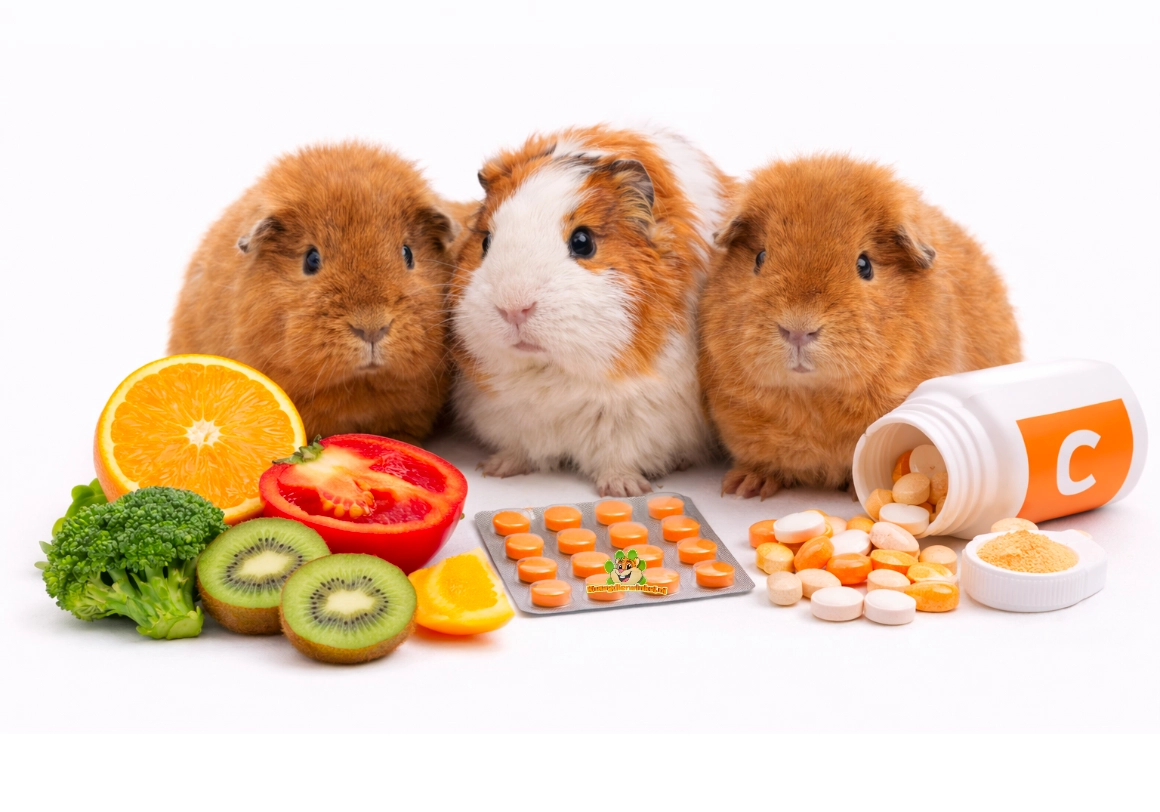 Vitamin C is a daily concern for guinea pigs. Guinea pigs cannot produce vitamin C themselves and must therefore obtain it through their diet. This makes guinea pig food different from food for many other rodents. A good foundation consists of plenty of guinea pig hay , specialized guinea pig food , suitable vegetables, and, where necessary, a targeted vitamin C supplement.
A commonly used guideline for adult guinea pigs is approximately 10–20 mg of vitamin C per kg of body weight per day. A 1 kg guinea pig therefore needs roughly 10–20 mg of vitamin C per day. Young, pregnant, sick, or recovering guinea pigs may have different needs. In such situations, consult a veterinarian, especially if your guinea pig is eating less, losing weight, or is recovering.
At DRD Knaagdierwinkel®, we view vitamin C as part of the complete nutritional routine. Not just “does the food contain vitamin C?”, but also: does your guinea pig actually finish the food, is the food still fresh, is your guinea pig getting enough hay, how do you feed vegetables, and when is a supplement useful? This makes vitamin C practical and controllable in daily care. Specialist since 2011.
Quick links:
Answer first | Calculation aid | What is vitamin C found in? | Vitamin C in guinea pig food | Supplements | Recognizing a deficiency | Common mistakes | Checklist | FAQ
Answer first: how much vitamin C does a guinea pig need?
For adult guinea pigs, 10–20 mg of vitamin C per kg of body weight per day is often used. This is a guideline for healthy adult animals. Growing, pregnant, sick, or recovering guinea pigs may require more.
✔ 1 kg adult guinea pig: approximately 10–20 mg vitamin C per day
✔ Vitamin C comes from special guinea pig food, vegetables, and possibly a supplement.
✔ General rodent food is not suitable as a vitamin C base for guinea pigs
✔ Food that has been open for a long time may contain less vitamin C than stated on the label.
In case of doubt, illness, recovery, pregnancy, or poor appetite: consult a veterinarian.
Calculation aid: calculate vitamin C per day
Use this simple formula for a healthy adult guinea pig:
Weight in kg × 10–20 mg = vitamin C per day
Example: a 1.1 kg guinea pig needs approximately 11–22 mg of vitamin C per day as a guideline.
| Guinea pig weight | Daily vitamin C guideline | Practical advice |
|---|---|---|
| 800 grams | approximately 8–16 mg | Pay close attention to growth, condition, and feed intake. |
| 1 kg | approximately 10–20 mg | Useful basic direction for many adult guinea pigs |
| 1.2 kg | approximately 12–24 mg | Check if your guinea pig is actually eating the guinea pig food. |
| 1.5 kg | approximately 15–30 mg | For overweight, it is better to calculate with ideal weight. |
✔ Use the table as a guideline, not as medical treatment advice.
✔ Always consider eating habits, weight, fitness, age, and health.
During recovery, illness, pregnancy, or growth, needs may differ.
Where does a guinea pig get vitamin C from?
Vitamin C can come from various sources. The basis is specialized guinea pig food, as this is tailored to guinea pigs and contains vitamin C. Additionally, suitable vegetables can contribute. A supplement can be useful if you want extra reassurance or if your veterinarian recommends supplementation.
| Source | Role | What do you look out for? |
|---|---|---|
| Special guinea pig food | Daily basic supplement with vitamin C | Do not use general rodent food as a base |
| Vegetables | Supplementation and variation | Introduce gradually and do not change everything at once. |
| Vitamin C tablet or supplement | Targeted supplement | Adjust dosage based on weight and situation |
| Hay | Fiber-based, not a reliable source of vitamin C | Always keep plenty available for digestion and chewing |
Guinea pig food and nutrition → | Guinea pig hay → | Guinea pig herbs →
Vitamin C in guinea pig food: what to look out for?
Always choose food specifically made for guinea pigs. Guinea pigs have different nutritional needs than hamsters, mice, rats, or rabbits, particularly due to vitamin C. Therefore, general rodent food is not a good basis for guinea pigs.
Vitamin C is sensitive to time, light, air, heat, and moisture. Therefore, store guinea pig food in a dry, cool, and tightly sealed place. Preferably, do not use food for too long after the bag has been opened, and check whether your guinea pigs are actually eating it. With mixed food, selective eating can result in insufficient intake of all nutrients.
✔ Choose special guinea pig food with vitamin C.
✔ Store food in a dry, cool, dark, and tightly sealed place.
✔ Watch out for selective eating with mixed food.
Use all-in-one kibble or pellets when you want more certainty that every bite has the same composition.
Guinea pig food → | Guinea pig all-in-one kibble and pellets → | Supreme Selective guinea pig food →
Vitamin C supplements for guinea pigs
A vitamin C supplement can be useful when you want extra reassurance, when your guinea pig is a picky eater, or when your veterinarian recommends supplementation. Preferably choose a method that you can easily dose and monitor, such as a tablet, powder, or direct administration according to product information.
Vitamin C via drinking water is less controllable. You do not know exactly how much each animal drinks, and vitamin C can degrade more quickly in water. Especially with multiple guinea pigs, direct dosing is often more manageable, because you can better see what each animal is actually ingesting.
✔ Useful for picky eaters or doubts about absorption.
✔ Direct dosing is more controllable than drinking water.
✔ Take weight, age, health, and product advice into account.
Seek the advice of a veterinarian in case of illness, recovery, pregnancy, or if in doubt.
Vitamin C deficiency in guinea pigs: what signs might stand out?
A vitamin C deficiency can manifest in various ways. These include reduced appetite, lethargy, weight loss, sensitive joints, reduced fluid movement, coat problems, or a weakened immune system. These signs can also be associated with other health problems.
Do you notice that your guinea pig is not eating, is clearly eating less, is losing weight, seems to be in pain, is walking differently, or is becoming lethargic? Then do not wait and contact a veterinarian. A supplement can provide support, but it is important to have the cause of the symptoms assessed.
Guinea pig health → | Guinea pig not eating → | Guinea pig teeth →
Common mistakes with vitamin C in guinea pigs
Giving Vitamin C seems simple, but in practice, things often go wrong because absorption is difficult to monitor or because there is too much reliance on old feed.
✔ Give general rodent food instead of special guinea pig food.
✔ Thinking that hay provides sufficient vitamin C.
✔ Relying too long on a bag of bait that has been open for a long time.
✔ Adding vitamin C to drinking water without knowing how much each animal ingests.
✔ With selective eating, do not check what your guinea pig leaves behind.
Supplement only in case of illness or loss of appetite without veterinary advice.
Smartly combine Vitamin C with your daily diet
Vitamin C works best within a complete dietary routine. Hay remains the basis for fiber and chewing. Guinea pig food provides targeted supplementation. Vegetables offer variety. Use a supplement when necessary or desirable, for example, if there is doubt about absorption or on the advice of a veterinarian.
Monitoring is especially important when you have multiple guinea pigs. One guinea pig may take more food than another. Therefore, do not just look at what you put in the enclosure, but also at what each animal actually eats. Weigh your guinea pigs regularly so that you spot changes more quickly.
Guinea pig food selection guide → | Guinea pig food bowls → | Guinea pig hay racks → | Guinea pig snacks →
DRD makes the choice: making vitamin C traceable
At DRD, we view vitamin C not as an isolated detail, but as an integral part of good guinea pig nutrition. The question is not only whether vitamin C is present, but above all whether your guinea pig is actually ingesting it.
The power lies in control: special guinea pig food, storing it properly, paying attention to selective eating, providing targeted supplementation when necessary, and acting quickly when your guinea pig eats less or its behavior changes.
Checklist – ensuring proper vitamin C management for guinea pigs
✔ Feed special guinea pig food as a base, and not general rodent food.
✔ Calculate approximately 10–20 mg of vitamin C per kg of body weight per day for adult guinea pigs.
✔ Store food in a dry, cool, dark, and tightly sealed place.
✔ Check if your guinea pig actually eats the food and does not selectively leave it behind.
✔ Use supplements specifically when you want extra reassurance or have received advice.
✔ Weigh your guinea pigs regularly and pay attention to appetite, weight, and behavior.
Contact a veterinarian if there is no eating, lethargy, pain, weight loss, or an abnormal gait.
Good to know
This information helps you better understand vitamin C and apply it practically. In cases of illness, loss of appetite, recovery, pregnancy, growth, weight loss, or clear behavioral changes, consulting a veterinarian remains the right step.
Would you like to read up on general background information? Then also check out the guinea pig information from the LICG via licg.nl.
FAQ – frequently asked questions about vitamin C in guinea pigs
Why does a guinea pig need vitamin C?
Guinea pigs cannot produce vitamin C themselves. Therefore, they must obtain vitamin C daily through their diet or a targeted supplement.
How much vitamin C does a guinea pig need?
For adult guinea pigs, a dosage of approximately 10–20 mg of vitamin C per kg of body weight per day is often recommended. Young, pregnant, sick, or recovering guinea pigs may require more.
Does a 1 kg guinea pig need 10–20 mg of vitamin C per day?
For a healthy adult guinea pig weighing 1 kg, 10–20 mg per day is a commonly used guideline. In addition, always consider diet, condition, age, and health.
Does guinea pig food contain vitamin C?
Special guinea pig food contains vitamin C. Store the food properly and do not use it too long after opening, as vitamin C may decrease over time.
Is general rodent food suitable for guinea pigs?
No, general rodent food is not a good basis for guinea pigs. Guinea pigs need special guinea pig food, partly because of vitamin C.
Can I give vitamin C via drinking water?
That is more difficult to monitor, because you do not know exactly how much each animal drinks and vitamin C in water can decrease. Direct dosing is often clearer.
When do you give a vitamin C supplement?
A supplement can be useful in cases of doubt regarding absorption, selective eating, or on the advice of a veterinarian. Adjust the dosage based on weight, age, health, and product information.
How do you recognize a vitamin C deficiency in guinea pigs?
Signs may include eating less, lethargy, weight loss, reduced fluid movement, or appearing to be in pain. These signs can also have other causes, so contact a veterinarian.
Can a guinea pig get too much vitamin C?
Use supplements according to the product information and discuss higher dosages with a veterinarian. Giving more is not automatically better, especially not during illness or long-term use.
What do you combine with vitamin C for guinea pigs?
Combine vitamin C with special guinea pig food, plenty of hay, suitable vegetables, clean water, good food bowls, hay racks, and regular monitoring of weight and eating behavior.
✔ Vitamin C in guinea pigs clearly explained with guidelines, calculation aid, and practical feeding tips
✔ Convenient to combine with guinea pig food, hay, vegetables, supplements, and daily check-ups
✔ Specialist since 2011, delivered from our own stock
Ordered before 17:00, shipped the same day | Delivered from our own stock | Specialist since 2011
