 Polski

Rat hammocks & hanging hideouts – sleeping together at a height, warm in winter and cool in summer



- Voor 17 uur besteld, dezelfde dag verzonden!
- Rodent specialist since 2011
- Dispatched from our own stock



- Voor 17 uur besteld, dezelfde dag verzonden!
- Rodent specialist since 2011
- Dispatched from our own stock



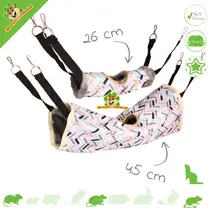
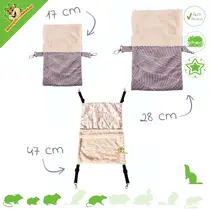
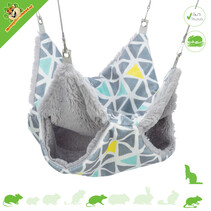
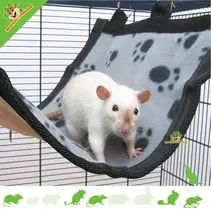
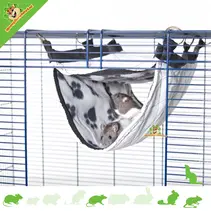
Rat Hammocks – soft sleep, lying together, and safe resting at height
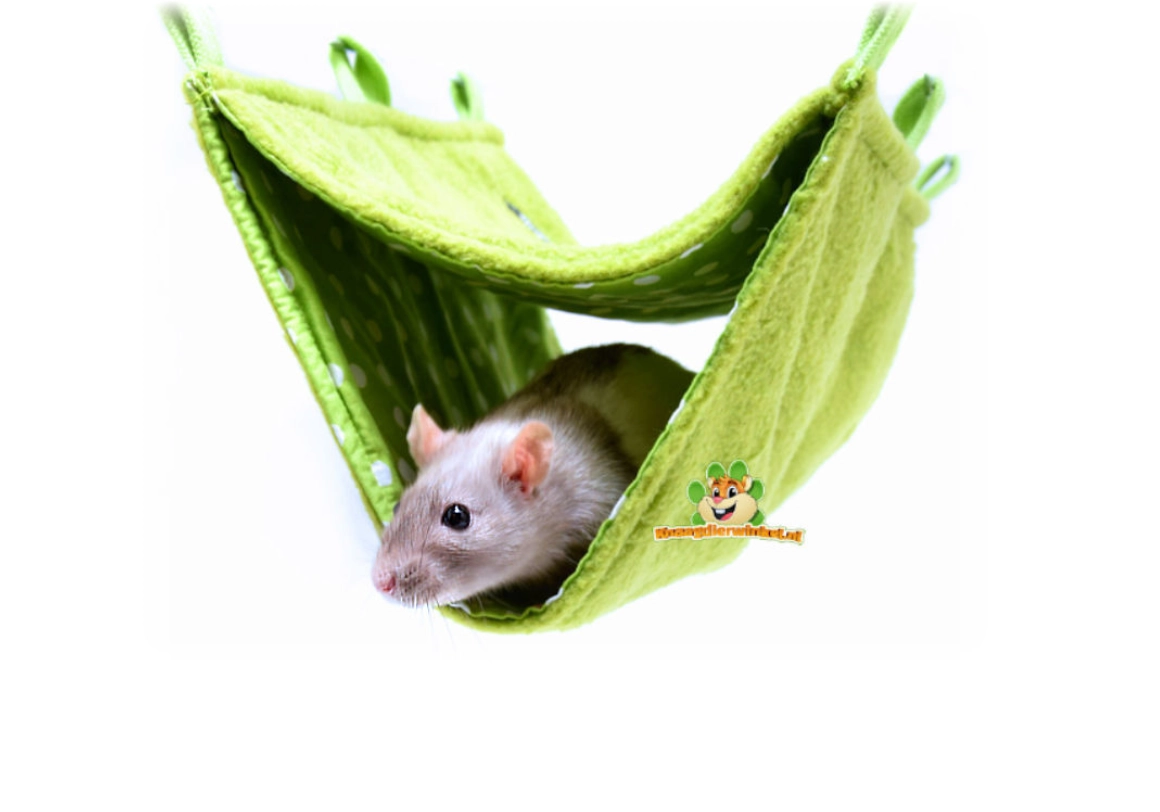 Rat hammocks are real favorite spots in the cage for many pet rats. Rats enjoy sleeping together, like to seek out sheltered resting places, and actively use the height of the cage. Therefore, when it comes to hammocks, DRD looks not only at “soft and fun,” but especially at size, sturdiness, suspension, washability, seasonal comfort, and how the hammock fits within safe routes in the rat cage.
DRD selects hammocks and hanging shelters that work logically in a complete rat cage: soft resting spots at the top, extra sleeping places for the group, tunnels as routes, and washable materials for a fresh cage. Combine hammocks, for example, with rat platforms & ladders , tunnels & tubes , and nesting material, cushions & baskets .
In short
✓ Rat hammocks provide soft resting places where rats like to sleep together.
✓ Choose the size and suspension so that your rats can safely enter, lie down, and get out again.
✓ Use a changing kit so you can wash the hammocks regularly without the cage becoming bare.
Quick links
Why hammocks? · Choosing a hammock · Types of hammocks · Size & group · Hanging safely · Washing & changing · Checklist · Shopping routes · FAQ
Sleeping together
Rats are social animals and like to sleep together. A spacious hammock or hanging shelter provides a soft place where multiple rats can lie together.
Rest at the top
Hammocks make the height of the cage usable. They provide resting places, stopping points, and routes, especially in combination with platforms and tunnels.
Washable routine
Fabric sleeping spots absorb odor and urine. With multiple hammocks, you can easily rotate, wash, and keep favorite spots fresh.
Why hammocks are important for rats
Rats enjoy using the height of their cage. They climb, explore routes, sleep at the top, and often choose soft spots where they can lie together. A good hammock makes that height usable and comfortable. It is therefore not just a decorative accessory, but a functional resting place in the cage.
Hammocks also help to better divide the cage into zones. At the bottom, you can use bedding , a toilet area , or a digging box , while hammocks provide nice resting spots at a higher level. This gives the cage more structure and allows your rats to choose where they want to be.
Choosing a rat hammock: what to look for?
A good rat hammock suits your group, your cage, and your grooming routine. So don't just look at color or shape, but especially at the size, the entry, the suspension points, and the material. Rats use hammocks extensively: they sleep in them, climb on them, gnaw on them, drag materials into them, and sometimes even use them as a urination spot.
- Choose a size in which your rats can lie comfortably, preferably together.
- Pay attention to sturdy suspension points and secure attachment to the bars.
- Ensure that the entry is not too difficult, especially for young, older, or less agile rats.
- Choose washable materials and keep a spare set on hand.
- Check regularly for loose threads, wear, and gnawing damage.
- Do not hang a hammock so high that it poses an unnecessary risk of falling.
Unsure about the cage layout? Then also check out the rat cage selection guide . There we explain how to practically combine height, routes, platforms, hammocks, and cleaning.
What types of rat hammocks are there?
Rats often have multiple favorite resting spots. Therefore, it is useful to combine different types of hammocks and hanging shelters. This creates choice in the cage: lying out in the open, sleeping in a sheltered spot, crawling through a tunnel, or snuggling up together in a warm place.
Open hammocks
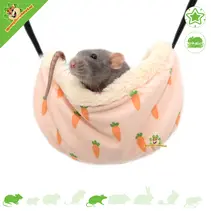
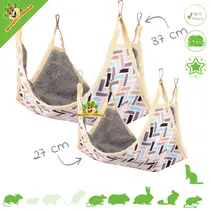
Open hammocks are comfortable resting spots for rats who like to keep an overview. They are easily accessible, easy to monitor, and often suitable as a stopover in the cage. Hang them so that your rats can safely get in and out.
Hanging tunnels and pouch hammocks
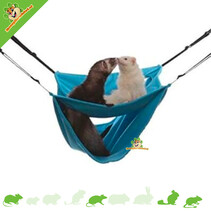
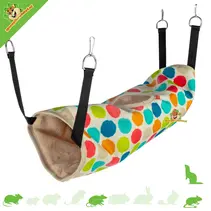
Hanging tunnels and pouch hammocks provide more shelter. This is nice for rats that like to burrow a bit deeper or want to lie together warmly. A tunnel shape can also help create routes between levels or resting places.
Hanging shelters and Sputniks
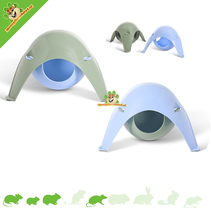
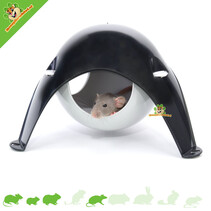
Hanging shelters, synthetic sleeping pads, and Sputniks are popular because they provide shelter and are often easy to clean. They can work well alongside fabric hammocks, especially when you want a hygienic resting place that is quick to wipe down.
Warm and airy hammocks
In winter, many owners prefer warmer, softer hanging spots. During warmer periods, airier hammocks or synthetic hanging shelters are sometimes more practical. Always pay attention to the room temperature, the ventilation in the cage, and whether your rats can choose between warmer and cooler spots themselves.
Size & group: preferably multiple good resting places
Rats like to sleep together, but they also need to be able to move around. Therefore, one hammock is usually not enough for a group. It is better to provide multiple resting spots at different heights so that your rats can choose. This creates more peace within the group and prevents one spot from being occupied all day.
- For two rats, a spacious hammock or hanging hideout is nice, but multiple spots remain handy.
- For larger groups, multiple hammocks, tunnels, and hiding places are more important than one very large spot.
- Combine open hammocks with sheltered sleeping areas.
- Pay attention to older rats: make entry points lower and easier to reach.
- Use platforms or tunnels as safe intermediate steps to higher hanging spots.
For a complete basic set, you can also check out What do you need for rats? There you will see how hammocks fit in with the rest of the rat equipment.
Safely hanging hammocks in the rat cage
Safe hanging starts with secure attachment. Hammocks should not dangle too loosely, but neither should they be pulled tight. Rats must be able to step into them stably and climb out safely. Do not turn hammocks into loose “islands,” but connect them with platforms, ladders, tunnels, or wire trails.
- Check that all hooks, clips, or chains are securely fastened.
- Hang hammocks so that rats can safely get in and out.
- If necessary, use extra hooks or chains to better adjust the height.
- Prevent large open fall spaces under high hanging points.
- Regularly check whether the fabric, seams, and suspension points are still intact.
- Replace hammocks if there are loose threads, holes, or sharp damage.
For sturdy hanging and easy adjustment, you can take a look at rat cage accessories , such as hooks and chains.
Good to know
✓ Hammocks make height usable, but safe routes remain important.
✓ Preferably place high hanging spots with platforms, tunnels, or intermediate steps around them.
✓ Check fabric hammocks for loose threads, holes, odor, and moisture.
Washing and changing hammocks
Fabric hammocks absorb odor, grease, and sometimes urine. This is part of daily use, but it does mean you need a good rotation routine. Remove wet or strong-smelling hammocks from the cage in time and replace them with clean ones. This keeps the cage fresh without your rats suddenly losing all their familiar sleeping spots.
- Work with multiple hammocks so you can always switch.
- Wash fabric parts according to the product's washing instructions.
- Preferably do not use strongly perfumed detergents.
- Let hammocks dry thoroughly before putting them back in the cage.
- Check for fraying, loose threads, and weak seams after washing.
For urine stains, odor, and cleaning products, you can also look further under rat care & cleaning and rat pee pads .
Checklist: how to choose the right rat hammocks
✓ The hammock is spacious enough for your rats, preferably also for them to lie in together.
✓ The suspension points are sturdy and easy to attach to the cage.
✓ Your rats can safely get in and out.
✓ The hangout spot fits within a safe route with platforms, ladders, or tunnels.
✓ The material is practically easy to keep clean or wipe down.
✓ You have multiple hammocks, so you can wash and switch.
Handy shopping routes for rest stops and routes in the rat cage
Hammocks work best when they are part of a complete cage layout. With these routes, you quickly create a logical combination of rest, routes, hygiene, and seasonal comfort.
Sleeping & resting
Create multiple soft spots where rats can sleep together or retreat for a moment.
Routes & altitude
Connect hammocks with platforms, ladders, tunnels, and sturdy suspension accessories.
Rat Platforms & Ladders
Rat Tunnels & Tubes
Rat Cage Accessories
Washing & seasons
Match soft spots to temperature, hygiene, and the places where your rats like to lie.
Learn more about rat cages and resting places
Do you want more guidance on setting up a rat cage with safe routes and comfortable sleeping spots? These information pages are a good match for this category:
FAQ – frequently asked questions about rat hammocks
Do rats need hammocks?
Hammocks are not food- or water-based, but they are very valuable in a rat cage. Rats like to sleep on something soft, often together, and often a bit higher up in the cage. A hammock makes the height usable and provides a nice resting place.
How many hammocks do you need for rats?
That depends on the number of rats and the size of the cage. One hammock is usually not enough. It is better to provide multiple resting places so that rats can sleep together but also have room to move. Additionally, keep a clean set of changing mats on hand.
Where do you hang a rat hammock?
Hang a hammock in a stable location where your rats can safely enter and exit. Ideally, create a route with platforms, ladders, or tunnels. Avoid large open trapping spaces under high hanging spots.
Can rats gnaw on hammocks?
Yes, some rats gnaw on fabric parts. Therefore, check hammocks regularly for holes, fraying, and loose threads. Replace a hammock when it is no longer sturdy or safe to use.
How often should you wash rat hammocks?
Wash hammocks as soon as they are wet, strong-smelling, or visibly dirty. For rats that like to urinate in hammocks, this may be necessary more often. A changing kit makes it easy to keep the cage fresh.
What is better: an open hammock or a hanging tunnel?
That depends on your rats. An open hammock offers a good overview and is easily accessible. A hanging tunnel or pouch hammock provides more shelter. In many rat cages, a combination works best.
DRD selects hammocks that combine relaxation, routes, and practice.
At DRD Knaagdierwinkel®, we view hammocks as part of the entire rat cage. A hammock should not only be soft, but also practical to hang, easily accessible, safe to use, and easy to keep clean. This way, you turn the height in the cage into a true resting and route zone.
Undecided between an open hammock, tunnel, pouch, or hanging hideout? Then check out the Ratten Webshop or contact us via Service & Contact . We are happy to help you decide.
✓ Soft rat hammocks, tunnels, and hanging hideouts
✓ Smartly combines with platforms, ladders, tunnels, and cage accessories
✓ Specialist since 2011
✓ Ordered before 17:00, shipped the same day from our own stock
