 Polski


A rabbit's teeth: teeth, molars, hay, and eating behavior
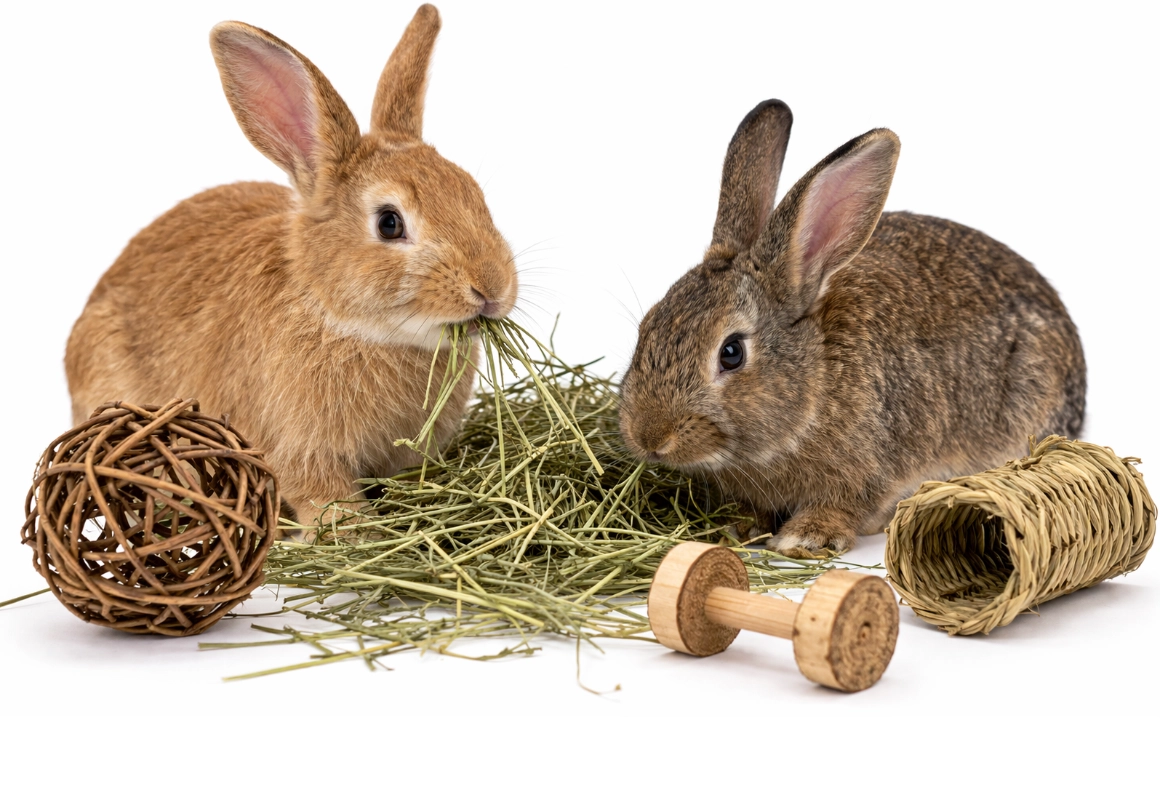 A rabbit's teeth play a major role in daily care. Rabbits use their teeth and molars to chew fiber-rich food, especially hay, for extended periods. That is precisely why you should pay attention not only to the visible front teeth, but also to eating behavior, hay intake, droppings, weight, drooling, and the way your rabbit chews.
This page is part of our Rabbit Information . Here you can read how teeth relate to hay , gnawing material , appetite, and droppings. A rabbit-specialist veterinarian is required in case of suspected dental problems; products can support the daily basics but do not solve a dental problem.
✓ In short: rabbit teeth and molars continue to grow and must wear down properly through thorough chewing on fiber-rich food.
✓ Hay is the most important daily basis for prolonged chewing. Gnawing material is supplementary as enrichment and occupation.
✓ Is your rabbit eating less, drooling, leaving the hay untouched, or are the droppings changing? Contact a veterinarian specializing in rabbits.
Quick links:
How do teeth work? · Hay and chewing · Chewing material · Recognizing signs · Not eating or selective eating · When to see a vet? · Daily check-up · FAQ
Hay as a base
Hay provides prolonged chewing and should always be available. It is more important than any other gnawing product.
Pay attention to eating habits
Dental problems are often manifested in eating less, chewing differently, making a mess, drooling, or preferring to eat mainly soft food.
Veterinarian in case of doubt
You cannot properly assess the molars yourself. If there are signs of pain or eating problems, a rabbit-specialist veterinarian should examine them.
How does a rabbit's teeth work?
Rabbits have incisors at the front and molars at the back of the mouth. The front teeth are visible when you look carefully at the mouth, but the molars are located further back and are difficult for you as an owner to assess. It is precisely these molars that are important, because a rabbit uses them to grind hay and other fiber-rich food.
A rabbit's teeth and molars continue to grow. They must wear down properly through chewing and by the teeth and molars aligning well. If the alignment is incorrect, if too little fiber-rich food is eaten, or if there is pain or another problem, the wear can be disrupted.
The teeth in brief
✓ Rabbits have visible incisors and molars at the back of the mouth.
✓ The molars are important for grinding hay and fiber-rich feed.
✓ Teeth and molars continue to grow and must wear down properly.
✓ Problems with teeth are often only apparent through eating behavior, saliva, weight, or droppings.
✓ A complete dental check-up is performed by a rabbit-savvy veterinarian.
Hay and chewing: the most important daily basis
Hay is indispensable in the daily routine of rabbits. It stimulates prolonged chewing and aligns with the natural eating behavior of rabbits: many small bites spread throughout the day. A rabbit that eats hay well uses its mouth differently than a rabbit that mainly eats pellets, snacks, or soft treats.
If your rabbit is eating little hay, it is important to take a close look at why. Is the hay fresh and appealing? Is the food portion not too large? Is there stress? Or could chewing be painful? A rabbit that leaves hay untouched but still eats soft things or pellets may still have a dental problem. Have this assessed if in doubt.
Handy shopping routes: Rabbit hay · Hay racks for rabbits · Rabbit hay selection guide
Chewing material and the teeth: what is their role?
Chewing material can be a nice addition, but it does not replace hay. Rabbits use chewing material primarily as a pastime, for enrichment, and as a way to accommodate natural gnawing and destructive behavior. Think of branches, willow, wooden toys, chew balls, tunnels, or houses that are allowed to be chewed on.
It is therefore good to offer gnawing material, but do not view it as a solution to a dental problem. If teeth or molars grow crooked, form hooks, or cause pain, a veterinarian must assess and treat the teeth. Extra gnawing material will not solve this on its own.
Good to know
Chewing material is valuable as enrichment. Hay remains the basis for prolonged chewing, and a veterinary check is necessary in case of pain, drooling, reduced eating, or abnormal chewing.
Useful shopping routes: Rabbit chewing material · Chewing material for rabbits · Rabbits playing & foraging
Signs of possible dental problems in rabbits
Dental problems are not always immediately visible. You can sometimes see the front teeth, but problems with the molars are often noticeable through behavior. For example, a rabbit may eat more slowly, leave hay untouched, drop food from its mouth, drool, or become a selective eater.
Pay particular attention to changes. A rabbit that normally enjoys eating hay but suddenly does so less is giving an important signal. Wet fur around the chin, dirty front paws from grooming, watery eyes, weight loss, or fewer droppings can also be reasons to have the teeth checked.
Pay attention to these signals
✓ Eat less hay or leave the hay untouched entirely.
✓ Interested in the food, but stopped after a bite.
✓ Chewing slowly, chewing strangely, or dropping food.
✓ Drooling, wet chin or wet front paws.
✓ Weight loss or less active attitude.
✓ Fewer, smaller, or abnormal droppings.
✓ Swelling of the jaw, head, or around the eye, or watery eyes.
Rabbit is not eating, is eating selectively, or is leaving hay untouched.
When a rabbit eats less or stops eating altogether, it is always serious. Dental problems can be one of the causes, but abdominal pain, stress, pain elsewhere, or other health issues can also play a role. Therefore, it is important not only to try a different food or a snack, but to seek veterinary advice quickly.
Selective eating can also be a signal. Some rabbits still eat pellets or soft treats, but no longer hay. This can make it seem as if the rabbit is being “picky,” whereas chewing on hay might be painful. So always look at the whole picture: hay, pellets, droppings, posture, weight, and behavior.
Check for selective eating
✓ Does your rabbit still eat hay, or mainly pellets and soft treats?
✓ Does your rabbit chew normally, or does chewing seem more difficult?
✓ Does your rabbit drop food from its mouth?
✓ Are the droppings normal in quantity and shape?
✓ Is there drooling, a wet coat, weight loss, or lethargy?
Useful information pages: Rabbit won't eat · Rabbit droppings: what is normal? · Rabbit food selection guide
When should you have your teeth checked?
Have your rabbit's teeth checked if you suspect it is in pain, eating less, leaving hay uneaten, drooling, losing weight, dropping food from its mouth, or producing abnormal droppings. Check-ups are also important in case of recurring symptoms. A veterinarian can examine the front teeth, but a more extensive examination is sometimes necessary for a proper assessment of the molars.
Do not trim teeth that are too long yourself, and do not have this done without proper care. Incorrect treatment can cause damage and worsen the problem. A veterinarian specializing in rabbits can assess what is necessary and determine whether the issue involves teeth, molars, hooks, jaw problems, or other causes.
Important to know
Do you suspect a dental problem? Go to a veterinarian experienced with rabbits. Teeth that do not wear down properly can cause pain, sores, reduced appetite, and intestinal problems.
Is your rabbit not eating or barely eating, or is there no droppings? Contact a rabbit-specialist veterinarian immediately.
Daily check: this is how you notice changes faster
You cannot see your rabbit's teeth very well yourself, but you can recognize daily signs. Check every day whether your rabbit is eating hay properly, taking its normal food portion, is active, and produces normal droppings. Additionally, pay attention to wet fur around the mouth, messing with food, and changes in weight.
A fixed routine helps with this. Offer hay in an attractive spot, use an appropriate portion of rabbit food, check the litter box, and keep the enclosure tidy. This makes changes more noticeable sooner.
Dental check without looking in the mouth
✓ Does your rabbit eat good hay daily?
✓ Does your rabbit chew normally and without making a mess?
✓ Does the chin stay dry and clean?
✓ Are the droppings normal in size and quantity?
✓ Do weight and fitness remain stable?
✓ Is your rabbit responding actively and as you are used to?
Handy shopping routes for daily essentials: Rabbit hay · Rabbit food · Hay racks · Chewing material · Rabbit health
Frequently asked questions about a rabbit's teeth
Do a rabbit's teeth keep growing?
Yes, a rabbit's teeth and molars continue to grow. They must wear down naturally through proper chewing and proper alignment. Hay plays an important daily role in this.
Is hay important for a rabbit's teeth?
Yes, hay is very important. It provides long chewing time and should always be available. A rabbit that eats little hay must be closely monitored.
Does gnawing material help with dental problems?
Chewing material is valuable as enrichment and a form of occupation, but it does not solve dental problems. Hay remains the foundation, and in case of pain, drooling, or reduced appetite, a veterinarian should check the teeth.
How do you recognize dental problems in a rabbit?
Watch out for eating less hay, chewing more slowly, dropping food, drooling, wet chin, weight loss, abnormal droppings, watery eyes, or swelling near the jaw or head.
My rabbit eats pellets but no hay, what does that mean?
That can be an important signal. Sometimes chewing hay is more painful than eating pellets. Have your rabbit evaluated by a rabbit-specialist veterinarian, especially if this is new behavior or the droppings change.
Can you check a rabbit's molars yourself?
No, the molars are located far back in the mouth and cannot be properly assessed at home. A veterinarian with experience with rabbits can examine the teeth better.
Are you allowed to trim rabbit teeth that are too long?
No, do not have this cut. Cutting it incorrectly can cause damage. Contact a rabbit-specialist veterinarian for a proper assessment and treatment.
When is a dental problem an emergency?
Is your rabbit not eating or barely eating, producing no or fewer droppings, drooling, puffed up, or appearing to be in pain? Contact a rabbit-specialist veterinarian immediately.
Continue reading within Rabbit Information
Do you want to know what to do if your rabbit is eating less? Then read Rabbit Not Eating . For the daily nutritional basis, you can read more at What Does a Rabbit Eat? and the Rabbit Hay Selection Guide . For droppings and daily check-ups, see Rabbit Droppings: What Is Normal?. Or go back to the Rabbit Information .
Hay, feed, and gnawing material at DRD Knaagdierwinkel®
At DRD Knaagdierwinkel®, you will find products that fit the daily basics of rabbits: good hay, suitable rabbit food, hay racks, gnawing material, and enrichment. These products help you establish a proper routine regarding eating, chewing, and check-ups, but they do not replace a veterinary check-up for suspected dental problems.
✓ Hay, feed, hay racks, and gnawing material neatly organized together
✓ Practical shopping routes for daily food, chewing, and enrichment
✓ Specialist since 2011
✓ Delivered from our own stock
View now: Rabbit hay · Rabbit food · Hay racks · Rabbit gnawing material · Rabbit health .
