 Polski


What Does a Rabbit Eat? Complete Nutrition Guide for Rabbits
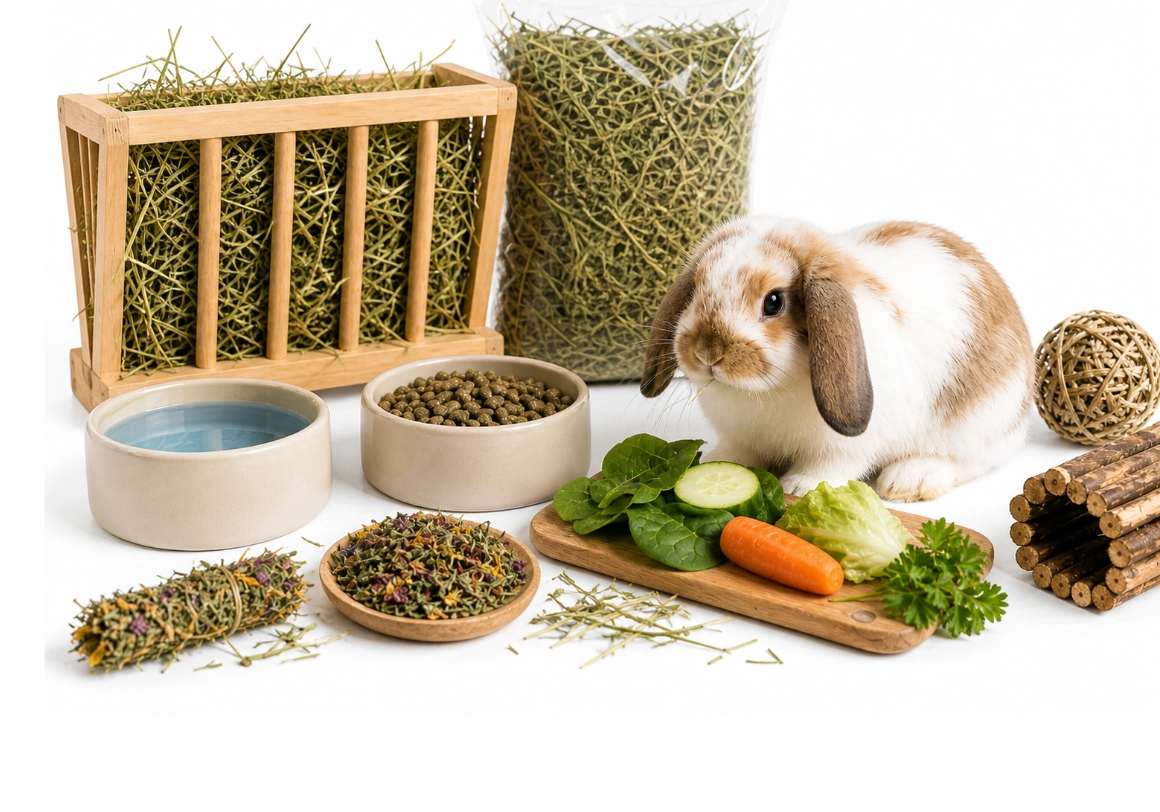 What does a rabbit eat daily? The basics are actually quite straightforward: plenty of hay, an appropriate portion of complete rabbit food, clean drinking water, and in addition, gentle variety with, for example, suitable herbs, vegetables, or a small snack. The most important thing is that the diet does not consist of loose extras, but of a fixed routine that suits the natural eating behavior of rabbits.
This feeding guide is part of our Rabbit Information . Here you can read how hay, pellets, herbs, vegetables, and snacks together form a logical menu. This makes it easier for you to choose what to feed daily, what is supplementary, and what to look out for regarding droppings, appetite, and selective eating.
✓ In short: a rabbit primarily eats hay, supplemented with suitable rabbit food, clean drinking water, and small amounts of suitable extras such as herbs, vegetables, or snacks.
✓ Hay should always be available, because rabbits need a lot of fiber-rich material and naturally spend a long time nibbling.
✓ Introduce new food gradually. Pay close attention to appetite, behavior, and droppings, as these reveal a lot about how your rabbits react to the food.
Quick links:
The basics · Hay · Rabbit food · Herbs & vegetables · Snacks · Selective eating · Daily check · FAQ
Hay as a base
Hay should be accessible all day long. It provides structure to the diet and keeps rabbits naturally occupied with nibbling.
Feed as a supplement
Complete rabbit food is intended as a supplement to hay. A uniform kibble or pellet helps to keep the menu clear.
Variation with policy
Herbs, vegetables, and snacks can be fun for variety and foraging, but they remain supplementary to the daily basis.
The daily dietary basis of a rabbit
A rabbit's diet consists of several complementary components. Hay is the foundation. In addition, you provide an appropriate portion of complete rabbit food and ensure that clean drinking water is always available. Herbs, vegetables, flowers, leaves, and snacks can then be used for variety, rewards, or forage enrichment.
When it comes to rabbit nutrition, think primarily in layers. First comes the basics, which must be right every day. After that come the extras. This prevents snacks, vegetables, or mixes from unknowingly becoming more important than hay and appropriate feed.
Nutrition in logical order
✓ Hay: the most important daily staple and always available.
✓ Drinking water: clean, easily accessible and checked daily.
✓ Rabbit food: a suitable portion of complete food as a supplement to hay.
✓ Herbs and vegetables: introduced gradually and tailored to what your rabbits tolerate well.
✓ Snacks: small extras for reward, training, or foraging.
Convenient shopping routes: Rabbit hay · Rabbit food · Drinking bottles & water bowls · Food bowls
Hay for rabbits: the most important basics
Hay should always play a leading role for rabbits. It suits their natural way of eating: many small portions spread throughout the day. Good hay smells fresh, is not musty, and is appealing enough to eat again and again. Some rabbits have clear preferences for texture, smell, or spiciness. Therefore, it can be helpful to try different types of hay.
A hay rack, hay bag, or designated hay spot makes it easier to offer hay cleanly and within reach. Many rabbits enjoy eating hay near their litter box. This is practical, as eating and defecating often go hand in hand. By placing hay smartly, you therefore not only encourage eating but also make the layout of the enclosure clearer.
Useful shopping routes: Rabbit hay · Hay racks for rabbits · Rabbit toilets · Rabbit toilet bedding
Rabbit food: complete feed as a supplement to hay
Rabbit food is intended as a supplement to hay. Preferably choose a complete food where every pellet has the same composition. This helps prevent selective eating, as your rabbit cannot simply pick the tastiest pieces from the food.
The correct amount of food depends on age, weight, activity, condition, and the type of food. Many foods provide a daily guideline. Use this as a starting point and then observe your rabbits closely: are they eating enough hay, do their droppings remain firm, and does their condition remain stable? If so, you are usually better off than if you only look at the bowl.
Feed your rabbits in a way that suits them. Some owners use a food bowl, while others distribute some of the pellets in a snuffle mat, treat ball, or mixed in with the hay. This way, foraging immediately becomes a form of enrichment.
Useful shopping routes: Rabbit food · Rabbit food bowls · Training & foraging toys
Good to know about portions
A commonly used general guideline for adult rabbits is approximately 20 grams of pellets or kibble per kilogram of body weight per day. This remains a guideline: always consider the feeding recommendations on the packaging, your rabbit's condition, the amount of hay eaten, and any advice from your veterinarian.
Do not keep giving your rabbits more pellets when the hay is left untouched. This often makes the hay less appealing. The goal is for hay to remain the foundation, with feed as a supplement.
Herbs, vegetables and natural variety
Herbs, flowers, leaves, and vegetables can make the menu more interesting. They provide scent, texture, and variety, and are also very suitable for stimulating foraging behavior. For example, scatter a small amount of herbs through the hay, hide some leaves in a sniffing mat, or use a small portion as a reward during quiet training.
Always introduce new vegetables and herbs gradually. Start with small amounts and do not give multiple new types at once. This way, you can better observe how your rabbits react. Pay attention to appetite, behavior, and droppings. Not every rabbit reacts the same way to the same food.
With herbs, it is important not to expect or promise any medicinal effects. Use herbs primarily as a tasty, natural variation and as a way to make foraging more fun. In cases of complaints, reduced appetite, or abnormal droppings, diet is not a substitute for veterinary advice.
Useful shopping routes: Rabbit herbs · Play & foraging · Foraging toys
Rabbit snacks: small, mindful, and functional
Snacks are extras. They are useful as a reward, as a small variation, or to make foraging toys more attractive. It is best not to use snacks as a large daily meal, but as a small part of the routine. This way, the foundation of hay and appropriate feed remains clear.
Choose snacks that suit your goal. Do you want your rabbits to search? Then use small pieces or crumbly snacks that you can hide. Do you want to encourage gnawing behavior? Then look more at natural gnawing material or edible twigs. Do you want to train? Then small, easy-to-dose rewards are useful.
Useful shopping routes: Rabbit snacks · Chewing material for rabbits · Training & foraging toys
Selective eating in rabbits
Some rabbits are selective eaters. This is especially noticeable with mixed diets where there are various pieces in the bowl. The rabbit chooses the tastiest parts and leaves the rest. This might seem harmless, but it makes the menu less predictable.
A uniform kibble or pellet can be a better choice, as every pellet has the same composition. It also helps to weigh the food, avoid constantly refilling, and keep checking whether your rabbits are eating enough hay. An empty food bowl does not automatically mean there is too little food; it could also mean that your rabbits have finished their portion and are now going to eat hay again.
Tips for picky rabbits
- It is better to choose a complete food with uniform kibble.
- Weigh out the daily portion instead of refilling the kibble without limit.
- Provide hay in multiple locations or in a fine hay rack.
- Make hay more interesting with a small amount of herbs or leaves.
- Change feed gradually and do not switch abruptly.
- Contact a veterinarian if your rabbit eats less or stops eating.
Daily check: appetite, hay and droppings
You don't assess nutrition solely by looking at the food bowl. Check daily whether your rabbits are eating hay well, responding actively, and producing normal droppings. Droppings provide a lot of information about the daily routine. Are the droppings becoming smaller, drier, softer, or noticeably fewer? If so, that is a signal to pay extra attention.
Is your rabbit not eating, producing no or far fewer droppings, puffed up, or reacting differently than normal? Then contact a rabbit-specialist veterinarian immediately. Rabbits are susceptible to appetite and digestive issues, so do not wait too long if you notice any clear changes.
Daily nutrition check
✓ Is good hay being eaten?
✓ Is the feeding portion appropriate and not consistently too generous?
✓ Is the drinking water clean and accessible?
✓ Are the droppings normal in shape and quantity?
✓ Are your rabbits active and alert?
✓ Have the new herbs, vegetables, or snacks been introduced gradually?
Frequently asked questions about what a rabbit eats
What does a rabbit eat daily?
A rabbit eats primarily hay daily, supplemented with an appropriate portion of complete rabbit food and clean drinking water. Herbs, vegetables, and snacks can be given as a supplement, but remain extras.
How much hay should a rabbit eat?
Hay should always be available. A rabbit must be able to eat hay several times a day. Offer it fresh, clean, and in an attractive spot, for example in a hay rack or near the litter box.
How much rabbit food do you give per day?
Many adult rabbits receive approximately 20 grams of pellets or kibble per kilogram of body weight per day, but this is a general guideline. Always check the feeding recommendations on the packaging, your rabbit's condition, and how much hay is being eaten.
Is mixed feed suitable for rabbits?
Mixed feed can encourage selective eating, as rabbits can pick out the tastiest pieces. A uniform kibble or pellet is often clearer, because every pellet has the same composition.
Can rabbits eat vegetables?
Many rabbits can eat suitable vegetables, but introduce them gradually. Start with small amounts and do not introduce multiple new types at once. Pay close attention to droppings and appetite.
Can rabbits eat herbs?
Suitable herbs can be given as a natural variation. Use herbs primarily for scent, taste, and foraging enrichment. Do not expect any medicinal effects and consult a veterinarian if symptoms occur.
Can rabbits eat fruit?
It is better to view fruit as a small snack for occasional use. It contains natural sugars and therefore should not form the basis of your daily diet.
What do you do if your rabbit doesn't eat hay?
Try to make the hay more appealing: fresh hay, a different texture, multiple hay beds, or a small amount of herbs mixed in. If your rabbit is eating poorly or not at all, contact a rabbit-specialist veterinarian immediately.
When is eating less a rabbit cause for concern?
Eating less, not eating, few or no droppings, puffing up, lethargic behavior, or clearly reacting differently are signals to contact a rabbit-specialist veterinarian quickly.
Continue reading within Rabbit Information
Do you want to review the complete basics for rabbits? Then also check out the Rabbit Checklist . Do you want to know how to logically combine nutrition with living space, litter box, and enrichment? Then also read the Rabbit Enclosure Selection Guide or go back to the Rabbit Information .
Everything for rabbit food at DRD Knaagdierwinkel®
At DRD Knaagdierwinkel®, you will find food and supplements that fit the daily life of rabbits. From hay and complete rabbit food to herbs, snacks, hay racks, food bowls, and foraging toys: every item plays a clear role in the feeding routine.
✓ Rabbit hay, rabbit food, herbs, and snacks neatly organized together
✓ Practical guide to choosing daily nutrition and variety
✓ Specialist since 2011
✓ Delivered from our own stock
View now: Rabbit hay · Rabbit food · Rabbit herbs · Rabbit snacks .
