 Polski


Rabbits in the summer: heat, shade, water, and fly control
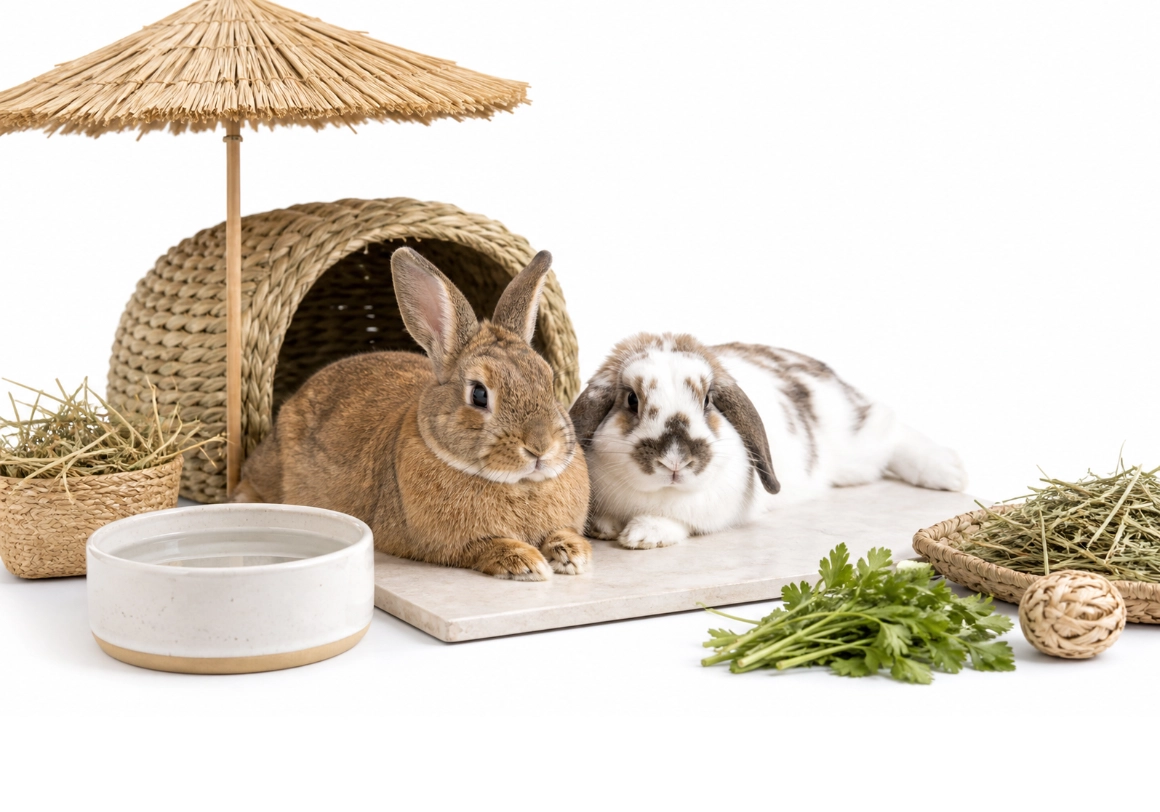 Rabbits require extra attention in the summer. Rabbits cannot dissipate heat well and, on hot days, depend on shade, cool resting places, clean drinking water, and an enclosure that is not in direct sunlight. Additionally, hygiene is especially important in the summer, as flies are attracted to dirty or wet areas.
This page is part of our Rabbit Information . Here you can read how to check on your rabbits on hot days, how to properly provide shade and drinking water, why a clean hindquarters is so important, and which products can help with summer care, outdoor enclosures, hygiene, and transport.
✓ In short: in the summer, always ensure shade, fresh air, clean drinking water, and an enclosure that does not heat up in direct sunlight.
✓ Check your rabbits more often on warm days for appetite, droppings, breathing, posture, and a clean, dry hindquarters.
✓ Do you notice maggots, wounds, a dirty, wet hindquarters, lethargy, loss of appetite, or shortness of breath on one of your rabbits? Contact a rabbit-specialist veterinarian immediately.
Quick links:
Heat & overheating · Shade & coolness · Drinking water · Fly & maggot infestation · Hindquarters inspection · Outdoor enclosure · Summer transport · FAQ
Cool resting places
Rabbits must always be able to choose a spot out of the sun, with shade, ventilation, and sufficient rest.
Clean & dry
Keep a close eye on the toilet areas, bedding, and the fur around the hindquarters during the summer.
Check daily
Heat, reduced appetite, abnormal droppings, or a dirty hindquarters can quickly cause problems. Therefore, it is better to check more frequently.
Rabbits and heat: why be extra careful?
Rabbits are less able to dissipate heat than humans. They do not sweat like we do and have a thick coat. In the wild, rabbits seek coolness in burrows and sheltered spots. In a hutch, run, garden, or rabbit room, they depend on the setup you provide.
Watch out for signs such as lying stretched out unresponsive, rapid breathing, warm ears, lethargy, loss of appetite, reduced droppings, or shortness of breath. Do you see clear signs of overheating, or is one of your rabbits behaving differently than normal? Contact a veterinarian specializing in rabbits.
Pay attention to these heat signals
✓ Lethargy or slower responsiveness than normal.
✓ Breathing faster or appearing short of breath.
✓ Eat little or nothing.
✓ Fewer or no droppings.
✓ Lying flat without responding normally and alertly.
✓ Clearly different behavior than you are used to.
Shade and coolness in the rabbit enclosure
In summer, shade is not a luxury, but a basic necessity. A hutch or run must not be left in full sun. Pay attention to the sun's movement: a spot that is shaded in the morning can still heat up completely later in the day.
Provide multiple sheltered spots. Consider natural shade, a shade cloth, a parasol, open shelters, or a well-ventilated shelter. A sheltered spot must not turn into a hot, enclosed box. Air circulation remains important.
Setting up a cooler
✓ Check the position of the sun throughout the day.
✓ Ensure that shade is always available.
✓ Use shelter that ventilates and does not completely seal.
✓ Optionally, place a cool tile or a safely wrapped cooler bottle that your rabbits can choose themselves.
✓ Move a run or outdoor enclosure in time when the sun moves on it.
Useful shopping routes: Rabbit runs · Rabbit houses · Summer products
Drinking water in the summer
Clean drinking water must always be available, but you should check this extra often in the summer. Water can get warm, tip over, become contaminated, or run out faster. Moreover, for outdoor rabbits, a water bottle or bowl in the sun can quickly become uncomfortably warm.
Many owners prefer to use a sturdy water bowl, as rabbits can naturally drink from it. A water bottle can be handy as an extra drinking point. Check daily that both systems are clean and working properly.
Water check on hot days
✓ Change water more often in hot weather.
✓ Do not place water in direct sunlight.
✓ Use multiple drinking stations for multiple rabbits.
✓ Check that drinking bottles are not leaking or clogged.
✓ Clean water bowls when there is hay, bedding, or feed in them.
View now: Drinking bottles & water bowls for rabbits .
Flies, maggot infestation and hygiene
In the summer, flies pose a significant risk to rabbits. Flies are attracted to dirty, wet, or strong-smelling areas, such as a soiled litter box, urine in the fur, sticky feces, or wounds. In the case of fly strike, flies lay eggs in the fur; maggots hatch from these eggs and can cause serious damage.
Hygiene is therefore extra important. Keep litter boxes clean, remove wet bedding promptly, and check the fur around the hindquarters daily. Do you see maggots, sores, holes in the skin, sudden severe pain, lethargy, or a foul-smelling wet spot? Contact a rabbit-specialist veterinarian immediately.
Fly control in the summer
✓ Check the fur around the hindquarters daily.
✓ Keep toilets and wet areas clean.
✓ Remove old vegetables, wet hay, and feed remnants quickly.
✓ Pay extra attention to sticky droppings, urine stains, wounds, and long-haired rabbits.
✓ Call the veterinarian immediately in case of maggots, wounds, dirty wet coat, or clear signs of pain.
Useful shopping routes: Rabbit toilets · Rabbit toilet bedding · Rabbit cleaning products · Rabbit health
Hindquarters control: keep clean and dry
The fur around the hindquarters should be clean and dry. Sticky droppings, urine in the fur, or a wet hindquarters are always signs to take seriously. This is especially important in the summer due to flies. Therefore, check not only the enclosure but also the rabbits themselves.
A dirty hindquarters can have various causes, such as soft droppings, being overweight, pain, dental problems, bladder issues, lack of exercise, or an improper diet. Therefore, do not just clean, but also look at the cause. In the case of recurring sticky feces or a dirty, wet hindquarters, veterinary advice is advisable.
Be extra alert with
✓ Long-haired rabbits.
✓ Older rabbits or rabbits that move less smoothly.
✓ Rabbits with soft droppings or sticky poop.
✓ Overweight rabbits.
✓ Outdoor enclosures that flies can reach more easily.
Useful information pages: Caring for a rabbit · Rabbit droppings: what is normal? · What does a rabbit eat?
Summer retreat
An outdoor enclosure must be safe, sheltered, and easy to monitor in the summer. Watch out for direct sunlight, poor ventilation, hot tiles, damp spots, drafts, predators, flies, and rain showers after warm days. A run can heat up quickly if it is not well shaded.
Also check the ground surface. Grass can be pleasant, but wet, bare, or dirty spots attract dirt and flies more quickly. Tiles can get very hot in the sun. Ensure that your rabbits can always choose between different areas: shade, a dry surface, a hiding place, drinking water, and free roaming space.
Country retreat check
✓ Is the accommodation not in direct sunlight?
✓ Is shade available throughout the day?
✓ Is the accommodation well-ventilated, but not drafty?
✓ Are the litter spots and wet bottom areas easy to clean?
✓ Can flies reach dirty or wet spots less easily?
✓ Is the enclosure safe against escapes and predators?
Useful shopping routes: Rabbit runs · Outdoors · Summer products
Transport and vet visits on hot days
Do your rabbits need to go to the vet on a hot day? Prepare for the transport well. Use a sturdy transport box with good grip on the bottom and do not place the box in the sun or in a hot, stationary car. Preferably leave at a cooler time if possible, but do not wait unnecessarily in case of an emergency.
Ensure the car can cool down first and that the transport box is stable. Do not place wet cloths directly over your rabbits. The goal is calm, safe, and controlled transport, without extra stress or overheating.
Transport check in warm weather
✓ Use a sturdy transport box with grip.
✓ Never place the box in direct sunlight.
✓ Never leave your rabbits in a hot car.
✓ Keep the transport calm and as short as possible.
✓ In case of an emergency, call the veterinarian first so that you can take targeted action.
View now: Rabbit transport box .
Checklist: rabbits in the summer
Daily summer check
✓ Do your rabbits have shade all day?
✓ Is clean drinking water available?
✓ Is the enclosure not in direct sunlight or on hot tiles?
✓ Are your rabbits eating normally and producing normal droppings?
✓ Are the hindquarters of both rabbits clean and dry?
✓ Have toilet spots, wet bedding, and food residue been removed?
✓ Do you see no flies, eggs, wounds, or maggots?
✓ Are your rabbits alert and breathing normally?
Important to know
Cooling products, shade cloths, water bowls, and cleaning products can help make summer care more practical, but they do not replace veterinary advice in case of illness, overheating, or fly strike.
Do you see maggots or wounds, is one of your rabbits not eating, is one of your rabbits not pooping, or does one of your rabbits seem distressed or lethargic? Contact a rabbit-specialist veterinarian immediately.
Frequently asked questions about rabbits in the summer
Can rabbits tolerate heat well?
Rabbits are less able to dissipate heat than humans. On hot days, they always need shade, cool resting places, clean drinking water, and extra monitoring.
How do you keep rabbits cool in the summer?
Provide shade, ventilation, clean drinking water, and cool resting places. You can also offer a cool tile or a safely wrapped cooling bottle so that your rabbits can choose for themselves whether they want to lie on it.
Can a rabbit hutch be placed in the sun?
No, a rabbit hutch should not be placed in full sun for extended periods. Pay attention to the sun's movement, as a spot with morning shade can still become warm later in the day.
Why are flies dangerous for rabbits?
Flies can lay eggs in dirty or wet fur, especially around the hindquarters. Maggots can hatch from those eggs. If you see maggots, wounds, or a dirty, wet hindquarters, call a veterinarian immediately.
How do you prevent fly strike in rabbits?
Keep litter boxes clean, remove wet bedding and food remnants, check the hindquarters daily, and pay extra attention to sticky droppings, long-haired rabbits, older rabbits, and warm weather.
Is it okay to wet rabbits when it's hot?
Do not simply wet rabbits. A wet coat can actually cause problems and attract flies. Instead, opt for shade, ventilation, clean drinking water, and a cool spot that your rabbits can choose for themselves.
What are the signs of overheating in rabbits?
Watch out for lethargy, rapid breathing, loss of appetite, fewer droppings, shortness of breath, lying flat without responding normally, or clearly altered behavior. If in doubt, contact a veterinarian.
What do you check daily in the summer?
Check shade, drinking water, appetite, droppings, breathing, the toilet area, and especially the fur around the hindquarters. It should remain clean and dry.
Continue reading within Rabbit Information
Do you want to build up your daily checks more effectively? Then also read Caring for a Rabbit . For stool and hind leg checks, you can read more at Rabbit Droppings: What Is Normal?. Is one of your rabbits eating less or not at all? Then view Rabbit Not Eating . Or go back to the Rabbit Information .
Summer products and care at DRD Knaagdierwinkel®
At DRD Knaagdierwinkel®, you will find products that help keep rabbit summer care manageable. Think of water bowls, water bottles, litter boxes, litter box bedding, cleaning products, transport boxes, runs, houses, and summer products for warm days.
✓ Products for water, shade, hygiene, and control conveniently grouped together
✓ Practical shopping routes for holiday home, toilet, cleaning, and transport
✓ Specialist since 2011
✓ Delivered from our own stock
View now: Summer products · Drinking bottles & water bowls · Rabbit toilets · Rabbit toilet bedding · Rabbit cleaning products · Rabbit transport box .
