 Polski


Rabbits in winter: cold, straw, water and shelter
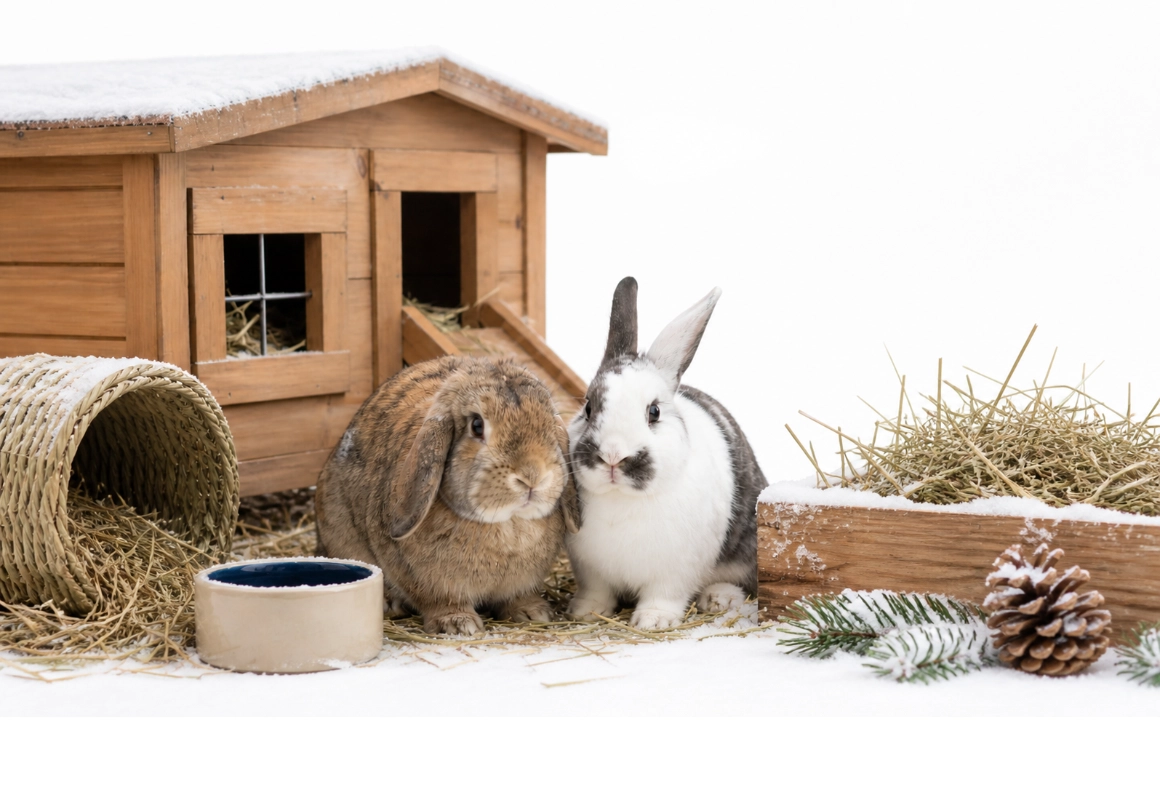 In winter, rabbits primarily require a dry, sheltered, and easily monitorable outdoor enclosure. Cold is usually less troublesome than dampness, drafts, wet bedding, frozen drinking water, and sudden temperature fluctuations. Rabbits accustomed to the outdoors and that have developed a winter coat in time can tolerate the cold better than rabbits that are suddenly moved outside from a warm indoor space.
This page is part of our Rabbit Information . Here you can read how to support outdoor rabbits in the winter with a draft-free shelter, sufficient straw and hay, water checks, hygiene, and a daily winter check. You will also read why you should not simply put indoor rabbits out in the cold and why you should not simply move outdoor rabbits to a warm living room.
✓ In short: in winter, outdoor rabbits need a dry, windproof, draft-free night shelter with sufficient straw to rest warmly and sheltered.
✓ Check drinking water several times a day during frost, as water bowls and drinking bottles can freeze.
✓ Avoid sudden temperature fluctuations: do not suddenly put indoor rabbits outside in the cold and do not simply bring outdoor rabbits into a warm living room.
Quick links:
Can rabbits withstand the cold? · Winter coat · Hutch & shelter · Straw & hay · Drinking water during frost · Switching indoors/outdoors · Daily winter check · FAQ
Dry and draft-free
Moisture and drafts are major concerns in winter. The night shelter must be dry, windproof, and well-stocked.
Check water
Drinking water can freeze quickly in frosty conditions. Therefore, check water containers and bottles more often than usual.
Staying warm together
Rabbits are social animals. A suitable pair can rest and seek shelter together.
Can rabbits withstand the cold?
Rabbits accustomed to being outdoors can withstand a lot in winter if their enclosure is properly set up. The most important conditions are a winter coat, a dry and draft-free sleeping area, sufficient straw, clean drinking water, good hygiene, and daily checks. Cold itself is therefore not the only point of attention; dampness, drafts, and frozen water often cause problems more quickly.
You cannot simply put indoor rabbits outside in the winter. They have not developed a suitable winter coat and are accustomed to a warmer environment. If you want to keep rabbits outdoors, you should start well before the cold period so that their bodies can adapt to outdoor life.
Useful information pages: Keeping rabbits outdoors · Rabbit enclosure selection guide · Rabbit checklist
Winter coat: why living outdoors on time is important
Rabbits living outdoors develop a thicker winter coat after the summer. This winter coat helps them cope better with the cold. This process does not occur when rabbits have been kept warm indoors all autumn and are only put outside when there is frost.
The same applies in reverse: you should not simply bring outdoor rabbits with a winter coat into a warm living room. Due to the large temperature difference, they are less able to regulate their body temperature. If temporarily bringing them indoors is truly necessary, for example due to illness or on the advice of the veterinarian, it is preferable to choose a cooler intermediate space and follow the advice of a veterinarian specializing in rabbits.
Winter coat in brief
✓ Getting used to being outside is more important than “just putting them outside”.
✓ Rabbits develop a winter coat when they live outdoors in time.
✓ You do not suddenly put indoor rabbits outside in the cold.
✓ You don't just bring outdoor rabbits into a warm living room.
✓ In case of illness, lethargy, or loss of appetite, follow the advice of a veterinarian specializing in rabbits.
Night shelter and winter shelter
The night shelter is one of the most important parts of the outdoor enclosure in winter. It must be dry, windproof, and draft-free. At the same time, there must be sufficient ventilation so that the shelter does not become musty or damp. A shelter that remains wet or through which cold wind blows is unsuitable as a winter resting place.
Place the enclosure as sheltered as possible against wind, rain, and snow. Pay particular attention to the wind direction and to places where rain blows inside. After rain, storms, or frost, check whether the night shelter is still dry and whether the straw remains airy and clean.
Winterproof night shelter
✓ Dry and waterproof.
✓ Windproof and draft-free.
✓ Filled with a thick, airy layer of straw.
✓ Large enough for your rabbits to rest comfortably together.
✓ Easily accessible, even in snow, rain, or ice.
✓ Do not leave wet, dirty, or compressed bedding.
Useful shopping routes: Rabbit houses · Rabbit bedding · Winter products
Straw and hay in winter: both have a different function
Straw and hay both play a clear role in winter. Straw is primarily used as an insulating, airy layer in the sleeping area. Your rabbits can burrow into it and create a sheltered resting place. Hay, on the other hand, is the daily basis of their diet and must remain readily available.
Do not confuse these functions. Straw is good for warmth and shelter, but hay remains important for eating, chewing, and the daily feeding routine. Therefore, provide sufficient fresh hay in dry places, even in winter. Check that the hay is not wet, musty, or soiled.
Straw
✓ Especially for insulation and shelter.
✓ Suitable as a thick layer in the night shelter.
✓ Replace when wet, flat, or dirty.
Hay
✓ Daily nutritional basis for rabbits.
✓ Place generously in dry spots.
✓ Check for moisture, odor, and contamination.
View now: Rabbit hay · Hay racks for rabbits · Rabbit bedding
Drinking water during frost: check water containers and bottles
Drinking water is a major concern in winter. Water bowls can freeze and water bottles can freeze shut or become clogged, even when there appears to be water left in the bottle. Therefore, check not only whether water is present, but also whether your rabbits can actually access it.
A sturdy water bowl is often easier to check than a water bottle, because you can see more quickly if the water is frozen. Place drinking water in as sheltered a location as possible, out of the full wind. During severe frost, it may be necessary to change the water several times a day.
Water check in winter
✓ Check several times a day whether the water is frozen.
✓ Also check the spout on drinking bottles.
✓ Place water as sheltered from the wind as possible.
✓ Use multiple drinking stations if necessary for multiple rabbits.
✓ Clean water bowls when there is straw, hay, or bedding in them.
View now: Drinking bottles & water bowls for rabbits .
Switching between inside and outside in the winter
Rabbits do not tolerate large temperature fluctuations well. Therefore, you should not simply move outdoor rabbits with a winter coat into a warm living room. You should not suddenly put indoor rabbits outside in the cold. While this might seem like a nice temporary solution, the temperature difference can actually be stressful.
Do your rabbits need to be temporarily removed from the outdoor enclosure, for example due to illness, extreme weather, or damage to the hutch? If so, preferably choose a cool, sheltered intermediate space such as an unheated shed or garage, provided it is safe, draft-free, and well-ventilated. In case of illness or loss of appetite, always follow the advice of a veterinarian specializing in rabbits.
prevent temperature fluctuations
✓ Do not simply bring outdoor rabbits into a warm living room.
✓ Do not suddenly put indoor rabbits outside in the winter cold.
✓ In case of emergency, preferably use a cool, safe intermediate space.
✓ Pay extra attention to food, droppings, and behavior after a relocation.
✓ Always follow veterinary advice in case of illness or lethargy.
Feed and hay in winter
In winter, hay remains the most important staple. Outdoor rabbits may use more energy to stay warm in the cold, but that does not mean you should simply give them a lot of extra pellets. Look at condition, activity, hay intake, droppings, and the dietary recommendations.
Above all, ensure that there is always plenty of dry and fresh hay available. Hay that gets wet outside deteriorates quickly. Therefore, use a dry hay spot, hay rack, or sheltered feeding area. Check daily to ensure your rabbits are actually continuing to eat well.
Winter feeding in brief
✓ Keep hay readily available and dry.
✓ Dose rabbit food based on condition, weight, and feeding advice.
✓ Protect feeding areas from rain, snow, and wind.
✓ Do not allow vegetables and wet extras to freeze or spoil.
✓ Not eating or producing fewer droppings is always a signal to act quickly.
Useful information pages: What does a rabbit eat? · Rabbit hay selection guide · Rabbit food selection guide
Hygiene in the winter shelter
In winter, you want to keep an enclosure warm, but also clean and dry. Wet bedding, urine stains, and compacted straw provide poor insulation and can become uncomfortable for your rabbits. Therefore, check the toilet area and the sleeping area daily.
Replace wet or dirty spots in time and refill the night shelter with dry, airy straw. Also pay attention to condensation, musty odors, and places where rain or snow enters. A winter shelter should not become enclosed and damp; shelter and ventilation must be in balance.
Winter hygiene
✓ Remove wet bedding daily.
✓ Check toilet areas more often in cold and damp conditions.
✓ Replenish straw when it is flat, wet, or dirty.
✓ Replace hay when it has become wet or musty.
✓ Check the night shelter for drafts, leaks, and musty odor.
Useful shopping routes: Rabbit toilets · Rabbit toilet bedding · Rabbit cleaning products
Daily winter check for outdoor rabbits
Outdoor enclosures change quickly due to frost, rain, wind, and snow. A short daily winter check helps to spot problems early. Look not only at the hutch, but also at the rabbits themselves: are they eating, moving normally, are there droppings, and do they remain alert?
Winter check in brief
✓ Do your rabbits eat hay and feed well?
✓ Are there normal droppings?
✓ Is drinking water accessible and not frozen?
✓ Is the night shelter dry, draft-free, and well filled with straw?
✓ Have toilet spots and wet floor areas been removed?
✓ Are your rabbits alert and moving normally?
✓ Is the shelter still safe and sturdy after wind, rain, snow, or frost?
Important to know
Winter products, straw, insulating furnishings, and drinking facilities can help make winter care more practical, but they do not replace daily checks.
Is one of your rabbits not eating, not pooping, sitting puffed up or lethargic, or does the enclosure feel wet, drafty, or unsafe? In case of health concerns, contact a rabbit-specialist veterinarian and improve the conditions immediately.
Frequently asked questions about rabbits in winter
Can rabbits stay outside in the winter?
Yes, rabbits can stay outside in the winter provided they are used to being outdoors, have developed a winter coat, and have a dry, draft-free, and well-sheltered enclosure with sufficient straw.
Can you put indoor rabbits outside in the winter?
No, that is not wise. Indoor rabbits have not developed a winter coat and are used to a different temperature. Start housing them outdoors well before the cold period, not in the middle of winter.
Are you allowed to bring outdoor rabbits indoors in the winter?
Do not simply bring outdoor rabbits into a warm living room. The temperature difference can be significant. If temporarily bringing them indoors is necessary, preferably choose a cool intermediate space and follow a veterinarian's advice in case of illness.
What is better in winter: straw or hay?
Both have a different function. Straw is primarily used as an insulating layer in the night shelter. Hay is the daily dietary basis and must remain readily available and dry.
How do you prevent drinking water from freezing?
Place water in a sheltered, wind-protected location and check it several times a day. For drinking bottles, also check the spout, as it can freeze shut while there is still water in the bottle.
Do rabbits need to eat more in the winter?
Outdoor rabbits can use more energy in cold weather, but do not drastically adjust their feed without careful consideration. Above all, ensure there is plenty of dry hay and monitor their condition, activity, droppings, and feeding recommendations.
What requirements must a winter hutch for rabbits meet?
A winter hutch must be dry, windproof, draft-free, and well-filled with straw. It must be large enough for your rabbits to rest comfortably together and must not become wet or musty.
What do you check daily on rabbits in the winter?
Check food, hay, droppings, drinking water, shelter, straw, wet spots, behavior, movement, and whether the enclosure is still sturdy, dry, and safe.
Continue reading within Rabbit Information
Would you like to review the basics of outdoor housing first? Then read Keeping Rabbits Outdoors . For warm days, you can continue reading at Rabbits in the Summer . Would you like to better assess the enclosure yourself? Then check out the Rabbit Enclosure Selection Guide . Or go back to the Rabbit Information .
Winter products for rabbits at DRD Knaagdierwinkel®
At DRD Knaagdierwinkel®, you will find products to help you practically set up the winter care for outdoor rabbits. Think of straw, hay, bedding, hay racks, water bowls, winter products, houses, cleaning products, and products for a dry and organized outdoor space.
✓ Products for straw, hay, drinking water, shelter, and winter checks conveniently grouped together
✓ Practical shopping routes for outdoor enclosure, night shelter, hygiene, and seasonal care
✓ Specialist since 2011
✓ Delivered from our own stock
View now: Winter products · Rabbit bedding · Rabbit hay · Hay racks · Drinking bottles & water bowls · Rabbit houses · Outdoors .
