 Polski


Guinea pig vegetable list: what can a guinea pig eat?
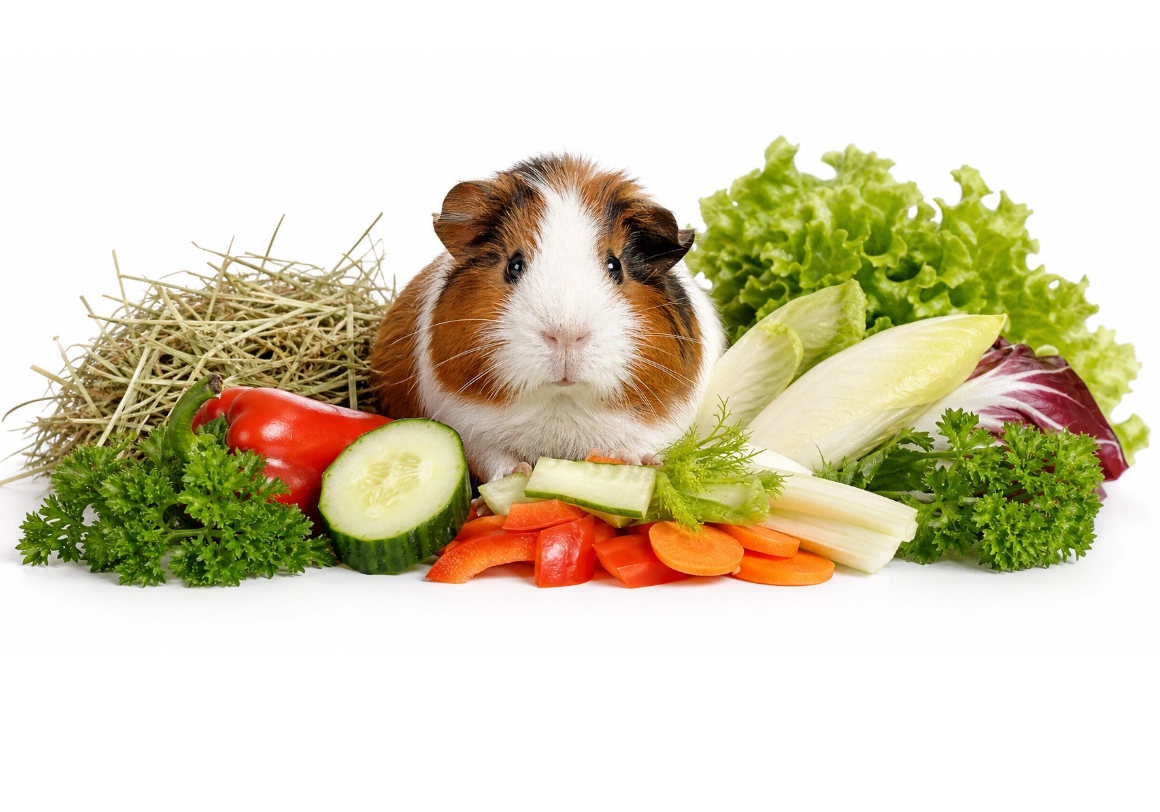 Vegetables are a valuable addition to the daily diet of guinea pigs. They provide variety, moisture, aroma, flavor, and nutrients. However, vegetables are not the main food. The foundation always remains plenty of guinea pig hay , supplemented with suitable guinea pig food and daily attention to vitamin C.
This guinea pig vegetable list helps you choose calmly: which vegetables can be given often, which are better given in moderation, and which products do not belong in the guinea pig enclosure. Always introduce new vegetables slowly, as guinea pigs' digestive systems need to adjust to change.
At DRD Knaagdierwinkel®, we view vegetables as part of the complete dietary routine. It’s not just a matter of asking “is it allowed?”, but also: how often, how much variety, how your guinea pig reacts to it, and does it fit alongside hay, guinea pig food, vitamin C, and any herbs?
✓ Hay always remains the main food
✓ Vegetables are supplementary and are introduced gradually
✓ Vitamin C remains important for guinea pigs on a daily basis
✓ Selected and explained by DRD Knaagdierwinkel® – Specialist since 2011
Quick links
Answer first • The basics • Vegetable list • In moderation • Do not give • Build up gradually • Vitamin C • Practical combinations • FAQ
Answer first: which vegetable can a guinea pig eat?
Guinea pigs may eat various types of vegetables, such as bell peppers, cucumber, chicory, endive, romaine lettuce, courgette, celery, and small amounts of broccoli or cauliflower leaves. Always give vegetables washed, fresh, and in suitable pieces.
Give vegetables high in calcium, sugar, acid, or gas-producing properties in moderation. Examples include parsley, kale, spinach, carrots, fruit, cabbage varieties, and tomatoes. Do not give certain products, such as onions, garlic, chives, leeks, potatoes, avocados, rhubarb, mushrooms, iceberg lettuce, and tomato leaves or stems.
Always keep an eye on your own guinea pigs. Does a guinea pig develop soft droppings, diarrhea, gas, a decreased appetite, or signs of abdominal pain after eating a specific vegetable? Then stop feeding that vegetable and consult a veterinarian if in doubt.
The basics: vegetables are supplementary, hay remains the main food.
A healthy guinea pig routine consists of plenty of hay, appropriate guinea pig food, daily vitamin C supplementation, water, and a moderate amount of vegetables. Vegetables provide variety and nutrients, but should not displace the intake of hay.
Always introduce new vegetables in small quantities. The guinea pig's gut flora needs time to adjust. Switching too quickly or giving portions that are too large can cause soft stools or intestinal problems.
Therefore, use vegetables as a daily supplement, not as a replacement for hay or guinea pig food.
Guinea pig vegetable list: often suitable as part of variety
The vegetables listed below are often used in a guinea pig diet. Do not give all of these types at once or in large quantities. Alternate gradually and observe your guinea pig's droppings, appetite, and reaction.
| Vegetables | Usage | Good to know |
|---|---|---|
| Paprika | Often suitable in small pieces | Known as a vitamin C-rich vegetable. Remove stem and seeds. |
| Cucumber | Often suitable, small portion | Contains a lot of moisture. Do not use as a main vegetable. |
| Chicory | Often suitable in variety | It is well eaten by many guinea pigs and is easy to portion. |
| Endive | Often suitable in variety | Build up gradually, especially with guinea pigs that are not used to much green fodder. |
| Romaine lettuce / cos lettuce | Often suitable in small portions | Choose romaine or cos lettuce rather than iceberg lettuce. |
| Zucchini | Suitable in small pieces | A mild vegetable to try in small quantities. |
| Celery | Small pieces, in moderation | Chop finely due to the fibrous structure. |
| Fennel | Small amount in variation | Aromatic; build up slowly and monitor reaction. |
| Radish leaf | Small amount in variation | Do not give too much at once; wash well. |
| Carrot foliage | Small amount in variation | Green leafy part of the root; wash well and build up gradually. |
Vegetables and fruit to give in moderation
Some vegetables are not “forbidden,” but require more attention. This can be due to calcium, sugar, acid, excessive moisture, or gas formation. Give these types in small portions, not too often, and always as part of a variety program.
| Product | Why in moderation? | Practical advice |
|---|---|---|
| Parsley | Rich in vitamin C, but also rich in calcium. | Small amount as a spicy addition. |
| Kale | Nutrient-rich, but not as a large daily portion. | Small portion and alternate with other vegetables. |
| Spinach | Rich in calcium and oxalate. | Sporadic and small, preferably not as a staple vegetable. |
| Broccoli | Can gasp up in some guinea pigs. | Small piece and pay close attention to the reaction. |
| Cauliflower leaf or small piece of cauliflower | May cause gas formation. | Small and not too often. |
| Cabbage varieties | Can cause gas formation. | Only small amounts if your guinea pig tolerates it well. |
| Root | Contains more sugar than many leafy greens. | As a small treat, not as a daily staple vegetable. |
| Tomato | Acidic and moist. | Only ripe fruit in small quantities; never leaves, stems, or plant parts. |
| Apple, pear, strawberry, kiwi | Fruit contains sugar. | Only as a small treat, not daily. Remove seeds and core parts. |
What should a guinea pig not eat?
The products listed below do not belong in the guinea pig enclosure. Has your guinea pig come into contact with something questionable or poisonous? Contact a veterinarian.
| Do not give | Why not? |
|---|---|
| Onion, garlic, chives and leek | Not suitable for guinea pigs. |
| Potato, potato peel and sprouts | Not suitable and better to avoid completely. |
| Avocado | Not suitable for guinea pigs. |
| Rhubarb and rhubarb leaves | Do not feed. |
| Mushrooms and champignons | Not suitable for guinea pigs. |
| Tomato leaf, tomato stem and tomato plant | The ripe fruit can be consumed in small quantities, but not the plant parts. |
| Iceberg lettuce | Better to avoid; choose romaine lettuce, cos lettuce, chicory, or endive instead. |
| Bread, cookies, breakfast cereals, pasta and processed human food | Not suitable for the guinea pig diet. |
| Dairy, yogurt drops and chocolate | Not suitable for guinea pigs. |
Introduce new vegetables gradually.
Give a new vegetable as a very small piece first. Do the droppings remain normal and is your guinea pig eating well? Then you can slowly increase the amount slightly. Do not give multiple new vegetables at the same time, because then you won't know where a reaction is coming from.
✔ Start with one new vegetable at a time.
✔ Start with a small piece.
✔ Pay attention to droppings, appetite, belly sounds, and behavior.
✔ Wash vegetables well and feed only fresh, clean parts.
✔ Remove leftovers from the enclosure on time.
Vegetables and vitamin C for guinea pigs
Guinea pigs cannot produce vitamin C themselves. Vegetables can contribute to vitamin C intake, especially vegetables such as bell peppers, parsley, broccoli, and certain types of cabbage. However, vegetables alone are not an exact source of vitamin C, as the amount of vitamin C varies by type, freshness, and portion.
Therefore, always use special guinea pig food and check if your guinea pig actually eats it. If in doubt, a targeted vitamin C product can be helpful, especially when your guinea pig is a picky eater, is recovering, or when a veterinarian recommends supplementation.
Read more: Vitamin C for guinea pigs: how much and what works? and Guinea pig food selection guide .
Practical combinations for the daily feeding spot
For the daily basics
Combine fresh vegetables with guinea pig hay , guinea pig food , and a designated water spot.
For picky eaters
Look for all-in-one guinea pig food so that every kibble has the same composition. Vegetables remain supplementary.
For foraging and sniffing
Mix small pieces of vegetables or herbs into hay or use a quiet feeding area. Also see guinea pig play and foraging .
For extra fragrance and variety
In addition to vegetables, use small amounts of guinea pig seasoning or fresh guinea pig seasoning .
DRD chooses: vegetables as an addition, not as a guessing list.
At DRD, we do not view a vegetable list as an invitation to try everything. A good guinea pig routine starts with hay, appropriate guinea pig food, vitamin C, water, and regularity. Vegetables add variety and nutrients to this.
That is why we opt for a calm classification: often suitable, in moderation, and do not give. This way, you can better decide what suits your guinea pigs without throwing the foundation off balance.
Checklist – safely feeding vegetables to guinea pigs
✓ Hay always remains plentiful.
✓ Use special guinea pig food as a base alongside hay.
✓ Give new vegetables one by one and in small pieces.
✓ Wash vegetables well and remove dirty or damaged parts.
✓ Remove leftovers from the enclosure on time.
✓ Give calcium-rich, sugar-rich, or gas-producing vegetables in moderation.
✓ Stop giving a vegetable if there are soft stools, diarrhea, gas, or a decreased appetite.
Good to know
This vegetable list is intended as a practical nutritional guide for healthy guinea pigs. Does your guinea pig have bladder problems, dental problems, is overweight, diarrhea, soft droppings, a poor appetite, or a medical history? Then consult a veterinarian regarding vegetables and vitamin C.
Is your guinea pig suddenly eating less, stopping eating, losing weight, or do you notice abnormal droppings? Then do not wait and contact a veterinarian.
Frequently asked questions about vegetables for guinea pigs
Which vegetable can a guinea pig eat every day?
Guinea pigs can be given a moderate amount of vegetables daily, provided they are accustomed to them. Bell peppers, chicory, endive, cucumber, and romaine lettuce are commonly used. Vary the types and do not always give just one type as the sole vegetable.
Can a guinea pig eat bell pepper?
Yes, guinea pigs can eat bell peppers. Bell peppers are known as a vitamin C-rich vegetable. Give small pieces and remove the stem and seeds.
Can a guinea pig eat cucumber?
Yes, cucumber can be eaten in small portions. Cucumber contains a lot of water and is therefore not a staple vegetable. Serve it as a variation alongside other vegetables.
Can a guinea pig eat carrots?
Yes, carrots are fine as a small treat. Because carrots contain more sugar than many leafy greens, it is better not to give them as the main daily vegetable.
Can a guinea pig eat broccoli?
Broccoli can be given in small quantities, but may cause gas in some guinea pigs. Build up gradually and stop if you notice soft droppings, gas, or discomfort.
Can a guinea pig eat lettuce?
Preferably choose romaine or cos lettuce and give small portions. It is better to avoid iceberg lettuce.
Can a guinea pig eat tomatoes?
A small piece of ripe tomato is acceptable, but give it in moderation. Never give tomato leaves, tomato stems, or other parts of the tomato plant.
Can a guinea pig eat fruit?
Fruit is only allowed as a small treat because it contains sugar. Think of a small piece of apple, pear, strawberry, or kiwi. Remove pits, core, and hard parts.
Which vegetables should a guinea pig not eat?
Do not give onion, garlic, chives, leek, potato, potato peel, avocado, rhubarb, mushrooms, champignons, iceberg lettuce, or tomato plant parts.
How much vegetables can a guinea pig have?
The amount depends on weight, condition, habituation, and the rest of the diet. Build up gradually and keep hay as the main food. In case of doubt, overweight, or intestinal problems, consult a veterinarian.
Can vegetables replace vitamin C?
Vegetables can contribute to vitamin C, but are not an exactly verifiable source. Always use special guinea pig food and, if in doubt, read our explanation regarding vitamin C.
Useful to look at as well
✓ Guinea pig food and nutrition
✓ All-in-one guinea pig food and pellets
✓ Guinea pig vegetable list with suitable vegetables, vegetables in moderation, and products to avoid
✓ With explanation about hay, guinea pig food, vitamin C, and gradually building up
✓ Practical for owners who want to vary safely without throwing the foundation off balance
✓ Ordered before 5 PM, shipped the same day
✓ Specialist since 2011
✓ Delivered from our own stock
Are you unsure about food, vegetables, or vitamin C for your guinea pigs? Feel free to contact us via our contact page . We are happy to help you.
