 Polski


Rabbit care: daily check, coat and nails
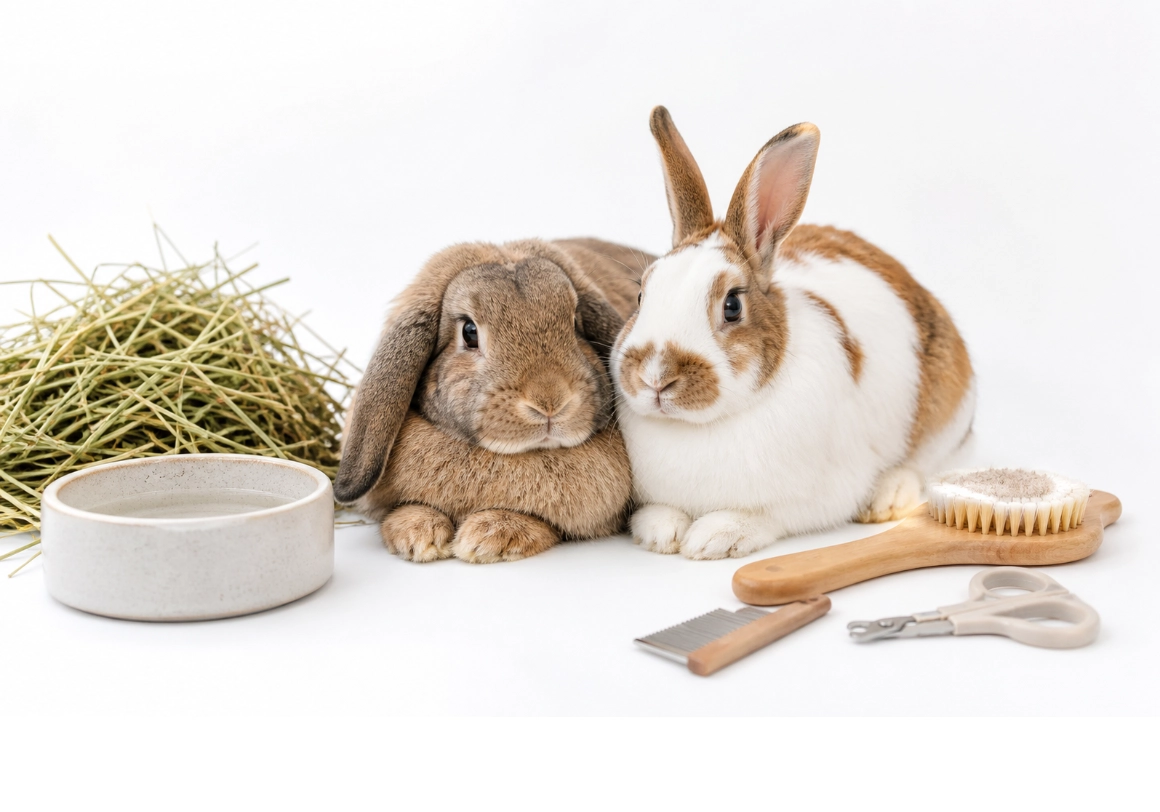 Caring for a rabbit goes beyond feeding and cleaning. It is precisely the small daily checks that provide a lot of information: is your rabbit eating well, is it producing normal droppings, is the coat staying clean, are the eyes clear, does your rabbit walk smoothly, and are the nails not too long? By checking these points regularly, you will notice changes more quickly.
This page is part of our Rabbit Information . Here you can read how to build up daily care, when coat or nail care is necessary, and when it is better to consult a rabbit-specialist veterinarian. Products can help with care and check-ups, but do not replace veterinary advice for health issues.
✓ In short: good rabbit care consists of daily checks of appetite, droppings, coat, posture, behavior, and the litter box.
✓ Check the coat and nails regularly. Long-haired rabbits, older rabbits, and rabbits with a dirty hindquarters require extra attention.
✓ Is your rabbit eating less, not pooping, in pain, drooling, or is the fur around its hindquarters dirty or wet? Contact a veterinarian specializing in rabbits.
Quick links:
Daily check-up · Coat care · Nail check · Rear end check · Eyes, ears, and nose · Picking & transport · When to see a vet? · FAQ
Daily signals
Appetite, droppings, posture, and behavior are often the first indicators of whether your rabbit is feeling different than normal.
Fur & rear end
A clean, dry coat around the hindquarters is important, especially in warm weather, for long-haired rabbits, and for soft droppings.
Nails & movement
Overly long nails can make walking less comfortable. Check them regularly and have someone show you how to trim them if you are in doubt.
Daily check: what to look out for?
The most important care begins with observation. You don't need to handle your rabbit extensively every day to see a lot. Check if your rabbit responds actively, eats hay well, produces normal droppings, and moves normally. Also check the litter box, water supply, and fur around the hindquarters.
A fixed routine helps. When you check roughly the same points every day, small changes stand out more quickly. This is important because rabbits often do not clearly show discomfort or illness.
Daily care check
✓ Does your rabbit eat hay well and take its normal food portion?
✓ Are the droppings normal in quantity, shape, and structure?
✓ Is the drinking water clean and easily accessible?
✓ Does your rabbit move normally and respond alertly?
✓ Is the fur around the hindquarters clean and dry?
✓ Are his eyes, nose, and ears clean?
✓ Are there no wet spots, odor, sores, or obvious behavioral changes?
Useful information pages: Rabbit droppings: what is normal? · Rabbit not eating · A rabbit's teeth
Coat care for rabbits
Rabbits groom their fur largely themselves. However, extra help may be needed, especially during shedding, for long-haired rabbits, older rabbits, or rabbits that do not keep themselves as clean. Check the fur for tangles, bald patches, flakes, wounds, wet spots, and dirt around the hindquarters.
Short-haired rabbits usually need some help, especially during shedding. Long-haired rabbits require more regular coat checks, as tangles form more easily. Comb gently and do not pull on tangles, as rabbits' skin is sensitive. In case of severe tangles, wounds, or pain reactions, it is advisable to seek help from a rabbit-specialist veterinarian or an experienced groomer.
Coat check in brief
✓ Check for loose hairs during shedding.
✓ Watch out for tangles in long-haired rabbits, especially around the hindquarters and flanks.
✓ Do not pull hard on tangles and comb gently.
✓ Check for bald spots, sores, scabs, scales, or redness.
✓ Ask for help if your rabbit is in pain, severely matted, or the skin appears damaged.
Checking a rabbit's nails
A rabbit's nails do not wear down sufficiently on their own in every rabbit. Indoor rabbits, older rabbits, or rabbits that do not walk much on rough surfaces can develop nails that are too long more quickly. Overgrown nails can affect walking and can get caught or tear.
Only trim nails when you know how to do so safely. Inside the nail is a living part with blood vessels and nerves. This is often easier to see in light-colored nails than in dark nails. If in doubt, have a veterinarian or experienced groomer demonstrate it first.
Nail check
✓ Regularly check that the nails are not getting too long.
✓ Watch out for crookedness, snagging, tearing, or nails that grow crooked.
✓ Do not cut into the quick of the nail.
✓ Have dark nails or first haircuts demonstrated if you are unsure.
✓ Stop when your rabbit is under a lot of stress and ask for help when necessary.
Rear end check: clean, dry, and free of sticky poop
A rabbit's rear end should be clean and dry. Sticky stool, urine in the fur, or a wet hindquarters are signs to be taken seriously. They can be related to diet, being overweight, pain, difficulty moving, dental problems, diarrhea, bladder problems, or an enclosure that is not kept properly clean.
During warm periods, extra monitoring is important because flies are attracted to dirty or wet fur. Do you see maggots, wounds, dirty wet fur, a lot of sticky droppings, or a rabbit that is not grooming itself properly? Then contact a rabbit-specialist veterinarian immediately.
Pay extra attention to
✓ Long-haired rabbits.
✓ Older rabbits or rabbits that move less smoothly.
✓ Rabbits with soft droppings or sticky poop.
✓ Overweight rabbits or rabbits with a thick coat.
✓ Warm periods when flies are active.
Useful information pages: Rabbit droppings: what is normal? · Litter training a rabbit · What does a rabbit eat?
Check eyes, ears, and nose
During daily care, you should also check the eyes, ears, and nose. The eyes should be clean and clear. The nose should be clean, and your rabbit should not be breathing audibly or with difficulty. Dirty ears, excessive head shaking, a tilted head, pus, swelling, or obvious irritation are also reasons to call a veterinarian.
If in doubt, do not clean deep inside the ears or eyes yourself. The skin and mucous membranes are sensitive, and the cause may be medical. You can safely point out visible dirt on the outside and report it to the veterinarian.
Check for
✓ Clear, clean eyes without pus or obvious irritation.
✓ A clean nose without much discharge.
✓ Normal breathing without an audible shortness of breath.
✓ No tilted head, excessive scratching, or excessive head shaking.
✓ No swelling, sores, pus, or sudden abnormal behavior.
Pick up, check and transport
Many rabbits find being picked up stressful. Therefore, it is preferable for checks to remain calm, predictable, and brief. Observe what you can see while your rabbit is sitting on the ground and only pick up your rabbit when necessary for care, a check, or transport.
For vet visits or emergencies, a sturdy transport box is important. If necessary, place the box open in the room beforehand so that your rabbit doesn't just see it as "something scary". Use a stable surface inside the box so that your rabbit does not slip during transport.
Practical for inspection and transport
✓ Keep checks short and calm.
✓ Support the body well when you need to lift your rabbit.
✓ Use a sturdy transport crate for vet visits.
✓ Ensure grip in the transport box.
✓ In case of emergency signals, do not take too long to try everything yourself first.
Useful shopping routes: Rabbit transport box · Rabbit bedding mats · Rabbit health
When should you call a veterinarian?
If you have any doubts about your rabbit's health, consulting a rabbit-specialist veterinarian is the right course of action. Especially if your rabbit is not eating, is defecating less, is puffed up, becomes lethargic, appears to be in pain, is drooling, has difficulty breathing, has a dirty, wet hindquarters, or shows signs of maggots or wounds, do not wait.
Recurring problems also deserve attention. Think of persistent sticky droppings, a frequently wet chin, recurring eye problems, difficulty walking, nails growing too long too quickly, fur that keeps tangling, or a rabbit that does not groom itself properly. In such cases, it is important to have the cause assessed.
Call the veterinarian if
✓ Eating little to nothing.
✓ No or significantly fewer droppings.
✓ Puffing out, lethargy, signs of pain, or teeth grinding.
✓ Drooling, wet chin, or difficulty chewing.
✓ Dirty wet hindquarters, sticky feces, wounds, or maggots.
✓ Shortness of breath, runny nose, pus near eyes or ears.
✓ Sudden different behavior that is out of character for your rabbit.
Checklist: caring for a rabbit
Handy grooming routine
✓ Daily: check appetite, hay intake, droppings, water, and behavior.
✓ Daily: check toilet area and buttocks for wet or dirty spots.
✓ Regularly: check the coat for loose hairs, tangles, wounds, or bald spots.
✓ Regularly: check nails for length, snags, or tearing.
✓ Regularly: assess eyes, ears, nose, and breathing.
✓ In case of change: review diet, droppings, teeth, stress, and living conditions together.
✓ If in doubt: contact a veterinarian specializing in rabbits.
Important to know
Grooming products help with combing, checking, keeping clean, and transporting, but they do not replace a veterinary check-up when your rabbit appears sick or shows signs of pain.
Is your rabbit not eating or barely eating, not defecating, does it have a dirty, wet hindquarters, or do you see maggots? Contact a rabbit-specialist veterinarian immediately.
Frequently asked questions about rabbit care
How do you care for a rabbit on a daily basis?
Check daily if your rabbit is eating well, producing normal droppings, has clean drinking water, is alert, and has a clean, dry coat around its hindquarters.
Do you have to brush a rabbit?
Short-haired rabbits need help, especially during shedding. Long-haired rabbits need to be checked and combed gently more often, as tangles form more quickly.
Can you wash a rabbit?
Don't wash a rabbit for no reason. A dirty hindquarters or sticky droppings often have a cause that needs to be addressed. Contact a veterinarian if the fur is wet and dirty, there is pain, or there is a lot of sticky droppings.
How often should you trim a rabbit's nails?
That varies by rabbit and surface. Check the nails regularly. Indoor rabbits or rabbits that do not walk much on rough surfaces can develop overgrown nails more quickly.
Can you trim a rabbit's nails yourself?
This is possible if you know how to do it safely. Do not cut into the quick. For dark nails or if in doubt, have a veterinarian or experienced groomer demonstrate it first.
Why is a dirty hindquarters on a rabbit dangerous?
A dirty or wet hindquarters can indicate nutritional, intestinal, bladder, dental, or mobility problems. Furthermore, during warm periods, a dirty coat attracts flies. Therefore, check this daily.
When should you take a rabbit to the vet?
Call a rabbit-savvy veterinarian if your rabbit is not eating, has no or fewer droppings, is lethargic, shows signs of pain, is drooling, has difficulty breathing, has a dirty, wet hindquarters, has wounds, maggots, or exhibits sudden changes in behavior.
Which products are useful for rabbit care?
Think of a sturdy transport box, a suitable comb or brush, grooming and hygiene products, floor mats, cleaning products, and products for daily necessities such as hay, feed, and water.
Continue reading within Rabbit Information
Do you want to learn to recognize daily signs better? Then also read Rabbit droppings: what is normal?, Rabbit not eating , and A rabbit's teeth . For nutrition and hay, you can read more at What does a rabbit eat? and the Rabbit hay selection guide . Or go back to the Rabbit Information .
Care and health at DRD Knaagdierwinkel®
At DRD Knaagdierwinkel®, you will find products that help with the daily care of rabbits: from hay, food, and water to litter boxes, litter bedding, cleaning products, floor mats, transport boxes, and grooming products. This allows you to keep the basics organized and notice changes more quickly.
✓ Products for daily care, hygiene, and control conveniently grouped together
✓ Practical shopping routes for coat, nails, grooming, transport, and health
✓ Specialist since 2011
✓ Delivered from our own stock
View now: Rabbit health · Rabbit transport box · Rabbit cleaning products · Rabbit toilets · Rabbit toilet bedding · Rabbit floor mats .
