 Polski

Dried Herb Roots for Guinea Pigs – Natural Chewing Fun!
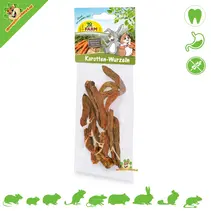
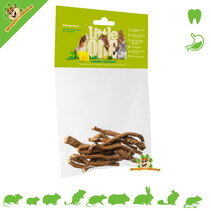
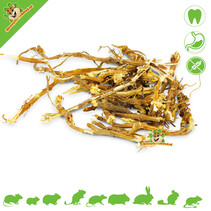
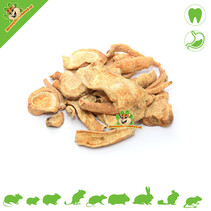
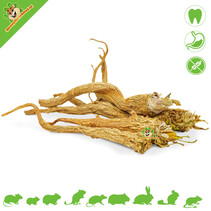
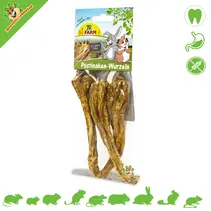

Dried guinea pig herb roots – firm texture for nibbling and exploring
 Dried guinea pig herb roots are sturdy plant-based treats for guinea pigs who enjoy sniffing, picking, and nibbling. Due to their harder texture, they often remain interesting longer than loose herbs, leaves, or flowers. You can offer them loose, place them near a hay corner, or use them as part of a quiet foraging session.
In this category, you will find dandelion root, parsley root, parsnip root, nettle root, and other dried root varieties, among others. They are intended as a supplement to the daily basis of guinea pig hay , suitable guinea pig food , and daily attention to vitamin C.
At DRD Knaagdierwinkel®, we view herb roots not as an ordinary snack, but as substantial enrichment with a clear function. They provide guinea pigs with something to quietly explore, occupy themselves with, and nibble on. This adds structure to the enclosure without making the basic diet unclear. Specialist since 2011.
Quick links:
Why herb roots? | Which ones do you choose? | How do you use them? | Combining with hay | Foraging | Storage & checking | Checklist | FAQ
Herb roots are sturdier than loose herbs, leaves, and flowers, allowing guinea pigs to spend more time on them.
Place a herb root by the hay corner, so that eating, sniffing, and nibbling come together.
Use herb roots as a natural search and discovery point in a low foraging area.
Why give dried herb roots to guinea pigs?
Dried herb roots provide guinea pigs with more solid structure in their enclosure. They are less fine than flowers or loose herbs and therefore require a bit more gnawing. This makes them suitable for guinea pigs who like to investigate, hold, move, or gently work on things with their teeth.
Herb roots are particularly interesting as a change of pace. Hay remains the most important daily source of chewing and fiber, while herb roots can provide an extra snacking opportunity. Therefore, use them as a supplement and not as a replacement for hay or guinea pig food.
Guinea pig herbs → | Dried guinea pig branches and stems → | Guinea pig gnawing material →
Which dried herb roots do you choose?
You choose the right herb root primarily based on scent, texture, and your guinea pigs' preference. Some roots have a more herbaceous scent, while others have a milder or sweeter aroma. Preferably, start with one type so you can clearly see which texture your guinea pigs find interesting.
✔ Dandelion root: a well-known herb root with a firm, aromatic texture.
✔ Parsley root: spicy aroma and interesting as a sturdy vegetable addition.
✔ Parsnip root: a firm root variety for guinea pigs who like to nibble.
✔ Nettle root: spicy and suitable as an alternative among herb roots.
✔ Carrot roots: recognizable plant-based nibble structure as an extra alongside hay and feed.
Do you want more variety within the same natural line? Then combine herbal roots with dried guinea pig leaves , dried guinea pig flowers , or dried guinea pig herbs .
How do you use dried herb roots?
Provide herb roots as a supplement. Place one or a few pieces loosely in the enclosure, near a hay corner, or at a designated sniffing spot. Because they are firm, your guinea pig does not need to eat them all at once. Smelling, moving them around, and occasional nibbling are also part of using them.
✔ Loose in the enclosure: as a simple nibbling and exploration point.
✔ At the hay corner: to naturally combine eating hay and nibbling.
✔ In a sniffing area: together with leaves, flowers, and herbs for more searching behavior.
✔ In small portions: it is better to have a small amount occasionally than to leave a lot uneaten at once.
Combine herb roots with hay
Hay remains the basis of the daily menu. You can use herb roots to make the hay corner more interesting. For example, place a piece of root partially among the hay so that your guinea pigs have to search for it and come across the material naturally while eating.
With multiple guinea pigs, it is wise to offer food in more than one place. This allows the animals to eat and sniff around more peacefully, without one guinea pig hogging all the interesting bits.
Guinea pig hay → | Guinea pig hay racks → | Guinea pig food bowls →
Use dried herb roots for foraging
Herb roots are suitable for quiet foraging moments. Hide a piece among hay, leaves, or herbs, or place it in a low search corner. Guinea pigs can then smell, search, and choose for themselves how to handle it.
Keep foraging areas for guinea pigs low and unobstructed. Use a hay corner, snuffle mat, treat board, or low search area rather than high or wobbly structures. Guinea pigs are ground-dwelling animals and often feel more comfortable when they can easily access the materials.
Guinea pig play & foraging → | Snuffle mats → | Guinea pig herbal toys →
Store, check and keep clean
Store dried herb roots in a dry, cool, and tightly sealed place. This helps preserve the aroma and texture better. It is better to give small amounts that you check regularly than a large amount of material that remains in the enclosure for a long time.
Check herb roots during cleaning. Remove wet, soiled, or heavily chewed pieces, especially if they are near a drinking area, litter box, or wet bedding. This keeps the enclosure fresh and tidy.
Cleverly combining dried herb roots
Herb roots combine nicely with hay, leaves, flowers, loose herbs, and branches or stems. Do you want more scent? Combine with herbs or flowers. Do you want more light texture? Use leaves. Do you want even more sturdy variety? Then also look at branches and stems or other gnawing material.
Dried guinea pig herbs → | Dried guinea pig leaves → | Dried guinea pig flowers → | Dried guinea pig branches and stems → | Guinea pig snacks →
DRD chooses: strong root structure as enrichment
At DRD, we view dried herb roots primarily as solid structural enrichment. They give guinea pigs something to explore, smell, and nibble on, without requiring you to change the daily diet.
The strength lies in the combination with other natural materials. Hay remains the base, herbs provide scent, leaves offer a light texture, flowers add color, and herb roots provide sturdier chewing material. This way, you build an enclosure that remains logical and interesting.
Checklist – using dried herb roots
✔ Use herbal roots as a supplement, not as a main food.
✔ Choose products intended for guinea pigs and small herbivores.
✔ Lay them down loose, near the hay corner or in a low sniffing spot.
✔ Offer enrichment in more than one place for multiple guinea pigs.
✔ Remove wet, dirty, or heavily gnawed pieces in time.
✔ Store dried herb roots in a dry, cool, and tightly sealed place.
Good to know
Dried herb roots do not replace hay, guinea pig food, or daily vitamin C. Introduce new types gradually and observe your guinea pigs closely to see how they react. Is your guinea pig suddenly eating less, not at all, or clearly differently than normal? Then contact a veterinarian.
FAQ – frequently asked questions about dried guinea pig herb roots
What are dried herb roots for guinea pigs?
Dried herb roots are firm plant root parts that you can give as a supplement. They are intended for sniffing, investigating, nibbling, and using for foraging.
What do you use herb roots for for guinea pigs?
You use herb roots as substantial enrichment alongside hay and guinea pig food. They provide texture, scent, and a natural nibbling opportunity in the enclosure.
Are herb roots a staple food for guinea pigs?
No, herbal roots are supplementary. The basis remains hay, suitable guinea pig food, water, and daily attention to vitamin C.
Which herb roots are suitable for guinea pigs?
Choose herb roots intended for guinea pigs and small herbivores, such as dandelion root, parsley root, parsnip root, nettle root, and other product varieties within this category.
How do you offer herb roots?
Place a small piece loose in the enclosure, near the hay corner, or in a low sniffing spot. It is better to give small portions that you check regularly than a lot at once.
Can you combine herb roots with hay?
Yes, that is a nice combination. Place a herb root partially mixed in with the hay so that your guinea pigs can search, smell, and nibble during hay time.
What is the difference between herb roots and branches?
Herb roots are dried root parts of plants. Branches and stems provide a more woody or stemmy structure. Both can be used as solid enrichment.
What do you do if your guinea pig leaves herb roots lying around?
That can happen. Try a different type, place it with the hay, or combine it with leaves, flowers, or herbs. Remove pieces if they become wet or soiled.
How do you store dried herb roots?
Store dried herb roots in a dry, cool, and tightly sealed place. This way, the aroma and texture are better preserved.
✔ Dried herb roots for guinea pigs to nibble, sniff, and forage
✔ Substantial structural enrichment alongside hay, herbs, leaves, and flowers
✔ Specialist since 2011, delivered from our own stock
Ordered before 17:00, shipped the same day | Delivered from our own stock | Specialist since 2011
