 Polski


Rabbit won't eat: why you need to act quickly
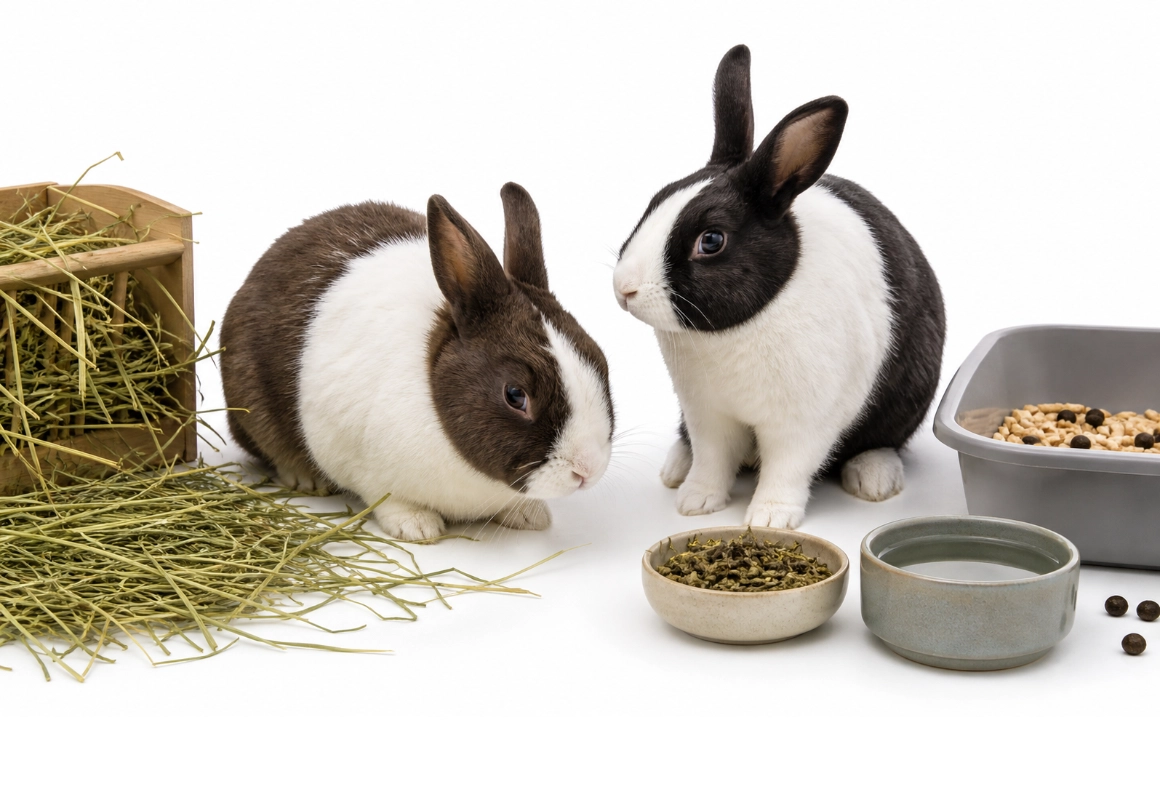 Is your rabbit not eating, or barely eating? Then that is an important signal. Rabbits are supposed to eat and produce droppings throughout the day. When a rabbit stops eating, the intestines can quickly become sluggish. Therefore, not eating in rabbits is not a situation to ignore for long.
This page is part of our Rabbit Information . Here you can read which signs you can check for yourself, when to call a rabbit-specialist veterinarian immediately, and how appetite relates to rabbit droppings , hay, teeth, stress, diet, and housing.
✓ In short: Is your rabbit not eating or barely eating? Contact a rabbit-specialist veterinarian immediately.
✓ Check immediately if your rabbit is still pooping, taking hay, drinking, responding alertly, and moving normally.
✓ Products can assist with daily care and the recovery routine, but do not replace an examination or advice from a veterinarian.
Quick links:
When is it an emergency? · What do you check? · Possible causes · Droppings & food · What can you do? · What is better not to do? · Daily routine · FAQ
Call immediately if not eating
If a rabbit is not eating or eating very little, it is important to contact a veterinarian quickly. Do not wait until the next day when eating and defecating stop.
Droppings tell a lot
No, fewer, or small hard droppings are important signals. Therefore, always check both food and droppings together.
No product solution
Hay, food, and grooming products support the routine, but do not independently resolve why a rabbit stops eating.
When is not eating an emergency for a rabbit?
Not eating can quickly become serious in rabbits. Contact a rabbit-specialist veterinarian immediately if your rabbit is eating little or nothing, producing no or significantly fewer droppings, sits still or puffed up, grinds its teeth, appears to have a hard or bloated abdomen, is lethargic, or is clearly reacting differently than normal.
Even when your rabbit still shows interest in food but stops after just one bite, that is a signal to pay close attention. Sometimes a rabbit wants to eat, but chewing is painful. Dental problems, stomach pain, stress, constipation, or other physical ailments can all affect appetite.
Call a rabbit-specialist veterinarian immediately at
✓ Not eating or barely eating.
✓ No or significantly fewer droppings.
✓ Small, hard droppings combined with reduced eating.
✓ Puffing out, lethargy, or withdrawn behavior.
✓ Teeth grinding, signs of pain, or not wanting to be touched.
✓ A hard, tense, or bloated stomach.
✓ Watery diarrhea, mucus, blood, or a dirty, wet hindquarters.
What do you check if your rabbit isn't eating?
While you are in contact with the veterinarian, you can take your time to gather information. This helps to clearly explain what is going on. Do not just look at the food bowl, but especially at the overall picture: hay, droppings, posture, behavior, drinking, belly, and any changes in the environment.
Quick checklist
✓ When did your rabbit last eat normally?
✓ Does your rabbit still eat hay, pellets, herbs, or nothing at all?
✓ Are there droppings? Are they normal, small, hard, soft, or fewer in number?
✓ Is your rabbit still drinking?
✓ Is your rabbit puffed up, still, stretched out, restless, or acting differently than normal?
✓ Are there signs of pain, such as teeth grinding or not wanting to be touched?
✓ Has anything changed: food, living conditions, stress, bonding, temperature, coat change, or medication?
✓ Has your rabbit recently gnawed on carpet, cardboard, rubber, plastic, or other material?
Useful information pages: Rabbit droppings: what is normal? · What does a rabbit eat? · Rabbit hay selection guide
Possible causes why a rabbit is not eating
A rabbit can stop eating for many reasons. Sometimes the cause lies in the stomach or intestines, sometimes in the teeth, stress, pain, lack of exercise, heat, a change in the enclosure, or something the rabbit has eaten or gnawed on. Therefore, it is important not to think solely of a “loss of appetite.”
You do not need to be able to determine the cause yourself. That is precisely the reason to call a rabbit-specialist veterinarian quickly. However, it does help if you can clearly explain what you see: since when has your rabbit been eating less, are there droppings, is the belly different, has there been stress, and what has your rabbit eaten?
Possible contributing factors
✓ Abdominal pain, gas, or sluggish bowels.
✓ Dental problems or pain when chewing.
✓ Stress, fright, moving, or change in residence.
✓ Too little exercise or low activity.
✓ Coat shedding, shedding, or a lot of loose hairs.
✓ Eating unsuitable material, such as carpet, rubber, or plastic.
✓ Underlying disease or pain elsewhere in the body.
Rabbit is not eating and is pooping less or not at all
Eating and defecating are closely linked in rabbits. If less food is consumed, you often see changes in the droppings as well. They may become smaller, harder, or less numerous. If no droppings appear at all, that is an important warning sign.
Therefore, always check the toilet area, bedding, or favorite defecation corner. Look at the quantity, shape, size, and texture. Note down what you see so that you can clearly communicate this to the veterinarian.
Pay attention to these poop signals
✓ No droppings.
✓ Much fewer droppings than normal.
✓ Small, hard droppings.
✓ Soft, wet, or sticky stools.
✓ Mucus, blood, or watery stools.
Handy shopping routes for the daily check: Rabbit toilets · Rabbit toilet bedding · Rabbit floor mats
What can you do while you are on the phone with the vet?
The most important thing is to contact a rabbit-specialist veterinarian as soon as possible. Additionally, you can observe your rabbit calmly and keep the basics comfortable. Offer fresh hay and clean water, keep your rabbit in a quiet environment, and prevent extra stress.
Note down what you see. When did your rabbit last eat? What was it still willing or unwilling to eat? Are there droppings? Has anything changed regarding food, enclosure, or behavior? This information helps the veterinarian assess what is needed more quickly.
Quiet first steps
✓ Call a veterinarian specializing in rabbits and explain the signs.
✓ Offer fresh hay and clean drinking water.
✓ Keep your rabbit calm and prevent extra stress.
✓ Check droppings, posture, belly, behavior, and appetite.
✓ Have a transport box ready when the veterinarian indicates that you need to come.
Handy shopping routes: Rabbit hay · Drinking bottles & water bowls · Rabbit transport box
What is better not to do?
When a rabbit stops eating, it is tempting to try all sorts of things. However, that is not always wise. The cause could be stomach pain, constipation, gas, dental pain, or something else. Therefore, contacting a veterinarian is important before you attempt self-treatment.
Better not to do
✓ Don't wait until tomorrow if your rabbit isn't eating or pooping.
✓ Do not keep trying different snacks instead of contacting the veterinarian.
✓ Do not administer medication that has not been prescribed by a veterinarian.
✓ Do not force-feed without consultation, especially when a blockage or severe abdominal pain is possible.
✓ Do not massage, heat, or treat if you do not know what is wrong and your rabbit appears to be in pain.
Daily routine to see changes faster
You cannot always prevent a rabbit from getting sick, but you can spot changes more quickly. A fixed routine with hay, appropriate food, clean water, a clear litter box, and daily droppings checks provides a lot of stability.
Check every day if your rabbit is eating normally, taking hay, responding actively, and producing normal droppings. Precisely because rabbits often show discomfort late, daily checks are important.
Daily health check
✓ Is good hay being eaten?
✓ Has the daily food portion been eaten normally?
✓ Are there normal droppings?
✓ Is the drinking water clean and accessible?
✓ Is your rabbit alert and moving normally?
✓ Is the fur around the hindquarters clean and dry?
Handy shopping routes for daily essentials: Rabbit hay · Rabbit food · Rabbit litter boxes · Rabbit health
Frequently asked questions about a rabbit that isn't eating
My rabbit isn't eating, what should I do?
Contact a rabbit-specialist veterinarian immediately. In the meantime, check if your rabbit is still defecating, eating hay, drinking, and responding normally.
How long should a rabbit not eat?
Do not wait too long. Not eating or eating very little is quickly a cause for concern in rabbits, especially when there are no or fewer droppings. Call a veterinarian specializing in rabbits for advice.
My rabbit doesn't eat hay but does eat snacks, is that bad?
Yes, that is a signal to take seriously. Hay should be the daily staple. If your rabbit eats little or no hay, check food portion, hay, teeth, stress, and droppings. If in doubt, call the vet.
My rabbit isn't eating or pooping; is that an emergency?
Yes. Not eating combined with no or significantly fewer droppings is a major warning sign. Contact a rabbit-specialist veterinarian immediately.
My rabbit is eating, but less than usual. What should I do?
Check hay intake, droppings, posture, drinking behavior, and activity. Is it deteriorating rapidly, is your rabbit barely eating, or are the droppings noticeably changing? Then call the veterinarian.
Can stress cause a rabbit not to eat?
Yes, stress can affect appetite. Think of moving, loud noises, bonding, heat, anxiety, or a change in living environment. Even then, eating less remains a signal to pay close attention and to call the vet if in doubt.
Can tooth pain cause a rabbit to stop eating?
Yes, dental problems or pain while chewing can cause a rabbit to show interest but stop after taking a bite. Have this assessed by a veterinarian specializing in rabbits.
Can I force-feed my rabbit myself?
Do not do this without consulting a veterinarian. In some cases, such as severe abdominal pain or a possible blockage, incorrect treatment can pose risks. Call a veterinarian specializing in rabbits first.
Continue reading within Rabbit Information
Do you want to better understand the connection between food and droppings? Then read Rabbit Droppings: What Is Normal? . For the nutritional basics, you can read on at What Does a Rabbit Eat? , the Rabbit Hay Selection Guide , and the Rabbit Food Selection Guide . Or go back to the Rabbit Information .
Products for the daily care routine
At DRD Knaagdierwinkel®, you will find products that help with the daily rabbit routine: hay, suitable rabbit food, drinking facilities, litter boxes, litter box bedding, transport boxes, and grooming products. These products are intended to keep the basics in order and to notice changes more quickly, not to treat a sick rabbit independently.
✓ Hay, feed, water bowls, and litter boxes neatly arranged together
✓ Practical shopping routes for daily check-ups and care
✓ Specialist since 2011
✓ Delivered from our own stock
View now: Rabbit hay · Rabbit food · Drinking bottles & water bowls · Rabbit litter boxes · Rabbit transport box · Rabbit health .
