Polski

Gerbilscaping for Gerbils! Create the Perfect Habitat for Your Gerbil
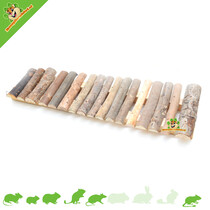
Sturdy wooden ladder and bridge of approx. 30 cm with mounting hooks. For low routes, platforms, small bridges, and natural furnishings for mice, hamsters, gerbils, rats, and degus.
Read more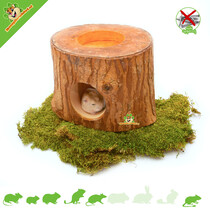
Compact hollowed-out mahogany tree trunk. Nail-free, with an open bottom, two openings, and a roof recess for herbs or treats. Beautiful for hamsterscaping and gerbilscaping.
Read more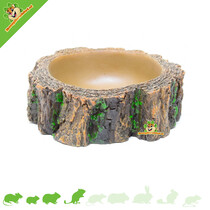
Natural-looking resin food bowl in a tree trunk style. Beautiful for hamsterscaping and gerbilscaping, with a smooth interior and compact size for mice, dwarf hamsters, hamsters, and gerbils.
Read more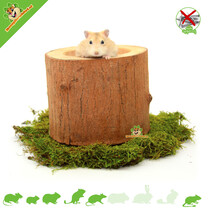
Natural mahogany cup of approx. 10 cm. Can be used as a snack bowl, herb bowl, foraging cup, or small scavenger hunt bowl for rodents and rabbits.
Read more- Voor 17 uur besteld, dezelfde dag verzonden!
- Rodent specialist since 2011
- Dispatched from our own stock
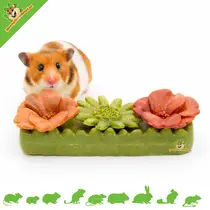
Veggie Bites Flowers are fully edible flowers made from natural ingredients. A healthy, fiber-rich snack for rodents and rabbits that keeps them occupied and tastes good.
Read more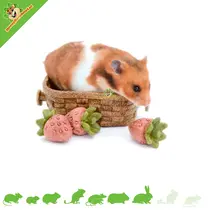
Delicious strawberry-shaped Veggie Bites in an edible basket. Everything is completely edible and made with natural ingredients. Healthy nibbling fun for all rodents and rabbits!
Read more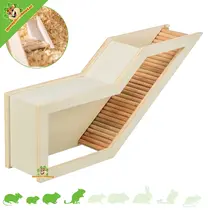
Stylish and elevated hiding place with a viewing opening and non-slip ladder. Ideal as a resting or lookout spot for hamsters, mice, and gerbils. Made of untreated wood.
Read more
Dried wavy sea lavender for hamsterscaping, gerbilscaping, and natural scaping. Beautiful as a decorative floral accent, for sniffing enrichment, and to add structure to the enclosure.
Read more- Voor 17 uur besteld, dezelfde dag verzonden!
- Rodent specialist since 2011
- Dispatched from our own stock
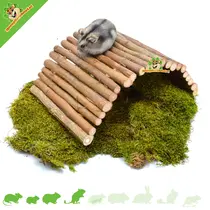
Flexible willow bridge measuring approx. 28 × 17 cm. Can be used as a bridge, tunnel, hiding place, stepping stone, or small landscaping wall for small rodents.
Read more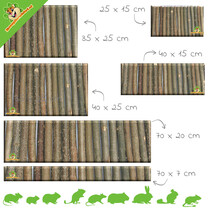
Flexible willow bridge in multiple sizes. Can be used as a bridge, tunnel, shelter, stepping stone, or natural barrier for rodents and rabbits.
Read more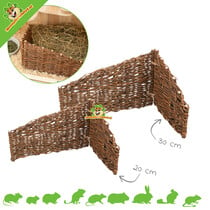
Natural willow wood corner wall to delineate bedding, hay, or landscaping zones. Available in 20 and 30 cm. Ideal for hamster landscaping, gerbil landscaping, hay corners, and natural decor.
Read more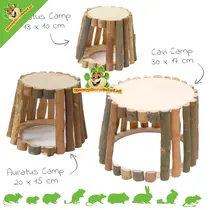
Natural willow house in 3 sizes. For shelter, exploration, nibbling, and extra structure in the enclosure. Choose Culatus, Auratus, or Cavi Camp to suit the size of your animal.
Read more- Voor 17 uur besteld, dezelfde dag verzonden!
- Rodent specialist since 2011
- Dispatched from our own stock
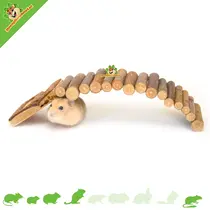
Bendable willow ladder/bridge of 27 cm for mice, dwarf hamsters, hamsters, gerbils, and degus. Can be used as a bridge, hiding place, stepping stone, wall, or gnawing material.
Read more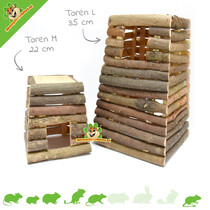
Natural willow tower in size M or L. For sheltering, exploring, climbing, nibbling, and providing extra structure in the enclosure of mice, hamsters, gerbils, rats, chinchillas, and degus.
Read more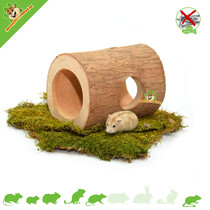
Robust mahogany log tunnel with a side opening and flattened bottom. For mice, dwarf hamsters, hamsters, gerbils, rats, and degus.
Read more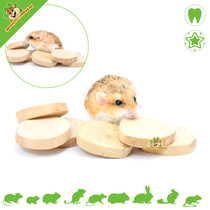
Let your rodents and rabbits enjoy natural gnawing fun with our Wooden Coffeewood Discs! This set of 8 discs offers delicious gnawing material for all rodents and rabbits. Made of coffeewood, this material is particularly suitable for animals with sensiti
Read more- Voor 17 uur besteld, dezelfde dag verzonden!
- Rodent specialist since 2011
- Dispatched from our own stock
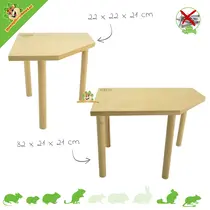
Wooden Getzoo corner platform in 2 variants: compact 22 × 22 × 21 cm or longer 32 × 22 × 21 cm left. Ideal as a stable place for a sand bath, food bowl, water bowl, or exercise wheel.
Read more
Wooden bridge of approx. 25 × 10 × 16 cm for mice, dwarf hamsters, hamsters, and gerbils. Can be used as a bridge, route, climbing structure, and sheltered spot in a natural setup.
Read more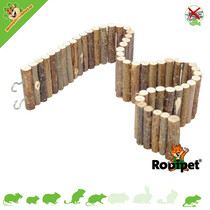
This hazelnut bridge from Rodipet is particularly suitable for small rodents. The bridge actually has no function for larger rodents. Thanks to the nice length of approximately 63 cm, you can go in any direction with the bridge. The bridge can be used as
Read more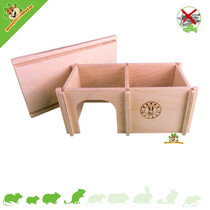
Compact wooden Getzoo multi-chamber house of approx. 23 × 13 × 10 cm with 2 chambers, open bottom, removable roof, and spacious entrance of Ø 8 cm. For mice, dwarf hamsters, hamsters, and gerbils.
Read more- Voor 17 uur besteld, dezelfde dag verzonden!
- Rodent specialist since 2011
- Dispatched from our own stock
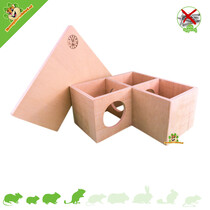
Spacious wooden Getzoo multi-chamber corner house of approx. 26 × 26 × 13 cm with 3 chambers, open bottom, removable roof, and openings of Ø 7 cm. For mice, dwarf hamsters, hamsters, and gerbils.
Read more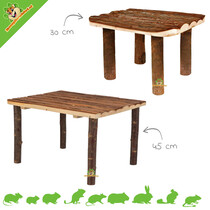
Wooden platform made of bark wood in 30 and 45 cm. For mice, hamsters, gerbils, rats, guinea pigs, and rabbits as a raised platform, hiding place, or stable feeding spot.
Read more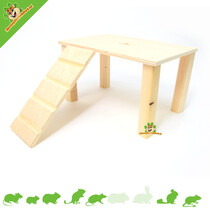
Wooden platform with stairs, 28 cm, for mice, dwarf hamsters, hamsters, gerbils, and rats. Handy as an extra surface for a food bowl, water bowl, or route.
Read more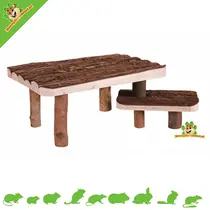
37 cm wooden platform for added height, hiding space, and a natural design. Can be used as a platform, resting place, hiding spot, or base in hamsterscaping and gerbilscaping.
Read more
Gerbil scaping starts at DRD Rodent Shop! Order everything for the Gerbil Scape quickly and easily at the DRD Gerbil Webshop !
Gerbil scaping is the natural and smart design of a gerbil's habitat , with one clear goal: to give your gerbils the opportunity to do what they're naturally good at: digging, building tunnels, gnawing, collecting, and exploring . The result is not only a beautiful scape, but above all, an enclosure that provides tranquility and daily activity.
At DRD Rodent Shop®, you'll find gerbil scaping products that complement each other perfectly: from diggable bedding to tunnels , houses , and forage enrichment . We've been specializing in rodents and rabbits since 2011 .
The soil is the core: choose diggable and buildable, so that tunnels can remain standing.
Gerbil bedding → | Digging grounds →
Combine tunnels, (multi-room) houses and natural shapes for peace and structure in the landscape.
Houses → | Tunnels →
Add a sandbox, gnawing material and foraging activities to keep the scape interesting every day.
Sandbox → | Play & Forage →
What is gerbil scaping?
Gerbil scaping is the creative and functional design of a gerbil enclosure using materials that reflect natural behavior. Think of a deep digging layer, safe tunnels and hiding places, plus enrichment such as a sandbox and foraging items. Many owners opt for a "natural look" with natural products (e.g., wood, moss, and fiber materials), as long as everything is animal-safe .
The basics: ground cover that can support tunnels
Gerbils are real diggers. A gerbilscape should therefore start with gerbil bedding that provides volume and preferably allows for tunnels. In practice, a deep layer works best: the more space there is for digging, the better your gerbils can create their own routes.
Practical guideline
✔ Choose a diggable soil and make it deep (think of ±20 cm or more if your accommodation allows it).
✔ Mixing is allowed: combining can provide extra stability and structure.
✔ Work in layers: firmer at the bottom, airier at the top for the “construction”.
Popular mix ideas often used in landscapes: Cotton & Cotton , Cotton & Hemp , and Cotton & Wood Fiber . Want extra "natural touches"? Then also consider moss (only if it's truly suitable for animal enclosures).
Building with houses & tunnels: rest, routes and storage places
A good gerbil enclosure offers multiple hiding places. Use houses and tunnels so gerbils can choose: sleep, hide, or store food. For social animals, it's often helpful to have multiple hiding places , so there's always a quiet option.
- Multi-room cottages are popular: sleeping in one room, storage in the other.
- Use routes : tunnel → house → sandbox, so that the scape “walks”.
- Want to add height? Do so in a controlled manner using platforms and ladders (stable and securely placed).
Enrichment: sandbox, gnawing material & foraging
A scape only becomes truly enjoyable when there's something to do every day. So, focus on three pillars: a sandbox (rolling/occupation), gnawing material (natural gnawing behavior), and playing & foraging (searching, sniffing, puzzling). This way, you use food and snacks more intelligently: not as a "perk," but as an activity.
Checklist – Gerbil scaping in 6 practical steps
✔ Choose a suitable accommodation with room for depth.
✔ Create a deep, diggable base – ground cover .
✔ Place multiple houses and tunnels for routes and rest.
✔ Add a sandbox and position it stably.
✔ Provide gnawing material and change it regularly.
✔ Make it interactive with foraging (hiding, searching, puzzles).
Safety
Use only materials intended for animal enclosures. Avoid decorative items (not designed for animals), lacquered/painted items, and small, loose parts. Place heavy objects (such as an exercise wheel) on a stable platform , not loosely on unstable substrates, so digging doesn't create a risk of getting trapped. Never pick up gerbils by their tails. If you have any questions about furnishing or product selection, we're happy to help you via our service page .
FAQ – Gerbilscaping
Where do I start with gerbil scaping?
Always start with the substrate: a deep, diggable substrate . Then build structure with tunnels/houses and add enrichment (sandbox, gnawing material, foraging).
How deep should the ground cover be?
The more burial space, the better. A practical base of approximately 20 cm or more often works, depending on the enclosure. More important than the exact number: the ground must be excavatable and preferably able to support tunnels.
Which materials should I avoid?
Avoid lacquered/painted materials, loose decorative items, sharp edges, and small parts that could be swallowed. Instead, choose products specifically designed for rodents and gerbil habitats.
How often do I change a gerbil's cape?
Small adjustments (changing routes, introducing new gnawing material, or foraging assignments) can be made regularly. Major maintenance should be done gradually to maintain group familiarity and minimize stress.
✔ Gerbil scaping is all about digging, routes and resting places
✔ Deep excavation layer + houses/tunnels + enrichment = strong base
✔ Specialist since 2011
Order before 5 PM, shipped the same day | Delivered from our own stock | Specialist since 2011