 Polski

Hamsterscaping: natural design for hamsters (golden hamster & dwarf hamster)
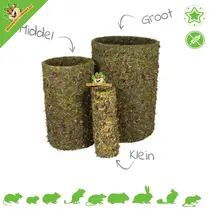
Natural nibble and hiding roll with mountain meadow hay, marigold, and rose blossom. Available in small, medium, and large.
Read more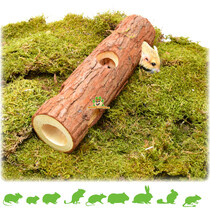
The Hollow Tree Trunk is a nice wooden tree trunk that is hollow on the inside. Made from untreated German natural wood. Wonderful to play with, walk through and of course nibble on. Thanks to this fun activity toy you can keep your rodent active and heal
Read more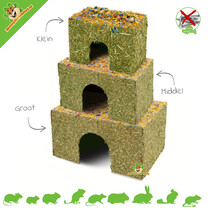
Natural hay house with floral topping for sheltering, nibbling, and exploring. Available in small, medium, and large.
Read more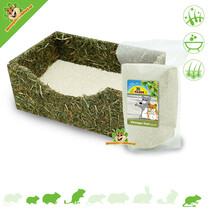
Natural sand bath with hay trim and 350 grams of bath sand. Fun for hamsters, dwarf hamsters, mice, and gerbils to bathe, dig, and explore in.
Read more- Voor 17 uur besteld, dezelfde dag verzonden!
- Rodent specialist since 2011
- Dispatched from our own stock

The Mr. Crumble Parsley Igloo is an edible house in the shape of an Igloo. The house is made entirely of parsley and has an open bottom. Small rodents love hiding places and will gladly use the house to hide in. We often see that small rodents want to nib
Read more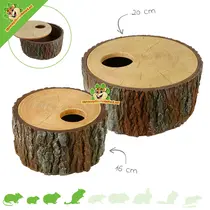
Resin tree trunk hideout with removable roof for mice, dwarf hamsters, small hamsters, and gerbils. Available in two sizes.
Read more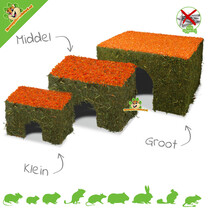
Natural hay house with carrot topping for sheltering, nibbling, and exploring. Available in small, medium, and large.
Read more
Nail-free wooden multi-chamber house of approx. 20 cm for mice and dwarf hamsters. With two chambers, an open bottom, and a natural look for hamsterscaping.
Read more- Voor 17 uur besteld, dezelfde dag verzonden!
- Rodent specialist since 2011
- Dispatched from our own stock

Nail-free wooden corner multi-chamber house of approx. 24 cm for mice, dwarf hamsters, and gerbils. With an open bottom, two chambers, and ø 6 cm openings.
Read more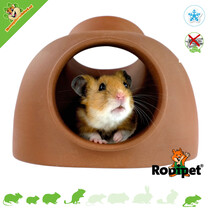
The Rodipet EasyClean Ceramic Igloo is made of high-quality and durable ceramic. The house was developed based on observations in the northern Syrian agricultural steppe during the Rodenti® expeditions in 2007, 2009 and 2010. The researchers looked at how
Read more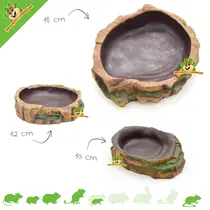
Natural-looking resin bowl for food, water or sand. Choose 10 or 12 cm for small rodents; 18 cm also as a sand bowl or food bowl for degus.
Read more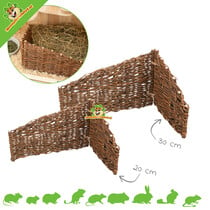
Natural willow wood corner wall to delineate bedding, hay, or landscaping zones. Available in 20 and 30 cm. Ideal for hamster landscaping, gerbil landscaping, hay corners, and natural decor.
Read more- Voor 17 uur besteld, dezelfde dag verzonden!
- Rodent specialist since 2011
- Dispatched from our own stock
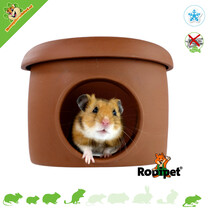
The Rodipet EasyClean Ceramic House is made of high-quality and durable ceramic. The house was developed based on observations in the northern Syrian agricultural steppe during the Rodenti® expeditions in 2007, 2009 and 2010. The researchers looked at how
Read more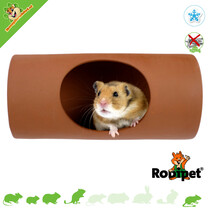
The Rodipet EasyClean advance TERRA Ceramic Tube is made of high-quality and durable ceramic and can be used as a coupling system to create a beautiful underground castle for your rodent. The tube can be connected to the other Rodipet EasyClean Ceramics p
Read more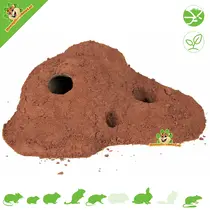
Digging sand with clay for natural landscaping, hamsterscaping, and gerbilscaping. Stays in place better near tunnels and burrows. 5 kg is approx. 5 liters.
Read more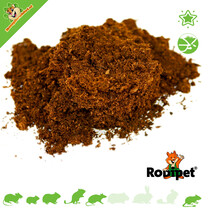
Peat is specially prepared for small rodents. Peat for rodents is very natural and ideal as bedding or for a diggable environment such as a digging pit or natural landscaping (bioactive). All burrowing rodents, such as hamsters, mice, rats, etc., have a n
Read more- Voor 17 uur besteld, dezelfde dag verzonden!
- Rodent specialist since 2011
- Dispatched from our own stock
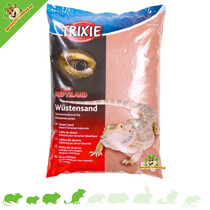
Red desert sand, 5 liters/5 kg, for mice, dwarf hamsters, hamsters, and gerbils. Beautiful as a sand zone, digging area, or color accent in a natural scape.
Read more
Organic coconut fiber humus for hamsterscaping, gerbilscaping, digging zones, and plant zones. Apply 7–8 times and is free of peat and fertilizers.
Read more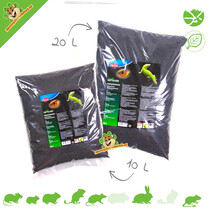
Organic humus for digging zones, planting zones, and natural landscapes. Great for hamsterscaping, gerbilscaping, ratscaping, and rabbit digging boxes.
Read more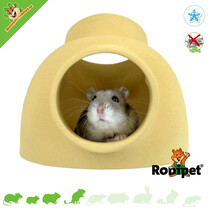
The Rodipet EasyClean GOBi Ceramic Igloo is made of high-quality and durable ceramic. This house was developed based on observations made in the Mongolian Gobi during the Rodenti® expeditions in 2008 and 2016. These observations are the basis for the deve
Read more- Voor 17 uur besteld, dezelfde dag verzonden!
- Rodent specialist since 2011
- Dispatched from our own stock
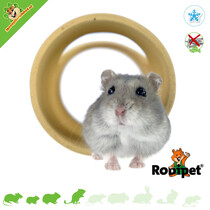
The Rodipet EasyClean advance TERRA Ceramic Tube is made of high-quality and durable ceramic and can be used as a coupling system to create a beautiful underground castle for your rodent. The tube can be connected to the other Rodipet EasyClean Ceramics p
Read more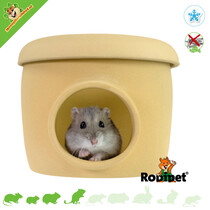
The Rodipet EasyClean GOBi ceramic house is made of high-quality and durable ceramic. This house was developed based on observations made in the Mongolian Gobi during the Rodenti® expeditions in 2008 and 2016. These observations are the basis for the deve
Read more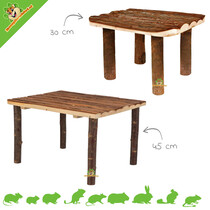
Wooden platform made of bark wood in 30 and 45 cm. For mice, hamsters, gerbils, rats, guinea pigs, and rabbits as a raised platform, hiding place, or stable feeding spot.
Read more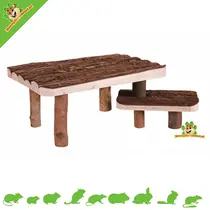
37 cm wooden platform for added height, hiding space, and a natural design. Can be used as a platform, resting place, hiding spot, or base in hamsterscaping and gerbilscaping.
Read more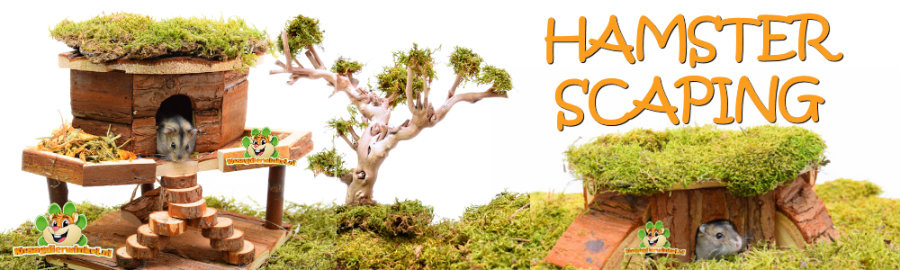
Hamsterscaping: natural design for your hamster (hamster cage & terrarium)
 Hamsterscaping is the natural and clever way to furnish a hamster cage or terrarium as a mini-landscape: with a deep digging layer, safe hiding places, a sand bath, and foraging areas. It not only looks great, but above all, it makes the habitat natural for your hamster: digging, hiding, gathering, and foraging as it naturally does.
At DRD Rodent Shop®, we help you choose the right rodent products that work in practice. From tunnel-resistant bedding to the right sizes for houses and exercise wheels . Specialists since 2011 – with a focus on well-being, safety, and a habitat that's easy to maintain.
Getting started with hamster scaping: here's how to do it smartly
The most beautiful hamster habitat doesn't start with "more decor," but with a solid foundation. First, choose a suitable enclosure , then build the digging layer , and finally create zones with houses , tunnels , a sand bath , and foraging areas.
Whether you want a tranquil "desert look" or a more "forest" scape with moss and cork, the basics remain the same. If the foundation is right, your hamster will naturally do more: dig, drag, hoard, and run trails.
Also view our range of Hamsterscaping Moss .
Think in zones: this is how your hamster cage becomes logical
A hamster feels most comfortable in an enclosure that's "full" and organized. You can achieve this by creating zones:
- Resting zone (nest/sleeping): main house + nesting material, preferably sheltered.
- Digging zone : the deepest part of the ground cover, this is where tunnels and storage areas are created.
- Sand bath zone : a permanent place for bathing (and often also as a toilet area).
- Foraging zone : scatter feeding, snack areas, search and play materials.
Tip: Create routes between areas with natural tunnels and shelters. This creates peace and quiet, as your hamster will find shelter to move around.
Excavation layer & ground cover: the difference between "nice" and "working"
Hamster scaping depends entirely on the digging layer. Many hamsters love to dig, but they'll stop if the tunnels collapse immediately. Therefore, it's best to choose substrate that is tunnel-resistant and comfortable to the touch. See: Hamster substrate .
How deep?
A common guideline for hamster scaping is a 20–30 cm digging layer (deeper is fine if your enclosure allows it). More important than the number: can your hamster create tunnels that stay put without you having to "push" everything down?
Construction in 4 steps
- Base layer : Fill the enclosure with a comfortable main bedding.
- Texture : Add a second texture (where needed) for grip and strength.
- Zone depth : make one corner really deep (digging zone) and keep the resting zone a little more stable/compact.
- Nesting material : Always add enough nesting material so your hamster can build a warm nest.
Extra fun (and functional): mix or layer ground coverings. This creates variety in texture and allows you to visualize zones. For inspiration, you can also look at tags like wood fiber and paper .
Houses & shelters: why multiple places work better
Hamsters don't like open spaces. They're most relaxed when they have a choice of multiple hiding places. Consider a main house (e.g., a multi-room house) plus additional hiding routes and "stopovers." See: Hamster Houses .
- Multi-room houses : popular because hamsters often create a “bedroom” and “pantry.”
- Ceramics/terracotta : nice as a cool shelter (also in warmer periods).
- Cork/tree trunk : ideal as a route and shelter at the same time.
When choosing a cage, consider the size (especially for golden hamsters). More space is almost always acceptable – the cage should remain practical: hamsters can enter, turn, build a nest, and store supplies.
Tunnels, routes & natural materials: an atmosphere that really makes a difference
In hamster scaping, natural materials aren't just "decorative." They help you build routes, define zones, and safely fill the enclosure. Useful starting points: cork tunnels , tree trunk tunnels , vines , and moss .
Tip: Use "under and around" techniques. So: a tunnel under a canopy, a route along a cork piece, and a hiding place behind a house. This way, your hamster can move around without feeling "out in the open."
Sand bath: permanent scape zone for coat care
A sand bath is a permanent feature in many hamster scaping setups. Ideally, create a single, well-defined area (this also helps with your maintenance routine). See: Hamster sand & sand baths .
Practical: You can sift the sand occasionally (depending on use). A sieve is useful for removing small debris.
An exercise wheel in a hamster scape: size and stability
An exercise wheel is an important part of many hamsters' daily routines. In hamster scaping, placement is especially important: a deep digging layer can sink, so ensure a stable base. See: Hamster exercise wheels .
- Dwarf hamster : a minimum of 20 cm is often recommended.
- Golden hamster (Syrian hamster) : often at least 28 cm for comfortable running.
Many people find a wooden wheel attractive in a natural setting. It looks great and can be pleasant to the touch. See also: wooden exercise wheels .
Foraging: The simplest upgrade with the biggest effect
Want your hamster to be "more hamster"? Let them forage. Instead of putting everything in one bowl, you can scatter (some of) the food in the digging layer, under a bridge, or among natural features. This encourages foraging and instantly makes your scape more interesting. See: Play & Foraging .
Handy additions to your scape: gnawing material (natural nibbling) and herbs & seeds (tasty to sprinkle).
(Fresh) plants in hamster scaping: atmosphere and distraction
Fresh plants instantly give a scape a natural look. Use them as decor, as greenery for nibbling, or as a sniffing corner. Ideally, choose plants intended for small animals and place them securely to prevent too much soil from seeping into the enclosure. See: Fresh hamster plants .
Maintenance & spot cleaning: how to keep your hamster scape fresh
The great thing about hamster scaping is that you usually don't have to replace "everything" all the time. You work in zones and do primarily spot cleaning : cleaning locally where necessary.
Hamster Scaping Safety: You Really Want to Get This Right
A scape is only successful if it's safe. With a few simple choices, you can prevent risks and ensure your design remains stable in the long run.
Checklist: hamsterscaping basic set
Hamsterscaping manual
Want a practical step-by-step guide to get you started right away? Check out our manual – handy if you're building your first hamster enclosure or upgrading an existing one.
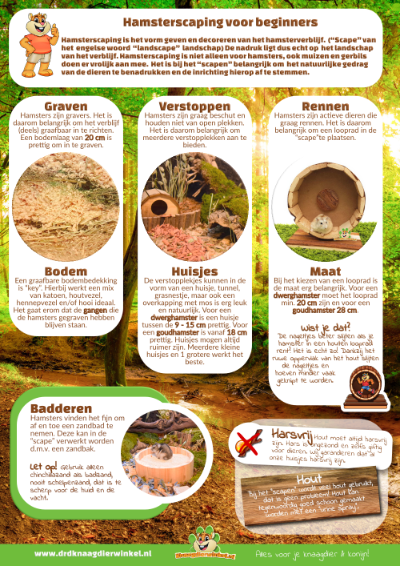 Click on the image to open the manual
Frequently Asked Questions about Hamster Scaping
What exactly is hamsterscaping?
Hamsterscaping is the natural design of a hamster cage or terrarium as a mini-landscape with zones: digging layer, hiding places, sand bath, and foraging areas.
What substrate is suitable for hamster scaping?
Choose substrate that supports digging and helps tunnels "stand." In practice, a combination of structure and volume often works best. See: hamster substrate .
How deep should the excavation layer be?
A commonly used guideline is 20–30 cm, but the most important thing is that the soil allows for tunnels and does not collapse immediately.
Which materials are suitable for a natural hamster scape?
Cork, tree trunk tunnels, grapevine, and hamster-safe moss are popular choices for routes, hiding places, and finishing touches. Start with: cork tunnels and grapevine .
How many hiding places does a hamster need?
A main house plus several hiding places usually works best. This way, your hamster can choose where to rest and how to move around. See: hamster houses .
Can hamster scaping also be done in a glass cage/terrarium?
Yes, that's right. In a glass enclosure, you can often easily add deep ground cover and create zones. See: hamster cages & terrariums .
What is spot cleaning?
Spot cleaning is localized cleaning: removing wet spots, checking storage areas, maintaining the sand bath/walking wheel, and replacing only what is absolutely necessary.
