 Polski

Rat Digging Box – Digging & Sniffing Enrichment for Pet Rats (Natural, Play Box, or Bio Bin)
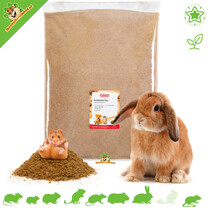
Clean, washed, and slightly damp play sand for rodents and rabbits. For digging boxes, play areas, plant zones, and natural landscaping. Not suitable as chinchilla sand.
Read more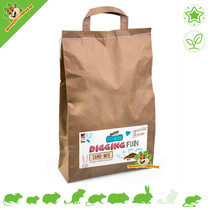
Play sand mix for digging pits, providing fun and enrichment for small pets. Great for use in a digging pit or DigginBox and also suitable as a substrate for fresh plants.
Read more
Organic coconut fiber humus for hamsterscaping, gerbilscaping, digging zones, and plant zones. Apply 7–8 times and is free of peat and fertilizers.
Read more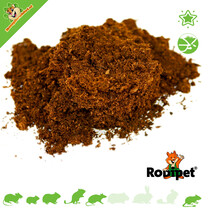
Peat is specially prepared for small rodents. Peat for rodents is very natural and ideal as bedding or for a diggable environment such as a digging pit or natural landscaping (bioactive). All burrowing rodents, such as hamsters, mice, rats, etc., have a n
Read more- Voor 17 uur besteld, dezelfde dag verzonden!
- Rodent specialist since 2011
- Dispatched from our own stock
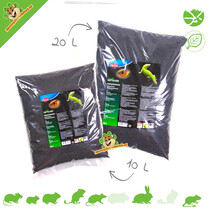
Organic humus for digging zones, planting zones, and natural landscapes. Great for hamsterscaping, gerbilscaping, ratscaping, and rabbit digging boxes.
Read more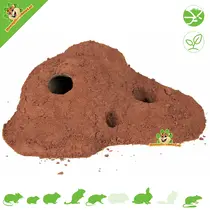
Digging sand with clay for natural landscaping, hamsterscaping, and gerbilscaping. Stays in place better near tunnels and burrows. 5 kg is approx. 5 liters.
Read more
Premium coconut fiber bedding of superior quality. Ideal as a natural top layer, play layer, foraging layer, or digging box filling.
Read more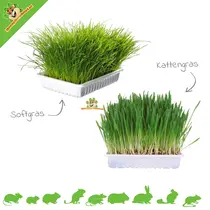
Trixie rodent grass/cat grass to grow yourself. Great as a fresh nibble, sniffing spot, and natural enrichment for rodents and rabbits.
Read more- Voor 17 uur besteld, dezelfde dag verzonden!
- Rodent specialist since 2011
- Dispatched from our own stock
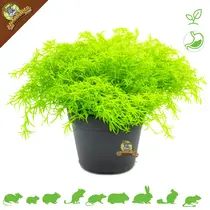
Delicious fresh chamomile for rodents and rabbits. Rodents also frequently encounter chamomile in the wild and enjoy its natural flavor.
Read more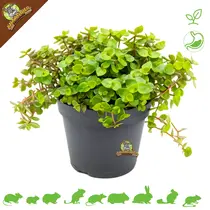
The vitamin plant, also known as the tortoise plant, is a tasty and healthy addition to your rodent or rabbit's daily diet! This plant is also excellent for decorating their enclosure and, especially, for food enrichment.
Read more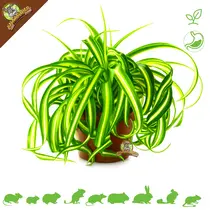
The botanical name Chlorophytum is derived from the Greek terms chloros = yellowish-green and phyton = plant. The green lily is not only a beautiful houseplant but also popular with cats and rodents because of its sturdy leaves. Even birds and terrarium i
Read more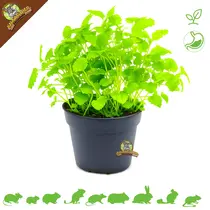
The delightful scent of this plant is almost reminiscent of lemon ice cream! The name "melissa" is derived from the Greek word for honeybee (Melitta).
Read more- Voor 17 uur besteld, dezelfde dag verzonden!
- Rodent specialist since 2011
- Dispatched from our own stock
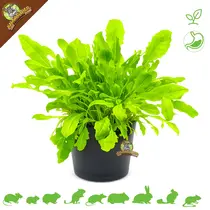
Delicious fresh dandelion is a favorite food for rodents and rabbits. Dandelion is part of the natural diet of many rodents, just as it is eaten in the wild.
Read more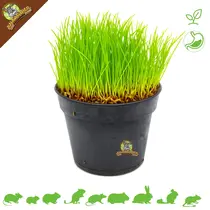
This delicious organic cat grass is finer than regular cat grass and can be eaten by rabbits, guinea pigs, hamsters, tortoises, reptiles, cats, and ornamental birds. It's a tasty and healthy addition to any cat's daily diet!
Read more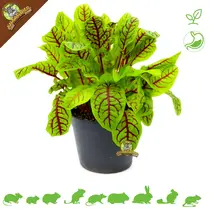
The compact-growing blood sorrel 'Little Red Pixie' is also very attractive because of its red veins. However, sorrel does require a special diet. The smaller the rodent, the smaller the portion should be. Place the plant in the enclosure for short period
Read more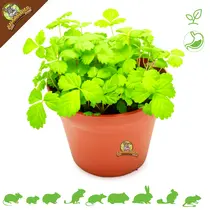
The wild strawberry is native throughout Europe and northern Asia. In the wild, it grows preferably in light deciduous and coniferous forests. It is a herbaceous, perennial, and evergreen plant, usually 5 to 25 cm tall and therefore smaller than the commo
Read more- Voor 17 uur besteld, dezelfde dag verzonden!
- Rodent specialist since 2011
- Dispatched from our own stock
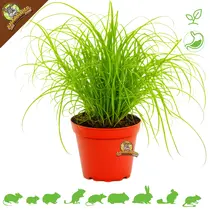
Delicious organic cat grass for rabbits, guinea pigs, hamsters, turtles, reptiles, cats, and ornamental birds. This cat grass is a tasty and healthy addition to your rodent's daily diet!
Read more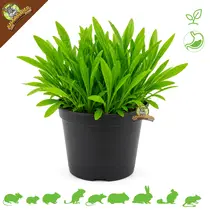
The Plantain is a robust native meadow plant and a valuable plant for rodents, birds, turtles and reptiles.
Read more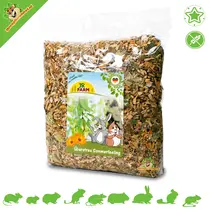
Flowery natural top layer with deciduous wood, coniferous wood, birch leaves, marigold, and mallow. Ideal as a foraging layer, play layer, or extra structure in the enclosure.
Read more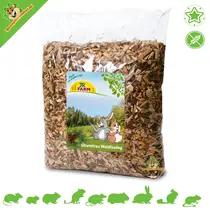
Natural forest-like top layer with hardwood, hardwood bark, softwood, and pine cones. Ideal as a play layer, sniffing layer, and foraging layer.
Read more- Voor 17 uur besteld, dezelfde dag verzonden!
- Rodent specialist since 2011
- Dispatched from our own stock
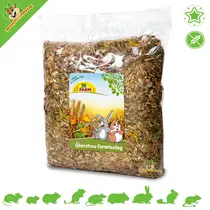
Natural top layer of wood, mountain meadow hay, oat plant, wheat ears, and marigold. Ideal as a foraging layer, play layer, or extra structure in the enclosure.
Read more
Dried moss for hamsterscaping and gerbilscaping. Ideal as a natural decorative layer, an accent around tunnels, platforms, and hiding places, or as a soft texture in a scape.
Read more
Thanks to this sieve shovel, the sand is sieved in no time and all excrement is removed. The shovel has a pleasant handle made of plastic. The sieve itself is made of stainless steel.
Read more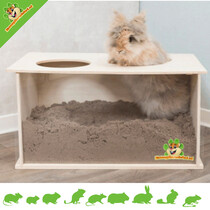
58 cm wooden digging box for dwarf rabbits and small rabbits. With two entrances and exits, a plexiglass viewing window, and a lid to better contain the bedding.
Read more
Rat Digging Box & Bio Bin – sniffing, searching, and digging for pet rats
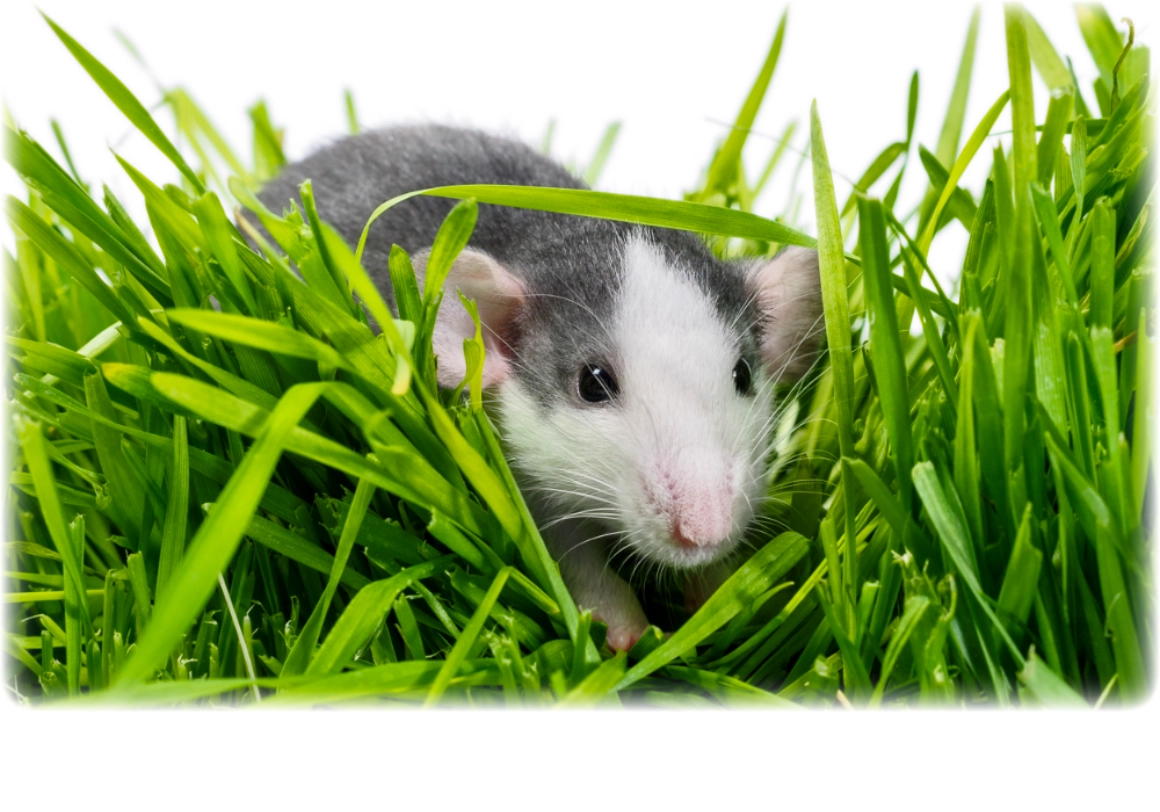 A rat digging box or bio bin provides your rats with a separate place to sniff, search, rummage, and dig. Rats are intelligent animals that enjoy exploring and being active. Therefore, when selecting a digging box, DRD looks not only at “filler in a bin,” but primarily at behavior, low dust levels, hygiene, safety of use, and how the digging zone fits within the rest of the rat cage.
For rats, DRD opts for digging and sniffing zones that logically align with Ratscaping , rat bedding , rat herbs and seeds , and play & foraging . This way, you don't turn a loose litter box into a messy spot, but into a deliberate enrichment zone that your rats can actually use.
In short
✓ A digging box gives rats a separate place to sniff, search, rummage, and dig.
✓ For rats, choose low-dust, easily controllable materials that align with hygiene and ventilation.
✓ A rat digging box is not a sand bath; do not use chinchilla sand or fine sand for rats.
Quick links
Why a digging bucket? · Choosing a digging bucket · Which filling? · Digging bucket & Ratscaping · Foraging in the digging bucket · Hygiene & maintenance · Checklist · Shopping routes · FAQ
Sniffing & searching
A digging box does not always have to be deep. A sniffing box with litter, herbs, seeds, or foraging material can also encourage rats to actively search and explore.
Excavation zone
Do you want to encourage more rooting and digging? Then choose a sturdy bin with sufficient space and a suitable, low-dust filling that you can easily monitor.
Ratscaping
In a natural rat cage, a digging box fits nicely as a separate zone alongside climbing, sleeping, making routes, toilet areas, foraging, and gnawing.
Why a digging box for rats?
Rats are curious, smart, and active. They want not only to eat, sleep, and climb, but also to search, explore, smell, drag, and make choices. A digging box or compost bin gives your rats a separate place where this behavior has more room. This makes the cage more varied and helps prevent boredom.
A digging box is particularly valuable because it allows you to concentrate behavior in one place. Instead of scattering loose materials throughout the cage, you create a clear zone where your rats are allowed to rummage around. That is more pleasant for your rats and more practical for you when cleaning.
At DRD, we therefore view a digging box not as a standalone accessory, but as part of a complete cage layout. Combine it with rat tunnels and tubes , platforms and ladders , hammocks , and a logical toilet area.
Choosing a rat burrow: what to look for?
A good rat digging box is sturdy, spacious enough, and easy to clean. The box must stand stably so that your rats can safely step in and out. Choose a box that works practically in your cage rather than one that only looks nice. Rats actively use such a zone, so stability and maintenance are important.
- Choose a sturdy bin that does not tip over or shift easily.
- Pay attention to the entry: your rats must be able to get in and out easily.
- Choose a size that fits your cage and the number of rats.
- Use a filling that is low-dust and easy to inspect.
- Do not place the digging bucket directly under a fixed urination spot or water bottle.
- Check regularly for moisture, food residue, and soiling.
Undecided between a shallow sniffing box and a deeper digging box? Then also check out our Rat Digging Box Selection Guide .
What kind of filling do you use in a rat burrow?
The filling determines how your rats use the litter box. If you primarily want foraging and sniffing, a light, sniffing filling often works well. If you want to encourage more digging and burrowing behavior, choose a filling that allows rats to work more. In all cases, the rule is: choose low-dust, controllable, and suitable for your cleaning routine.
Paper, cardboard and ground cover
Paper, cardboard, and low-dust bedding are pleasant for a sniffing or mess box. You can hide small pieces of food, herbs, or seeds inside, forcing your rats to search. This is an accessible way to start with a digging box.
Humus or natural digging zone
Humus can be beneficial for a natural digging or planting zone, especially within Ratscaping. For beginners, it is often more practical to start with a separate digging bin, digging zone, or planting zone. This allows you to effectively control moisture, odor, ventilation, and maintenance before working on a larger scale.
Herbs, seeds and foraging material
Herbs, seeds, ears of grain, and small foraging extras make a digging box extra interesting. Scatter small amounts throughout the filling so your rats have to search instead of taking everything directly from a food bowl. Use this as a supplement alongside good rat food .
Good to know
✓ A digging box for rats is not a sand bath.
✓ Do not use chinchilla sand or fine sand for rats.
✓ Choose materials that are suitable for sniffing, foraging, digging, and good hygiene.
Excavator Bucket & Ratscaping: create a clear zone
A digging box fits very well within Ratscaping. Ratscaping revolves around natural and functional design: zones for sleeping, climbing, creating routes, eating, drinking, toileting, foraging, gnawing, and exploring. The digging box then becomes a distinct activity within the cage, not just a separate container with materials.
Place the digging box in a stable spot and consider the route to it. Rats enjoy it when parts are logically connected. A tunnel to the digging zone, a platform above it, or a foraging area next to it can make the box extra interesting.
Do you want to decorate in a more natural way, but still remain practical? Then read on at Ratscaping for tame rats and Ratscaping for beginners .
Foraging in the bucket
A digging box is also very suitable for stimulating foraging behavior. Instead of offering all the extras immediately, you can hide small amounts of herbs, seeds, or pellets in the box. Your rats will then have to sniff and search, making eating more of an activity.
- Sprinkle a small amount of food or herbs through the filling.
- Hide seeds or small snacks in different places.
- Alternate with tunnels, cardboard, or foraging toys.
- Remove old or damp food residues in time.
- Use extras as a supplement, not as a replacement for basic food.
Look for suitable additions under Rat Herbs and Seeds , Rat Snacks , and Rat Toys & Foraging .
Hygiene & maintenance of a rat burrow
A burrow remains best when you check it regularly. Rats can hide food in it, leave droppings, or accidentally urinate in it. That is part of daily use, but it does mean that the box must be part of your cleaning routine.
- Check the excavator bucket regularly for wet spots and odor.
- Remove old food residues and soiled bedding in time.
- Replace the filling as soon as it becomes musty, wet, or dusty.
- Clean the bin itself before adding new filling.
- Place the excavator bucket in a location with sufficient ventilation.
Combine the digging box with a clearly marked rat toilet zone . This prevents the digging box from unintentionally becoming the primary urination spot.
Checklist: how to make a proper rat burrow
✓ The container stands firmly and cannot easily tip over.
✓ The entry is logical and safe for your rats.
✓ The filling is low-dust and suitable for sniffing or digging.
✓ The excavator bucket is not located in a place where it gets wet quickly.
✓ You regularly check for food residue, moisture, odor, and soiling.
✓ You do not use chinchilla sand, fine sand, or a sand bath for rats.
Handy shopping routes for digging buckets, foraging, and ratscaping
A digging box works best as part of the entire rat cage. With these routes, you quickly create a logical combination of substrate, enrichment, and setup.
Bucket & bottom
Start with a suitable bin and then choose a low-dust, easily controllable filling.
Foraging & searching
Make searching more fun with herbs, seeds, small snacks, and foraging toys.
Natural interior design
Connect the excavator bucket with routes, tunnels, platforms, and natural landscaping.
Learn more about rat digging bins and enrichment
Do you want more guidance on making a digging box or a more natural rat cage? These information pages are a good fit for this category:
FAQ – frequently asked questions about rat burrows
Do rats need a digging box?
A digging box is not a mandatory basic product, but it is a valuable form of enrichment. Rats can sniff, search, rummage, and dig in it. Especially in an active rat cage or Ratscaping setup, a digging box provides extra activity.
What do you do in a rat digging box?
That depends on the goal. For sniffing and foraging, you can use paper, cardboard, bedding, herbs, seeds, or small food rewards. For a natural digging zone, you can also work with humus or a plant zone, provided you properly control moisture, ventilation, and hygiene.
Is a rat digging box the same as a sand bath?
No, a rat digging box is not a sand bath. Rats do not need a sand bath for grooming. Therefore, do not use chinchilla sand or fine sand for rats. Instead, choose low-dust materials suitable for sniffing, searching, and digging.
Can I use humus for rats?
Humus can be used as a natural digging or planting zone, especially by owners experienced in natural landscaping. Preferably, start with a separate digging box or planting zone so you can effectively control moisture, odor, ventilation, and maintenance.
How do you keep a rat burrow clean?
Regularly check the digging box for wet spots, odor, old food residue, droppings, and dirt. Replace the filling when it becomes wet, musty, dusty, or dirty. Also clean the box itself before adding new filling.
Where do you place a digging box in the rat cage?
Place the digging box in a stable spot where it won't tip over easily and won't get wet immediately from a water bottle or designated urination spot. A logical route to it, for example with a tunnel or platform, often makes the box more interesting for your rats.
DRD selects excavator buckets that combine behavior and practice.
At DRD Knaagdierwinkel®, we view a digging box as part of the entire rat enclosure. The box must suit your rats' behavior, but also your daily care. Therefore, we pay attention to material selection, low dust levels, ease of cleaning, placement, and the combination with bedding, foraging, tunnels, and Ratscaping.
Do you want to build a burrow but are unsure which filling or setup suits your needs? Then check out the Ratten Webshop or contact us via Service & Contact . We are happy to help you figure it out.
✓ Digging bins and bio bins for sniffing, searching, and enrichment
✓ Smartly combines with bedding, herbs, seeds, and Ratscaping
✓ Specialist since 2011
✓ Ordered before 17:00, shipped the same day from our own stock
