 Polski



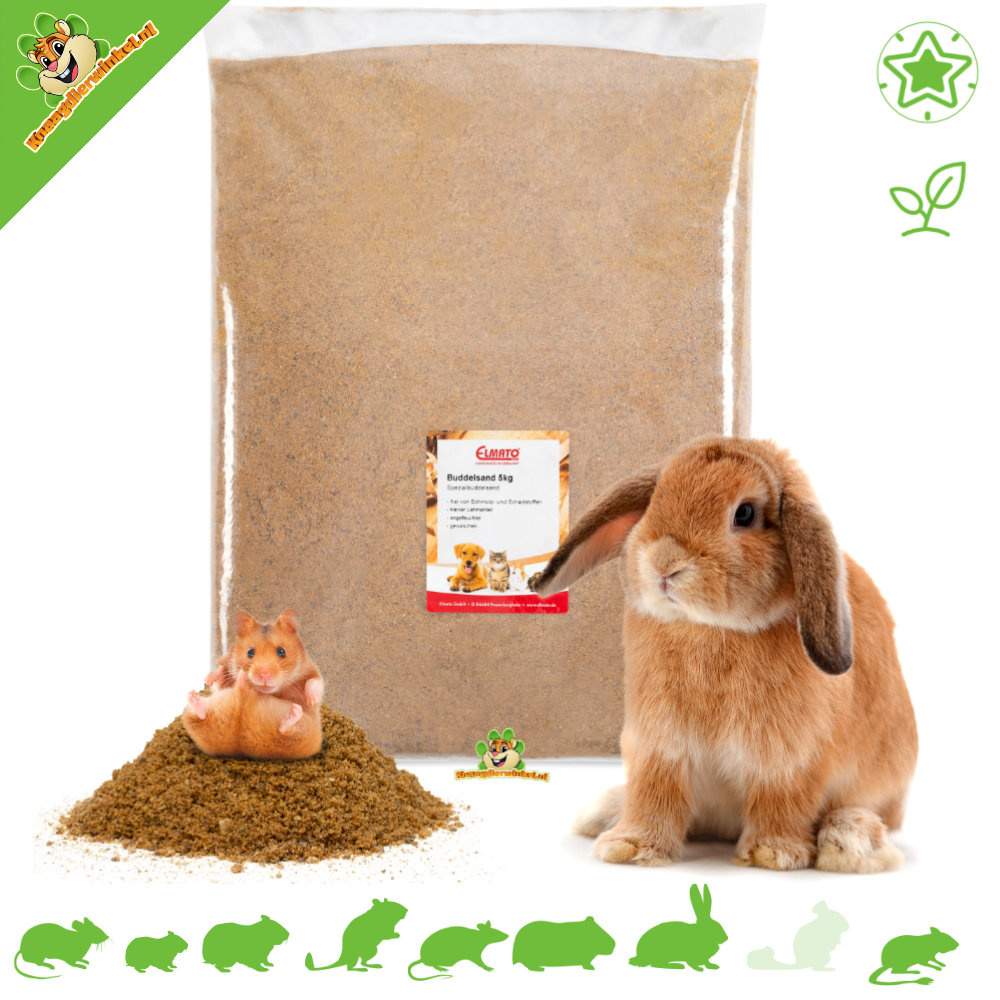
Rodent Play Sand 5 kg for Digging Box and Scaping


- Dispatched from our own stock
- Personal & expert advice
- Always 100% rodent-friendly
- Ordered before 5 p.m., shipped the same day!
- Customer service from 09:00 to 18:00
Rodent Play Sand 5 kg for Digging Box, Play Zone and Scaping
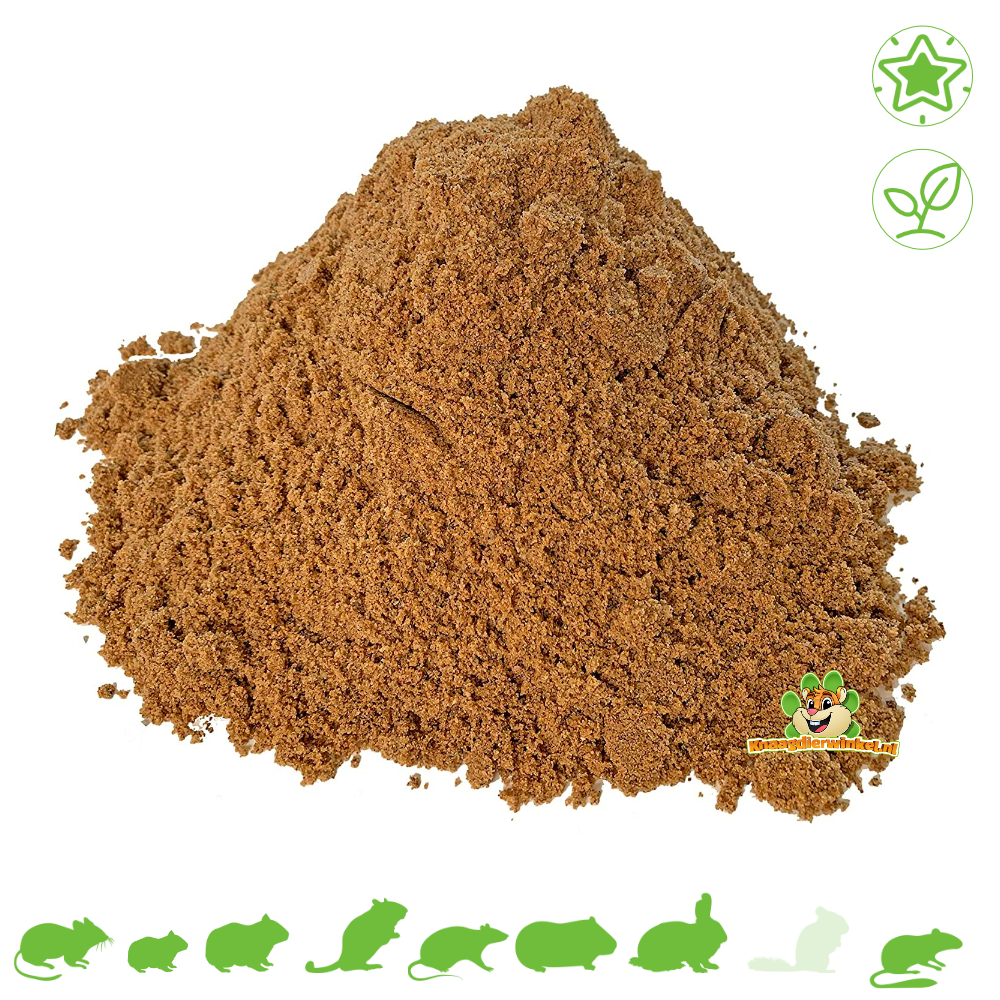
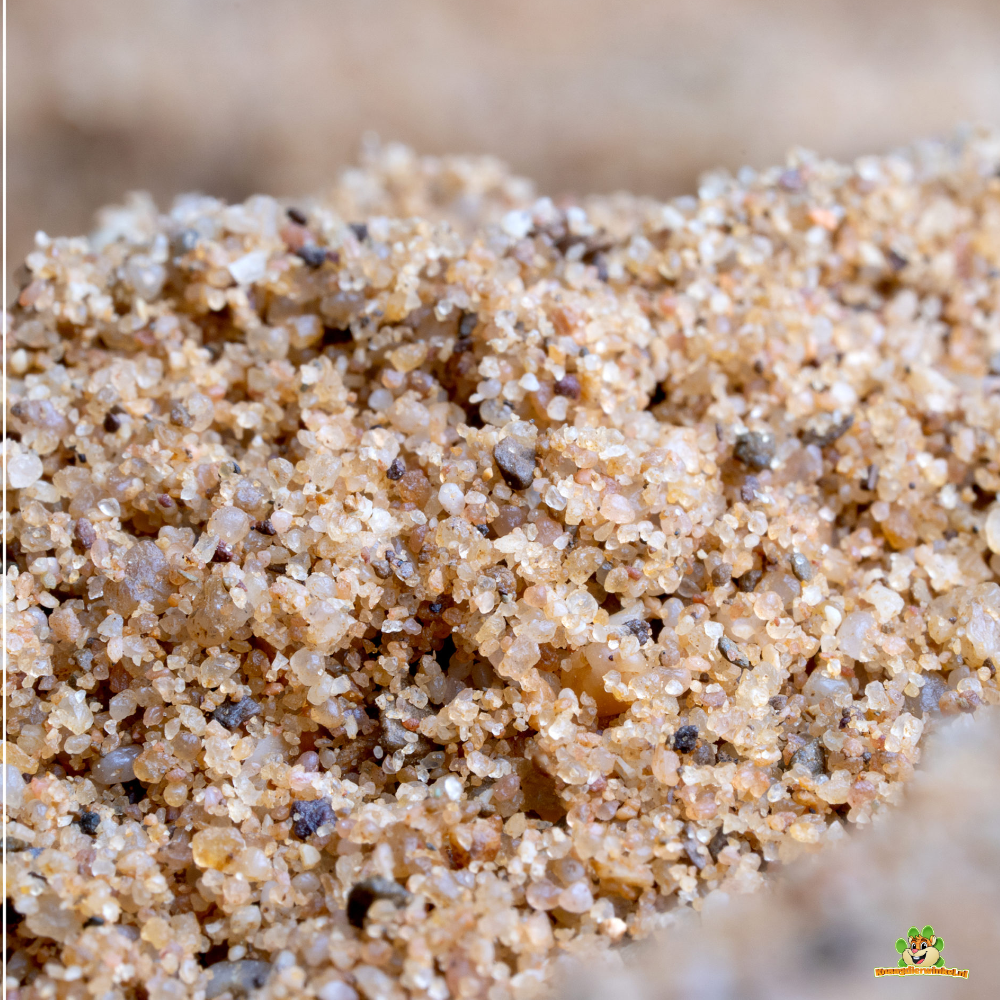
Rodent Play Sand is clean, washed, and slightly damp sand for natural digging, playing, and landscaping areas in the enclosure. The sand is TÜV-certified, free of dirt and harmful substances, moistened, and washed. Due to the small amount of moisture and clay, it feels more pleasant than completely dry loose sand and is ideal for use in a separate digging box, play zone, or planting zone.
This play sand is primarily intended as a natural material for exploring, digging, sniffing, and decorating. Think of a separate digging box for larger animals, a shallow play zone for small rodents, or a natural base around fresh rodent plants. It is not chinchilla sand and not bath sand for coat care.
Play sand in brief
Product: clean play and digging sand for rodents and rabbits
Content: 5 kg, approximately comparable to 5 liters
Material: sand with a small amount of moisture and clay
Use: digging pit, low play area, planting zone or natural landscaping
Special feature: TÜV-approved, washed, and free of dirt and harmful substances
Not suitable as: chinchilla sand or dry sand bath for coat care
✔ Clean, washed, and TÜV-approved play sand
✔ Slightly damp for a pleasant digging and playing surface
✔ Great for digging buckets, planting zones, and natural landscaping
✔ Suitable as a substrate for fresh rodent plants
✔ Beautiful natural base for hamsterscaping, gerbilscaping, and other rodentscaping
Why choose rodent play sand?
Many rodents find it interesting to explore different surfaces. Sand provides a different texture than bedding, wood, moss, or hay. As a result, a sand zone can help make the enclosure more natural, varied, and richer. Your animal can dig in it, sniff around, make paw prints, examine plants, or seek out a cooler spot.
When it comes to sand, DRD looks not only at “can it be used in the enclosure?”, but above all at the right product role. This play sand is neither tunnel-stable burrow sand nor fine bath sand. It is a practical play and digging sand for separate zones, shallow layers, planting areas, and controlled digging bins.
Play sand, digging sand, or bath sand: what is the difference?
This product is play sand. This means that it is primarily intended as a natural surface for digging, sniffing, and playing. Because the sand is slightly damp and contains a little clay, it feels more natural than completely dry sand.
This sand is less suitable for deep tunnels for hamsters and gerbils, as the tunnels do not stand up well in it. For that, you would prefer to use a deep, firm bedding or a product specifically intended as burrow sand. This play sand is not suitable as a sand bath for chinchillas, as it is too damp for their delicate fur.
For small rodents
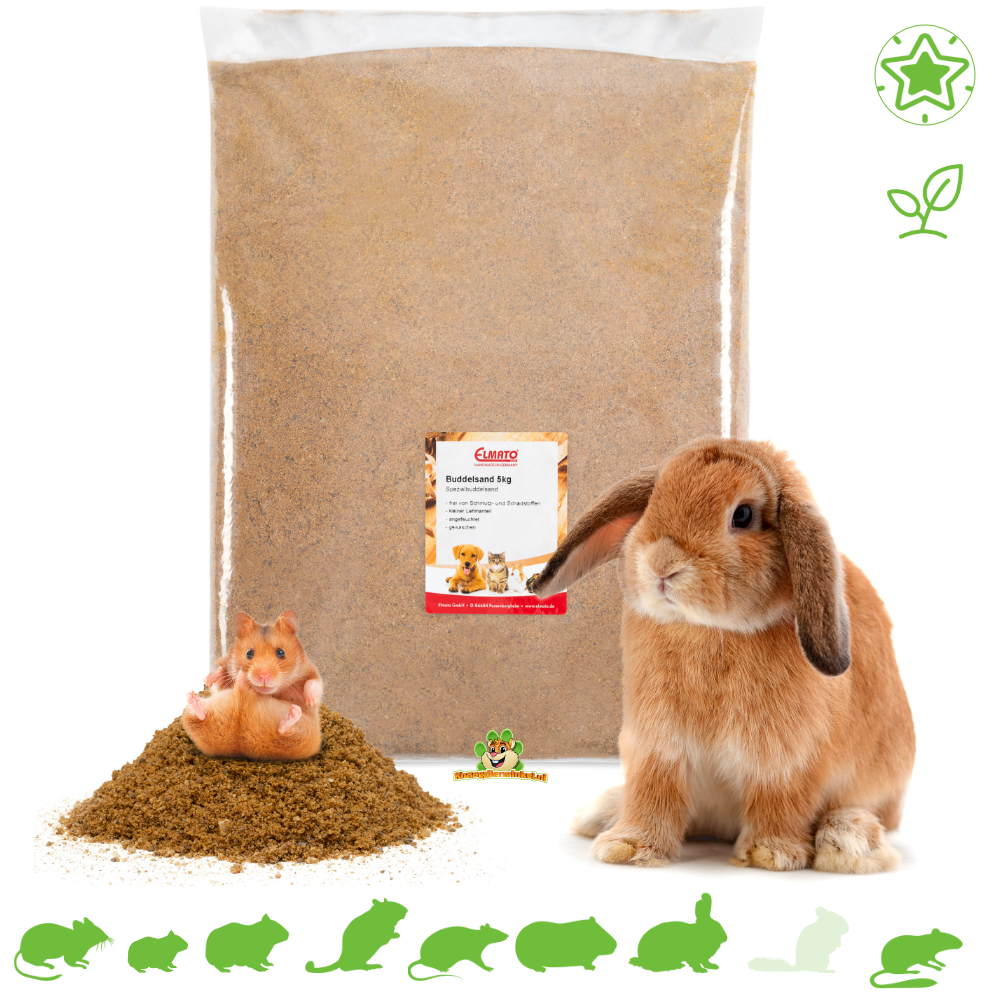
For small rodents such as mice, dwarf hamsters, hamsters, and gerbils, it is best to use this sand in a separate zone or shallow sandbox. A layer of approximately 5 to 7 cm is sufficient for playing, sniffing, and shallow digging. If you want to fill an entire 100 × 40 cm enclosure with 5 cm of sand, approximately 4 bags are needed.
For animals native to dry or desert-like areas, such as many hamsters and gerbils, allow the sand to dry thoroughly before use. This prevents the humidity in the enclosure from rising unnecessarily.
Use as a digging box for larger animals
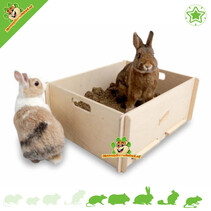
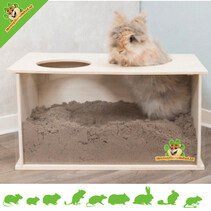
For larger animals, the play sand can be used in a separate digging box or play box. Think of a box where the animal can dig, sniff, and search for a few suitable herbs or snacks. A 5 kg bag is roughly equivalent to 5 liters. For a 50 × 50 cm box with a 10 cm layer, at least 5 bags of sand are needed.
For rats, we do not recommend using sand as a sand bath or as a permanent, dry sandbox for grooming. Rats do not bathe in sand like chinchillas or degus. If you wish to use this sand for rats, use it only as a temporary, slightly damp digging or sniffing box under supervision, and additionally, choose low-dust bedding, digging materials, and Ratscaping materials that are suitable for rats.
Great for plant zones and natural landscaping
This play sand is also suitable as a substrate for fresh rodent plants. Plants can root well in it, and the sand texture gives the enclosure a natural look. You can use it in a separate planter, a small landscaping zone, or as a transition between bedding, humus, moss, cork, and branches.
For hamsterscaping and gerbilscaping, you can use sand as a decorative zone, dry riverbed, desert corner, or transition to a plant zone. Keep the application practical: a clearly separated zone is preferable to an entire enclosure filled with sand when the animal primarily needs deep, stable bedding.
For which animals is Rodent Play Sand suitable?
- Mouse: suitable as a low play and sniffing zone. Do not use a deep layer of sand as the main surface, but offer it as variety alongside suitable bedding.
- Dwarf hamster: suitable as a shallow sand zone or covering layer, provided the sand dries thoroughly first. For a sand bath, preferably use suitable bath sand.
- Hamster: suitable as a play zone, plant zone, or decorative sand area in hamsterscaping. Not suitable as a deep tunnel bottom, because the tunnels do not stand well.
- Gerbil: suitable as a sand zone or part of gerbilscaping, provided the sand dries thoroughly first. For deep tunnels, firm, deep bedding remains more important.
- Dwarf rat: potentially suitable as a temporary, slightly damp digging or sniffing box under supervision. Dwarf rats vary in size and behavior, so observe the individual animal closely and prevent dust formation.
- Rat: potentially suitable as a temporary digging or sniffing box under supervision when the sand is slightly damp and not dusty. Do not use as a sand bath or permanent dry sand box for grooming.
- Guinea pig: suitable as a separate digging or play box if your guinea pig shows interest in this. Do not use it as the main bedding and ensure the sand remains clean and dry enough.
- Rabbit: suitable as a separate digging box or play box. Rabbits love to dig; use a spacious box and check regularly for soiling.
- Chinchilla: not suitable. This sand is too damp for the delicate chinchilla fur and is not chinchilla sand.
- Degu: suitable as a digging or play zone, but not as a replacement for a suitable sand bath. Carefully check that the container remains clean and does not become too damp.
How much sand do you need?
A 5 kg bag is roughly equivalent to 5 liters. How much you need depends on the size of the bucket and the desired layer thickness. For a small sand zone, one bag is often sufficient. For a proper digging bucket, you will need multiple bags.
| Tray or zone | Layer thickness | Indication |
| Small sandbox or corner | 5–7 cm | Usually 1 bag, depending on the size of the bin |
| Enclosure 100 × 40 cm | 5 cm | About 4 bags |
| Excavator bucket 50 × 50 cm | 10 cm | At least 5 bags |
These indications help to better estimate in advance how much sand you need. If you want to make a deep, spacious digging bucket, one bag is usually not enough.
Use with fresh rodent plants
The play sand can also be used as a substrate for fresh rodent-friendly plants. The plants can root in it, and the sand structure gives the plant zone a natural look. Optionally, combine this with humus or other suitable natural materials, depending on the type of plant and the application.
Always use plant zones in a controlled manner. Remove old plant debris in time and check that the substrate does not become too wet. This way, the scapping zone remains beautiful, natural, and practical to maintain.
Composition and specifications
Material: sand.
Weight: approx. 5 kg.
Volume indication: approximately comparable to 5 liters.
Details: TÜV-approved, washed, moistened, and free of dirt and harmful substances. For desert animals, allow the sand to dry thoroughly first.
Good to know
Observe your animal during the first use to see how it interacts with the sand. Always check the sand for abnormalities before use and remove it if it becomes dirty, musty, too wet, or dusty.
Store the sand in a dry and cool place. Because the sand is slightly damp, it is important to store the packaging properly and not leave it in a warm, enclosed, or humid room.
Frequently asked questions about Rodent Play Sand
What do you use Rodent Play Sand for?
You use this sand for a digging box, play zone, planting zone, or natural landscaping. It is intended for digging, sniffing, and exploring, not as chinchilla sand or classic bath sand.
Is this sand suitable as excavation sand for tunnels?
This sand is less suitable for deep tunnels for small rodents, as the tunnels do not stand well in it. It is better to use it as a shallow sand zone or a separate digging box.
Does the sand need to dry first for hamsters and gerbils?
Yes, for desert animals such as hamsters and gerbils, we recommend letting the sand dry thoroughly first. This prevents the humidity in the enclosure from becoming too high.
Is this play sand suitable for chinchillas?
No, this sand is not suitable for chinchillas. It is too damp for the delicate chinchilla fur and is not chinchilla sand.
Can I use this sand for rats?
Only use as a temporary, slightly damp digging or sniffing box under supervision. Do not use it as a sand bath or permanent dry sandbox. For rats, low-dust bedding, suitable digging materials, and Ratscaping usually remain the more logical choice.
Can I use this sand for rabbits?
Yes, you can use it in a separate digging box for rabbits. Ensure the box is spacious, check regularly for soiling, and do not use it as the main bedding.
How much sand is in a bag?
The bag contains 5 kg of sand, roughly equivalent to 5 liters. For an excavator bucket or larger area, multiple bags are usually required.
Is this sand suitable for fresh rodent plants?
Yes, the sand can be used as a substrate for fresh rodent-friendly plants. However, check the plant zones regularly and prevent the substrate from remaining too wet.
Useful shopping links
- Sand for rodents
- Play sand for rodents
- Hamsterscaping
- Gerbilscaping
- Ratscaping
- Fresh rodent plants
- Humus for planting zones and digging zones
Rodent Play Sand 5 kg is a great choice when you want to create a natural digging box, planting zone, or landscaping corner. Thanks to its washed, slightly moist texture, the sand is pleasant to use, while you can easily choose per animal species whether to let it dry, use it as a shallow zone, or offer it in a separate digging box.
| Material: | Sand |
| Liter (approx): | - |
| Weight (approx): | 5 kg |
| Suitable for: | Rodents, Mouse, Dwarf Hamster, Hamster, Gerbil, Rat, Rabbit, Degu |
| Particularities: | For desert animals let sand dry first |
| Safety information: | Observe the animal during initial use to see how it interacts with the bedding. Always check the bedding before use for possible irregularities. |
Mijn ratjes zijn er erg blij mee. Het is wat grof maar dus ook minder stoffig dan mijn vorige zand en niet te grof dus groot succes
- Niet stoffig
Bedankt namens de Sneeuwmuis mannetjes.