 Polski

Food bowls for rodents and rabbits – ceramic, stainless steel, anti-slip and more




- Voor 17 uur besteld, dezelfde dag verzonden!
- Rodent specialist since 2011
- Dispatched from our own stock


- Voor 17 uur besteld, dezelfde dag verzonden!
- Rodent specialist since 2011
- Dispatched from our own stock
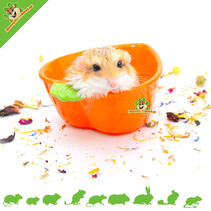
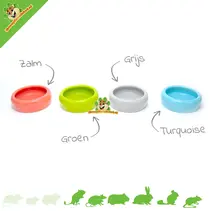
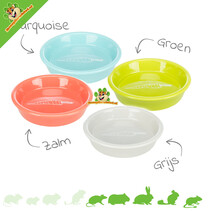

Food bowls for rodents and rabbits
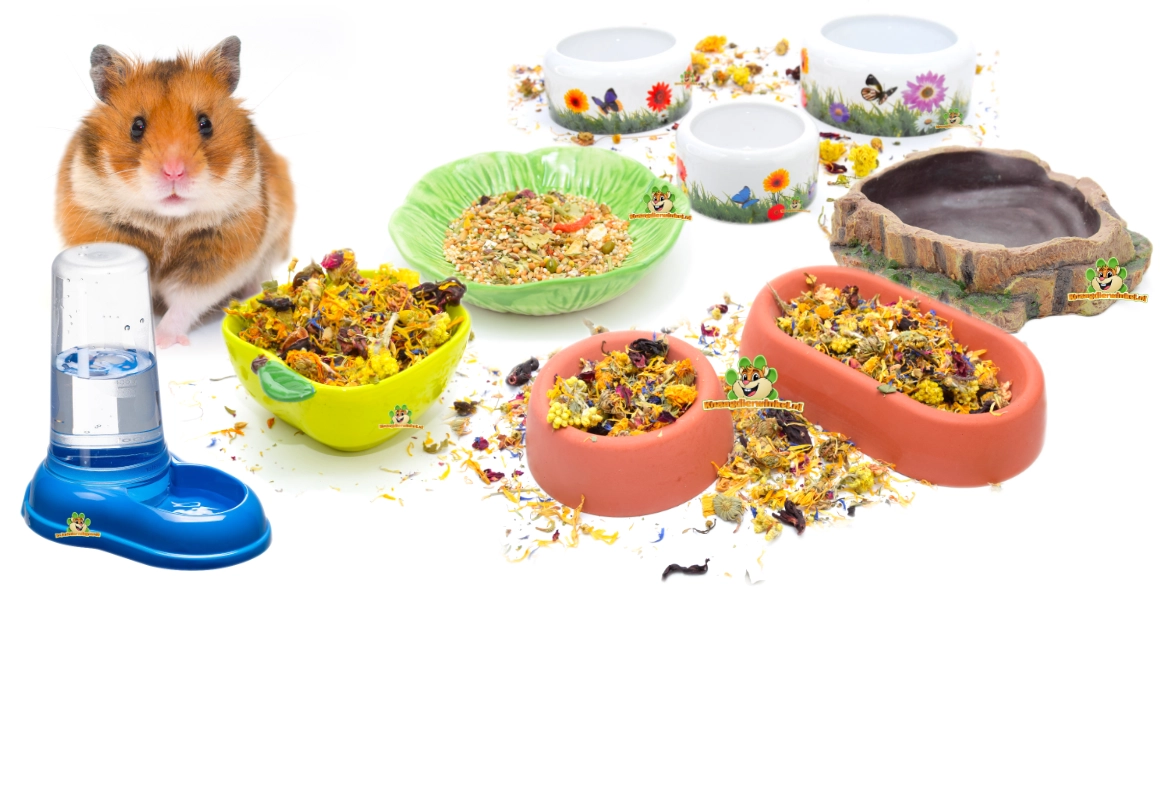 A good food bowl may seem small, but it makes a big difference in practice: it keeps food neatly organized, prevents it from scattering throughout the enclosure, and gives your pets a recognizable "eating spot." At DRD Rodent Shop®, you'll find carefully selected food bowls in various materials and sizes – from heavy ceramic to stainless steel and sturdy versions that are less likely to slide or tip.
Handy for any habitat, whether you have amouse , dwarf hamster , hamster , gerbil , rat , guinea pig , or rabbit . Specialist since 2011 .
- Food stays in one place
- Less mixed with ground cover
- Handy for portions and fixed routines
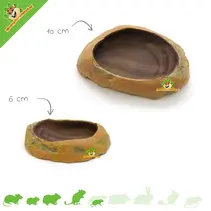
- Ceramics: heavy and stable
- Stainless steel: practical and quick to clean
- Anti-slip: less sliding in the enclosure
- Multiple feeding stations prevent hassle
- Space for eating together
- Handy for different portions
Why a food bowl is a good foundation
In many habitats, a food bowl is simply convenient: you can immediately see how much has been eaten, the food stays cleaner, and it prevents it from disappearing into the bedding. Combine this with foraging? Perfect: use the bowl as a "basic portion" and offer the rest in a spread-out manner for an extra challenge.
Looking for suitable food? Check out Feed and Play & Forage .
Types & materials: what suits your animal?
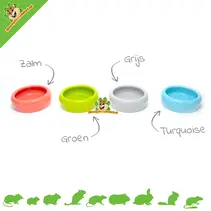
Ceramic feeding bowls
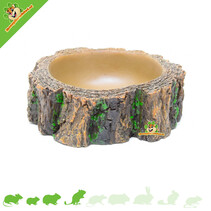
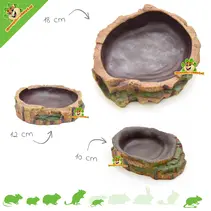
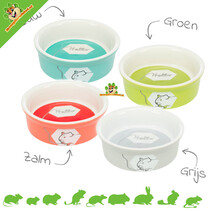
Heavy, sturdy, and therefore difficult to tip over. Ideal for animals that like to move around or dig enthusiastically. Ceramic looks beautiful in natural settings and stands securely on the surface.
Stainless steel feeding bowls
Practical, hygienic, and quick to clean. Perfect for everyday use and for owners who want to keep track of everything easily.
Sturdy plastic / anti-slip
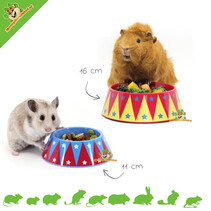
Lightweight but often cleverly designed. Anti-slip or a wider base helps prevent sliding. Handy if you're looking for a food bowl that's easy to move.
Tip: If you are a fanatic digging or sliding champion, choose heavier and wider models (ceramic or stable models).
What size feeding bowl fits? (guide measurements)
The ideal size depends on your pet, the type of food, and whether you only provide a basic portion or offer everything in the bowl. The following guidelines will help you quickly choose:
- Mouse : approx. 5–7 cm
- Dwarf hamster : approx. 6–8 cm
- Hamster (Syrian) : approx. 8–11 cm
- Gerbil : approx. 7–10 cm
- (Dwarf) rat : approx. 10–14 cm
- Degu : approx. 10–14 cm
- Chinchilla : approx. 12–16 cm
- Guinea pig : approx. 12–16 cm
- Rabbit : approx. 14–18+ cm (depending on size and group size)
Are you unsure between two sizes? Generally, choose the larger option, or place two smaller containers (especially for duos/groups).
For couples & groups: multiple feeding stations often work best
Many species live together (for example, mice, gerbils, rats, guinea pigs, and rabbits). It's wise to provide more than one food dish so everyone can eat peacefully. A practical rule of thumb: it's better to have one extra feeding station than not enough.
Cleaning & hygiene
How to keep food bowls fresh:
- Daily : empty and remove crumbs/moisture.
- Regularly : clean with warm water (and dry thoroughly).
- Ceramic/stainless steel : often the easiest to keep thoroughly clean.
- Plastic : Check for scratches or rough edges and replace if worn.
Checklist: Choose the right food bowl in 20 seconds
✔ Does the size suit your pet and how you feed (basic portion vs. everything in the bowl)?
✔ Do you choose stability that suits the behavior (sliding, digging, “knocking over”)?
✔ Is the material easy to keep clean?
✔ Do duos/groups have enough feeding places?
✔ Is the container stable in the place where you place it?
Safety: what to pay attention to
- Check containers regularly for damage (cracks, rough edges, loose parts).
- For avid sliders, it is best to use heavy or anti-slip models.
- Place food bowls on a stable surface (not wobbly on a bridge or loose platform).
- Replace plastic containers when they become visibly worn or rough.
FAQ – frequently asked questions about feeding bowls
What is the most "tip-proof" food bowl?
Usually a heavy ceramic feeder with a wide base. This is the most stable, even when digging and shoveling.
Is a food bowl always necessary when foraging?
Not necessarily, but many owners like to give a basic portion in a bowl and spread the rest for an extra challenge.
How many food bowls do I need if I have multiple animals?
Preferably multiple feeding stations. This creates a calm atmosphere during mealtimes and makes it easier for everyone to eat together.
Which materials are easiest to keep clean?
In practice, stainless steel and ceramic are the quickest and most thorough to clean.
Useful shopping links to complete your stay
- Cage furnishings (everything for a smart base)
- Food and snacks
- Play & foraging (food enrichment and challenge)
- Ground cover & nesting material
- Service & contact
Why order food bowls from DRD Rodent Shop®?
✔ Wide choice of size, material and stability
✔ Practically selected for different animal species and habitats
✔ Specialist since 2011 – we are happy to help you with your choice and design
✔ Easily combine with feed and forage products for a complete plan
