 Polski

Guinea Pig Chewing Material & Chewing Wood in the Guinea Pig Webshop

- Voor 17 uur besteld, dezelfde dag verzonden!
- Rodent specialist since 2011
- Dispatched from our own stock
- Voor 17 uur besteld, dezelfde dag verzonden!
- Rodent specialist since 2011
- Dispatched from our own stock
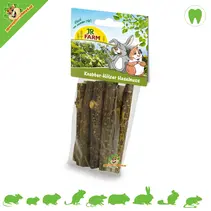
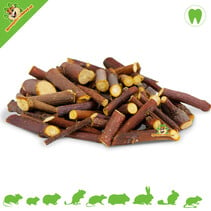
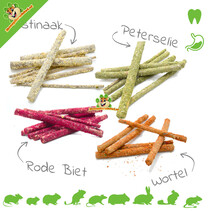

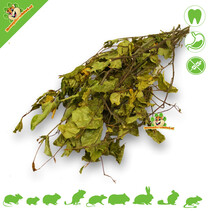
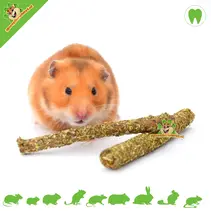
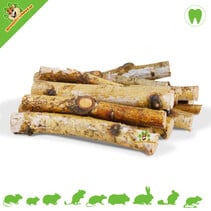

Choosing guinea pig gnawing material: gnawing wood, branches, and natural enrichment
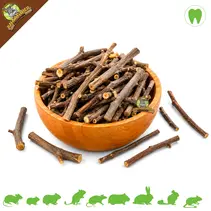
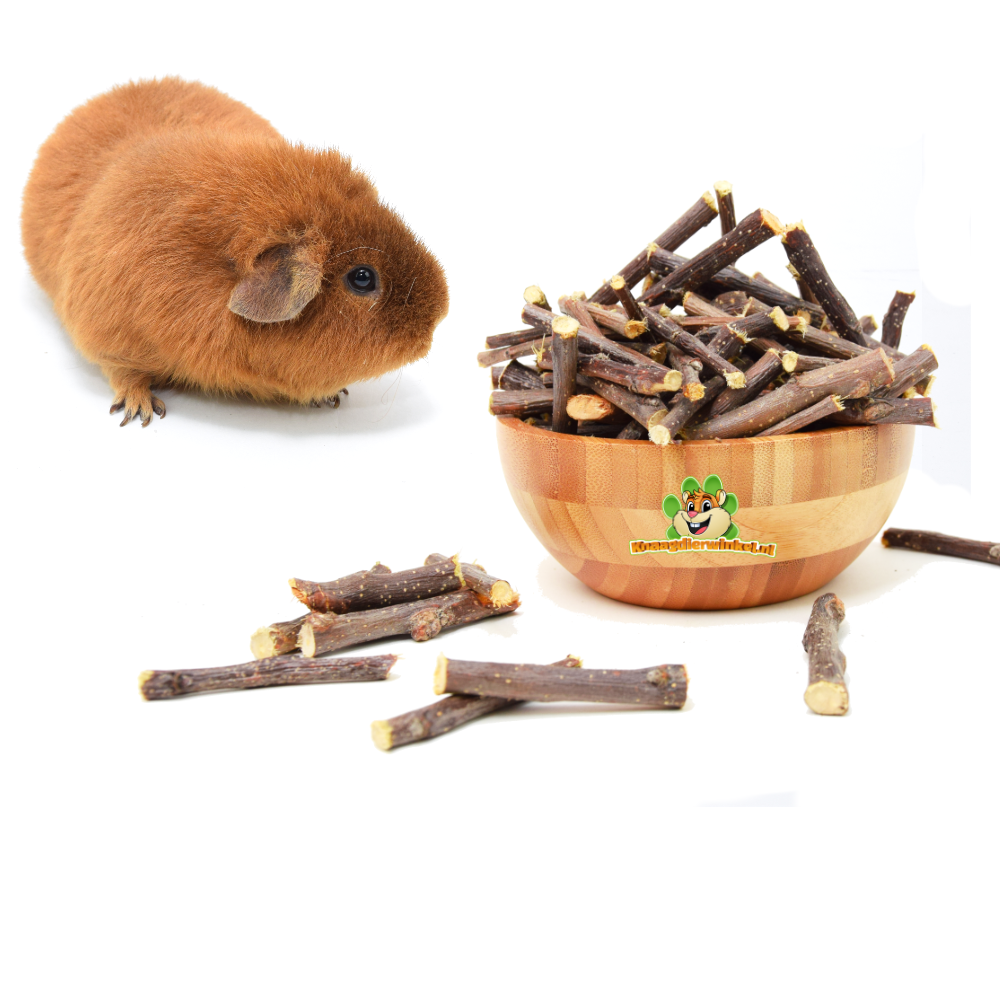 Guinea pig gnawing material gives your guinea pigs something to explore, sniff, move around, and nibble on quietly. Think of gnawing wood, willow branches, fruit tree wood, birch, hazelnut, stems, roots, and other natural materials that suit guinea pigs as curious soil animals.
Chewing material is supplementary. The daily basis always remains plenty of guinea pig hay , suitable guinea pig food , water, and daily attention to vitamin C. Hay remains the most important daily chewing and fiber base; you add chewing material for extra structure, scent, variety, and activity.
At DRD Knaagdierwinkel®, we consider the function of gnawing material in the enclosure. Does it provide structure? Does it encourage exploration and nibbling? Does it fit a low, uncluttered guinea pig setup? And can you combine it with hay, guinea pig herbs , and foraging ? This way, you don't just choose any twig, but material that truly adds something to your guinea pigs' day. Specialist since 2011.
✓ Guinea pig gnawing material and gnawing wood for nibbling, sniffing, and exploring
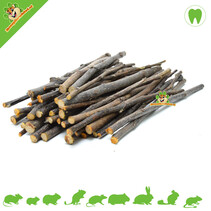
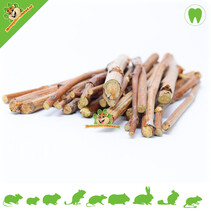
✓ With willow, birch, hazelnut, apple, pear, branches, stems, and herb roots, among others
✓ Combines beautifully with hay, herbs, leaves, flowers, tunnels, and foraging areas
✓ Selected by DRD Knaagdierwinkel® – Specialist since 2011
Quick links
In short • Why gnawing material? • Types of gnawing material • Which gnawing wood do you choose? • How do you use it? • Together with hay • Foraging • Checking & replacing • FAQ
In short: what do you use guinea pig gnawing material for?
You use guinea pig gnawing material as natural enrichment. It gives guinea pigs something to smell, investigate, move, and nibble on. Branches, stems, willow products, herb roots, and fruit tree wood, in particular, can provide extra structure in the enclosure.
Important: gnawing material does not replace hay. Hay remains the daily basis for fiber, chewing, and nutrition. Gnawing wood and branches are primarily supplementary: they make the enclosure more interesting and give guinea pigs more choice in what they explore.
It is better to use a few well-chosen materials in logical places than many loose items at once. A twig next to the hay corner, a herb root in a sniffing area, or willow material near a tunnel can be enough to make the enclosure more interesting.
To investigate
Guinea pigs use their noses, lips, and teeth to discover new materials.
As extra structure
Branches, stems, and roots provide more variety than soft materials alone.
When foraging
Combine gnawing material with hay, herbs, leaves, or small snack pieces.
Why gnawing material for guinea pigs?
Guinea pigs are curious and react strongly to scent, texture, and new materials. Chewing material gives them something natural to explore. One guinea pig may actively nibble on it, while another mainly sniffs it, moves it around, or uses it as part of a sniffing area.
The main difference compared to hay is their role. Hay is nutrition and the daily foundation. Chewing material is enrichment and provides extra structure. Together, they can complement each other nicely, especially when you combine gnawing wood with a hay corner, herbs, or a quiet foraging area.
Read more: Guinea pig hay , Guinea pig herbs and Guinea pig playing & foraging .
Types of guinea pig gnawing material
Within guinea pig gnawing material, you can distinguish different types of rolls. Some materials are thin and light, while others are sturdier or more fragrant. By considering the texture and the occasion of use, you can more easily choose what suits your guinea pigs.
| Type of gnawing material | Goes well with | What do you look out for? |
|---|---|---|
| Willow | Nibbling, bowing, exploring and natural environment | Nice alongside hay, herbs, and tunnels. |
| Fruit tree wood | Natural snack texture, like an apple or pear | Choose material that is deliberately offered as animal feed/gnawing wood. |
| Birch, beech and hazelnut | Explore, smell, and nibble more vigorously | Check regularly for sharp or heavily worn parts. |
| Dried branches and stems | Natural structure in hay corner or sniffing area | Combines beautifully with leaves, flowers, and herbs. |
| Herb roots | Firmer snack variety and aroma | Use as a supplement, not as a main food. |
| Chew and herb toys | Activity, sniffing and foraging | Check for loose parts, moisture, and wear. |
Which guinea pig gnawing wood do you choose?
The right choice depends on texture, scent, and the moment of use. Some guinea pigs find thin twigs interesting, while others respond better to willow, fruit tree wood, herbaceous stems, or sturdier chewing materials. Start simple and see what your guinea pigs enjoy exploring.
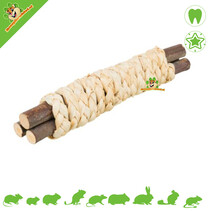
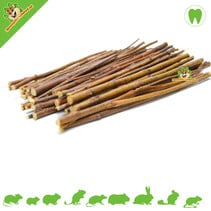
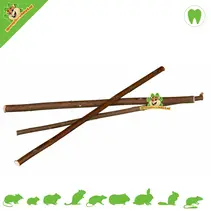
✔ Willow: often interesting due to structure and flexibility, also combines beautifully with hay and herbs.
✔ Fruit tree wood: such as apple or pear, suitable as a natural gnawing structure.
✔ Birch, beech, and hazelnut: sturdy materials to explore and nibble on.
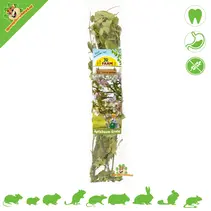
✔ Spicy stems and roots: provide aroma, texture, and a natural snacking experience.
✔ Shaped chew products: handy when you want to combine enrichment and activity.
Always check the product information and choose material intended for guinea pigs and small herbivores. It is best not to simply pick branches outside, as you do not always know if they are suitable, clean, or untreated.
How do you use guinea pig gnawing material?
Place gnawing material in a low, dry, and easily accessible spot. Guinea pigs are ground-dwelling animals, so they usually prefer using gnawing material when they can reach it easily without having to climb. A few twigs near the hay corner or a chew product in a quiet sniffing area often works better than hanging it high up.
✔ At the hay corner: combine eating hay, sniffing, and nibbling in one logical place.
✔ In a sniffing area: place branches, leaves, and herbs together to encourage more exploratory behavior.
✔ Loose in the enclosure: suitable as a simple nibbling and exploration spot.
✔ At tunnels or small houses: make a sheltered spot more interesting without blocking walking routes.
✔ With multiple guinea pigs: offer food in more than one place so that one animal does not claim everything.
Use gnawing material together with hay
Hay and gnawing material complement each other nicely. Hay is the daily staple that guinea pigs spend a lot of time with. Gnawing material adds extra structure and variety to this. For example, place a few twigs next to the hay rack or among a loose clump of hay.
Do you want to make the haymaking time even more interesting? Then add a small amount of dried herbs, leaves, or flowers. This creates a quiet spot where your guinea pigs can eat, smell, pick, and nibble.
Guinea pig hay
The daily basics and ideal for logically offering gnawing material alongside.
Guinea pig hay racks
For a permanent hay corner where you can easily place gnawing material next to it.
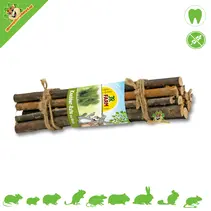
Dried branches and stems
For extra structure between hay, herbs, and sniffing spots.
Using gnawing material for foraging
Chewing material can also be part of a foraging area. For example, combine hay, leaves, flowers, twigs, and a few small snack pieces. Your guinea pig will then have to search and sniff, while the chewing material provides extra structure.
Keep it low and uncluttered. Guinea pigs often feel more comfortable at a quiet foraging spot on the floor than with complicated structures. Especially with multiple guinea pigs, it works well to create several small sniffing spots.
Guinea pig playing & foraging
For snuffle mats, snack plates, snack rolls, and quiet search moments.
Guinea pig herbs
For scent, leaves, flowers, and small herbal moments with gnawing material.
Check and replace gnawing material
Check gnawing material regularly during cleaning. Remove pieces if they are wet, dirty, moldy, or heavily worn. Also watch out for sharp splinters, loose parts, or products left in a damp corner for too long.
Store unused gnawing material in a dry, cool, and well-ventilated place. This helps preserve the scent and texture better. It is better to give a few pieces that you can easily check than a large quantity that remains in the enclosure for a long time.
DRD chooses: gnawing material with a clear role
At DRD, we view guinea pig gnawing material primarily as natural enrichment. It provides structure, scent, and something to explore, while hay remains the most important daily chewing base.
The power lies in smart combinations. A twig next to the hay, some leaves in a sniffing area, or a herb root as extra texture can be enough to make the enclosure more interesting.
Convenient to combine with guinea pig chewing material
Hay & feed
Guinea pig hay • Guinea pig food and nutrition • Guinea pig hay racks • Guinea pig food selection guide
Herbs & natural variation
Guinea pig herbs • Dried guinea pig leaves • Dried guinea pig flowers • Dried guinea pig herb roots
Foraging & setup
Guinea pig play and foraging • Guinea pig tunnels • Guinea pig houses • Guinea pig snacks
Accommodation & maintenance
Guinea pig cage • C&C guinea pig cages • Guinea pig bedding • Cleaning a guinea pig cage
Checklist – using guinea pig gnawing material properly
✓ Use gnawing material as a supplement alongside hay, not as a replacement.
✓ Choose products intended for guinea pigs and small herbivores.
✓ Place gnawing material low, dry, and easily accessible.
✓ Combine with hay, herbs, leaves, or flowers for more sniffing behavior.
✓ Offer enrichment in more than one place for multiple guinea pigs.
✓ Check regularly for wet, dirty, or heavily worn parts.
✓ Remove material from sharp splinters, loose parts, or mold.
Important to know
Only use gnawing material intended for guinea pigs or small herbivores. Do not simply pick branches outside, as you do not always know if they are suitable, clean, or untreated.
Is your guinea pig eating less, stopping eating, producing fewer droppings, chewing differently, or appearing to be in pain? Then look beyond just the gnawing material and contact a veterinarian.
FAQ – frequently asked questions about guinea pig gnawing material
What do you use guinea pig gnawing material for?
You use guinea pig gnawing material as natural enrichment. It gives your guinea pigs something to explore, sniff, move, and nibble on.
Is gnawing wood important for guinea pigs' teeth?
Hay remains the most important daily chewing base for guinea pigs. Chewing wood can provide additional gnawing structure, but does not replace readily available hay.
Which gnawing wood is suitable for guinea pigs?
Choose gnawing wood and branches intended for guinea pigs and small herbivores, such as suitable willow, fruit tree wood, birch, hazelnut, branches, stems, or herb roots within this category.
Can I give branches from the garden to my guinea pig?
We do not recommend that lightly. You often cannot be sure whether branches have been sprayed, are contaminated, or are suitable. It is better to choose material that is deliberately offered as gnawing material for animals.
Where do you put gnawing material?
Place gnawing material low, dry, and easily accessible. For example, near a hay corner, sniffing area, tunnel route, or a quiet spot in the enclosure.
What if my guinea pig doesn't gnaw on gnawing wood?
That is possible. Some guinea pigs prefer sniffing or moving the material rather than actively gnawing on it. You could try a different texture, such as willow, fruit tree wood, branches, stems, or herb roots.
Can you combine gnawing material with herbs?
Yes, that is a nice combination. Hay, herbs, leaves, flowers, and gnawing material together make a sniffing spot more interesting.
How often should you replace gnawing material?
Replace gnawing material when it is wet, dirty, moldy, heavily worn, or no longer fresh. Check it regularly during cleaning.
Does gnawing material replace hay?
No, gnawing material does not replace hay. Hay remains the daily basis, while gnawing material provides extra structure and enrichment.
What do you combine with guinea pig gnawing material?
Combine guinea pig gnawing material with hay, hay racks, herbs, leaves, flowers, herb roots, tunnels, houses, snuffle mats, and guinea pig snacks.
✓ Guinea pig gnawing material and gnawing wood for nibbling, sniffing, and enrichment
✓ With willow, birch, beech, hazelnut, apple, pear, branches, stems and herb roots
✓ Practical to combine with hay, herbs, leaves, flowers, tunnels, and foraging areas
✓ Ordered before 5 PM, shipped the same day
✓ Specialist since 2011
✓ Delivered from our own stock
Unsure which gnawing material is best suited for your guinea pigs and enclosure? Feel free to contact us via our contact page . We are happy to help you decide.
