 Polski



Willow branches 18 cm for Rodents & Rabbits
- Dispatched from our own stock
- Personal & expert advice
- Always 100% rodent-friendly
- Ordered before 5 p.m., shipped the same day!
Willow gnawing wood 18 cm for rodents and rabbits
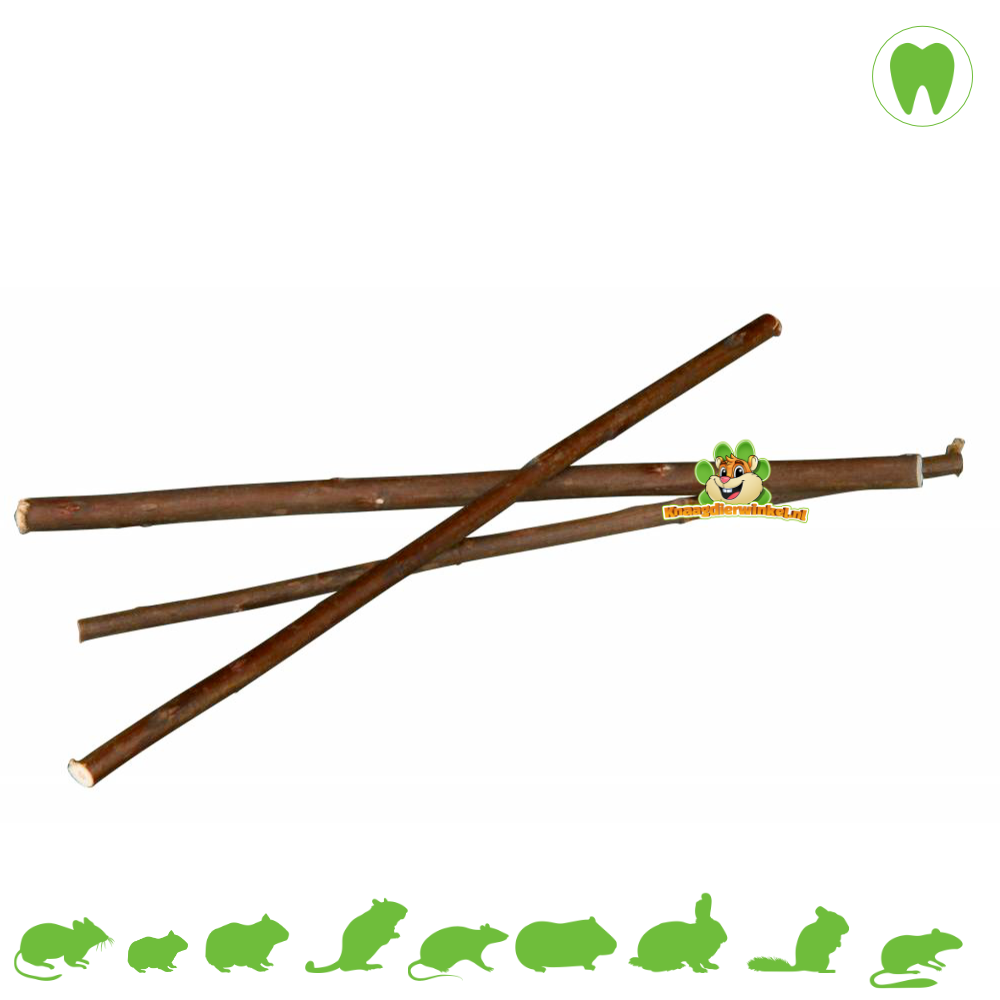
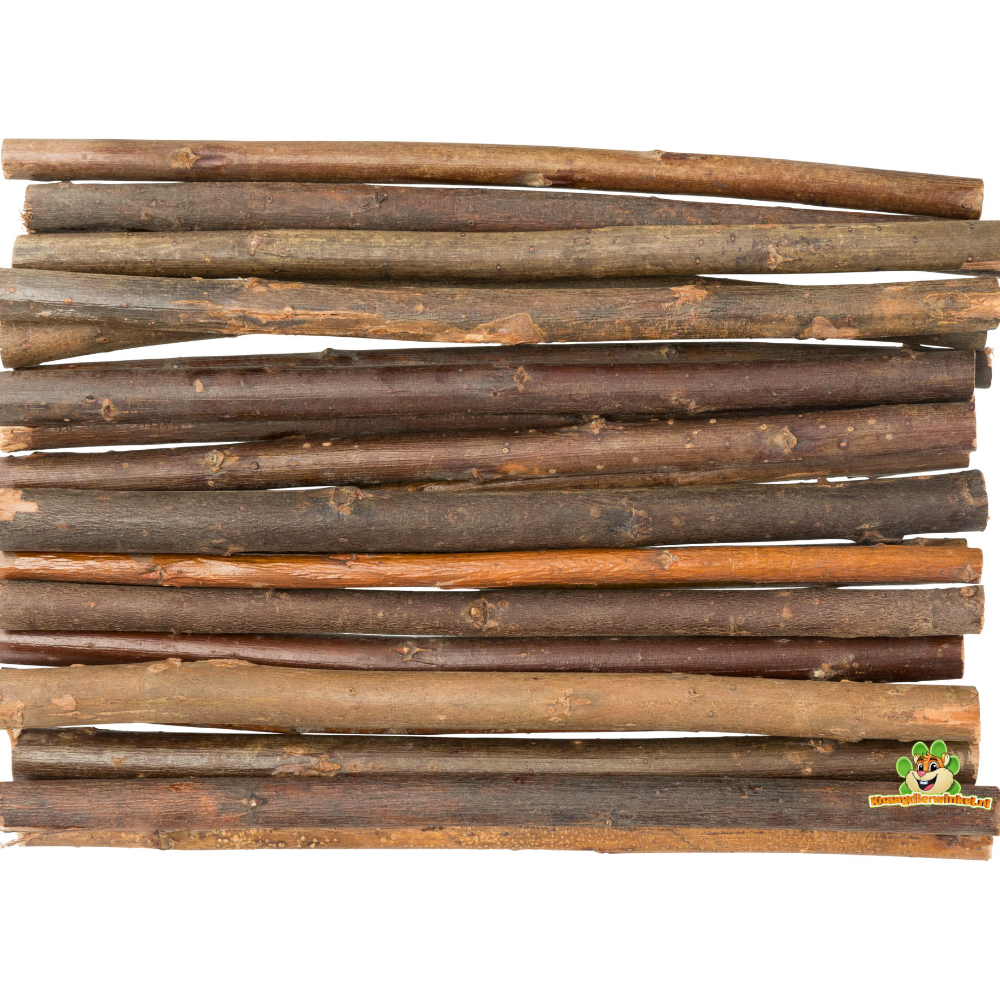
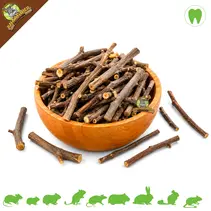
These 18 cm natural willow branches are a fine form of gnawing wood for rodents and rabbits. Willow has a crunchy bark and a soft core, making it interesting for many animals to nibble on, investigate, or play with.
The twigs are suitable as natural variety in the enclosure. You can offer them loose, place them partly among the bedding, or use them in a foraging corner. Some animals gnaw very actively on willow, while others mainly sniff, move it around, or nibble on it occasionally. This difference is normal: gnawing behavior varies by animal and by moment.
In short
- Natural willow gnawing wood
- Length: approx. 18 cm
- Contents: approx. 20 pieces
- Composition: willow
- Type: complementary feed
- Promotes foraging and natural gnawing behavior
- Suitable for mice, dwarf hamsters, hamsters, gerbils, rats, guinea pigs, rabbits, chinchillas, and degus
Advantages of 18 cm Willow Branches
✔ Made from natural willow twigs
✔ Approx. 20 pieces per package
✔ Suitable as gnawing wood and a pastime
✔ Easy to offer loose or incorporate into a foraging corner
✔ Combines nicely with gnawing material , gnawing wood , and play & foraging
Why choose willow branches?
Willow branches are a simple and natural way to offer gnawing material. Many rodents and rabbits need material to explore, grasp, move, or nibble on. Willow is popular for this purpose because the bark and wood provide different textures.
Gnawing is normal behavior for rodents and rabbits. It helps them stay occupied and provides variety in their enclosure. Additionally, gnawing on suitable material contributes to the natural use of teeth. The daily basics naturally always remain appropriate nutrition, sufficient fiber where appropriate for the species, and a well-designed living environment.
Some animals are true gnawers and grab a willow twig immediately. Other animals leave it lying there at first and use it later. This does not immediately mean that the product is unsuitable; gnawing needs and preferences can vary from animal to animal.
How do you use the willow branches?
- Place one or a few twigs loosely in the enclosure.
- Hide a twig partially among the bedding to encourage extra foraging behavior.
- Use the twigs in a natural corner with hay, herbs, or other suitable material.
- Regularly alternate with other types of gnawing material.
- Remove twigs when they are dirty, wet, or severely damaged.
You don't need to offer many twigs at once. One or two twigs are often enough to see if your animal is interested. By alternating with other materials, the gnawing options remain more interesting.
For which animals are willow branches suitable?
- Mouse: suitable as small gnawing and exploration material. Lay a twig loose or incorporate it into a sniffing corner.
- Dwarf hamster: suitable as natural gnawing wood in the hamsterscape. Some dwarf hamsters gnaw actively, others use it mainly as part of the decor.
- Hamster: suitable as an alternative alongside houses, tunnels, bedding, and other enrichment. Offer it low and dry.
- Gerbil: very suitable as natural gnawing material. Gerbils often enjoy gnawing and can actively incorporate willow twigs into their enclosure.
- Rat: suitable as gnawing and exploration material. Also fun in a natural play corner or for ratscaping .
- Guinea pig: suitable as a natural snack variation alongside hay and appropriate food.
- Rabbits: suitable as natural twigs to gnaw on and play with. For rabbits living together, you can offer multiple twigs at the same time.
- Chinchilla: suitable as gnawing wood. Chinchillas often appreciate willow as a dry, natural activity.
- Degu: suitable as gnawing material. Degus are active gnawers, so check regularly how much is being used.
Willow branches for wildlife spotting and foraging
Willow twigs are also fun to use in a natural setup. For hamsterscaping and gerbilscaping , you can place them loosely among bedding, cork, moss, or tunnels. This way, the twigs become not only gnawing wood but also part of the pathways and structure of the enclosure.
For rats, you can use the willow branches in a ratscaping corner with branches, tunnels, plant zones, bedding, or foraging material. Rats like to explore with their noses, paws, and teeth, making simple natural materials often much more interesting than they seem at first glance.
- Place twigs partially visible between the bedding.
- Combine with herbs or hay for extra sniffing behavior.
- Use them as a natural detail around tunnels or hiding places.
- Vary the location so that your animal can rediscover itself.
Is gnawing wood important?
Chewing wood is a valuable addition to the enclosure, but not every animal uses it in the same way. Some animals gnaw on twigs daily, while others prefer hay, herb stems, pellets, cardboard, or other materials. The most important thing is that your animal always has suitable opportunities to exhibit natural behavior.
Willow twigs are therefore handy to have on hand as standard. You can offer them when your pet seems to have an extra need to gnaw, when you want to enrich the decor, or when you simply want to add some variety.
Composition and product information
- Product: Willow Branches 18 cm Gnawing Wood
- Contents: approx. 20 pieces
- Length: approx. 18 cm
- Composition: willow
- Analysis: -
- Type: complementary feed
- Use: gnawing wood, foraging, enrichment, and natural decor
- Suitable for: mice, dwarf hamsters, hamsters, gerbils, rats, guinea pigs, rabbits, chinchillas, and degus
- Disclaimer: not for food-producing animals
Save and offer
- Store the twigs dry.
- Offer them in a dry spot in the enclosure.
- Remove twigs when they are wet, dirty, or moldy.
- Regularly check that no sharp, splintering, or dirty parts develop.
- Use the twigs as a supplement, not as a replacement for the main food.
Willow twigs are natural products. As a result, thickness, color, and shape may vary slightly from twig to twig. This is inherent to the material and actually makes the twigs more natural to use.
Good to know
- Willow twigs are intended as supplementary gnawing material.
- Not every animal gnaws on wood with the same activeness; preference varies from animal to animal.
- For small animals, you can offer one twig at a time.
- For social animals, you can place several twigs at the same time to reduce crowding.
- Keep the product dry and clean.
- Replace twigs when they are dirty, wet, or severely damaged.
Frequently asked questions about Willow branches 18 cm
For which animals are willow branches suitable?
Willow branches are suitable for mice, dwarf hamsters, hamsters, gerbils, rats, guinea pigs, rabbits, chinchillas, and degus. Usage varies by animal: some animals gnaw actively, while others use it primarily as research material.
How many willow twigs are in the package?
There are approximately 20 willow twigs in the package. Because this is a natural product, the shape and thickness may vary slightly from twig to twig.
Are willow branches suitable for hamsters?
Yes, willow branches are suitable for hamsters and dwarf hamsters. Place a single twig loosely in the enclosure or incorporate it into a hamsterscape. Not every hamster gnaws on wood with the same level of activity, so preferences may vary.
Are willow branches suitable for gerbils?
Yes, willow branches are very suitable for gerbils. Gerbils are active gnawers and can use willow twigs as gnawing material and natural enrichment in their enclosure.
Are willow branches suitable for rabbits?
Yes, rabbits can use willow twigs as a natural snack to vary their diet. For rabbits living together, you can offer multiple twigs so that each animal can choose.
Are willow branches suitable for guinea pigs?
Yes, guinea pigs can use willow twigs as a natural variation alongside hay, appropriate food, and other enrichment. Some guinea pigs enjoy nibbling on them, while others are a bit more selective.
Are willow branches suitable for chinchillas and degus?
Yes, willow branches are suitable as gnawing material for chinchillas and degus. Offer the branches dry and replace them when they become dirty or wet.
Is my animal required to gnaw on wood?
No, not every animal gnaws on wood the same amount. It is especially important that suitable gnawing and enrichment materials are available, so that your animal can choose when it feels the need.
Can I use willow branches for foraging?
Yes, you can partially hide willow twigs among bedding, hay, or herbs. This way, it becomes not just gnawing wood, but also part of a sniffing or foraging moment.
How do I store willow branches?
Store willow branches dry and clean. Remove twigs from the enclosure when they are wet, dirty, or moldy.
Useful shopping links
With Willow Branch Chewing Wood 18 cm, you provide your animal with a simple, natural activity. Place a twig in the enclosure, combine it with other chewing materials, and observe calmly which method of presentation your animal finds most interesting.
| Content (approx): | 20 piece |
| Composition: | Willow |
| Analysis: | - |
| Promotes Foraging: | Yes |
| Suitable for: | Rodents, Mouse, Dwarf Hamster, Hamster, Gerbil, Rat, Guinea Pig, Rabbit, Chinchilla, Degu |
| Type: | supplementary pet food |
| Particularities: | - |
| Disclaimer: | Not for food producing animals |

Mijn chinchilla's vinden wilg erg lekker, goed voor de tanden en als vermaak.
Top!! Mijn chins zijn er dol op!
Geweldig product. Chinchilla's zijn er gek op. Misschien ik ze zelf ook maar eens proberen lol
Geweldig! Mijn chinchilla's zijn er gek op. Binnen kort maar weer opnieuw bestellen, want ik moet ze natuurlijk wel in voorraad hebben.
Geweldig product en goed verpakt.
Geweldig product. Mijn chinchilla's zijn er gek op.
Deze takjes zijn geweldig. Mijn chinchilla's zijn er gek op.
Een geweldig product. De chinchilla's zijn er gek op. Daarnaast ook erg goed verpakt.
Mijn hamster doet hier niets mee maar dat is vrijwel met alles zo. Er moet wel n heeeeel lekker smaakje ergens aan zitten wil ze er aan knagen. Andete hamsters vinden ze vast fijn.
Mijn hamster doet hier niets mee maar dat is vrijwel met alles zo. Er moet wel n heeeeel lekker smaakje ergens aan zitten wil ze er aan knagen. Andete hamsters vinden ze vast fijn.
mijn chins zijn er verzot van