 Polski

Gerbil tunnels & tubes – cork, wood, bamboo, and terracotta tunnels for gerbils
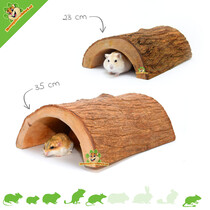
Robust mahogany tree bark tunnel in 23 and 35 cm. For hiding, exploring, climbing, gnawing, and natural furnishing for hamsters, gerbils, rats, and degus.
Read more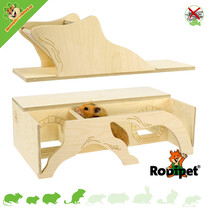
The Watchbox is a very special house that can be placed partly under the ground cover, preferably against the glass. This way you can watch the underground vicissitudes of the animals! The watchbox approaches the natural instincts of small rodents in a ve
Read more
Crocodile-shaped wooden watchbox of approx. 50 cm for mice, dwarf hamsters, and gerbils. Great as a hiding place, viewing house, and landscaping element.
Read more
Wooden watchbox/tunnel with running area, observation chamber, and sloping path with grip grooves. For mice, dwarf hamsters, hamsters, and gerbils.
Read more- Voor 17 uur besteld, dezelfde dag verzonden!
- Rodent specialist since 2011
- Dispatched from our own stock
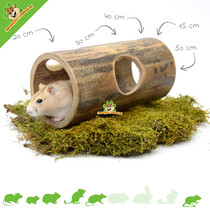
Gnaw-resistant bamboo tunnel in multiple sizes. Due to the smooth, dense structure, it is difficult to gnaw through and easy to clean. For natural furnishing and landscaping.
Read more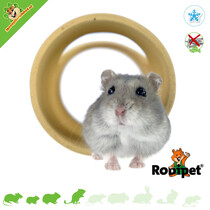
The Rodipet EasyClean advance TERRA Ceramic Tube is made of high-quality and durable ceramic and can be used as a coupling system to create a beautiful underground castle for your rodent. The tube can be connected to the other Rodipet EasyClean Ceramics p
Read more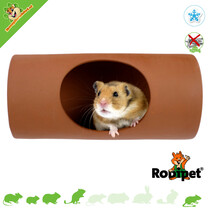
The Rodipet EasyClean advance TERRA Ceramic Tube is made of high-quality and durable ceramic and can be used as a coupling system to create a beautiful underground castle for your rodent. The tube can be connected to the other Rodipet EasyClean Ceramics p
Read more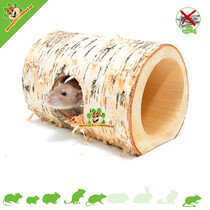
Natural birch log tunnel of approx. 23 cm with a diameter of approx. 8 cm. For hiding, running, gnawing, and scaping for mice, hamsters, gerbils, rats, and degus.
Read more- Voor 17 uur besteld, dezelfde dag verzonden!
- Rodent specialist since 2011
- Dispatched from our own stock
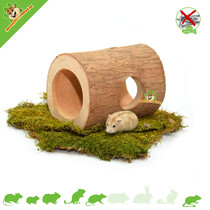
Robust mahogany log tunnel with a side opening and flattened bottom. For mice, dwarf hamsters, hamsters, gerbils, rats, and degus.
Read more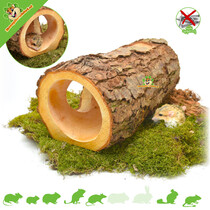
Robust alder wood log tunnel with natural bark. Sturdy, stable, and beautiful for hiding, gnawing, scaping, and natural decor.
Read more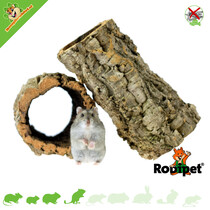
Cork tunnels natural and unique. Each cork tunnel has its own shape and that makes them so nice to use for hamster scapes, for example. The cork tunnel stimulates natural behavior in small rodents, because it has a tunnel shape. Small rodents such as mice
Read more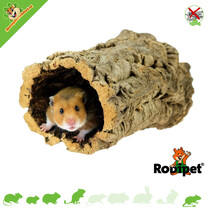
Cork tunnels natural and unique. Each cork tunnel has its own shape and that makes them so nice to use for hamster scapes, for example. The cork tunnel stimulates natural behavior in small rodents, because it has a tunnel shape. Small rodents such as Mice
Read more- Voor 17 uur besteld, dezelfde dag verzonden!
- Rodent specialist since 2011
- Dispatched from our own stock
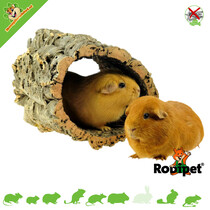
Cork tunnels natural and unique. Each cork tunnel has its own shape and that makes them so nice to use for hamster scapes, for example. The cork tunnel stimulates natural behavior in small rodents, because it has a tunnel shape. Small rodents such as Mice
Read more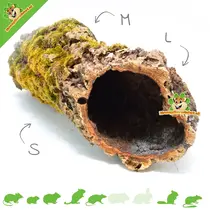
Natural cork tunnel made of untreated cork bark. Ideal as a tunnel, hiding place, climbing structure, and decoration for hamsterscaping, gerbilscaping, and small rodents.
Read more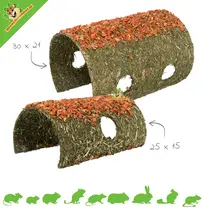
Natural tunnel made of fibers and starch with a carrot, for crawling through, hiding, gnawing, and destroying. Available in 2 sizes for small and larger rodents.
Read more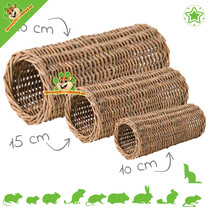
Natural willow tunnel in three sizes for rodents and rabbits. Can be used as a tunnel, hiding place, and gnawable play element in the enclosure or run.
Read more- Voor 17 uur besteld, dezelfde dag verzonden!
- Rodent specialist since 2011
- Dispatched from our own stock
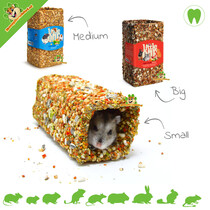
Snack tunnel in three sizes with a crispy topping of seeds, puffed grains, vegetables, and fruit. For nibbling, hiding, foraging, and exploring.
Read more
Round terracotta tunnel for rodents. Sturdy, cooling, rough enough to let nails wear down naturally, and beautiful for hamsterscaping, gerbilscaping, and natural decor.
Read more
Flexible willow bridge measuring 22 x 10 cm for mice, dwarf hamsters, and gerbils. Can be used as a bridge, tunnel, hiding place, step, or natural divider in the enclosure.
Read more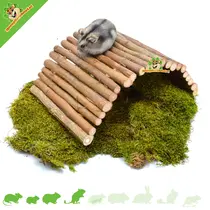
Flexible willow bridge measuring approx. 28 × 17 cm. Can be used as a bridge, tunnel, hiding place, stepping stone, or small landscaping wall for small rodents.
Read more- Voor 17 uur besteld, dezelfde dag verzonden!
- Rodent specialist since 2011
- Dispatched from our own stock
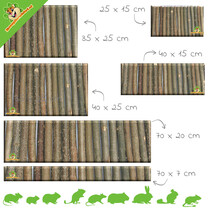
Flexible willow bridge in multiple sizes. Can be used as a bridge, tunnel, shelter, stepping stone, or natural barrier for rodents and rabbits.
Read more
Spacious wooden play area measuring 47 × 22 × 15 cm for mice and dwarf hamsters. With multiple hiding places, levels, steps, and open bottoms. Great for hamsterscaping.
Read more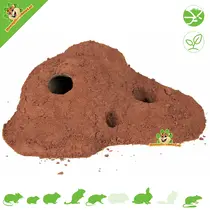
Digging sand with clay for natural landscaping, hamsterscaping, and gerbilscaping. Stays in place better near tunnels and burrows. 5 kg is approx. 5 liters.
Read more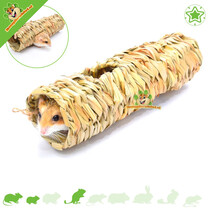
Enter a world of adventure with our 25cm Seagrass Tunnel! With its natural look and convenient dual side openings, this tunnel is a must-have for small rodents such as mice, dwarf hamsters, hamsters and gerbils. Made from sustainable seagrass, this tunnel
Read moreGerbil tunnels – safe tunnels and tubes for digging, hiding and gerbil scaping
Gerbil tunnels are a perfect fit for gerbils' favorite activities: digging , running , hiding , and organizing their habitat like a private "burrow." Tunnels allow you to create routes through the enclosure (above ground) and provide additional hiding places, without relying solely on bedding. In this category, you'll find a carefully selected assortment of products including cork tunnels, bamboo tunnels, tree trunk tunnels, bark tunnels , and terracotta tunnels (approximately 27 tunnel products in total).
At DRD Rodent Shop® , we select tunnels based on practical safety (no sharp edges, a logical size) and enrichment: tunnels should definitely be used in an active gerbil enclosure. We've been specializing in rodents and rabbits since 2011 .
Place tunnels so that gerbils can always move from hiding place to hiding place. This provides both peace and activity.
Gerbil houses →
Wood/cork = gnawing and activity. Bamboo = harder and often stays neat longer. Terracotta = sturdy and stable.
Rodent material →
Tunnels work best as a supplement to a thick, diggable substrate (for true burrows and tunnel building).
Gerbil bedding →
Gerbil tunnels – quick selection guide
In this category, you'll find various tunnel types, from robust "walking tunnels" to gnawing and digging tunnels. It's helpful to remember: more exits and logical routes usually lead to more use.
1) Natural tunnels (viewing, crawling and hiding routes)
- Cork tunnel – natural, lots of grip, nice hiding route.
- Bark tunnel – large, sturdy and ideal as a permanent “tunnel”.
- Willow tunnel / grass tunnel – light and nibbleable (often temporary, but fun).
2) Rodent & challenge tunnels
- Tree trunk tunnels – gerbils like to make openings their own by gnawing.
- Wooden tunnels / watchbox tunnels – combine shelter with a route through the enclosure.
Tip : Use tunnels for foraging as well by occasionally hiding small treats in or near a tunnel route. Gerbil snacks →
What are gerbil tunnels?
Gerbil tunnels are tubes and tunnel-shaped shelters that you place in (or on) the enclosure. They give gerbils a sense of security, encourage exploratory behavior, and help you organize the enclosure logically: from nesting zone to play zone and back, without any open "space."
What materials work well for gerbils?
- Wood – natural and rodent-friendly; ideal as an enrichment.
- Cork – robust, with plenty of grip and often popular as a hiding place.
- Bamboo – hard and often stays beautiful for longer (handy if you're looking for something more "firm").
- Ceramic/terracotta – sturdy and stable, ideal as a permanent tunnel or a cooler spot.
Plastic tunnels are generally less recommended for gerbils, as they can be damaged by avid gnawers. In a gerbil enclosure, a "natural and gnawable" environment often works best.
Installing tunnels and combining them smartly
- Create routes : connect hiding places (houses, tunnels, bends) so that gerbils can move around in a sheltered environment.
- Work with height : place a tunnel (partly) on a plateau or solid surface, so that it does not immediately disappear "under" the ground cover.
- Combine with a digging layer : tunnels on top, real burrow activity underneath with deep ground cover.
- Make eating active : hide a few small snacks as a search (not too many; variety is still beneficial).
Checklist – choosing gerbil tunnels
✔ At least 1–2 fixed tunnel routes (hiding & movement).
✔ Choose materials that suit your group (gnawable vs. hard/stable).
✔ Place tunnels stably (do not wobble, no risk of clamping).
✔ Combine with deep ground cover for real digging behaviour.
✔ Check tunnels regularly for damage caused by gnawing.
Safety
Choose tunnels of a reasonable size for your gerbils and place them securely. Avoid tunnels with sharp edges or loose parts. If they are chewing intensively, check the openings occasionally to ensure they remain clean. If you see that a tunnel is no longer safe, remove it from the enclosure.
FAQ – gerbil tunnels
Which gerbil tunnels are most suitable?
Tunnels made of wood, cork, bamboo, and terracotta are the most popular choices. Wood/cork is ideal for enrichment (gnawing), while bamboo and terracotta are useful if you're looking for something stable.
Are tunnels a replacement for deep bedding?
No: tunnels are a supplement. For true digging and burrowing behavior, a deep, diggable substrate remains the foundation. They work best together.
How do I clean gerbil tunnels?
First, remove loose bedding. Clean with warm water if necessary and let it dry thoroughly before replacing the tunnel. With natural materials, regularly shaking it out often helps a lot.
✔ Gerbil tunnels for hiding, routes & enrichment
✔ Choose from cork, wood, bamboo & terracotta
✔ Specialist since 2011
Order before 5 PM, shipped the same day | Delivered from our own stock | Specialist since 2011

