 Polski

Dwarf Rat Houses – suitable hiding places for small rats
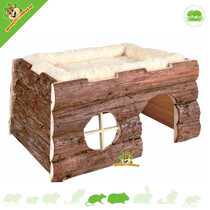
Spacious bark wood house for rats and guinea pigs, with an open bottom, door, small window, and a soft, removable cushion on the roof as an extra relaxation spot.
Read more
15 cm ceramic apple house for mice, dwarf hamsters, hamsters, and gerbils. Can be used as a cool house, sleeping house, sand bath, or natural landscaping decoration.
Read more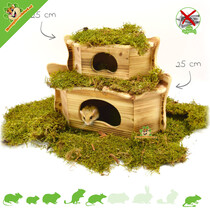
Nail-free corner house made of bark wood in 17 and 25 cm. With an open base and a flat roof for extra surface area. For natural furnishing, hamsterscaping, gerbilscaping, and ratscaping.
Read more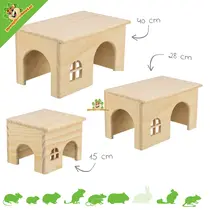
Sturdy wooden log house made of untreated spruce with an open bottom, flat roof, and two entrances. Available in three sizes for different rodents.
Read more- Voor 17 uur besteld, dezelfde dag verzonden!
- Rodent specialist since 2011
- Dispatched from our own stock

Ceramic house for small rodents. Great as a cool resting place during warm days, a cozy sleeping spot, and easy to clean thanks to the glazed ceramic.
Read more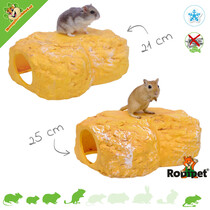
The Rodipet Ceramic Rock House has a beautiful natural design and a large entrance that allows hamsters to enter comfortably, even with bulging cheek pouches! The surface of the rock is made of sturdy ceramic and invites you to climb, explore and keep a l
Read more
Natural coconut houses with a bridge for small rodents. Great as a hiding place, climbing challenge, or landscaping element for mice, dwarf hamsters, hamsters, and gerbils.
Read more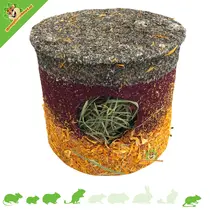
Natural herb house of approx. 15 cm with meadow hay, marigold, and black cumin seeds. For sheltering, sniffing, gnawing, and foraging for small rodents such as mice, dwarf hamsters, hamsters, and gerbils.
Read more- Voor 17 uur besteld, dezelfde dag verzonden!
- Rodent specialist since 2011
- Dispatched from our own stock
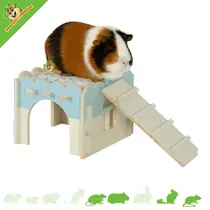
Comfortable wooden house made of FSC® poplar wood for guinea pigs and degus. Includes side entrance, ramp, fluffy fleece blanket, and connectable for extra space.
Read more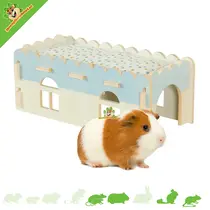
Comfortable wooden house made of FSC® poplar wood for guinea pigs and degus. Two entrances, fluffy fleece blanket, and modular connectable for extra space.
Read more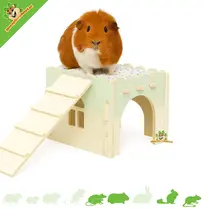
Comfortable wooden house made of FSC® poplar wood for guinea pigs and degus. Includes side entrance, ramp, fluffy fleece blanket, and connectable for extra space.
Read more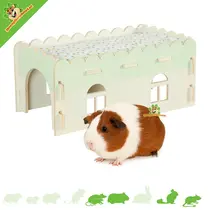
Comfortable wooden house made of FSC® poplar wood for guinea pigs and degus. Two entrances, fluffy fleece blanket, and modular connectable for extra space.
Read more- Voor 17 uur besteld, dezelfde dag verzonden!
- Rodent specialist since 2011
- Dispatched from our own stock
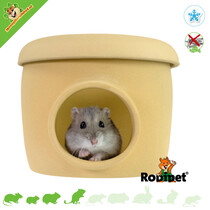
The Rodipet EasyClean GOBi ceramic house is made of high-quality and durable ceramic. This house was developed based on observations made in the Mongolian Gobi during the Rodenti® expeditions in 2008 and 2016. These observations are the basis for the deve
Read more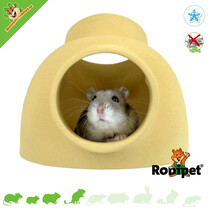
The Rodipet EasyClean GOBi Ceramic Igloo is made of high-quality and durable ceramic. This house was developed based on observations made in the Mongolian Gobi during the Rodenti® expeditions in 2008 and 2016. These observations are the basis for the deve
Read more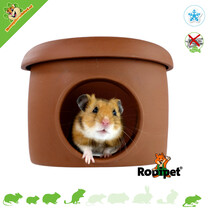
The Rodipet EasyClean Ceramic House is made of high-quality and durable ceramic. The house was developed based on observations in the northern Syrian agricultural steppe during the Rodenti® expeditions in 2007, 2009 and 2010. The researchers looked at how
Read more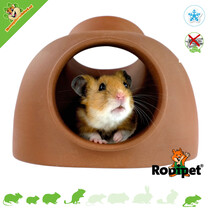
The Rodipet EasyClean Ceramic Igloo is made of high-quality and durable ceramic. The house was developed based on observations in the northern Syrian agricultural steppe during the Rodenti® expeditions in 2007, 2009 and 2010. The researchers looked at how
Read more- Voor 17 uur besteld, dezelfde dag verzonden!
- Rodent specialist since 2011
- Dispatched from our own stock
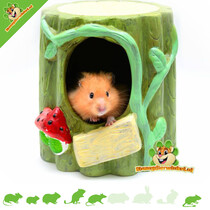
18 cm ceramic log house for mice, dwarf hamsters, hamsters, gerbils, pygmy rats, rats, and degus. As a shelter, cool house, or sand bath.
Read more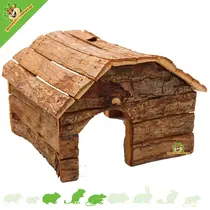
Natural mahogany rodent house with multiple levels, an open bottom, and two openings. For hiding, climbing, exploring, and a natural interior.
Read more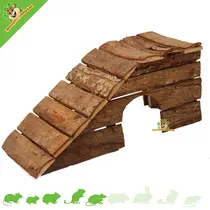
Natural rodent house made of mahogany with bark, an open bottom, and a flat roof. For shelter, exploration, and extra structure in the enclosure.
Read more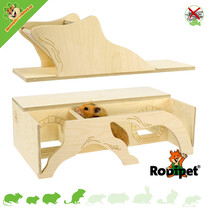
The Watchbox is a very special house that can be placed partly under the ground cover, preferably against the glass. This way you can watch the underground vicissitudes of the animals! The watchbox approaches the natural instincts of small rodents in a ve
Read more- Voor 17 uur besteld, dezelfde dag verzonden!
- Rodent specialist since 2011
- Dispatched from our own stock
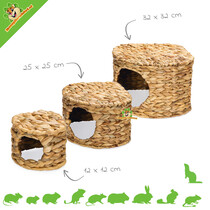
Grass House Corner Water Hyacinth in 3 sizes. Natural water hyacinth corner house with an open base and reinforcement. Choose the correct size via the green animal logos on the product image.
Read more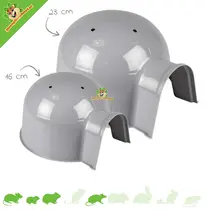
Grey plastic igloo house with an open bottom for mice, dwarf hamsters, hamsters, and rats. Available in 16 and 25 cm, easy to clean.
Read more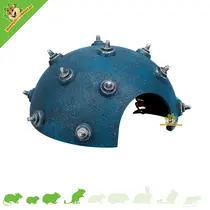
Decorative 18 cm resin hideout for mice, dwarf hamsters, hamsters, and gerbils. With an open bottom and a cool aquascaping look.
Read more
Soft hanging house made of plush and cotton, approx. 22.5 cm. For mice, rats, and degus who like to hang, sleep, or rest in a sheltered spot.
Read more
Dwarf Rat Houses – suitable hiding places for small tame rats
 Dwarf rat houses are important for peace, safety, and a clear overview in the cage. Dwarf rats are small, tame rats, but they remain social animals that enjoy sleeping, hiding, exploring, and establishing routes together. Therefore, when selecting houses for dwarf rats, DRD focuses primarily on size, entrance, stability, ease of cleaning, and whether multiple animals can use them comfortably.
Dwarf rats can still differ significantly from one another in size and build, as they are a relatively young variant/mutation. Therefore, never choose houses based solely on the name "dwarf rat," but always consider your animals: do they fit through the entrance easily, can they turn around comfortably, can they rest together, and does the house remain stable within the setup?
In this category, you will find hiding places and houses that are better suited for small rats than many standard large rat houses. A good house is not too cramped, not inconveniently large, and stands stably within the enclosure. Combine houses with a safe dwarf rat cage , low-dust dwarf rat bedding , natural dwarf rat ratscaping , and optionally a suitable dwarf rat exercise wheel . For food, simply choose good rat food .
In short
✓ Dwarf rat houses must be suitable for small pet rats: spacious enough to hide comfortably, but not inconveniently large.
✓ Because dwarf rats can vary in size, always match your entrance and indoor space to your own animals.
✓ Use multiple hiding places so that pygmy rats can rest both together and separately.
Quick links
Why houses? · Choosing a house · Size & entrance · Types of houses · Placement in the cage · Cleaning · Checklist · Shopping routes · FAQ
Suitable size
A small house must be large enough to be pleasant to use, but also compact enough to fit logically in a dwarf rat cage.
Resting together
Dwarf rats are social animals. Therefore, it is better to choose multiple hiding places so that they can sleep together or separately.
Stably placed
Place the houses low and stable so that they cannot tip over, sink, or stand inconveniently in walkways.
Why houses are important for pygmy rats
Dwarf rats need hiding places to feel safe. A small house provides peace, shelter, and a fixed spot in the cage. This is pleasant during sleeping, grooming, lying together, or briefly withdrawing from busy cage routes.
Because dwarf rats are social, one little house is often not enough to make the cage truly comfortable. Multiple hiding places offer freedom of choice. Sometimes they lie together, sometimes one animal chooses a different spot. This choice makes the cage calmer and more natural.
For dwarf rats, size is especially important. A house for standard rats can sometimes be too large and awkward in a compact setup, whereas a small hamster house might be too cramped, too light, or too restrictive for rat-like use. Because dwarf rats can vary in size, DRD always considers product fit: does the house fit your small tame rats *and* the cage in which it is used?
Choosing a dwarf lattice house: what to look for?
Choose a dwarf rat house based on size, entrance, material, stability, and ease of cleaning. A house must provide shelter but also remain practical in the daily cage. You want to be able to inspect, move, and clean it without disrupting the entire setup.
- Choose a house where your dwarf rat can comfortably turn around, lie down, and hide.
- Pay attention to the entrance: it must match the actual size of your animals.
- For social animals, it is better to choose multiple hiding places than a single sleeping place.
- Pay attention to stability, especially with wooden, ceramic, or natural houses.
- Do not place playhouses on high, unstable places where falling or tipping over could occur.
- Choose materials that suit your cleaning routine and cage setup.
Still unsure about the basics of the enclosure? Then also check out the Dwarf Rat Cage and the Rat Cage Selection Guide .
Size, entrance and interior space
The best size depends on your animals and your cage. A dwarf rat is smaller than a standard pet rat, but still needs space to move naturally. Therefore, do not look only at the external dimensions of the house, but also at the entrance and the usable interior space.
Dwarf rats can vary in size and build. Therefore, always check whether your animals fit easily through the entrance, can turn around comfortably, and can rest together if necessary. The product name provides an indication, but the actual size of your animals determines whether the house fits well.
- The entrance must be large enough to easily go in and out.
- The interior space must be suitable for lying down, turning over, and resting together.
- For multiple pygmy rats, multiple houses or hiding places are useful.
- A house that is too cramped can become restless or impractical for pack animals.
- A house that is too large can take up a lot of cage space and block routes.
- Always look at your own animals: build, age, and group behavior matter.
Practical tip
✓ Choose two or three well-placed hiding places rather than one large house that blocks a lot of space.
✓ Place a house so that your pygmy rats maintain multiple routes.
✓ A little dried moss or light natural decoration on the roof can help a little house blend beautifully into a Ratscaping setting.
Which types of houses are suitable for pygmy rats?
Dwarf rats can use various types of houses. The best choice depends on the location in the cage, the material, the degree of gnawing, and how easily you want the house to keep clean.
Wooden houses
Wooden houses have a natural look and fit in nicely with Ratscaping. They provide shelter and combine well with bedding, tunnels, and natural materials. Check wooden houses regularly for moisture, odor, and gnawing damage.
Ceramic houses
Ceramic houses are often sturdy and easy to wipe clean. They can be pleasant as an extra hiding place, especially when you are looking for a house that remains stable. Do pay attention to the entrance and interior space, so that the house is a good fit for your pygmy rats.
Natural hiding places
Cork, wood, half tunnels, and natural shapes are great for creating routes and hiding places. They don't always have to be a single enclosed house; sometimes a natural hiding place actually provides more choice and movement in the cage.
More room or route cottages
Some houses have multiple entrances, chambers, or routes. This can be interesting for pygmy rats, as they like to choose and move around. Do consider ease of cleaning and place the house stably so that it does not sag or tip over.
Soft resting spots as an addition
In addition to houses, soft resting spots or hanging places can also be nice. View this as a supplement to permanent hiding places, not as the only shelter. Dwarf rats enjoy having multiple types of resting places.
Place dwarf grate houses in the cage
The placement determines how pleasantly a house is used. Place houses low, stable, and logically along the route. A house may be part of the layout, but should not cause tipping, sinking, or awkward steps leading to bars or doors.
- Place the houses on a flat, stable surface.
- Prevent a house from tipping over or sinking into loose bedding.
- Leave enough space around the entrance so that animals can pass each other.
- Create multiple hiding places scattered throughout the cage.
- Do not place houses directly under a leaking water bottle or designated potty spot.
- After installation, check that bars, doors, and drinking points remain easily accessible.
For a logical layout, combine houses with Dwarf Rat Ratscaping , Dwarf Rats Bedding , and practical Rat Cage Accessories .
Cleaning and checking cottages
Dwarf rats may use houses to sleep, eat, hoard, or simply sit quietly. Therefore, checking regularly is advisable. Look for any remaining food, wet bedding, or odors, and inspect the material for damage.
- Check the houses regularly for moisture, odor, and old food remnants.
- Remove wet nesting material or wet bedding in time.
- Check the wood for gnawing damage, sharp edges, or sagging.
- Wipe down ceramic or smooth houses regularly when necessary.
- Let cleaned houses dry thoroughly before putting them back.
- Replace houses that are no longer sturdy, fresh, or pleasant to use.
For a fresh base, you can move on to Dwarf Rat Bedding and the broader category Rat Care .
Checklist: how to choose pygmy rat houses that are right
✓ The house matches the actual size and build of your dwarf rats.
✓ The entrance is easily accessible and the interior space is practical.
✓ There are multiple shelters for resting both together and separately.
✓ The playhouse stands stably and cannot easily tip over or sink.
✓ The material suits your cleaning routine and decor.
✓ The cottage does not block any major routes, drinking points, doors, or ventilation.
Handy shopping routes for holiday homes and furnishings
A pygmy rat house works best as part of a complete, safe setup. With these routes, you can quickly create a logical combination.
Shelter & sleep
Choose multiple houses or hiding places so that your pygmy rats have a choice of rest and shelter.
Natural interior design
Combine houses with natural routes, ground cover, digging zones, and sniffing spots.
Activity & basis
Complete the cage with exercise, food, snacks, and practical care.
Learn more about pygmy rats and home environment
Do you want more guidance regarding dwarf rats, cage setup, and preparation? These information pages are a good fit for this category:
FAQ – frequently asked questions about pygmy rat houses
Which houses are suitable for pygmy rats?
Suitable houses for pygmy rats are stable, easily accessible, and appropriately sized. Because pygmy rats can vary in size and build, always consider your own animals: the entrance, interior space, stability, and group use must be right.
Can dwarf rats live in hamster houses?
Sometimes that is possible, but not automatically. Many hamster houses are small, lightweight, or not intended for rat-like use. Always check the entrance, interior space, stability, and material.
Can pygmy rats live in regular rat houses?
Sometimes it is. A standard rat house can be pleasant as a spacious hiding place, but it can also take up a lot of space in a dwarf rat cage. Therefore, choose based on cage layout and group use.
How many houses do pygmy rats need?
Multiple hiding places are recommended. Dwarf rats are social and often lie together, but they also need to be able to retreat. Therefore, it is better to use multiple resting spots in different places in the cage.
Where do you place a pygmy rat house?
Place a shelter low, stable, and easily accessible. Prevent it from tilting or sinking. Also ensure that entrances, drinking points, doors, and routes are not blocked.
Are wooden houses suitable for pygmy rats?
Yes, wooden houses can be a good fit for pygmy rats and a natural interior. However, do check them regularly for moisture, odor, gnawing damage, and sharp edges.
DRD selects custom-made dwarf rat houses for tranquility and product fit
At DRD Knaagdierwinkel®, when it comes to dwarf rat houses, we look at what really works for small, tame rats. A good house provides shelter, fits in the cage, remains stable, and supports natural behaviors such as sleeping together, hiding, sniffing, and establishing routes.
Undecided between a wooden house, ceramic house, natural shelter, or route house? Then check out the Dwergrat Webshop or contact us via Service & Contact . We are happy to help you decide.
✓ Dwarf latrine houses and shelters with attention to size, entrance, stability, and resting together
✓ Always match the actual size and build of your dwarf rats
✓ Smartly combines with a dwarf rat cage, bedding, Ratscaping, exercise wheels, and good rat food
✓ Specialist since 2011
✓ Ordered before 17:00, shipped the same day from our own stock
