Polski


Have a question?
Have a question about this product? Please feel free to contact us, we will be happy to help you!

Have a question about this product? Please feel free to contact us, we will be happy to help you!
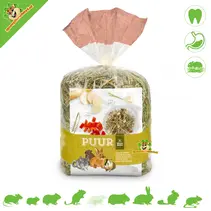
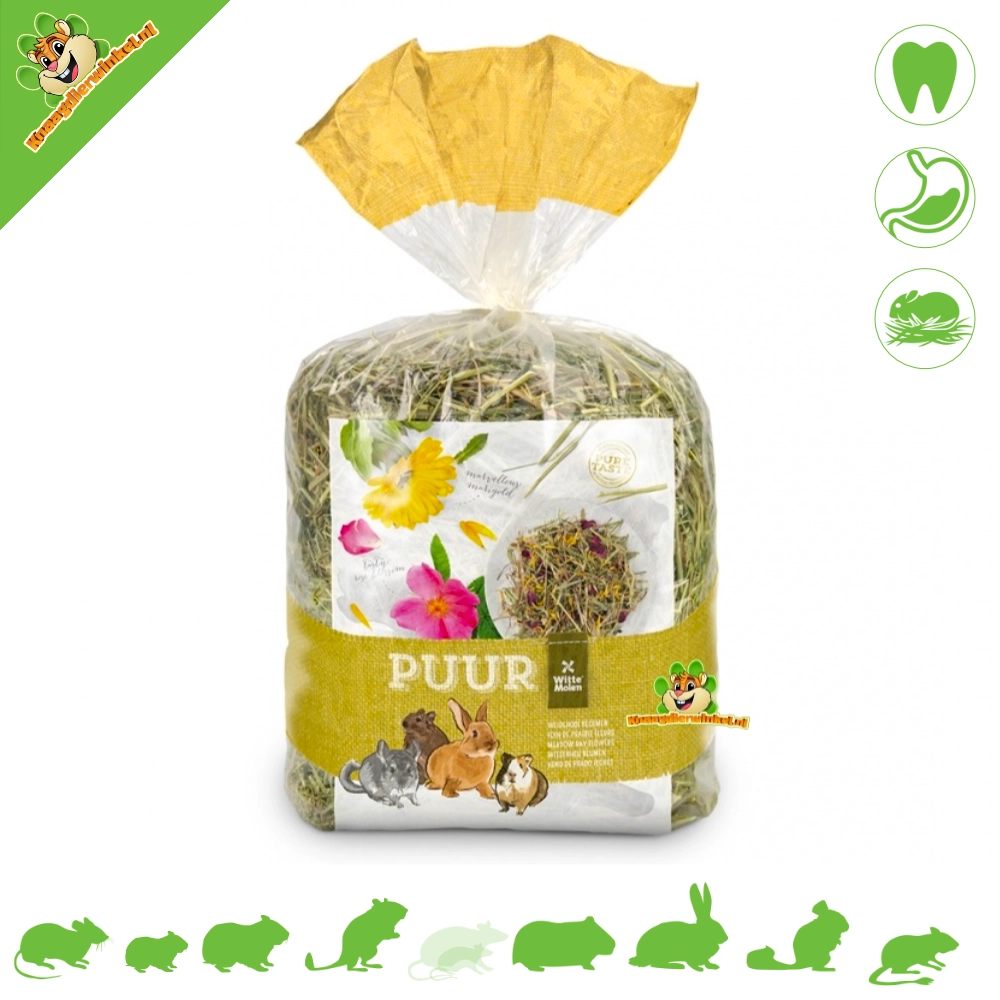
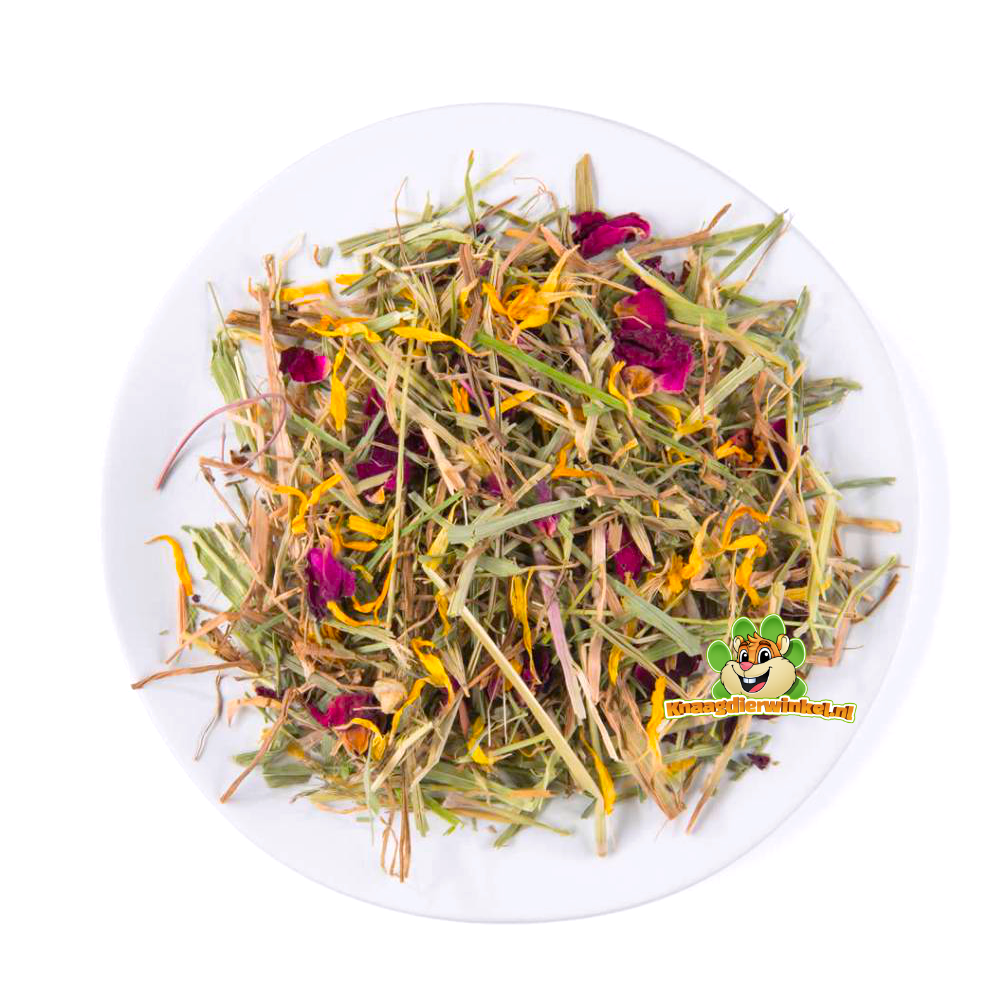
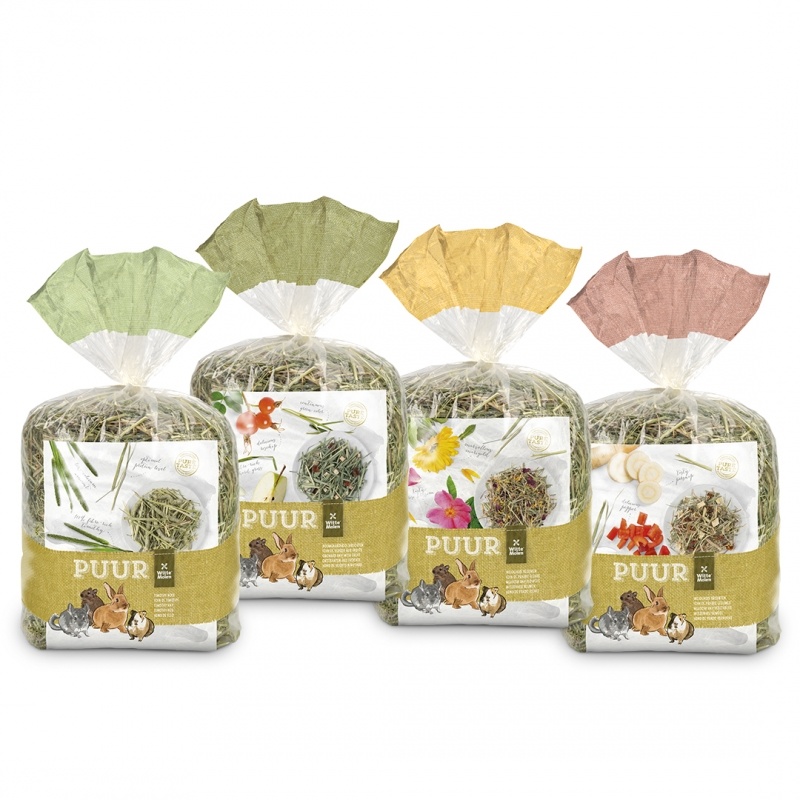
Witte Molen PUUR Meadow Hay Flowers is a fragrant meadow hay with marigold and rose blossom. This hay adds extra variety to haymaking and is suitable for guinea pigs, rabbits, chinchillas, and degus as a fiber-rich hay supplement. For small rodents such as mice, dwarf hamsters, hamsters, and gerbils, it is especially nice as nesting, scaving, and foraging material.
When it comes to hay, DRD always considers its role in the enclosure. For herbivores such as guinea pigs, rabbits, chinchillas, and degus, hay is an important part of their daily diet. For small rodents, you use hay primarily to make the enclosure more natural, richer, and more interesting. This way, you use the same product in a way that suits the animal.
✔ Meadow hay with floral variety of marigold and rose blossom
✔ Roughage-rich addition to the daily diet
✔ Stimulates sniffing, searching, and natural eating behavior
✔ Nice as a hay alternative for guinea pigs, rabbits, chinchillas, and degus
✔ Also nice as nesting and scaving material for small rodents
✔ Combines well with hay , hay racks , and rodent and rabbit herbs
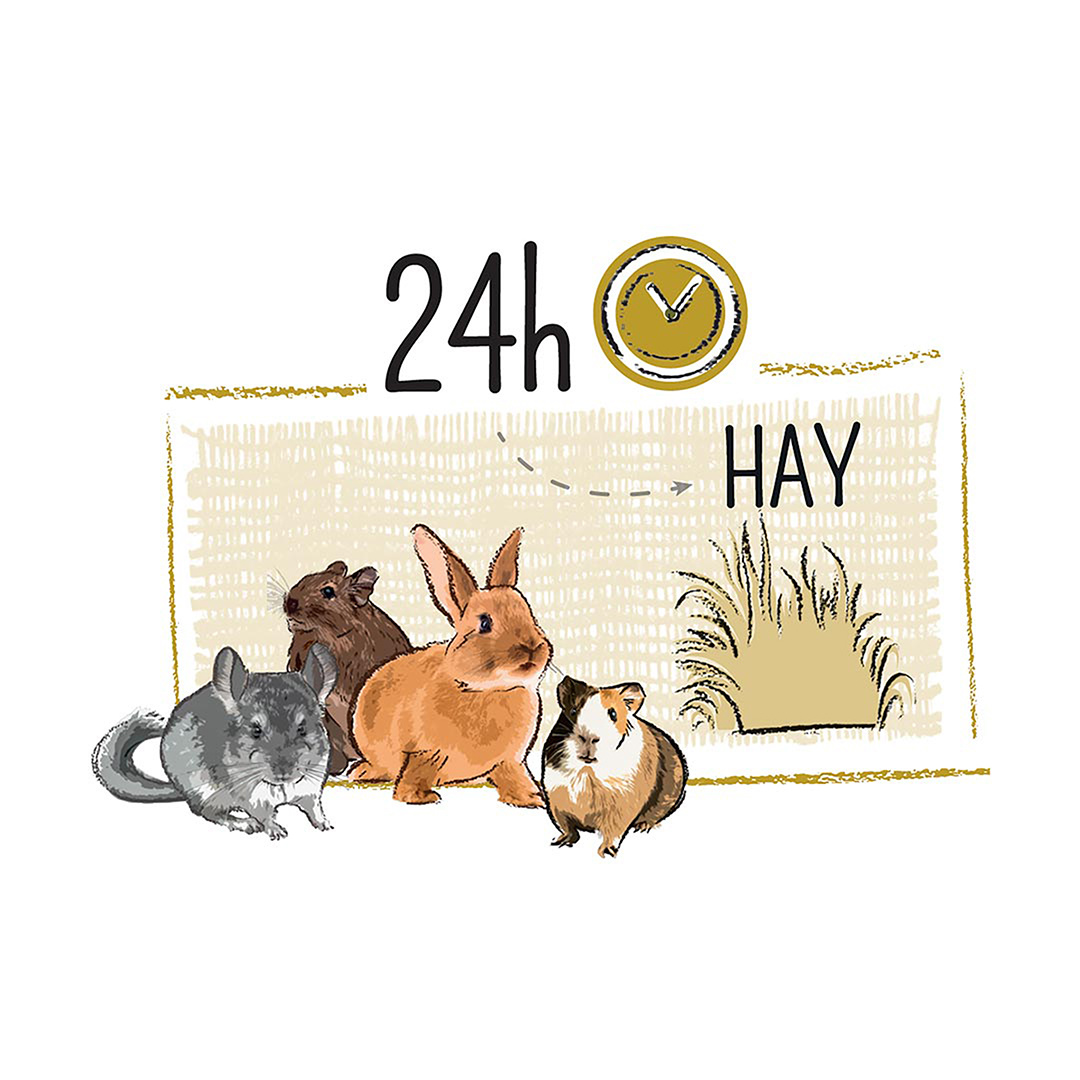
Hay is much more than just filler in the enclosure. For guinea pigs, rabbits, chinchillas, and degus, hay is an important part of their daily diet. It provides prolonged chewing, texture, and a fiber-rich base. Hay with flowers can help make haymaking more appealing, especially for animals that enjoy exploring scent and texture.
Witte Molen PUUR Meadow Hay Flowers contains marigold and rose blossom. This gives the hay extra fragrance, color, and variety. You can use it as a tasty hay variation alongside a regular hay base, or as extra attractive hay in a hay rack, hay corner, hay sack, or foraging area.
For small rodents, this hay is particularly interesting as an enrichment. Mice, dwarf hamsters, hamsters, and gerbils can use hay for nesting, dragging, layering, or combining with bedding in a scape. It does not need to be the daily basis of the diet for these animals, but it can add a lot to the enclosure setup and their natural foraging behavior.
For rats, hay is not a daily staple like it is for guinea pigs or rabbits. For rats, primarily use low-dust bedding, tunnels, hammocks, foraging toys, and suitable Ratscaping materials. A small amount of hay can optionally be used as sniffing material if your rats enjoy it, but it is not a main product for rat care.
For guinea pigs, rabbits, chinchillas, and degus, you can offer this hay in a hay rack, hay bag, hay corner, or feeding area. Always provide sufficient hay and refresh it regularly, especially when the hay is damp, trampled, or soiled.
For mice, dwarf hamsters, hamsters, and gerbils, you can use small tufts in the bedding, near a house, in a tunnel, or around a foraging area. For example, mix hay in layers through the bedding to add extra structure to hamsterscaping or gerbilscaping.
Do not use this hay as a substitute for a complete diet. It is a complementary feed and, depending on the animal species, should be used alongside appropriate main feed, water, hay/basic fibers, and other equipment.
How long a 500-gram bag lasts depends on the animal species, the number of animals, and how you use the hay. Rabbits and guinea pigs consume hay more quickly because it is eaten daily as a fiber-rich base. For small rodents, you usually use smaller tufts as nesting, scaving, or foraging material.
A 500-gram bag is particularly nice as a tasty variation or supplementary hay product. For large-scale daily use, you can combine this with a regular hay base.
Hay can help add more structure to the bedding in hamsterscaping and gerbilscaping. By alternating thin layers of hay with bedding, tunnels and digging zones can take shape better. Additionally, the color difference creates a beautiful, natural look.
Use small tufts for this and distribute the hay loosely. Combine with hamster bedding , gerbil bedding , cork, bamboo , or natural tunnels. This way, the hay becomes part of an enclosure where your animal can search, drag, nest, and explore.
Hay is a natural product. Color, smell, texture, and coarseness may vary slightly from harvest to harvest. That is part of hay. Store the product in a dry, dark, and well-ventilated place to preserve the smell and quality as much as possible.
Witte Molen PUUR Meadow Hay Flowers combines beautifully with a good hay area, appropriate main feed, and natural enrichment. This way, you turn hay into not only food but also an active part of the enclosure.
This hay is suitable for guinea pigs, rabbits, chinchillas, and degus as a hay variation. For mice, dwarf hamsters, hamsters, and gerbils, it is especially nice as nesting, landscaping, and foraging material.
Yes, this hay can be given as a tasty hay variation for rabbits. Hay should be readily available to rabbits daily.
Yes, guinea pigs can use this meadow hay with marigold and rose blossom as a hay variation alongside their daily hay base.
Yes, for hamsters, this hay is primarily suitable as nesting material, hamsterscaping material, and foraging structure. It is not a hamster's main food.
Yes, gerbils can use hay to drag, gnaw, and incorporate into the bedding. It is fun as part of gerbilscaping and natural decor.
The composition consists of 92% hay, 4% marigold, and 4% rose blossom.
This hay contains 28% crude fiber.
Yes, hay is a natural product. Color, smell, texture, and coarseness may vary slightly from harvest to harvest. Store hay in a dry and dark place and always check that it smells fresh.
This product is a complementary feed. While hay is an important daily source of fiber for herbivores, the overall diet must be appropriate for the species and supplemented with suitable food.
Witte Molen PUUR Meadow Hay Flowers 500 grams is a great choice when you want to offer hay with extra scent, color, and variety. For guinea pigs, rabbits, chinchillas, and degus, it is a tasty hay supplement; for small rodents, it is especially beautiful as nesting, landscaping, and foraging material in a naturally decorated enclosure.
| Content (approx): | 500 grams |
| Composition: | 92% hay, 4% marigold, 4% rose blossom |
| Analysis: | Crude protein 7.7%, Crude fat 1.9%, Crude fiber 28%, Crude ash 6.3% |
| Promotes Foraging: | Yes |
| Suitable for: | Rodents, Mouse, Dwarf hamster, Hamster, Gerbil, Guinea Pig, Rabbit, Chinchilla, Degu |
| Type: | supplementary pet food |
| Particularities: | The quality of the hay depends on the harvest |
| Disclaimer: | Not for food producing animals |
Mooi product, heerlijk geurend, groen, lekker los verpakt. Weinig stof. Kortom een fijne hooisoort die Onze cavia’s graag eten ter afwisseling van Timothee hooi. Echt een aanrader!
Voldoet aan de verwachtingen
Onze konijnen zijn er dol op