 Polski

Rat houses & rat shelters – hiding places, Sputniks, and sleeping houses for pet rats
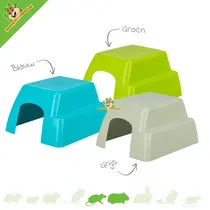
Plastic igloo house measuring 23 × 26 x 15 cm for rats and guinea pigs. With an open bottom, step, and a 10 x 10 cm opening. Easy to clean.
Read more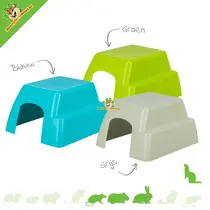
Spacious plastic igloo house measuring 29 × 33 x 19 cm for rats, guinea pigs, and small rabbits. With an open bottom, step, and easy-to-clean plastic.
Read more
Spacious plastic hanging house for mice, pygmy rats, and rats. Can also be placed on the floor. Easy to clean and ideal as an elevated resting place.
Read more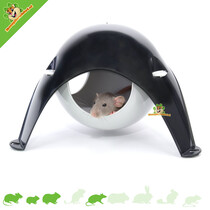
Spacious plastic Sputnik house for mice, hamsters, pygmy rats, and rats. Can be used as a hanging house or a standing house, easy to clean, and ideal as an extra sleeping place.
Read more- Voor 17 uur besteld, dezelfde dag verzonden!
- Rodent specialist since 2011
- Dispatched from our own stock

Complete your pet's living space with the Rody Tunnel Small Animal Hideaway, a great hideaway designed specifically for the active and playful nature of small animals. This tunnel not only provides a safe and comfortable place to rest, but also stimulates
Read more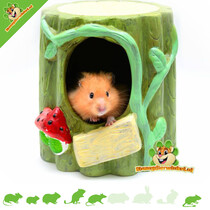
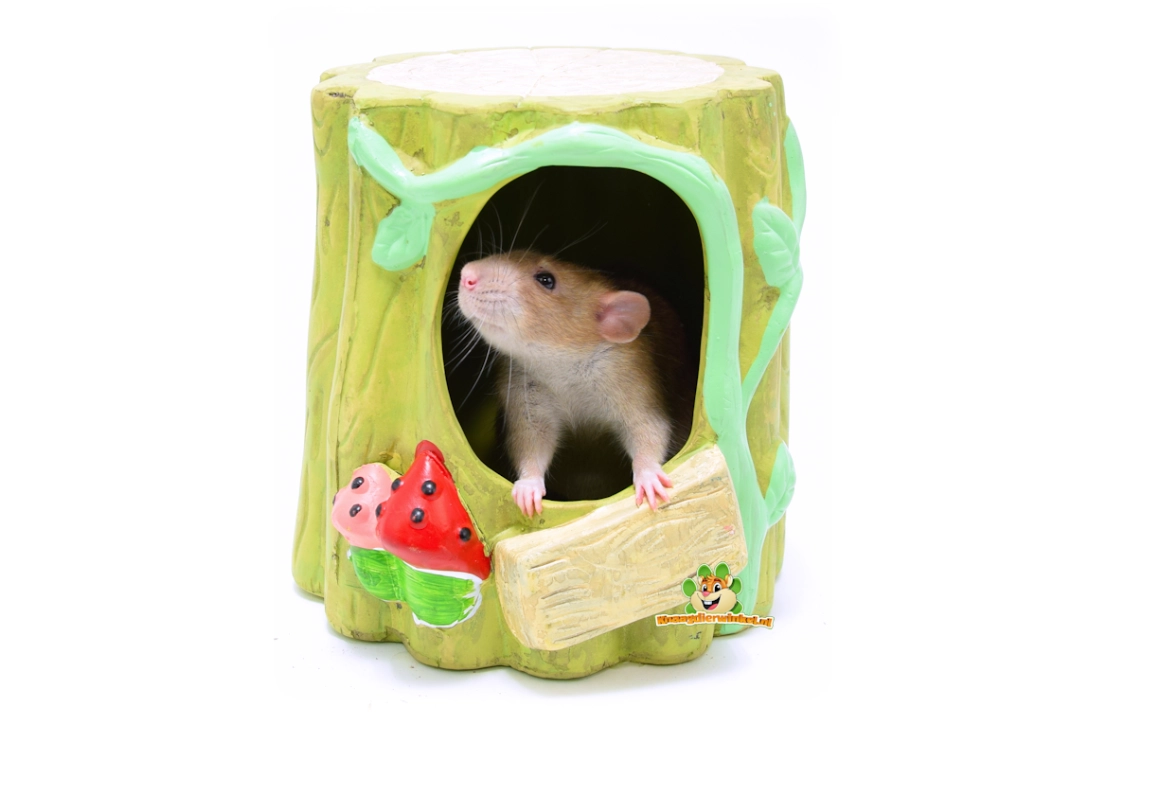
18 cm ceramic log house for mice, dwarf hamsters, hamsters, gerbils, pygmy rats, rats, and degus. As a shelter, cool house, or sand bath.
Read more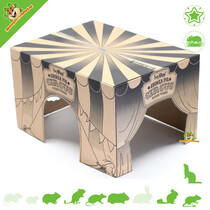
It's no secret that guinea pigs love tunnels, burrows, and cardboard boxes. As prey animals, guinea pigs thrive on a safe space where they can hide, nap, and, of course, get up to mischief!
Read more
HayPigs cardboard playhouse for rodents who love to hide, gnaw, and destroy. With multiple openings, an open base, and a spacious design for fun and shelter.
Read more- Voor 17 uur besteld, dezelfde dag verzonden!
- Rodent specialist since 2011
- Dispatched from our own stock

Tipi Tent Hammock Ami 23 cm made of seagrass and plush. A cozy hanging shelter for mice, pygmy rats, rats, degus, and birds. With hanging system and hand wash instructions.
Read more
Soft plush igloo measuring 23 × 23 × 23 cm for dwarf rats, rats, guinea pigs, and ferrets. For chinchillas and degus only if they do not gnaw on textiles.
Read more
Soft plush pumpkin-shaped sleeping bag. Available in 2 sizes. For mice, pygmy rats, rats, guinea pigs, chinchillas, degus, and ferrets that use textiles neatly.
Read more
Soft plush pineapple-shaped sleeping bag. Available in 13, 23, and 38 cm. For mice, pygmy rats, rats, guinea pigs, chinchillas, degus, and ferrets that neatly use textiles.
Read more- Voor 17 uur besteld, dezelfde dag verzonden!
- Rodent specialist since 2011
- Dispatched from our own stock
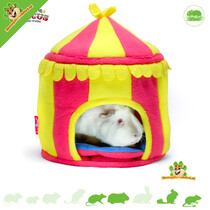
Soft HayPigs Circus Tent with two removable pee pads for guinea pigs, rats, and other rodents. A great hiding place for resting, sleeping, and sheltering.
Read more
Soft plush sleeping bag in a pink apple shape. Available in 14 and 23 cm. For animals that use textiles neatly; always check for chewing and wear.
Read more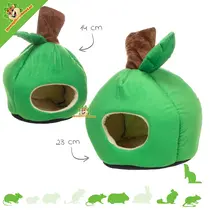
Soft plush sleeping bag in a green apple shape. Available in 2 sizes. For mice, pygmy rats, rats, guinea pigs, chinchillas, degus, and ferrets that use textiles neatly.
Read more
Soft hanging house made of plush and cotton, approx. 22.5 cm. For mice, rats, and degus who like to hang, sleep, or rest in a sheltered spot.
Read more- Voor 17 uur besteld, dezelfde dag verzonden!
- Rodent specialist since 2011
- Dispatched from our own stock

Soft plush house of approx. 32 cm for rats, guinea pigs, small rabbits, ferrets, chinchillas, and degus. Cozy, sheltered, and with a removable cushion.
Read more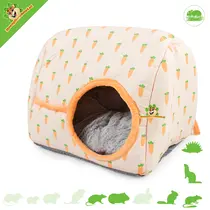
Soft plush carrot house of approx. 30 cm for rats, guinea pigs, ferrets, chinchillas, and degus. With a cozy shape and removable cushion.
Read more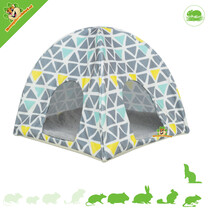
Soft 37 cm Trixie tent with two openings and a removable cushion. Great as a hiding place for guinea pigs, small rabbits, and ferrets, and for rats especially as an accessory during run.
Read more
Soft fleece tunnel from HayPigs with a removable pee pad and plastic insert for extra sturdiness. Great as a hiding place or sleeping tunnel for guinea pigs, rats, and other larger rodents.
Read more- Voor 17 uur besteld, dezelfde dag verzonden!
- Rodent specialist since 2011
- Dispatched from our own stock
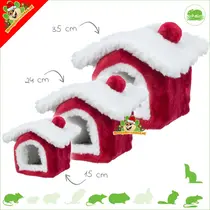
Soft plush Christmas house in three sizes. Cozy festive hideout for mice, rats, guinea pigs, rabbits, chinchillas, and degus. Use under supervision.
Read more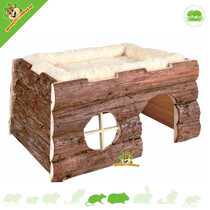
Spacious bark wood house for rats and guinea pigs, with an open bottom, door, small window, and a soft, removable cushion on the roof as an extra relaxation spot.
Read more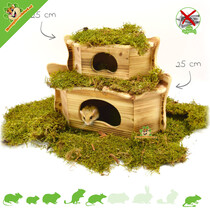
Nail-free corner house made of bark wood in 17 and 25 cm. With an open base and a flat roof for extra surface area. For natural furnishing, hamsterscaping, gerbilscaping, and ratscaping.
Read more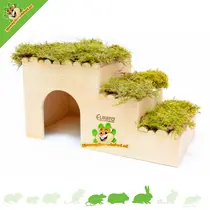
Spacious wooden ladder house measuring 42 cm. Ideal as a large sleeping house for rats and guinea pigs. For small rodents, it can primarily be used as a buried hideout.
Read more
Rat Houses & Homes – sleeping together, sheltering, and quietly retreating
 Rat houses are important resting places in the rat cage. Rats like to sleep in a sheltered spot and often together with other rats. Therefore, when selecting houses, DRD looks not only at “does it fit in the cage?”, but primarily at group use, size, entry, material, placement, and how the house fits in with the rest of the cage setup.
DRD selects houses and hiding places that rats can actually use: spacious enough to lie together, easily accessible, and logically combined with Rat Hammocks , Rat Tunnels & Tubes , Rat Platforms & Ladders , and Nesting Material, Cushions & Baskets . This way, a house does not become a standalone object, but a pleasant resting zone in the cage.
In short
✓ Rat houses provide sheltered resting places where rats like to sleep together.
✓ Choose multiple hiding places rather than one small house that the entire group has to compete for.
✓ Pay attention to size, entrances, ease of cleaning, and a stable spot in the cage.
Quick links
Why houses? · Choosing a house · Types of houses · Multiple rats · Placement in the cage · Maintenance & hygiene · Checklist · Shopping routes · FAQ
Sleeping together
Rats like to lie close together. A spacious little house provides a nice group spot where multiple rats can rest in shelter.
Hiding & choosing
Multiple houses and hiding places provide choice. This makes the cage calmer and gives rats the opportunity to lie together or separately.
Creating cage zones
A small house helps to organize the cage logically: sleeping here, playing there, toilet in the corner, and routes in between.
Why little houses are important for rats
Rats are social animals, but they also need places where they feel sheltered. A small house provides a clear resting place where your rats can sleep, lie together, or retreat for a moment. This makes the cage more organized and gives your rats more choice.
A good house supports the overall cage layout. At the bottom, a house can create a quiet sleeping zone, while hammocks and tunnels add height and routes. In a natural setup, a house can become part of a Ratscaping corner with bedding, tunnels, gnawing material, and foraging areas.
It is best when rats can choose. One time they sleep together in a large house, the next time they choose a hammock, tunnel, or basket. This freedom of choice makes the cage more interesting and pleasant for daily use.
Choosing a rat house: what to look for?
You choose the right rat house based on size, entrance, material, and placement. Space is especially important for rats. A house must not only be suitable for a single rat but often also for sleeping together. Therefore, consider the body size of your rats and the group for which you are using the house.
- Choose a house that is spacious enough for adult rats.
- For a group, a larger shelter or multiple hiding places are often more pleasant.
- A small house with multiple openings can be useful as an extra route or alternative option.
- Pay attention to the entry: your rats must be able to get in and out easily.
- Choose material that fits your cleaning routine.
- Place the playhouse stably so that it cannot slide, tilt, or sink.
Unsure about the complete setup? Then also check out Setting up a rat cage and What do you need for rats?
What types of rat houses are there?
Rats use houses in various ways. Some houses are primarily comfortable sleeping spots, while others serve as hiding places, play areas, staging posts, or are part of a natural cage setup. By combining different types, your cage gains more variety and structure.
Spacious sleeping cabins
Spacious sleeping houses are ideal for rats that like to lie together. Choose a house that is large enough for your group or combine multiple houses so that the rats do not all have to sleep in one place.
Wooden houses
Wooden houses provide a natural look and are often enjoyed as hiding places. They fit beautifully with Ratscaping and natural decor. Keep in mind that wood can absorb urine and odor; therefore, place them strategically and check regularly.
Plastic houses
Plastic houses are practical because they are easy to clean. This is useful in cages where rats like to choose specific urination spots or where you want to wipe down the house regularly. Optionally, combine them with nesting material or a soft mat for extra comfort.
Grass, willow, and natural hiding places
Natural houses made of grass, willow, or similar materials provide structure and something to explore. They are fun as a hiding place, a gnawing project, or part of a natural play corner. Check them for moisture and replace them when they are worn out.
Houses with multiple entrances
Houses with multiple openings are convenient in a group. Rats can enter and exit more easily, pass each other, and choose a different route. This can be especially useful when a house becomes popular or is located in the middle of a route.
Multiple rats: provide enough resting places
Rats are meant to live together, but living together also means there must be enough choice. One small house can be nice, but with a group, it is often better to offer multiple resting places. This way, rats can sleep together but also move to separate areas when they feel the need.
- Provide at least one spacious shared shelter.
- Additionally, add extra houses, hammocks, tunnels, or baskets.
- Use multiple openings or routes at popular hiding places.
- Distribute resting areas across different heights and zones.
- Check if one house is consistently claimed; if so, add extra options.
- Combine soft resting places with materials that are easy to keep clean.
You can find good combinations under Rat Hammocks , Nesting Material, Cushions & Baskets , and Rat Tunnels & Tubes .
Where do you place little houses in the rat cage?
A playhouse works best when placed in a logical location. For example, position it in a quiet corner, near a route, or as part of a sleeping zone. Ensure the playhouse is stable and prevents it from tipping over or sinking. A dry, easily inspectable location is particularly desirable for wooden or natural playhouses.
- Place a sleeping house in a quiet spot where rats like to lie.
- Place the playhouses stably, preferably on a flat surface.
- Do not use small houses as the only high step, but combine height with platforms and tunnels.
- Preferably do not place wooden houses directly on designated urination spots.
- Use multiple resting areas for larger cages or groups.
- Make a playhouse part of a route, play area, or Ratscaping zone.
Practical tip
✓ Don't just place a house “wherever there is room”, but where your rats like to rest or walk through.
✓ Combine a house with nesting material or a soft mat for extra comfort.
✓ At popular cottages, multiple entrances or extra resting areas are often very pleasant.
Maintenance & hygiene of rat houses
Houses are nice sleeping places, but as a result, they are also used intensively. Rats drag nesting material along, sometimes eat inside a house, and may also urinate in them. Therefore, check houses regularly for moisture, odor, food remnants, and gnawing damage.
- Check the houses for damp spots, odor, and old food remnants.
- Remove dirty nesting material in time and replace it with clean material.
- Wipe down plastic houses regularly and let them dry thoroughly.
- Check wooden houses for urine stains, splinters, and gnawing damage.
- Replace natural houses when they are wet, musty, or too badly damaged.
- Use pee pads or nearby toilets if rats keep wetting the same spot.
For a fresh cage, conveniently combine houses with rat pee mats , rat toilets , and rat bedding .
Checklist: how to choose rat houses that work
✓ The house is spacious enough for adult rats and suits your group.
✓ You offer multiple resting places so that rats can choose.
✓ The entrance is easily accessible and not too narrow.
✓ The material fits your cleaning routine and your rats' urination habits.
✓ The playhouse is stable and cannot tip over or sink.
✓ You regularly check for moisture, odor, food residue, splinters, and gnawing damage.
Handy shopping routes for cottages, resting places, and cage furnishings
Houses work best when they are part of the entire rat cage. With these routes, you quickly create a nice combination of rest, routes, comfort, and hygiene.
Sleeping & resting
Create several nice resting spots where your rats can lie together or separately.
Routes & layout
Combine houses with tunnels, platforms, and Ratscaping for an active, logical cage.
Hygiene & comfort
Keep sleeping areas fresh with suitable bedding, pee pads, litter boxes, and soft materials.
Learn more about resting places and rat cage design
Do you want more guidance on logically setting up a rat cage? These information pages are a good fit for this category:
FAQ – frequently asked questions about rat houses
Do rats need a house?
Yes, a small house or other sheltered resting place is a nice foundation in the rat cage. Rats like to sleep safely and sheltered, often together with other rats. Combine houses with hammocks, tunnels, and soft resting spots.
How big should a house for rats be?
A rat house must be spacious enough for adult rats. Because rats often sleep together, a larger house or multiple hiding places is preferable. Always consider the body size of your own rats.
Is one little house enough for multiple rats?
One spacious little house can be a nice group spot, but multiple resting places are usually more pleasant. This way, rats can lie together, but also move to another spot whenever they want.
What is better: wood or plastic?
Wood provides a natural look and extra texture. Synthetic is often easier to clean. The best choice depends on your cage, cleaning routine, and where your rats like to sleep or urinate.
Why are multiple entrances useful for rat houses?
Multiple entrances make a house easier to access. Rats can pass each other, swerve, and use the house as a route. This is especially useful in a group or at a popular house.
How do you keep a rat house clean?
Check houses regularly for moisture, odor, food remnants, and gnawing damage. Replace dirty nesting material in time. Plastic is easy to wipe down; check wood and natural materials extra carefully for urine stains and wear.
DRD selects cottages that combine tranquility, group behavior, and interior design.
At DRD Knaagdierwinkel®, we view rat houses as part of the entire cage. A good house provides shelter, but also structure: a sleeping zone, a route area, a hiding place, or a quiet corner. This way, you help your rats get a cage where they can sleep, choose, lie together, and explore.
Are you unsure whether to choose a wooden house, plastic house, natural house, large group house, or multiple small hiding places? Then check out the Ratten Webshop or contact us via Service & Contact . We are happy to help you decide.
✓ Rat houses and huts for sleeping, sheltering, and resting together
✓ Smartly combines with hammocks, tunnels, nesting material, pee pads, and Ratscaping
✓ Specialist since 2011
✓ Ordered before 17:00, shipped the same day from our own stock
