 Polski

Rat exercise wheels & running wheels – safe exercise and enrichment for pet rats

Spacious 33 cm plastic running wheel for hamsters, gerbils, dwarf rats, and rats. With a closed running surface, removable front panel, and a choice of blue, salmon, and green.
Read more
Kaytee Silent Spinner running wheel 29 cm for Syrian hamsters, gerbils, and dwarf rats. Plastic running wheel with a closed running surface, can be used freestanding or attached to bars.
Read more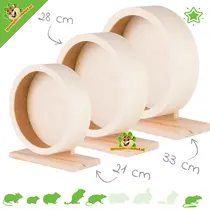
Natural wooden exercise wheel with cork running surface for extra grip. Available in ø 21, ø 28, and ø 33 cm. For mice, dwarf hamsters, hamsters, gerbils, and rats.
Read more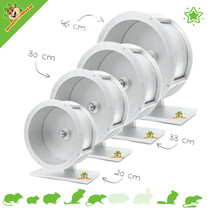
High-quality aluminum exercise wheel with smooth running, a strong base, and a smooth, grippy running surface. Available in multiple sizes for small rodents that require a durable exercise wheel.
Read more- Voor 17 uur besteld, dezelfde dag verzonden!
- Rodent specialist since 2011
- Dispatched from our own stock
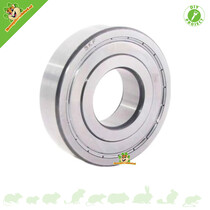
Replacement ball bearings for the aluminum wheels from DRD Rodent Shop® and the Silent Spinners. Replacement requires technical skills and is at your own risk.
Read more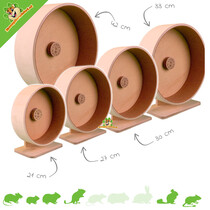
Silent wooden Getzoo exercise wheel with cork inlay, closed running surface, and height-adjustable stand. Available in Ø 21, 27, 30, 33, and 42 cm for small and larger rodents.
Read more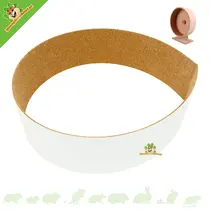
Replacement cork insert for Getzoo Wooden Cork Exercise Wheels. Available in Ø 21, 27, 30, and 33 cm. Handy as a spare, for cleaning, or when the cork layer needs replacing.
Read more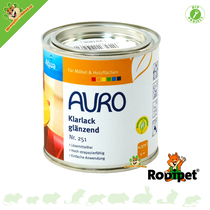
A lacquer that simultaneously offers good protection to the wood and is completely safe for humans and animals! AURO® clear coat has been tested according to DIN EN 71 part 3 (toy safety) and DIN 53160 (saliva and sweat resistant) and therefore meets our
Read more- Voor 17 uur besteld, dezelfde dag verzonden!
- Rodent specialist since 2011
- Dispatched from our own stock
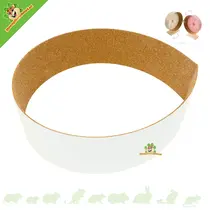
Replaceable cork insert for the 27 cm Getzoo plastic exercise wheel. Cork on a flexible plastic strip, removable and easy to clean.
Read more
Rat Running Wheels & Exercise Wheels – safe extra exercise and variety
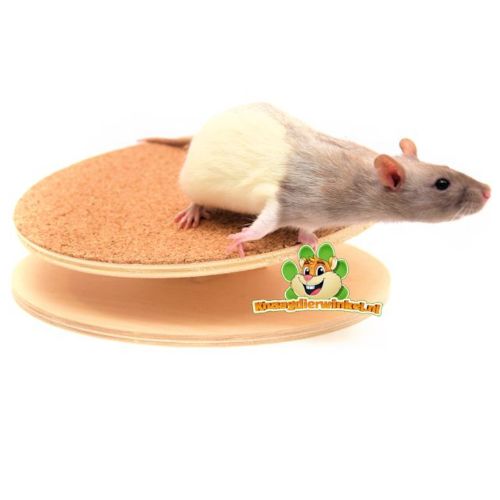 Rat exercise wheels can be a fun addition for rats who enjoy running, moving, and choosing their own active moments. At the same time, making the right choice is crucial in this category. Therefore, DRD does not just look at “does an exercise wheel fit in the cage?”, but primarily at size, running posture, a solid track, stability, ease of cleaning, and whether the wheel is truly suitable for the rats that will be using it.
A running wheel is not a substitute for a spacious rat cage , daily run, climbing, foraging, and interaction. Think of it as extra enrichment alongside strong basic products such as Rat Play & Foraging , Rat Tunnels & Tubes , Rat Platforms & Ladders , and Ratscaping . For some rats, a running wheel becomes a favorite feature; other rats prefer tunnels, sniffing, climbing, or contact with you.
In short
✓ A running wheel can provide fun extra exercise, but it is not a basic need like space, companions, furnishings, and foraging.
✓ Size is the guiding principle: your rat must be able to walk with as straight a back as possible.
✓ Preferably choose a sturdy running wheel with a solid track, good grip, and stable placement.
Quick links
Why a running wheel? · Choosing a running wheel · Size & running posture · Running surface & safety · Placement in the cage · Alternatives · Checklist · Shopping routes · FAQ
Extra exercise
For rats that enjoy running, a well-chosen exercise wheel can be a nice extra activity alongside climbing, playing, and running around.
Measure first
A running wheel must be large enough. If you see a curved back or an unnatural posture, the wheel is not suitable for that rat.
Safe extra
A running wheel is an extra option, not a mandatory component. Foraging, tunnels, platforms, and Ratscaping remain at least as important.
Why a running wheel can be fun for rats
Some rats love running. A well-chosen exercise wheel can be a nice extra way for them to burn off energy and choose an active moment for themselves. Curious, young, or active rats, in particular, may find an exercise wheel interesting if it is spacious, stable, and easily accessible.
At the same time, a running wheel is different for rats than for hamsters. Rats are social animals, climbers, explorers, and foragers. Their daily challenge comes primarily from a spacious cage, other rats, routes, hammocks, tunnels, platforms, digging and sniffing spots, and contact with their owner. A running wheel is an additional option alongside these.
The best approach is therefore positive and honest: choose a running wheel when your rats fit in it well and actually use it. If it does not suit their size or behavior, there are plenty of other forms of enrichment that are at least as valuable.
Choosing a rat wheel: what to look for?
For rats, the right size is the most important starting point. A running wheel must be spacious enough so that your rat can run with a natural posture. Additionally, you want a sturdy wheel with a solid track, good grip, and stable mounting or a stand. This way, the wheel remains a pleasant addition rather than an awkward accessory in the cage.
- Choose the largest suitable running wheel that practically fits in the cage.
- Check if your rat can walk with as straight a back as possible.
- Preferably choose a closed walkway without balusters or open treads.
- Pay attention to grip: the tread must not be too slippery.
- Check if the wheel stands stably or can be securely attached.
- Check if the wheel is easy to clean, especially when your rats mark or urinate while running.
Do you primarily want more daily challenge in the cage? Then combine a running wheel with Rat Play & Foraging , Rat Digging Box , and Ratscaping .
Size & gait: the most important choice
A rat running wheel must be large enough for the rat running in it. Therefore, do not look solely at the product name, but especially at your own animal. Rats differ in size, build, and usage. A wheel that might be comfortable for a young or small rat may be too small for a larger adult rat.
- Your rat must be able to walk without a clearly rounded or curved back.
- The head, back, and hips must move along as naturally as possible.
- The tail should not be pushed awkwardly against the edge or stand.
- The wheel must be wide enough so that your rat does not have to walk crookedly.
- Observe the usage closely during the first few days.
- Do not use the running wheel when you see that your rat is running in it unnaturally.
Practical tip
✓ Undecided between two sizes? For rats, it is better to choose a larger size, as long as the wheel can be placed stably and practically.
✓ Don't just check if your rat fits in, but especially how your rat walks in it.
✓ Some rats love a running wheel; other rats prefer climbing, sniffing, or playing. Both are normal.
Tread, grip and safety
In addition to size, the tread is important. A closed tread is the most comfortable, as paws cannot get caught between rungs or open steps. Grip also counts: a tread that is too slippery can cause unsteady walking, while sufficient grip provides more control.
- Preferably choose a closed walking surface without bars.
- Ensure sufficient grip so that your rat doesn't keep slipping.
- Check that there are no sharp edges or protruding parts.
- Check if the rotating mechanism runs smoothly and does not wobble.
- Place the wheel so that the tail, legs, and fur cannot get caught in it anywhere.
- Clean the tread regularly and dry it thoroughly.
A good exercise wheel feels sturdy, easy to handle, and quiet in use. If you hear a lot of rattling, see wobbling, or the wheel does not run smoothly, check the attachment and placement.
Where do you place a running wheel in the rat cage?
A running wheel takes up space. Therefore, place it carefully so that it does not block running routes and is not too close to hammocks, tunnels, platforms, or feeding areas. The wheel must stand firmly or be secured without the possibility of sliding or tilting when your rats run in it or climb around it.
- Place the running wheel on a stable, flat surface or attach it securely.
- Make sure there is enough clearance around the wheel.
- Do not block important routes to water, food, toilets, or resting places.
- Do not place the wheel directly on a wet puddle.
- Check that cage mates cannot get trapped under, behind, or next to the moving wheel.
- Make the wheel part of an active zone, together with tunnels, foraging areas, or platforms.
For an active yet logical cage, combine the running wheel with Rat Tunnels & Tubes , Rat Platforms & Ladders , and Rat Hammocks .
What if your rat doesn't use a running wheel?
Not every rat finds a running wheel interesting. That is not a problem. Rats have many other ways to be active. In fact, for many rats, sniffing, climbing, foraging, destroying things, and contact with you are more important than running in a wheel.
- Use foraging toys to make searching for food more active.
- Create routes with tunnels, platforms, ladders, and suspension bridges.
- Add a digging box or sniffing zone for searching behavior.
- Offer gnawing material for destroying, stripping, and investigating.
- Use Ratscaping to make the cage look more natural and richer.
- Plan daily outdoor run and contact moments outside the cage.
You can find good alternatives at Rat Play & Foraging , Rat Gnawing Material , Rat Digging Box , and Ratscaping .
Checklist: how to choose the right rat wheel
✓ The running wheel is large enough for as upright a walking posture as possible.
✓ The tread is closed, firm, and provides sufficient grip.
✓ The wheel is stable or firmly attached.
✓ There is enough clearance around the wheel.
✓ The wheel is easy to clean and keep dry.
✓ The running wheel remains an additional enrichment alongside space, climbing, foraging, conspecifics, and outdoor access.
Convenient shopping routes for movement, play, and enrichment
A running wheel works best when it is part of an active, well-designed cage. With these routes, you can quickly create a logical combination.
Extra exercise
Choose a suitable running wheel as an extra activity alongside a spacious cage and daily challenge.
Routes & climbing
Make the cage active with routes, transfers, intermediate stations, and safe heights.
Sniffing & discovering
Alternate running with searching, digging, gnawing, and natural furnishings.
Learn more about movement, behavior, and rat cage setup
Would you like more guidance on active structuring and daily enrichment? These information pages align well with this category:
FAQ – frequently asked questions about rat exercise wheels
Do rats need a running wheel?
Not necessarily. A running wheel can be a nice extra for rats that like to run, but rats primarily need space, other rats, climbing opportunities, foraging, exercise, and daily interaction.
What do you look for most in a rat running wheel?
Size is the most important thing. Your rat must be able to walk with as straight a back as possible. In addition, a solid running surface, good grip, stability, and ease of cleaning are important.
Is a hamster wheel suitable for rats?
Usually not. Many hamster wheels are too small for rats. Always observe your rat's posture while running. A wheel that causes a curved back is not a good fit.
What kind of tread is best?
A closed tread with sufficient grip is the most comfortable. Avoid open spokes or treads where small legs could get awkwardly caught. Also check that the wheel rotates smoothly and stably.
What if my rat doesn't use the running wheel?
That is normal. Not every rat finds a running wheel interesting. In that case, offer other enrichment, such as tunnels, digging boxes, foraging toys, gnawing material, platforms, and Ratscaping.
How do you clean a rat exercise wheel?
Wipe down the running surface regularly, especially when your rats mark or urinate while running. Dry the wheel thoroughly afterwards and try to prevent the rotating mechanism from getting wet for extended periods.
DRD chooses exercise wheels as extra enrichment, not as a replacement for a good cage.
At DRD Knaagdierwinkel®, we view rat exercise wheels as an additional opportunity for movement and variety. A good wheel must suit the animal, not the other way around. That is why we help you pay particular attention to size, running posture, stability, running surface, and placement. This ensures that a wheel remains a fun addition for rats that truly enjoy it.
Undecided between a running wheel, foraging toys, a digging box, tunnels, or Ratscaping? Then check out the Ratten Webshop or contact us via Service & Contact . We are happy to help you decide.
✓ Rat exercise wheels and running wheels for extra exercise and variety
✓ Selection guide for size, upright running posture, closed track, grip, and stable placement
✓ Specialist since 2011
✓ Ordered before 17:00, shipped the same day from our own stock
