 Polski



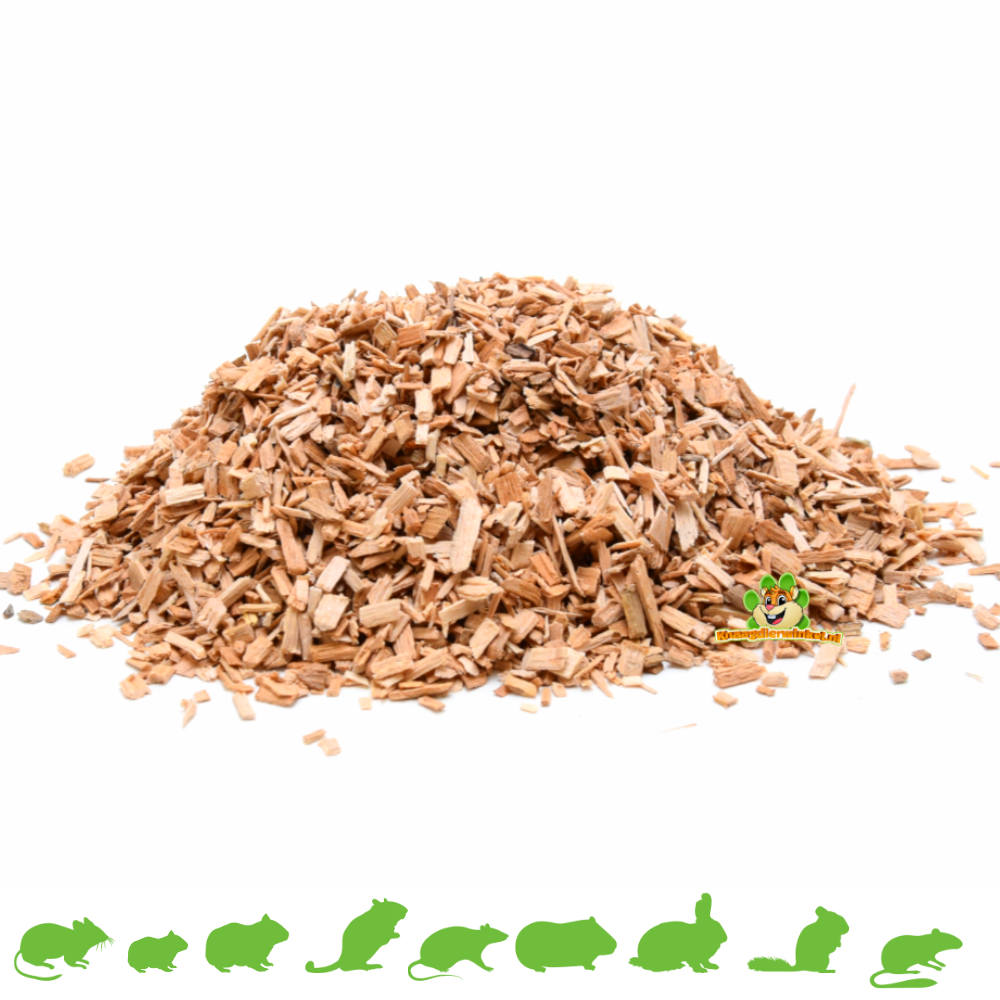
Original Beech Wood Chips for Rodents and Rabbits
- Buy 2 for €11,35 each and save 5%
- Dispatched from our own stock
- Personal & expert advice
- Always 100% rodent-friendly
- Ordered before 5 p.m., shipped the same day!
Original Beech Wood Chips 5 kg – fine beech chips for toilet, sniffing corner, and natural texture
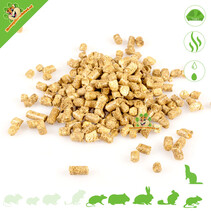
Original Beech Wood Chips are fine beech chips of approx. 6 mm for rodents and rabbits. The chips provide a sturdy, dry, and natural structure to the enclosure and are especially useful as toilet bedding, a sniffing corner, a path through a scape, or a decorative layer around houses, tunnels, and natural materials.
At DRD, we always consider the correct use for each animal when it comes to bedding. These beech chips are not intended as a deep digging substrate where tunnels remain intact. For that, you are better off choosing a diggable bedding. Beech wood chips are actually strong as a practical structural layer: for example, in a toilet, under a hay rack, in a sniffing corner, or as a natural path in hamsterscaping, gerbilscaping, or ratscaping.
In short
- Fine beech chips of approx. 6 mm
- Contents: approx. 5 kg
- Nice as toilet bedding, sniffing corner, path, or structural layer
- Suitable for rodents and rabbits
- Not intended as a deep excavation bed for stable tunnels
- Decorative in natural enclosures and scapes
Advantages of Original Beech Wood Chips
✔ Fine, natural beech chips
✔ Practical as toilet bedding for larger rodents and rabbits
✔ Beautiful as a path, sniffing corner, or decorative textured layer
✔ Handy around hay racks, feeding areas, and dry corners
✔ Combines well with other bedding and natural decor
What do you use beech wood chips for?
Beech wood chips are particularly useful when you want to add a sturdy, distinct structure to the enclosure. They feel different from soft digging bedding, paper, cotton, or hemp, and therefore give a spot a distinct function. Think of a path through the scape, a dry sniffing corner, a toilet area, or a natural finish around wood, cork, and moss.
For small animals such as mice, dwarf hamsters, hamsters, and gerbils, use beech wood chips primarily as extra structure, not as the sole bedding. A few handfuls in a corner, as a pathway, or as a sniffing spot already provide variety. For animals that really want to dig and create tunnels, a deep layer of diggable bedding remains the foundation.
For guinea pigs, rabbits, rats, chinchillas, and degus, beech wood chips are particularly practical as litter box bedding or a dry layer in a defined area. Think of a litter box, potty area, hay corner, or dry sniffing zone. This way, you use the chips for exactly what they excel at: providing structure, absorbing moisture, and clearly marking out a spot.
Not as a tunnel floor, but as a smart structural layer
Beech wood chips are sturdy and loose in structure. This makes them attractive as a decorative layer, but less suitable as the main bedding for hamster or gerbil capping when you want to create stable tunnels. Tunnels do not stand well in beech chips because the chips do not provide enough cohesion.
Do you want to create a diggable substrate for dwarf hamsters, hamsters, or gerbils? Then use a suitable digging bedding as a base and add beech chips only locally. For example, as a woodland path, sniffing strip, dry corner, or to create a difference in texture. This way, your animal gets variety without the digging layer losing its function.
For which animals are Original Beech Wood Chips suitable?
- Mouse: suitable as a sniffing corner, path, or structural layer. Do not use beech chips as the sole bedding, but combine them with soft bedding, nesting material, and sufficient hiding places.
- Dwarf hamster: suitable as a small landscaping detail, sniffing spot, or pathway through the enclosure. For digging and tunnels, a deep layer of diggable bedding remains the basis.
- Hamster: suitable as a dry corner, path, or for creating a difference in texture in hamsterscaping. Use the wood chips locally and combine them with a thick digging layer, sand bath, houses, and tunnels.
- Gerbil: suitable as a structural layer or dry sniffing area in gerbilscaping. A deep, firm digging layer remains important for gerbils; beech wood chips are mainly used as a supplement.
- Dwarf ridge: suitable as toilet bedding, a dry corner, or a structural layer in a Ratscaping zone.
- Rat: suitable as litter, a dry sniffing corner, or a defined layer. For complete bedding, depending on the cage, ventilation, and behavior, you often choose a softer or more diggable base.
- Guinea pig: suitable as toilet bedding or a dry layer in a toilet/hay corner. For the entire floor, a softer and more comfortable underlay is often more logical, especially when guinea pigs lie in the same spot frequently.
- Rabbit: suitable as litter bedding in the litter box or as a dry layer in the hay corner. Beech chips are particularly practical where you want to trap moisture and droppings locally.
- Chinchilla: suitable as litter bedding or a dry structural layer in a confined corner. Do not use as a sand bath; chinchillas require special chinchilla sand for that.
- Degu: suitable as a dry structural layer, sniffing area, or toilet zone. For digging, gnawing, and furnishing, combine beech chips with suitable bedding, sand, and sturdy natural materials.
Usage & layer thickness
For a litter box, dry corner, or sniffing spot, a layer of about 3 to 5 cm is often practical. For larger animals such as pygmy rats, rats, guinea pigs, rabbits, and chinchillas, you can use around 5 cm in a toilet or designated area. Check the area regularly and replace the wood shavings as soon as they are damp, soiled, or less fresh.
Are you using beech chips as a path or decorative structure in a scape? Then a thin layer is usually enough. For example, scatter the chips along a tunnel, around a shelter, or in a small sniffing corner. You can also hide some herbs, flowers, or small treats in between, so that your animal has to actively search for them.
Are you using beech chips in combination with a deep digging substrate? Then keep the digging substrate as the main base and use the beech chips locally. This way, the soil remains suitable for digging, and the enclosure still gains extra structure.
How many beech wood chips do you need?
For beech wood chips as toilet bedding or a structural layer, you can count on:
length × width × layer thickness in cm ÷ 1000 = number of liters of bedding
Because this product is sold per approx. 5 kg and not per liter, this is primarily a handy calculation tool to estimate the layer thickness and usage per spot.
| Place | Example size | Layer thickness | Liter indication |
|---|---|---|---|
| Small toilet | 30 × 20 cm | 5 cm | approx. 3 liters |
| Rabbit toilet | 40 × 30 cm | 5 cm | approx. 6 liters |
| Spacious toilet/hay corner | 50 × 40 cm | 5 cm | approx. 10 liters |
| Scaping path | 60 × 10 cm | 2 cm | approx. 1.2 liters |
For complete bedding in an enclosure, you can use the same formula. Just keep in mind that beech chips are usually not the best choice as the sole digging substrate for animals that want to make tunnels.
Combine with other bedding
Beech wood chips combine well with other types of bedding. For example, use a soft or diggable base and add beech chips where you want more structure. This makes the enclosure more varied without your animal losing the primary function of the bedding.
For hamsters and gerbils, consider a deep digging layer with a beech path or sniffing corner. For rats and pygmy rats, you can use beech chips in a toilet or dry Ratscaping zone. For guinea pigs and rabbits, the chips are particularly practical in the litter box or under a hay rack.
Cleaning & refreshing
Remove wet or soiled spots regularly. In a litter box or hay corner, you should replace the wood shavings more often than in a decorative sniffing corner. How often this is necessary depends on the animal species, the number of animals, the size of the area, and how neatly your animals use their toilet.
If you use beech chips as a structural layer in a scape, also check that no wet spots develop under shelters, hay racks, or feeding areas. Dry, clean chips remain the most pleasant to use.
Material/composition
- Material/composition: beech chips.
- Structure: fine beech chips of approx. 6 mm.
- Contents: approx. 5 kg.
Good to know
Beech wood chips are a natural bedding material with a loose, firm structure. Use them primarily as toilet filling, a sniffing area, a pathway, or a structural layer. For animals that dig deep tunnels, such as hamsters and gerbils, a diggable bedding remains the basis.
Check the bedding before use and observe how your animal interacts with it during the first use. Replace the shavings when they are wet, soiled, or no longer fresh.
Useful shopping links
- Bedding and nesting material
- Wooden bedding
- Rodent litter
- Rat toilets
- Rabbit toilets
- Rabbit toilet bedding
- Guinea pig toilets
- Playing and foraging
- Hamsterscaping
- Ratscaping
Frequently asked questions about Original Beech Wood Chips
What do you use beech wood chips for?
Beech wood chips are primarily used as toilet bedding, a dry sniffing corner, a path, or a decorative structural layer. They are firm and loose in structure, making them feel distinctly different from soft or diggable bedding.
Are beech wood chips suitable as the main bedding for hamsters?
Not if you want to support tunnels and digging behavior. For hamsters, a deep layer of diggable bedding is the foundation. It is better to use beech chips locally as a path, dry corner, or sniffing area.
Are beech wood chips suitable for gerbils?
Yes, as an additional structural layer or sniffing area. A deep, firm digging substrate remains important for gerbils. Beech chips are particularly nice as variety, a path, or a dry layer in part of the enclosure.
Can you use beech wood chips as toilet bedding?
Yes, that is actually a practical application. For dwarf rats, rats, guinea pigs, rabbits, chinchillas, and degus, you can use beech wood chips in a litter box or a dry litter/hay corner.
How thick should the layer be?
For a litter box or dry corner, about 3 to 5 cm is often practical. For larger animals and toilet use, you can use about 5 cm. As a decorative layer or path, a thinner layer is usually sufficient.
Are beech wood chips suitable for tunnels?
Beech wood chips are not ideal for leaving tunnels in. The chips have a loose structure and do not provide sufficient cohesion for stable tunnels. For tunnels, it is better to use a diggable bedding material and add beech chips locally for structure.
Can you use beech wood chips in hamsterscaping?
Yes, but mainly as a detail. Think of a path, a wooded corner, a sniffing spot, or a dry structural layer. For the deep digging layer, it is better to choose a ground cover that supports tunnels better.
How often do you need to replace beech wood chips?
Replace wet or soiled spots in a timely manner. In a litter box, you refresh the litter more often than in a dry, decorative sniffing corner. How often this is necessary depends on the animal species, the number of animals, and the use of the spot.
With Original Beech Wood Chips, you add a sturdy, natural structure to the enclosure. A great choice for owners who want to create a toilet area, sniffing corner, path, or dry landscaping layer, and consciously distinguish between a digging area, resting spot, and practical toilet zone.
| Material: | beech chips |
| Liter (approx): | - |
| Weight (approx): | approx. 5 kg |
| Suitable for: | Rodents, Mouse, Dwarf Hamster, Hamster, Gerbil, Rat, Guinea Pig, Rabbit, Chinchilla, Degu |
| Particularities: | Offer under supervision |
| Safety information: | Observe the animal during initial use to see how it interacts with the bedding. Always check the bedding before use for possible irregularities. |


Prima bodembedekking voor de kooi van mijn cavia's. Na jarenlang houtvezel te hebben gebruikt, is dit zoveel makkelijker.
Prima bodembedekker voor mijn cavia's. Ik had hiervoor houtvezels, maar dit is veel makkelijker te gebruiken en kan weer moeiteloos verwijderd worden als de kooi schoongemaakt wordt.
Zulk leuk decoratief materiaal voor als je bijvoorbeeld ern bosthema in je hok wilt maken..leuk om hier dan de bospaadjes mee te maken.