Polski

Rodent Exercise Wheels – Safe, Quiet & the Right Size (Mouse, Hamster, Gerbil, Dego, Chinchilla)
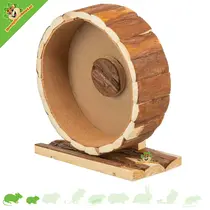
Natural wooden exercise wheel with cork lining for mice and dwarf hamsters. The cork provides extra grip, while the ball bearing ensures smooth and quiet running.
Read more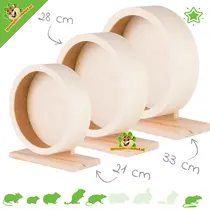
Natural wooden exercise wheel with cork running surface for extra grip. Available in ø 21, ø 28, and ø 33 cm. For mice, dwarf hamsters, hamsters, gerbils, and rats.
Read more
20 cm plastic exercise wheel for mice and dwarf hamsters. With enclosed running area, four openings, removable front panel, and textured grip. Can be used standing or hanging.
Read more
Plastic exercise wheel of ø 28 cm for mice, dwarf hamsters, and hamsters. With enclosed running surface, stand, and hanging option.
Read more- Voor 17 uur besteld, dezelfde dag verzonden!
- Rodent specialist since 2011
- Dispatched from our own stock

Spacious 33 cm plastic running wheel for hamsters, gerbils, dwarf rats, and rats. With a closed running surface, removable front panel, and a choice of blue, salmon, and green.
Read more
Wooden exercise wheel of Ø 27 cm with closed back, protected ball bearings, and adjustable stand. Suitable for mice and dwarf hamsters. Can be combined with a separate cork insert.
Read more
Kaytee Silent Spinner running wheel 29 cm for Syrian hamsters, gerbils, and dwarf rats. Plastic running wheel with a closed running surface, can be used freestanding or attached to bars.
Read more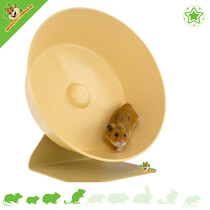
Discover the Rodipet Marathon Heureka Running Wheel for small rodents! The material and properties of each individual part of the Exercise Wheel have been carefully designed, manufactured and tested. Thanks to ball bearings, the running wheel is whisper q
Read more- Voor 17 uur besteld, dezelfde dag verzonden!
- Rodent specialist since 2011
- Dispatched from our own stock
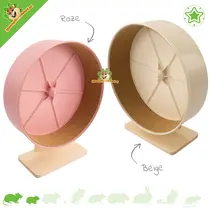
Plastic exercise wheel of Ø 27 cm with wooden stand and replaceable cork inlay. Suitable for mice and dwarf hamsters. Quiet, stable, and easy to clean.
Read more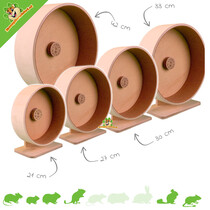
Silent wooden Getzoo exercise wheel with cork inlay, closed running surface, and height-adjustable stand. Available in Ø 21, 27, 30, 33, and 42 cm for small and larger rodents.
Read more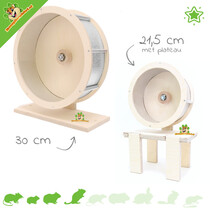
The DRD Knaagdierwinkel® wooden Running Wheel is enhanced with aluminium parts. Thanks to the double ball bearings, the wheel rotates smoothly and quietly. The wheel is made of high-quality birch wood enriched with first-class high-grade aluminium, expert
Read more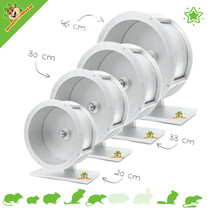
High-quality aluminum exercise wheel with smooth running, a strong base, and a smooth, grippy running surface. Available in multiple sizes for small rodents that require a durable exercise wheel.
Read more- Voor 17 uur besteld, dezelfde dag verzonden!
- Rodent specialist since 2011
- Dispatched from our own stock
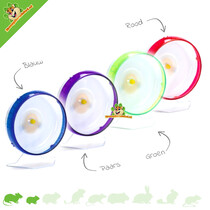
The Kaytee Silent Spinner 24 cm is a plastic exercise wheel for mice and dwarf hamsters. It features a closed running surface, a grippy texture, and can be used freestanding or mounted on bars.
Read more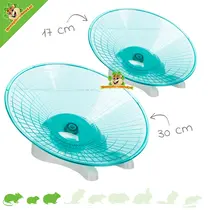
Plastic exercise disc for mice, dwarf hamsters, and hamsters. Available in ø 17 cm and ø 30 cm. With a stable base, ribbed structure, and an easy-to-clean running surface.
Read more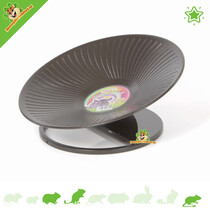
Sturdy 28 cm metal exercise disc for gerbils and degus. Chew-resistant exercise disc for running, turning, and being active in the enclosure.
Read more
A lacquer that simultaneously offers good protection to the wood and is completely safe for humans and animals! AURO® clear coat has been tested according to DIN EN 71 part 3 (toy safety) and DIN 53160 (saliva and sweat resistant) and therefore meets our
Read more- Voor 17 uur besteld, dezelfde dag verzonden!
- Rodent specialist since 2011
- Dispatched from our own stock
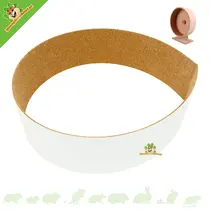
Replacement cork insert for Getzoo Wooden Cork Exercise Wheels. Available in Ø 21, 27, 30, and 33 cm. Handy as a spare, for cleaning, or when the cork layer needs replacing.
Read more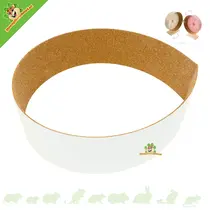
Replaceable cork insert for the 27 cm Getzoo plastic exercise wheel. Cork on a flexible plastic strip, removable and easy to clean.
Read more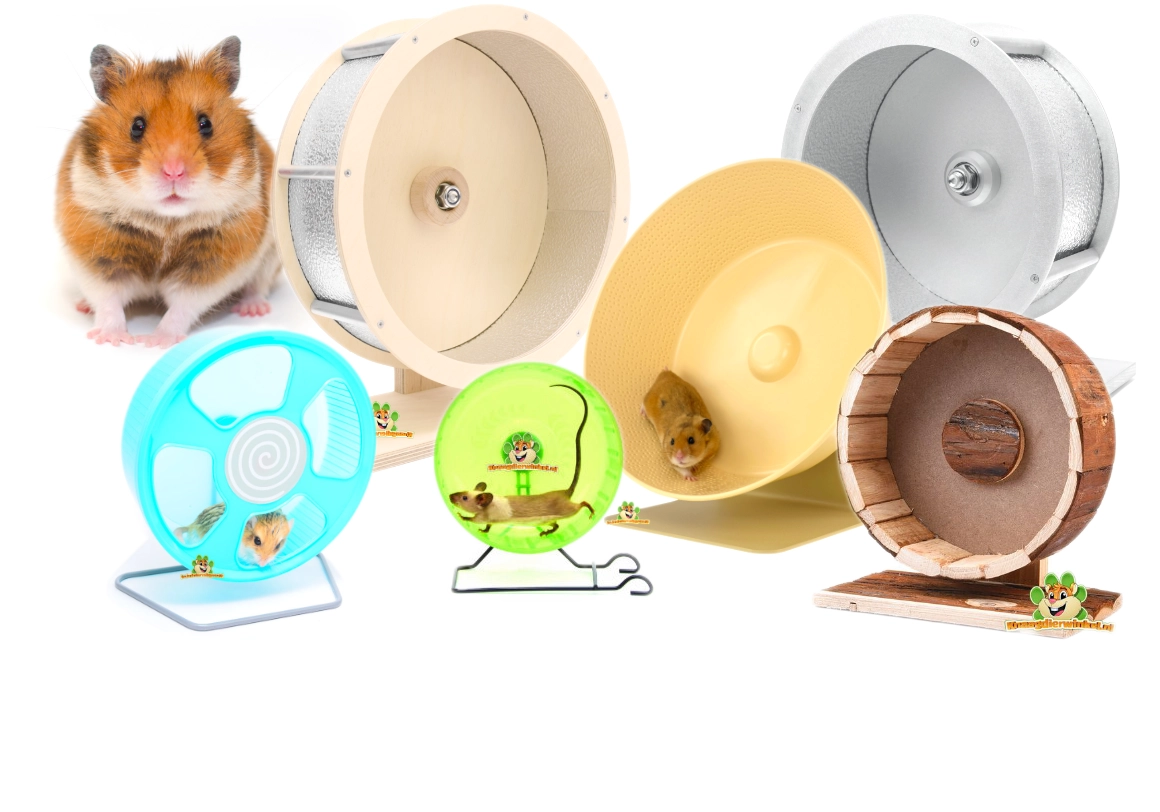
You can order running wheels for rodents quickly and easily at DRD Rodent Shop ®
For many rodents, running is an important part of natural behavior. Think of mice , hamsters , gerbils , chinchillas , and degus . A good exercise wheel provides extra exercise, helps them burn off energy, and prevents animals from just running in circles around the bars. Size and safety always come before price or appearance .
Note: Running wheels are not intended for rabbits and guinea pigs . These animals primarily need plenty of space to run, floor enrichment, and species-appropriate habitat.
Better to choose too big than too small.
Preferably closed and stable.
Tuned for gnawing and cleaning.
Sound, placement and maintenance explained.
Sizing advice: which exercise wheel is right for my rodent?
The most important criterion is simple: your animal must be able to run with a straight back . Do you see a distinct "banana back"? Then the wheel is too small. The sizes below are practical guidelines; if in doubt, always choose a larger size.
| Animal species | Guide size (diameter) | Pay extra attention |
|---|---|---|
| Mouse | ± 20 cm or larger | Stable stance + closed running surface |
| Dwarf hamster | ± 20–22 cm or larger | Back straight, no bars/mesh |
| Golden hamster | ± 28–33 cm | Space in residence + stable placement |
| Gerbil | ± 28 cm or larger | Beware of gnawing: choice of material is important |
| Dego | ± 30–33 cm or larger | Strong rodents: prefer sturdy material |
| Chinchilla | ± 38 cm or larger | Extra sturdy, spacious and stable (weight/impact) |
Which material running wheel should I choose?
Not every material is suitable for every animal. Some species will barely chew on a wheel, while others can be real "destructive." Therefore, choose not only based on appearance, but also on behavior and safety.
- Wood: natural and often quiet. Suitable for many hamsters and mice, but can wear out faster with strong rodents.
- Plastic: easy to clean. Works well if your pet doesn't (or rarely) chew on it; always check for bite/gnaw damage.
- Metal/aluminum: extra sturdy and often ideal for strong rodents (such as degus/chinchillas) that quickly damage wood or plastic.
Safety: what to look out for when using an exercise wheel
- Closed walking surface: avoid bars/mesh/open structures where legs can get in.
- Correct diameter: back straight while running (better too big than too small).
- Stable position: the wheel should not wobble or tilt, especially not with larger/stronger animals.
- No sharp edges: check edges/transitions and screws, especially after mounting.
- Check for gnawing damage: if there are bite marks/tears, replace it to prevent risks.
- Sound & Bearings: A smooth wheel prevents frustration and unnecessary noise.
Practical tips (placement, sound and maintenance)
- Placement: Place the wheel on a flat surface. In a terrarium, you can often place the wheel in a more stable position.
- Noise: A slight knock/rattling noise is usually caused by loose mounting or dirt at the pivot point.
- Cleaning: Wipe regularly; for plastic/metal this can often be done quickly, but for wood, spot cleaning is usually the easiest.
- Alternative enrichment: always combine a running wheel with hiding places and tunnels for a complete set-up.
Also see matching furnishings: Houses , Pipes & Tunnels and Ground Covering .
FAQ Running wheels
How do I know if the running wheel is big enough?
If your animal runs with a straight back (no clear arch), you're good. Not sure? Choose a larger size.
Is an exercise wheel always necessary?
For many species (such as hamsters, mice, and gerbils), exercise in the enclosure is often an important part of the overall experience. However, it remains a fundamental part of the overall system: space, bedding, and enrichment remain just as important.
Wood or plastic: which is better?
That depends on the gnawing behavior and cleaning. Wood is natural and often quiet, while plastic is easy to clean. For strong rodents, a sturdier material is often more practical.
My running wheel is making noise, what can I do?
Check mounting and stability, clean the pivot point and see if the wheel turns freely without binding.