 Polski

Low-Sugar Nutrition for Guinea Pigs

Complete food for adult guinea pigs with 63 plants & herbs from permanent grassland, a 3-fiber mix, and stabilized vitamin C. Contains quinoa, amaranth, aronia, maca, and mint, among others. High in fiber and practical as a daily base.
Read more
Complete food for adult guinea pigs with 63 plants & herbs from permanent grassland, rose petals, marigold, and peppermint. With stabilized vitamin C and a high-fiber texture. Available in multiple packaging sizes.
Read more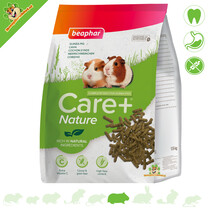
Grain-free all-in-one guinea pig food with timothy hay (49%) and herbal hay (10%). High fiber content, with vitamin C and prebiotic inulin. Helps prevent selective eating because every kibble is complete. 1.5 kg.
Read more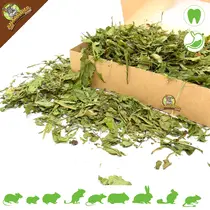
Dried dandelion leaves as a natural leaf variation for rodents and rabbits. Tasty mixed into hay, as a topping, or as a scatter mix for foraging.
Read more- Voor 17 uur besteld, dezelfde dag verzonden!
- Rodent specialist since 2011
- Dispatched from our own stock
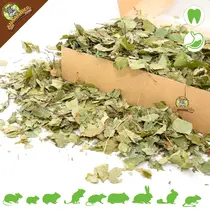
Coarsely dried birch leaves as a natural leaf variation for rodents and rabbits. Mixed with hay, as a topping, or as a scatter mix for foraging.
Read more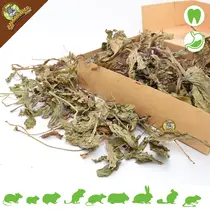
Dried broad-leaved plantain leaves make a crunchy leaf topping for rabbits and rodents. Perfect for mixing into hay or scattering for foraging: they add variety, structure, and encourage foraging in the enclosure.
Read more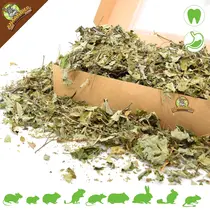
Crispy blackberry leaves as a leaf topping for hay and foraging fun. Scatter them around, hide them, or mix a small amount into hay. For rabbits and rodents. Choose your weight.
Read more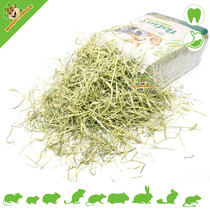
Fiber-rich timothy hay for guinea pigs, rabbits, chinchillas, and degus. Also great as natural landscaping and foraging material for small rodents.
Read more- Voor 17 uur besteld, dezelfde dag verzonden!
- Rodent specialist since 2011
- Dispatched from our own stock
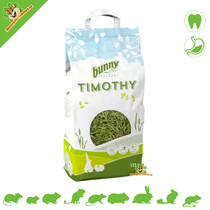
High-quality German Timothy hay with a coarse structure and 30% crude fiber. Suitable as a daily hay base for rabbits, guinea pigs, chinchillas, and degus.
Read more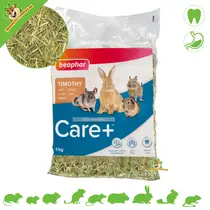
Beaphar Care+ Timothy Hay 1 kg is fiber-rich hay for rabbits, guinea pigs, chinchillas, and degus. Also suitable as natural nesting and landscaping material for small rodents.
Read more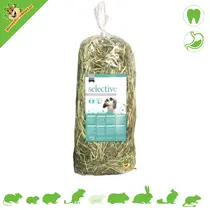
Premium timothy hay with long stems and 34% fiber. Daily fiber base for guinea pigs, rabbits, chinchillas, and degus; also beautiful as landscaping material.
Read more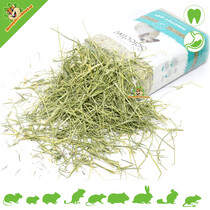
Premium timothy hay with long stems and 34% fiber. Daily fiber base for guinea pigs, rabbits, chinchillas, and degus; also beautiful as landscaping material.
Read moreLow-sugar nutrition for guinea pigs
Has your veterinarian detected glucose in your guinea pig's urine or an elevated blood glucose level? Or has your guinea pig been diagnosed with diabetes mellitus? Adjusting the diet may then form part of the approach.
At DRD, we do not look at 'sugar' alone. We choose a diet with plenty of fibre, little fat and as few unnecessary sugar- and starch-rich extras as possible. Hay always forms the basis.
On this page you will find a deliberately small selection of complete guinea pig food, Timothy hay, herbs and leaves suitable for such a diet. We select these products based on their composition, rather than simply on claims such as 'grain-free' or 'no added sugar'.
DRD step-by-step plan
✓ Provide unlimited good-quality grass hay or Timothy hay
✓ Choose a complete guinea pig food high in fibre and low in starch and fat
✓ Avoid fruit, sweet treats and grain-rich snacks
✓ Choose suitable vegetables that are low in sugar
✓ Use suitable herbs and leaves as treats and enrichment
✓ Always follow your veterinarian's advice regarding diagnosis, monitoring and treatment
Quick links
Complete guinea pig food • Hay • Herbs & leaves • Vegetables • Changing food • Glucose & diabetes • FAQ
1. Which guinea pig food do we recommend?
We do not automatically include every guinea pig food marketed as 'grain-free' or 'no added sugar' in this category. When selecting food for a guinea pig whose dietary glucose intake needs to be limited, we consider the complete composition and analysis.
We look at factors including fibre, starch and fat content. Starch content is particularly relevant to our assessment because starch is broken down into glucose during digestion. For this reason, the claim 'no added sugar' alone is not sufficient for us to select a food for this category.
Why are there only a few foods in this category?
This is a deliberate choice. Many manufacturers of complete guinea pig foods do not state the starch content. This means we cannot adequately compare these foods in this respect.
We therefore prefer to offer a small, well-supported selection rather than include a large number of products simply because, for example, they are grain-free.
Bunny Nature CaviaDroom BASIC
Our first choice within this category is Bunny Nature CaviaDroom BASIC. This is a complete food for adult guinea pigs for which the manufacturer also states the starch content.
✓ 21% crude fibre
✓ 5% starch
✓ 2.6% crude fat
✓ 600 mg/kg vitamin C
The combination of high fibre, 5% starch and a low fat content makes this, in our view, a well-supported choice for a diet in which the amount of easily digestible carbohydrates and energy is carefully considered.
Bunny Nature CaviaDroom Special Edition FLOWERS
Bunny Nature CaviaDroom Special Edition FLOWERS is also included in our selection. For the relevant analytical values, this variety has the same values as CaviaDroom BASIC:
✓ 21% crude fibre
✓ 5% starch
✓ 2.6% crude fat
✓ 600 mg/kg vitamin C
We therefore also consider this variety suitable for this category. The choice between BASIC and FLOWERS can primarily be based on which variety your guinea pig prefers to eat.
What about other grain-free guinea pig foods?
Grain-free does not automatically mean low in sugar or starch. Grain-free foods can still contain ingredients that provide carbohydrates. Conversely, the presence of grain does not automatically make a food unsuitable.
For this specific category, we want to be able to substantiate why we select a food. If a manufacturer provides insufficient information about factors such as starch content, we do not include that food in our preferred selection solely on the basis of claims such as 'grain-free' or 'no added sugar'.
2. Hay forms the basis
Hay is the most important source of food for a guinea pig and should be available without restriction day and night. It provides plenty of fibre and allows a guinea pig to continue eating and chewing throughout the day.
As part of this diet, you can choose Timothy hay or another good-quality grass hay that your guinea pig eats well.
Is your guinea pig a fussy eater? Ultimately, we consider it more important that your guinea pig eats enough good-quality hay than that one particular type of hay is offered but largely left uneaten.
3. What makes a healthy treat?
A treat does not have to be sweet. When glucose intake needs to be limited, we recommend avoiding fruit, dried fruit and sweet or grain-rich treats.
Simple dried leaves can be a good way to provide variety and a tasty treat.
Use leaves as a supplement to the daily hay, not as a replacement. Natural products do not need to be offered without restriction either.
Turn treat time into foraging time
Hide a few leaves among a generous handful of hay instead of offering them directly from your hand. Your guinea pig then has to smell, search and select. This turns the treat into a form of natural feeding enrichment.
What do we prefer to avoid?
✕ Fruit and dried fruit
✕ Sweet nibble sticks
✕ Biscuits and wafers
✕ Treats containing honey or molasses
✕ Grain-rich and other starch-rich treats
A guinea pig does not need these products to receive a complete and varied diet.
4. Choose suitable vegetables low in sugar
Fresh vegetables can remain part of the daily diet. When glucose intake needs to be limited, we preferably choose suitable vegetables that are low in sugar and do not use fruit as a daily extra.
A guinea pig does not need fruit to obtain sufficient vitamin C. Vitamin C can also be obtained from suitable vegetables and a complete guinea pig food.
Offer a variety of suitable vegetables and introduce new varieties gradually.
5. Gradually changing to a different guinea pig food
Are you switching to a different complete guinea pig food? Do not change the food overnight. Gradually mix the new food with the current food.
Example transition schedule
Days 1–3: 75% current food + 25% new food
Days 4–6: 50% current food + 50% new food
Days 7–9: 25% current food + 75% new food
From day 10: 100% new food, provided your guinea pig accepts it well
A slower transition is not a problem if your guinea pig is sensitive or very fussy. The most important thing is that your guinea pig continues to eat well and consumes sufficient hay during the transition.
Glucose in the urine: does it always mean diabetes?
No, not automatically. Glucose in the urine is a finding that must be assessed by a veterinarian in combination with your guinea pig's symptoms and, where appropriate, further tests.
If diabetes is suspected, your veterinarian can determine which additional tests are required and whether treatment is necessary.
This category is therefore not intended to diagnose or treat diabetes in a guinea pig yourself. We help with the nutritional part of the diet when your veterinarian recommends reducing glucose intake through the diet.
In summary: how to put the diet together
✓ Unlimited Timothy hay or good-quality grass hay
✓ High-fibre complete guinea pig food low in starch and fat
✓ Suitable vegetables low in sugar
✓ Suitable leaves for variety and foraging
✓ No fruit, sweet treats or unnecessary starch-rich snacks
Frequently asked questions
Does glucose in the urine mean my guinea pig has diabetes?
No. Glucose in the urine must be assessed by a veterinarian in combination with your guinea pig's health and, where appropriate, further testing.
Does my guinea pig need a completely sugar-free diet?
No. The aim is not to eliminate every naturally occurring trace of sugar from plant-based foods. We consider the diet as a whole and primarily limit unnecessary sources of sugar, starch and energy.
Which complete guinea pig food do you recommend?
From our range, we select Bunny Nature CaviaDroom BASIC and Bunny Nature CaviaDroom Special Edition FLOWERS. According to the manufacturer, both foods contain 21% crude fibre, 5% starch and 2.6% fat.
Why aren't all grain-free foods included in this category?
Because grain-free does not mean the same as low in sugar or starch. For this specific category, we want to be able to substantiate why a complete food has been selected. We therefore deliberately choose a small selection for which sufficient relevant analytical data are available.
Can my guinea pig still have treats?
Yes. Choose suitable leaves rather than fruit, biscuits, sticks or grain-rich treats. A few leaves can also be hidden in the hay to encourage natural foraging behaviour.
Can my other guinea pigs eat the same food?
In many cases, adult guinea pigs living together can eat the same healthy basic diet. This may be different if a veterinarian prescribes a specific therapeutic diet for one animal.
Need help with your guinea pig's diet?
Has your veterinarian detected glucose in the urine or blood and recommended adjusting the diet? We are happy to help you assess the nutritional part of the diet.
Please tell us which complete food, hay, vegetables and treats your guinea pig currently receives. If you have information from your veterinarian that is relevant to the nutritional advice, you can send this as well.
Please note: nutritional advice from DRD Knaagdierwinkel® is intended to support a responsible diet and does not replace diagnosis, examination or treatment by a veterinarian.