Polski



Coarse Birch Leaves for Rodents and Rabbits


- Buy 2 for €2,84 each and save 5%
- Dispatched from our own stock
- Personal & expert advice
- Always 100% rodent-friendly
- Ordered before 5 p.m., shipped the same day!
Coarse Birch Leaves for Rodents and Rabbits
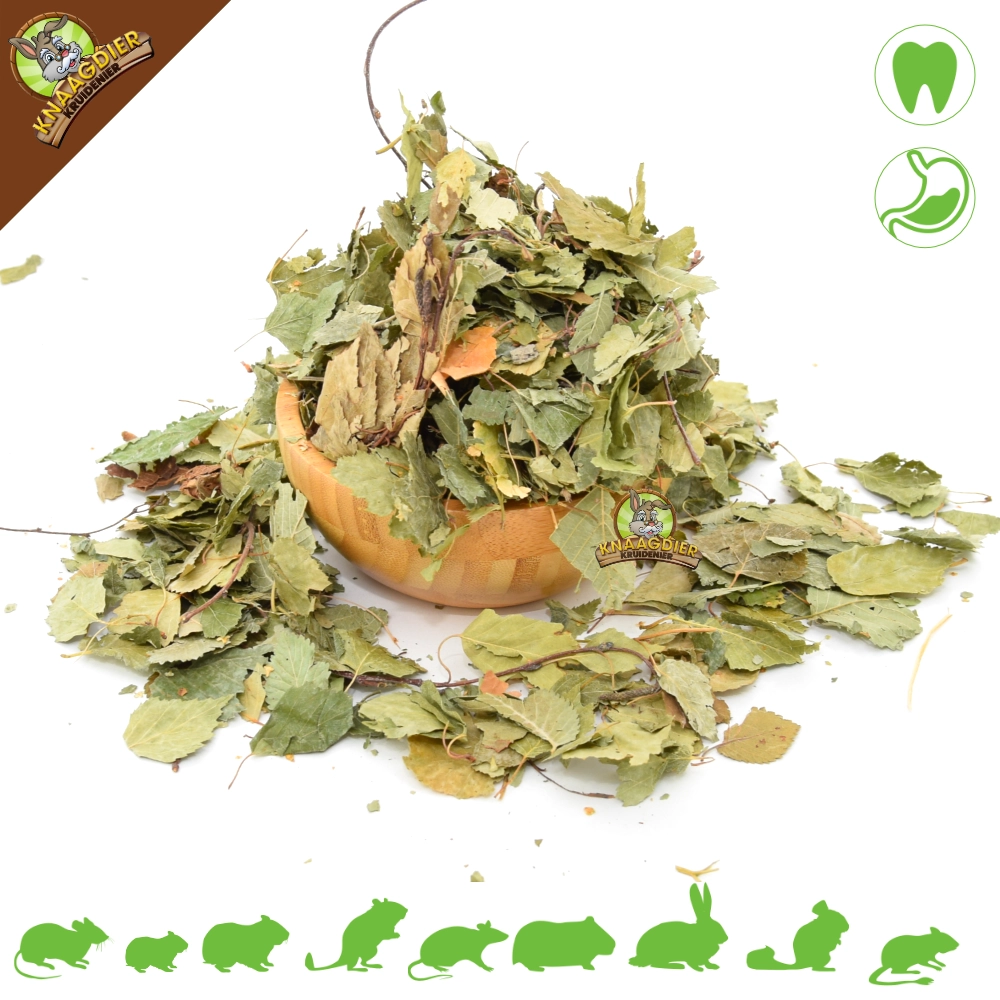
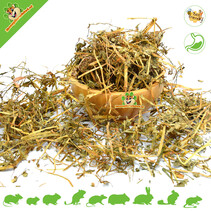
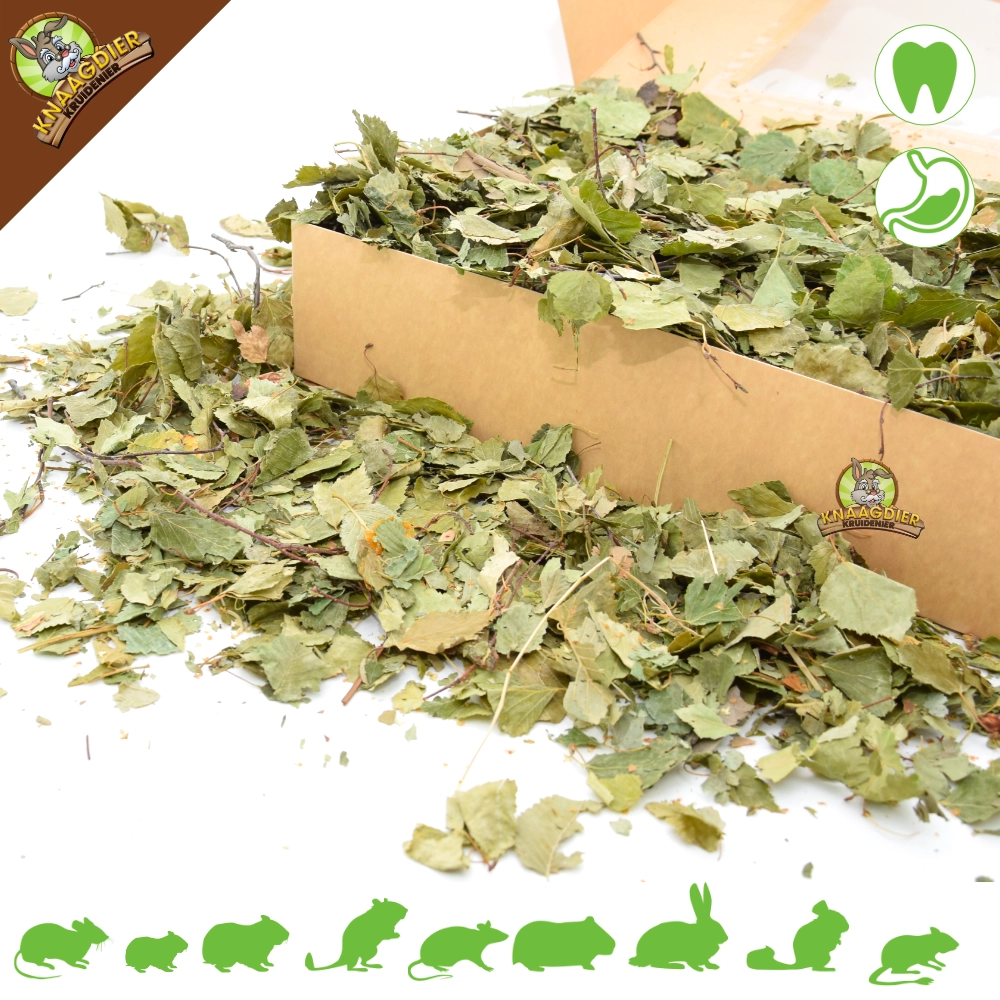
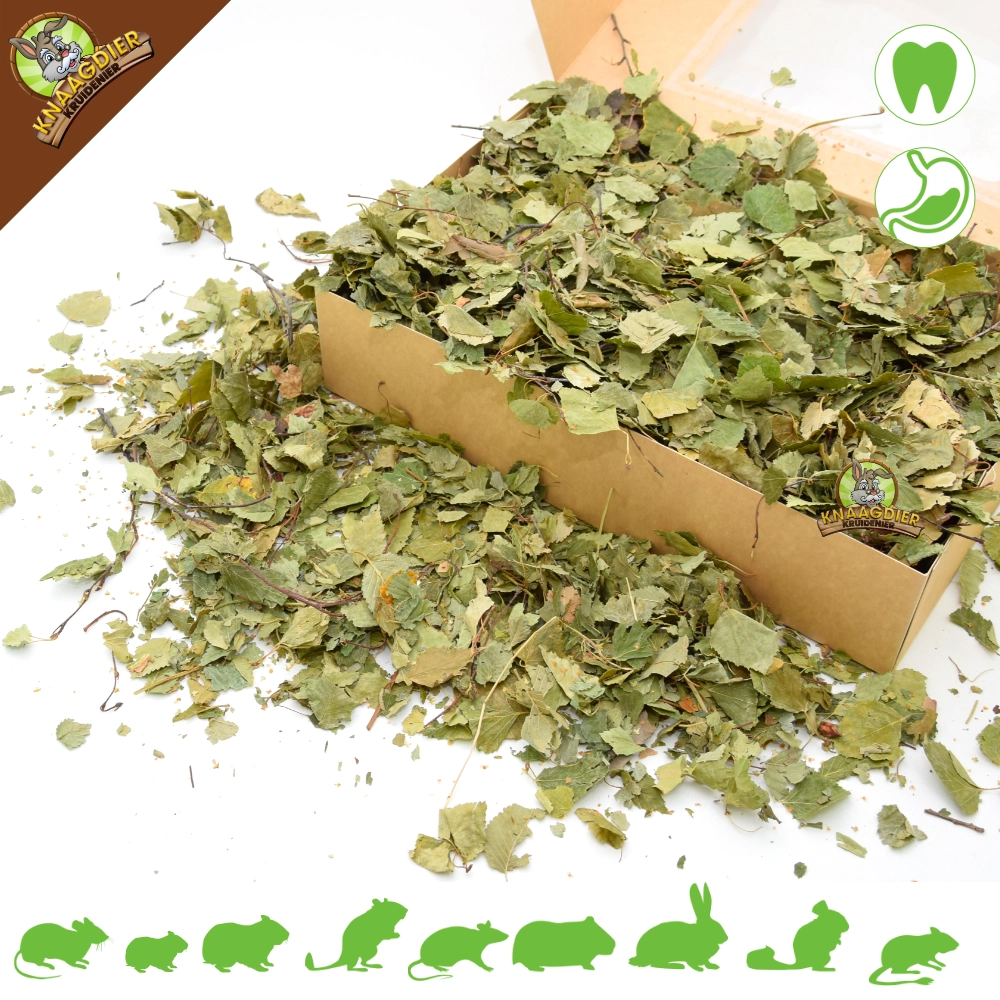
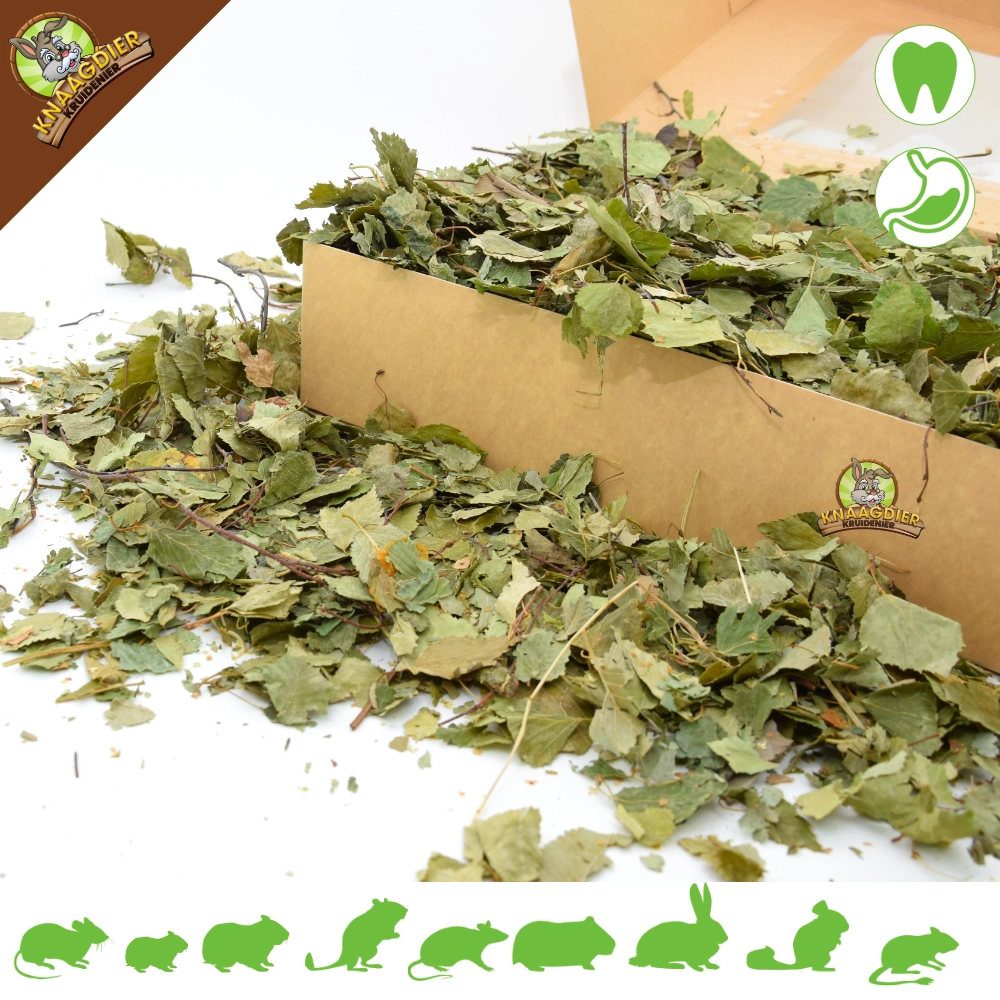
Knaagdier Kruidenier® Coarse Birch Leaves are coarsely dried leaves for rodents and rabbits. The crunchy leaf texture makes this product very suitable for mixing with hay, using as a topping, or scattering throughout the enclosure as natural foraging material.
DRD chooses birch leaves because they add a lot of texture, scent, and sniffing value to the daily feeding time. By offering the leaves scattered, you invite your animal to search, pluck, sniff, and select. This makes the mealtime not only flavorful but also more active and natural.
In short
- 100% dried birch leaves
- Complementary feed for rodents and rabbits
- Crisp leaf texture for scent, structure, and searching
- Ideal mixed with hay, as a topping, bedding mix, or forage layer.
- Great for foraging: sniffing, searching, plucking, and gathering
- Combines well with other leaves, flowers, and herbs
- Available in 100 grams and 400 grams
Advantages of Coarse Birch Leaves
✔ Pure leaf variety without unnecessary additives
✔ Crunchy texture: nice to sprinkle, pick, and search
✔ Ideal as a topping for hay or as a natural straw mix
✔ Suitable for snack plates, foraging mats, and sniffing boxes
✔ Combines beautifully with other leaves, flowers, and herbs
✔ From De Knaagdier Kruidenier®, carefully selected for rodents and rabbits
✓ De Knaagdier Kruidenier® – premium private label of DRD
This product is part of De Knaagdier Kruidenier®, the premium private label of DRD Knaagdierwinkel®. Under this brand, we select natural herbs, flowers, leaves, and mixes suitable for the daily care of rodents and rabbits.
The strength lies in calm, natural variation: suitable for enriching hay, stimulating foraging, or making an enclosure more interesting in an edible way. In doing so, De Knaagdier Kruidenier® aligns well with what DRD stands for: carefully choosing what truly feels right for both animal and owner.
Why choose birch leaves?
Birch leaves are a lovely leaf variation for owners who want to make the daily hay-feeding or foraging moment more natural. The crunchy leaf texture provides an enhanced experience, as your pet can pluck, move, shred, or pick the leaves out from among the hay.
For guinea pigs, rabbits, chinchillas, and degus, birch leaves are very suitable as supplementary leaf variety alongside good hay and appropriate basic food. For mice, dwarf hamsters, hamsters, gerbils, dwarf rats, and rats, they are especially fun as edible enrichment in a natural-style setup, sniffing box, digging box, or foraging time.
By offering the leaves scattered throughout, you make the food more interesting. Your animal has to smell, search, pluck, and select. This aligns better with natural behavior than putting everything in one food bowl.
For which animals are Coarse Birch Leaves suitable?
- Mouse: suitable as a foraging stimulus and natural scattering variation. Use tailored portions and combine with finer seeds, flowers, or small foraging products if desired.
- Dwarf hamster: suitable as a natural bedding layer or landscaping detail. Use small pieces and combine with seeds, harvested produce, or dried flowers if desired.
- Hamster: suitable as edible enrichment in a natural-style setup. For hamsters, birch leaves are fun to hide or mix into a layer of dry forage.
- Gerbil: suitable as an additional foraging layer. Gerbils can examine, move, and shred the leaves.
- Dwarf rat: suitable as a forage supplement, depending on group size and acceptance. Dwarf rats can vary in size, so dose according to use and behavior.
- Rat: suitable as sniffing or digging box filling. Mix a little into a digging box, sniffing mat, or dry bedding layer.
- Guinea pig: very suitable as supplementary leaf variety alongside hay and guinea pig food. Mix portions through the hay to make eating hay more interesting.
- Rabbit: very suitable as a leaf variation alongside the daily hay routine. Use as a topping through hay, on a treat plate, or scattered throughout the enclosure.
- Chinchilla: suitable as supplementary leaf variety. Combine with fiber-rich staple food, good hay, and a simple, natural herbal routine.
- Degu: suitable as supplementary leaf variety. Use judiciously and tailored to a frugal, fiber-rich diet.
How do you offer Coarse Birch Leaves?
- Mix a portion into the hay.
- Scatter the leaves over several spots in the enclosure.
- Use as a topping over herbs, vegetables, or a snack plate.
- Hide pieces of leaf in a foraging mat, sniffing box, or digging box.
- Combine with other leaves, flowers, or dried vegetables for more variety.
- Use as a supplement to the daily basic diet.
Start slowly if your pet is not yet familiar with birch leaves. This allows your pet to get used to the smell, taste, and texture. Remove leftovers when they have become damp or dirty.
✓ Usage & variation in brief
Birch leaves work best when offered scattered. This stimulates searching, sniffing, and plucking, while your animal can actually use the leaf structure.
- Use measured portions at a time
- Mix in hay or herbs
- Scatter through a foraging layer or sniffing box
- Combine with flowers or dried vegetables
- Close the paper packaging or cardboard box tightly after use.
- Store in a dry, cool, and airy place.
Compound
100% dried birch leaves.
Analysis
Crude ash 6.6%, crude protein 11.7%, crude fiber 18.6%, crude fat 3.5%.
This analysis corresponds to the natural leaf variation that you can offer as a supplement to the daily basic diet. The leaf structure comes into its own particularly well when mixed with hay, as a topping, or as a forage mix.
Packaging & fragility of dried leaves
Dried leaves are naturally very dry and therefore fragile. During transport and use, leaves may break or become slightly finer. This is characteristic of this type of natural product and does not detract from its usability: even smaller pieces are perfectly suitable for use mixed with hay, as a topping, or as a scattering mix.
DRD packages the leaves as carefully as possible. The small package is wrapped in paper and the large package in a cardboard box. This ensures the leaves remain as well protected, dry, and airy as possible.
Product information
- Product: Rodent Herbalist® Coarse Birch Leaves
- Type: complementary feed
- Contents: available in 100 grams and 400 grams
- Composition: birch leaves
- Use: leaf variation, hay topping, foraging material and bedding mix
- Promotes foraging: yes, by scattering
- Suitable for: mouse, dwarf hamster, hamster, gerbil, dwarf rat, rat, guinea pig, rabbit, chinchilla and degu
- Packaging: small paper packaging, large packaging in a cardboard box
Good to know
Coarse Birch Leaves are a natural leaf variety that you can offer as a supplement to the daily basic diet. For guinea pigs, rabbits, chinchillas, and degus, they are very suitable for enriching hay and providing more variety in scent, texture, and foraging. For smaller rodents, you can use the leaves as an edible forage layer or for sniffing variety in appropriate portions.
Store birch leaves in a dry, cool, and tightly sealed place. Always check that the leaves remain clean and dry in the enclosure and remove any residue if they become damp or soiled.
Frequently asked questions about Coarse Birch Leaves
What do you use Coarse Birch Leaves for?
You use birch leaves as supplementary leaf variation, as a topping for hay or straw mix, or as part of a foraging session.
What is the benefit of birch leaves?
Birch leaves have a crunchy texture and are fun to pick, search for, and distribute. As a result, they are well-suited for foraging and enriching hay.
Are birch leaves suitable for rabbits?
Yes, birch leaves are very suitable as supplementary leaf variety for rabbits. Use them alongside unlimited hay, appropriate rabbit food, and other herbs or leaves.
Are birch leaves suitable for guinea pigs?
Yes, birch leaves are very suitable as additional leaf variety for guinea pigs. Mix portions into the hay or use them as part of a snack plate.
Can I use birch leaves for hamsterscaping or gerbilscaping?
Yes, in appropriate quantities you can use birch leaves as an edible mulch or foraging layer. Combine them with harvested products, seeds, flowers, or natural landscaping materials.
Why are there sometimes broken leaves in the package?
Dried leaves are naturally dry and fragile. As a result, they may break during transport or use. This is normal for this type of natural product. Smaller pieces can also be used well mixed with hay, as a topping, or as a scattering mix.
Why are the leaves wrapped in paper or cardboard?
DRD packages the small package in paper and the large package in a cardboard box to keep the leaves as well protected, dry, and airy as possible.
How do I store birch leaves?
Store the leaves in a dry, cool, and tightly sealed place. Remove any leftovers from the enclosure when they have become damp or dirty.
Useful shopping links
- Dried leaves for rodents and rabbits
- Rodent and rabbit herbs
- Dried leaves for rabbits
- Dried leaves for guinea pigs
- Chinchilla hay & herbs
- Degoe herbs
- Hay to mix with
- Playing & foraging
With Knaagdier Kruidenier® Coarse Birch Leaves, you provide your rodent or rabbit with a natural leaf variety to enrich hay, forage, and add variety. Use appropriate portions, scatter the leaves, and let your animal search, smell, pluck, and select for itself.
| Content (approx): | 100 grams | 400 grams |
| Composition: | birch leaves |
| Analysis: | Crude ash: 6.6%, crude protein: 11.7%, crude fibre: 18.6%, crude fat: 3.5% |
| Promotes Foraging: | Yes, by scattering around |
| Suitable for: | Rodents, Mouse, Dwarf Hamster, Hamster, Gerbil, Rat, Guinea Pig, Rabbit, Chinchilla, Degu |
| Type: | supplementary pet food |
| Particularities: | - |
| Disclaimer: | Not for food producing animals |