Polski



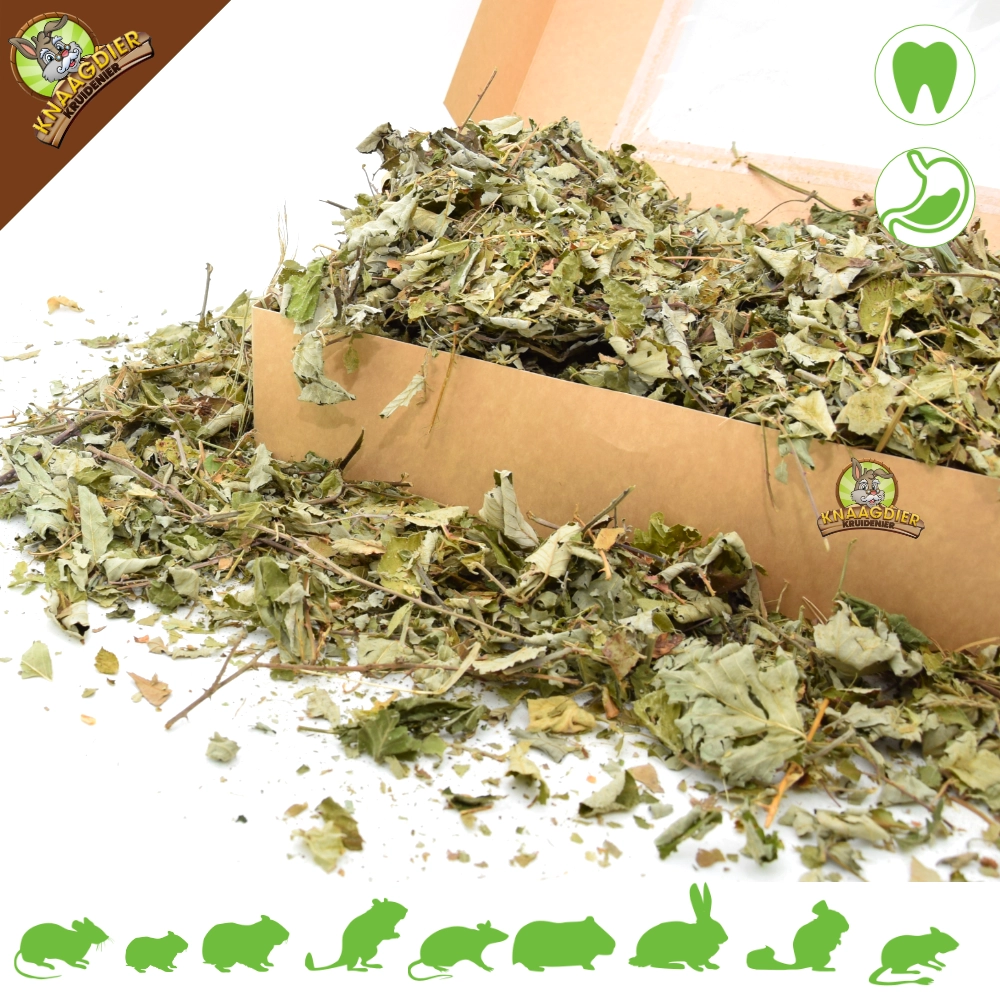
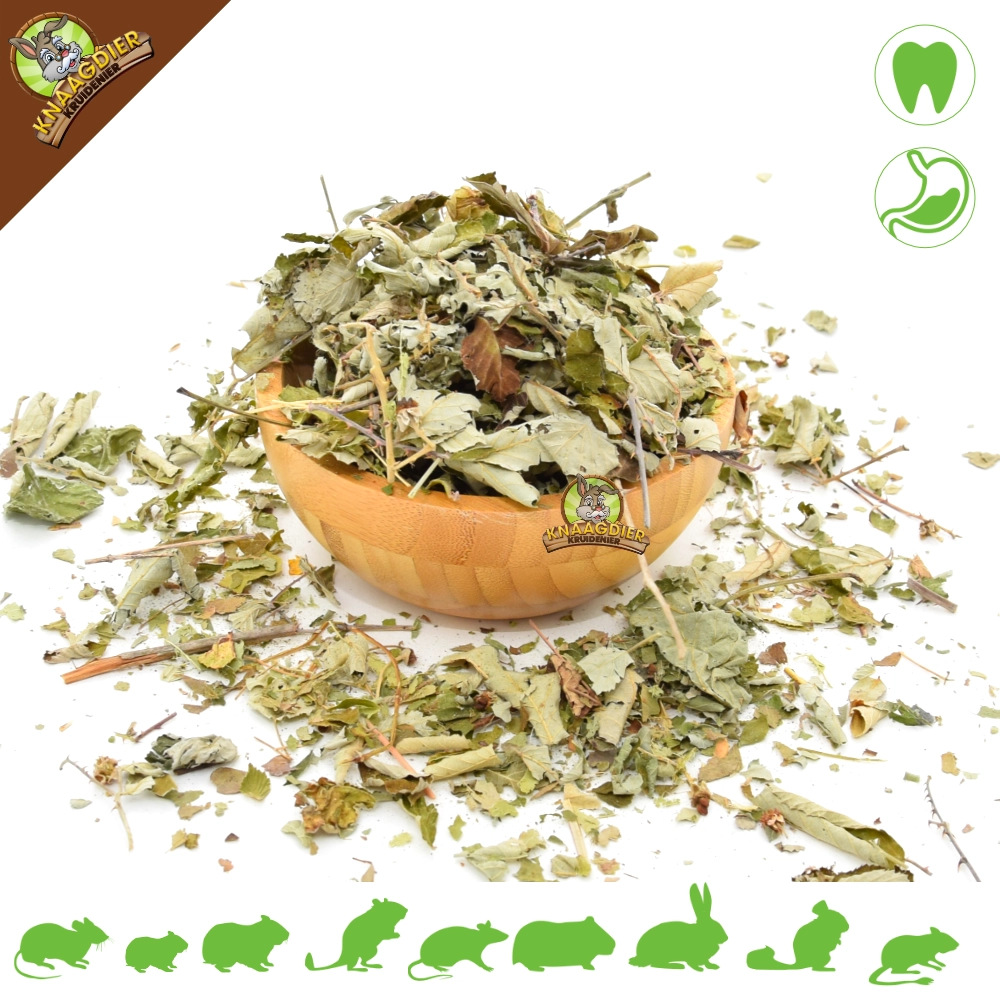
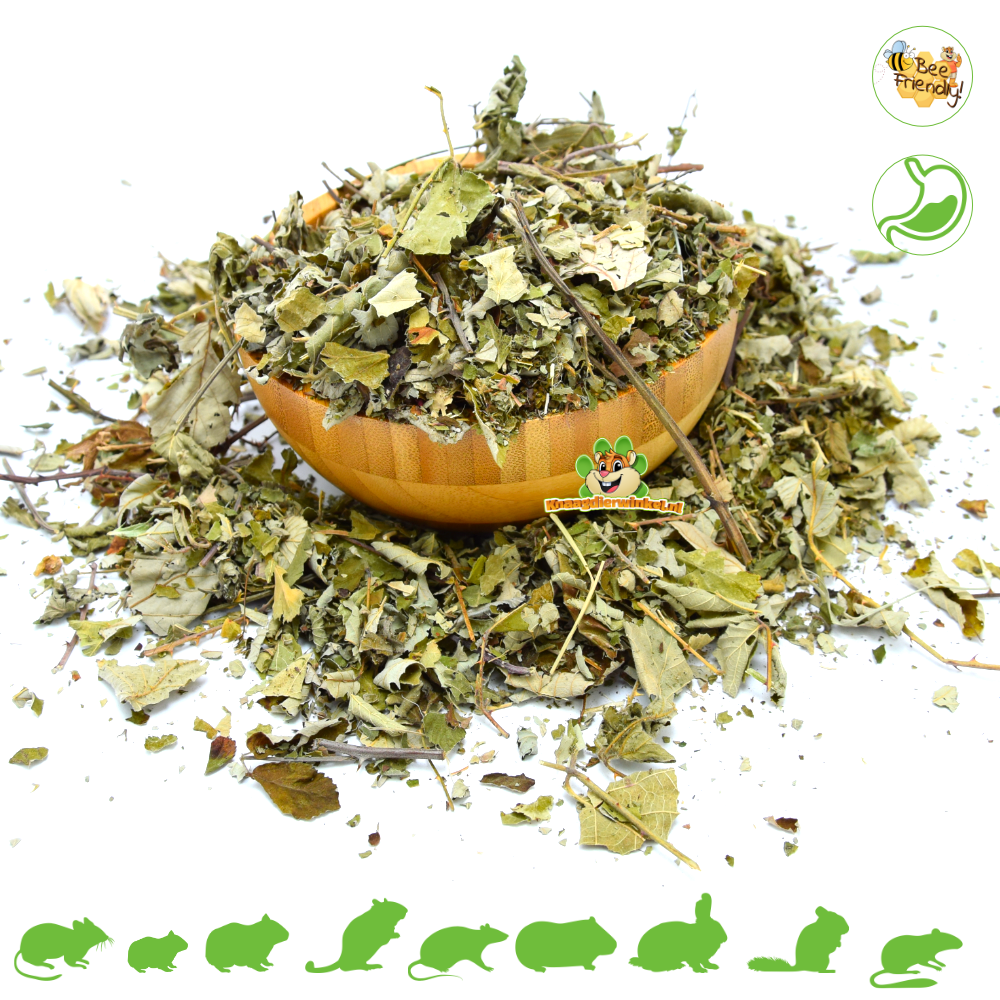
Dried Blackberry Leaves Coarse for Rodents & Rabbits!


- Buy 2 for €7,55 each and save 5%
- Dispatched from our own stock
- Personal & expert advice
- Always 100% rodent-friendly
- Ordered before 5 p.m., shipped the same day!
Rodent Grocer Dried Blackberry Leaves
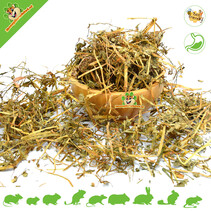
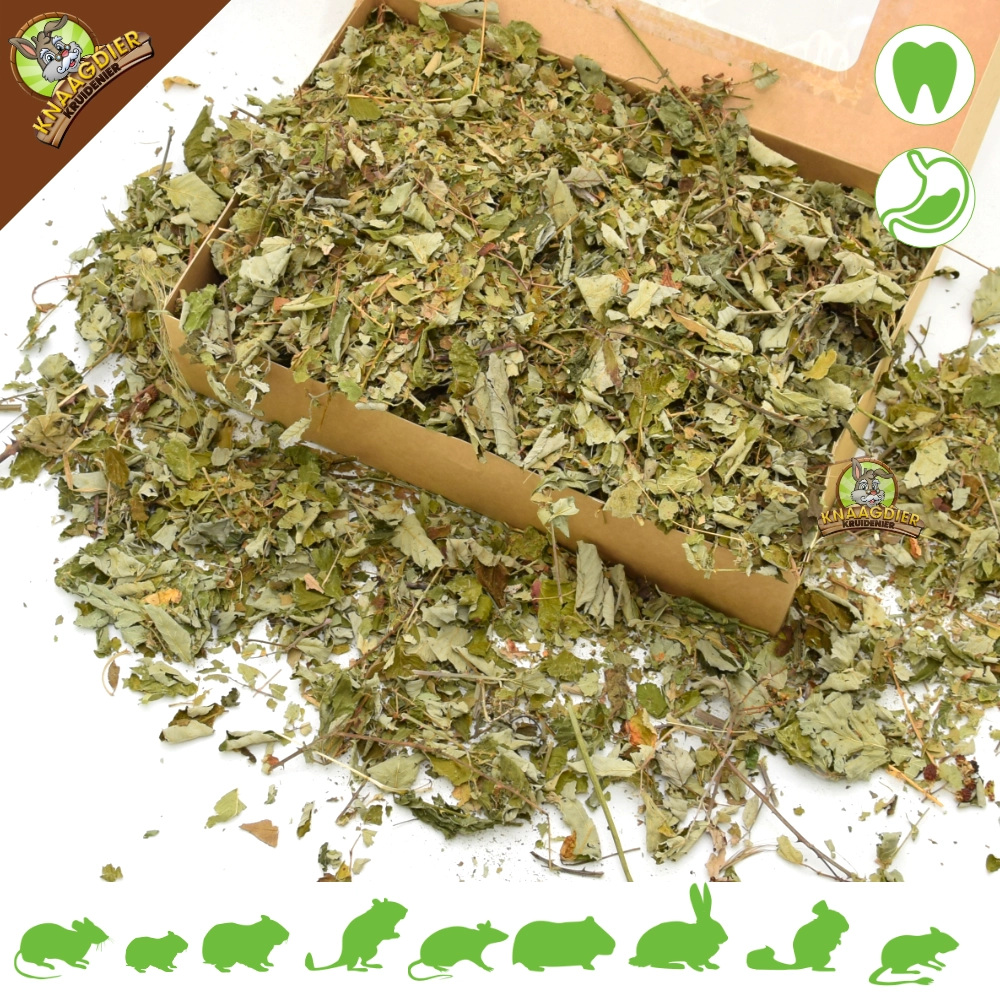
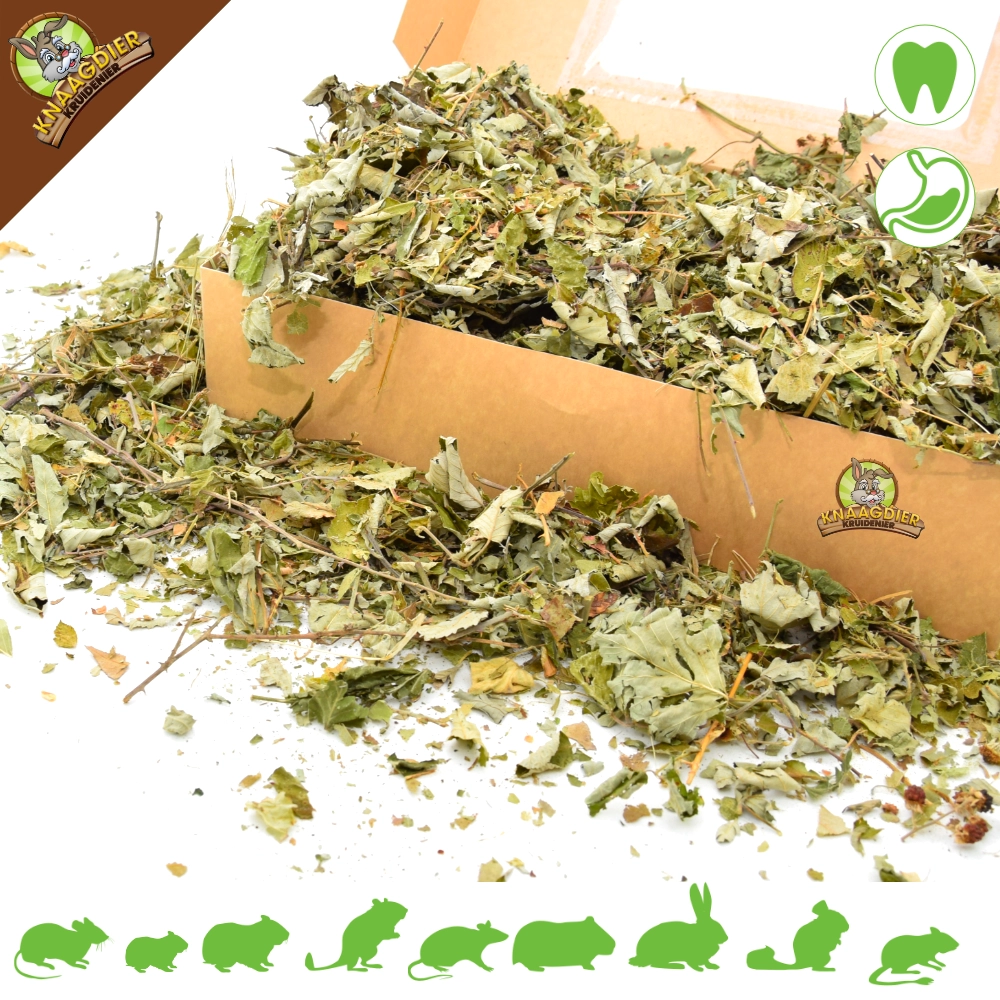
Dried blackberry leaves are a crunchy leafy treat for rabbits and rodents. You can use them as a topping for hay, or you can scatter them around the enclosure for added foraging fun. This makes feeding time a little more fun and active, without having to provide large quantities.
In short
- Complementary animal feed: 100% dried blackberry leaves
- Promotes foraging: yes, by scattering
- For: mouse, (dwarf) hamster, gerbil, rat, guinea pig, rabbit, chinchilla and degu
- Choose your weight: 80 g, 100 g, 500 g or 1 kg
✔ Sturdy leaf structure: fun to pick and nibble
✔ Ideal for foraging: scattering, hiding, letting people “search”
✔ Easy to combine with hay moments
✔ Easy to dose: small portions for variety
Why give blackberry leaves?
Leaves offer variety in aroma, flavor, and texture. By not just offering blackberry leaves in a bowl, but also scattering them or hiding them, you can easily turn them into a foraging opportunity. This fits in well with the natural "searching and picking" behavior of many rodents and rabbits.
How to use dried blackberry leaves
- Through the hay: mix a few leaves through the hay so that your animal can pick them out.
- Spreading: Spread a small amount over a dry part of the ground cover.
- Hiding: Place some leaves under a bridge, in a tunnel or in foraging toys.
Practical guideline per animal
- Small rodents (mouse, dwarf hamster, hamster, gerbil): a few crumbs or 1 small leaf at a time, offered in divided doses.
- (Dwarf) rats: a few leaves at a time; fun to hide or combine with foraging.
- Herbivores (guinea pig, rabbit, chinchilla, degu): a small handful as a topping for hay or as a sprinkle. Build up gradually if your pet is not yet accustomed to eating many leaves.
Compound
Composition: blackberry leaves.
Good to know
- Store in a dark, dry, and well-ventilated place. Moisture can reduce quality and cause mold.
- Remove leftovers when they become wet (for example in a toilet or drinking area).
- Not for food producing animals.
FAQ
Can I give blackberry leaves every day?
Offer leaves primarily for variety: it's better to give them a small amount regularly than a large portion occasionally. This keeps things interesting and helps you maintain an overview.
What is the best way to present them?
Spreading or hiding food often works best. Your pet then has to search and pick, which immediately turns mealtime into an activity.
Which animals are these leaves suitable for?
For rabbits and many rodents, including mice, hamsters, gerbils, rats, guinea pigs, chinchillas, and degus. Adjust the amount to the size of your pet.
Useful shopping links
- Rodent & Rabbit Herbs
- Dried leaves
- Hay & mangers
- Training & foraging
- Hamsterscaping
- Questions? Contact us
| Content (approx): | 150 grams | 400 grams |
| Composition: | blackberry leaves |
| Analysis: | Crude ash: 5.7%, crude protein: 10.0%, crude fibre: 18.6%, crude fat: 3.6% |
| Promotes Foraging: | Yes, by scattering around |
| Suitable for: | Rodents, Mouse, Dwarf Hamster, Hamster, Gerbil, Rat, Guinea Pig, Rabbit, Chinchilla, Degu |
| Type: | supplementary pet food |
| Particularities: | - |
| Disclaimer: | Not for food producing animals |