 Polski



Dried mealworms for small rodents



- Dispatched from our own stock
- Personal & expert advice
- Always 100% rodent-friendly
- Ordered before 5 p.m., shipped the same day!
Rodent Shop Dried Mealworms for small rodents
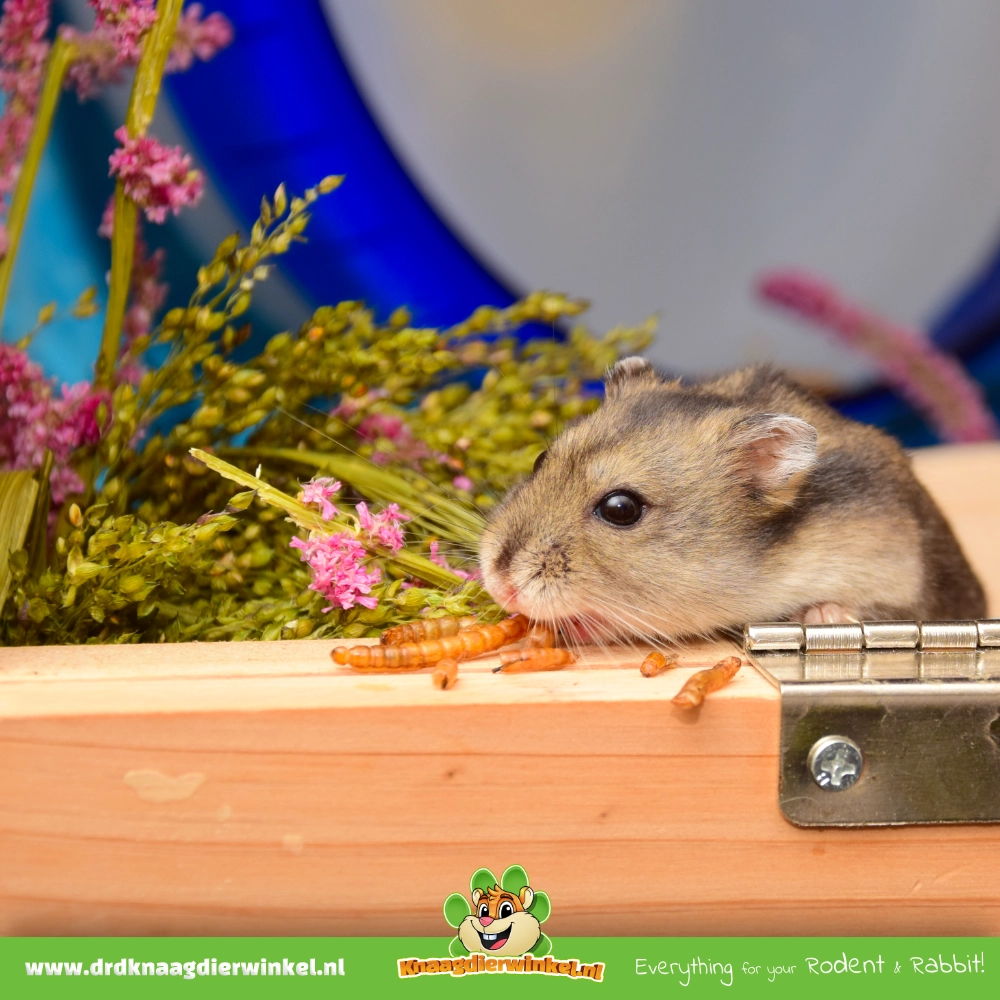
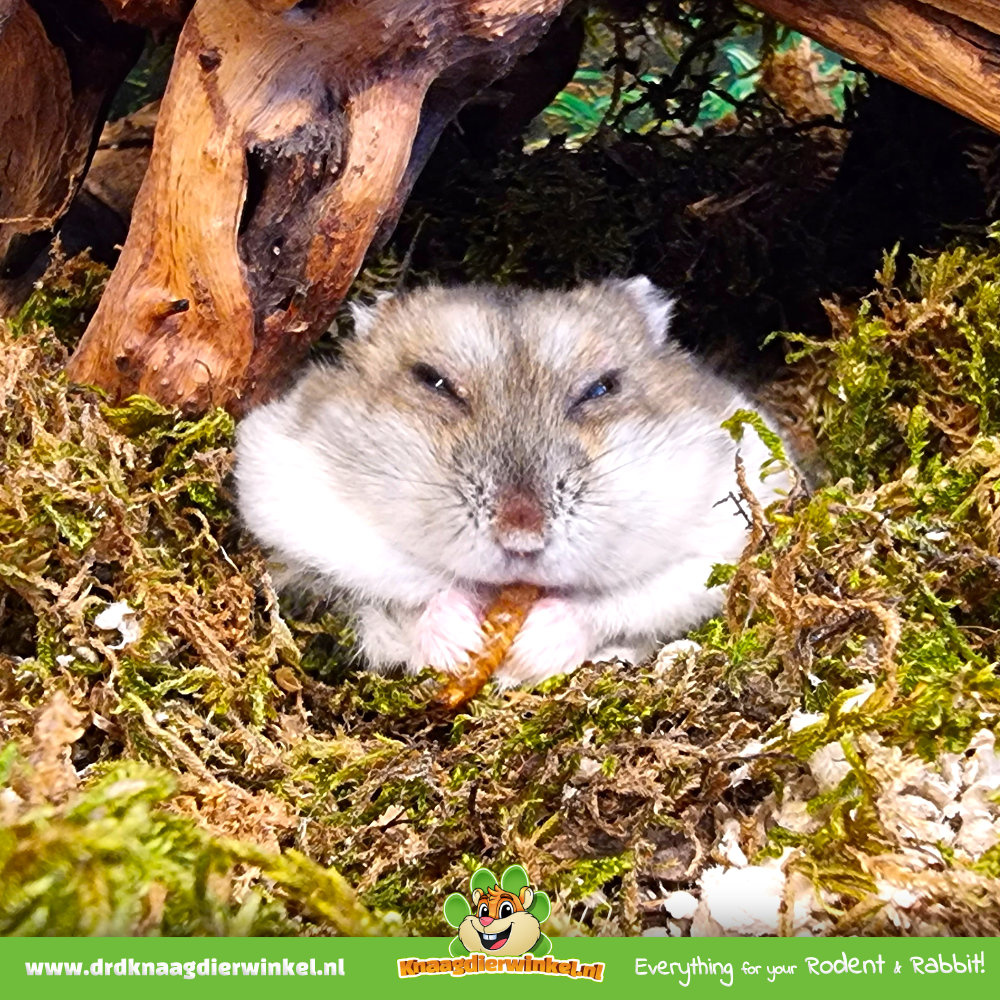
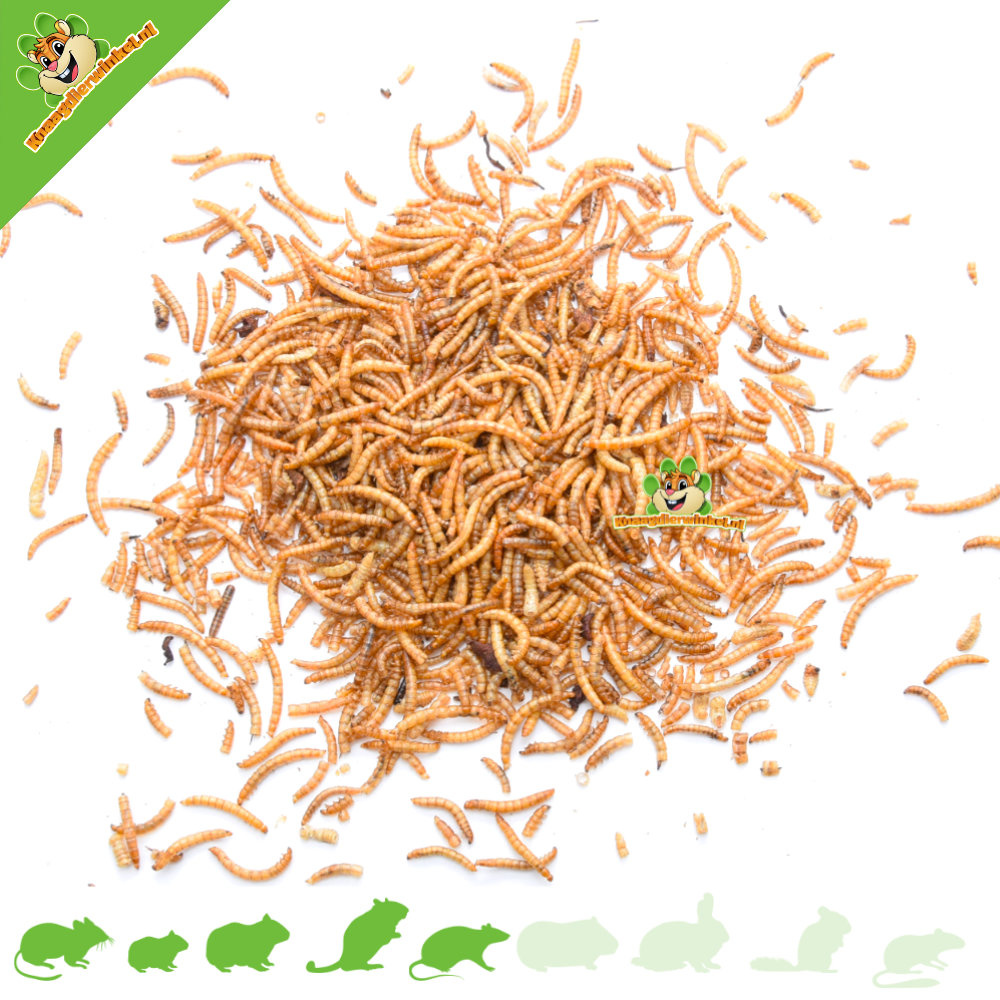
 Dried mealworms are a tasty, protein-rich snack for small rodents that naturally eat animal protein or insects. Think of mice, dwarf hamsters, hamsters, gerbils, and rats. You can give the mealworms as a small reward, mix them with their food, or hide them in the enclosure as part of foraging.
Mealworms are a valuable supplement, especially for animals that naturally have more animal protein in their diet. They are easy to portion, have a long shelf life, and are easy to store. Because mealworms are concentrated and nutritious, always give them as a supplementary snack and not as the main food.
Nutrition in brief
- Dried mealworms as an animal protein source
- Suitable for mice, dwarf hamsters, hamsters, gerbils, and rats
- Also interesting for fat-tailed gerbils, which naturally eat insects.
- Can be used as a snack, reward, or foraging enrichment.
- Not suitable for true herbivores such as guinea pigs, rabbits, chinchillas, and degus.
Advantages of Dried Mealworms
✔ Protein-rich snack: a natural source of animal protein for small omnivorous rodents.
✔ Ideal for foraging: hide a few mealworms in the bedding, a snack plate, or a foraging toy.
✔ Tasty reward: convenient to feed by hand or mix with food.
✔ Easy to store: dried mealworms do not require refrigeration and are easy to portion.
✔ Good supplement: especially suitable for animals that also include insects or animal proteins in their natural diet.
Why give mealworms to small rodents?
Not all rodents eat the same thing. Some species are true herbivores, while others also eat seeds, small insects, and animal protein in the wild. In practice, mice, hamsters, dwarf hamsters, gerbils, and rats are not strictly herbivores. Therefore, dried mealworms can be a suitable supplementary snack for these animals.
Mealworms are especially useful when you want to make the diet a bit more varied or when your pet enjoys actively searching for tasty treats. For example, scatter a few mealworms in the bedding or hide them in a foraging area. This way, snacking immediately becomes a little scavenger hunt.
In young, pregnant, or lactating animals, protein requirements may differ from those of adult animals in maintenance. In such cases, use mealworms consciously as a supplementary snack and always tailor the total diet to the species and life stage.
For which animals are dried mealworms suitable?
- Mouse: suitable as a protein-rich snack and foraging reward. Mice naturally have a varied diet and can make good use of animal protein as a supplement.
- Dwarf hamster: suitable as a small snack. Give a few mealworms at a time and use them, for example, in a snack bowl or mixed in with the bedding.
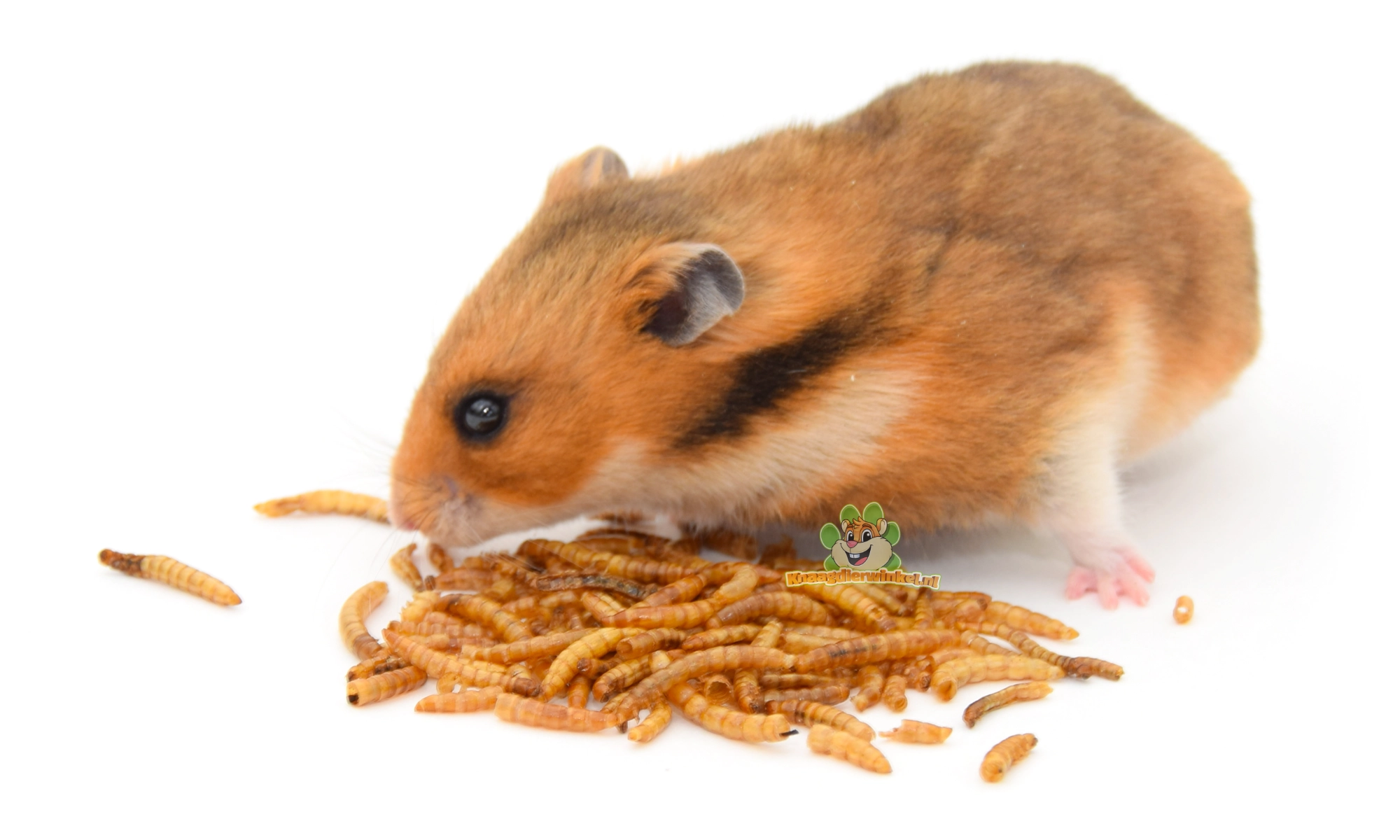
- Hamster: suitable as a supplementary protein source and reward. Also fun to hide during hamsterscaping or foraging.
- Gerbil: suitable as a supplementary snack. Especially interesting as a variation alongside a good basic diet.
- Fat-tailed gerbil: very suitable, because fat-tailed gerbils naturally eat insects. Combine mealworms with other dried insects for variety.
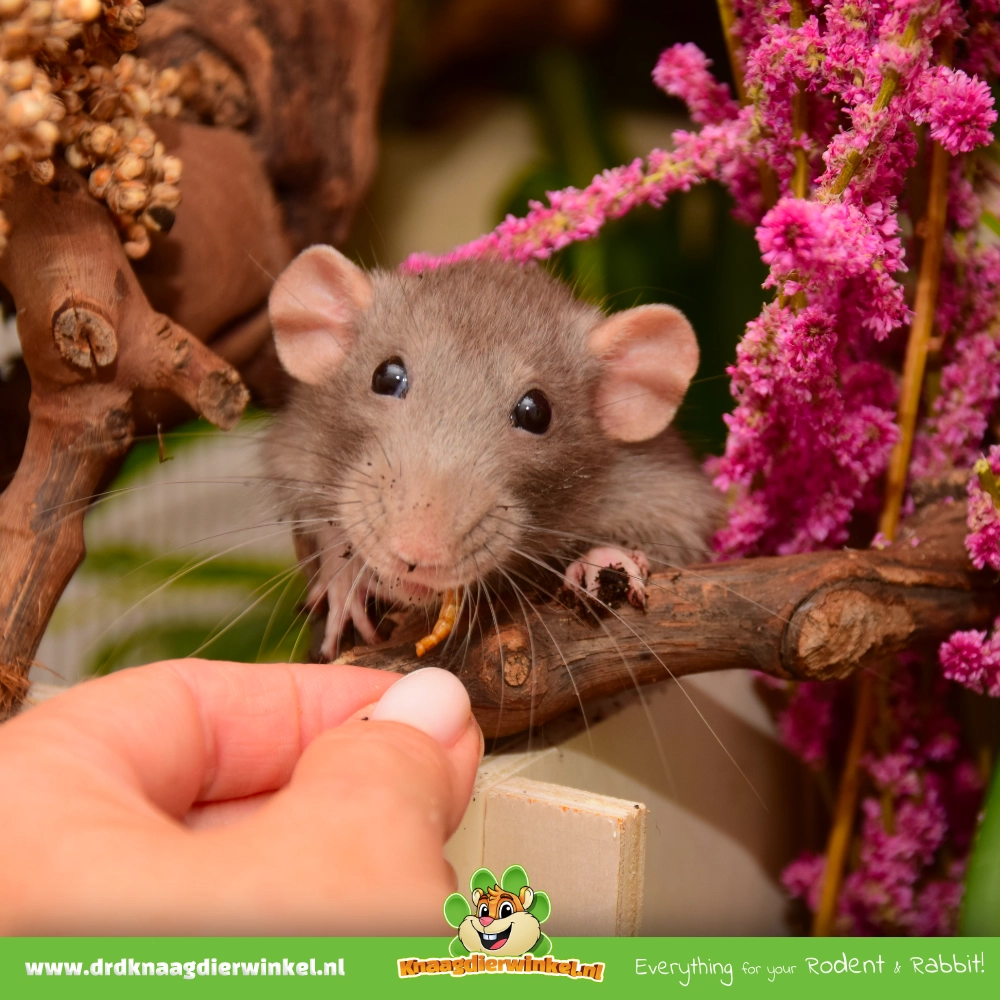
- Dwarf rat and rat: suitable as a tasty protein snack or training reward. Give in moderation, as mealworms are nutritious.
- Dormouse: suitable as a supplementary animal protein source within an appropriate species-specific diet.
- Guinea pig, rabbit, chinchilla, and degu: not suitable. These animals are herbivores and should not be given mealworms or other animal snacks.
How do you feed dried mealworms?
Always give dried mealworms as a supplement to a complete basic diet. You can feed them loose by hand, mix them into the food, or use them as a search reward. Start with small quantities, especially if your animal is not yet used to this product.
For extra enrichment, you can hide a few mealworms in a foraging area, among dry herbs, in a treat ball, or on a snack plate. This requires your animal to sniff and search, making the meal more interesting.
Fat-tailed gerbils and insects
The fat-tailed gerbil has different nutritional needs than many other small rodents. This species naturally eats insects as well. Dried mealworms are therefore a good supplement alongside an appropriate basic diet. For more variety, you can also take a look at our insects for small rodents .
Compound
Composition: dried mealworms.
Mealworms naturally contain animal proteins and fats. As a result, they are nutritious and very suitable as a small snack, but always give them in moderation. A few mealworms are often sufficient as a treat for small animals.
How do you store dried mealworms?
Store dried mealworms in a cool, dry, and dark place in a well-sealed container. An airtight jar is convenient so that the mealworms stay dry and retain their scent and texture better. Refrigeration is not necessary, as long as the packaging remains dry and tightly closed.
Good to know
Dried mealworms are intended as a supplementary snack and not as a main food. Only give them to animals whose diet includes animal protein. We do not recommend mealworms for guinea pigs, rabbits, chinchillas, and degus, as these animals are herbivores. Always check if your animal tolerates the snack well and do not give too much at once.
Frequently asked questions about dried mealworms
Are dried mealworms suitable for hamsters?
Yes, dried mealworms are suitable as a supplementary snack for hamsters. Give them in moderation, for example as a reward or hidden in a foraging area.
Can dwarf hamsters eat mealworms?
Yes, dwarf hamsters may have dried mealworms as a small, protein-rich snack. A few mealworms at a time is usually sufficient.
Are mealworms suitable for guinea pigs or rabbits?
No, guinea pigs and rabbits are herbivores. Mealworms and other animal snacks are not suitable for these animals.
Can I use mealworms for foraging?
Yes, mealworms are very suitable for hiding in a snack bowl, foraging toy, or in the bedding. This stimulates searching and sniffing.
Do dried mealworms need to be refrigerated?
No, refrigeration is not necessary. Store the mealworms in a dry, cool, and dark place in a well-sealed container.
Are mealworms suitable for fat-tailed gerbils?
Yes, fat-tailed gerbils naturally eat insects. Dried mealworms are therefore a suitable supplement to a good basic diet and can be alternated with other dried insects.
Useful shopping links
- View insects for small rodents
- Read more about mice
- Read more about hamsters and dwarf hamsters
- Read more about the fat-tailed gerbil
- Read more about rats
| Content (approx): | 30 grams | 90 grams |
| Composition: | Dried mealworms |
| Analysis: | Proteins: 50-60%, Fats: 30-40%, Carbs: 5-15%, Fibers: 3-5% |
| Promotes Foraging: | Yes, by scattering around |
| Suitable for: | Rodents, Mouse, Dwarf Hamster, Hamster, Gerbil, Rat |
| Type: | supplementary pet food |
| Particularities: | - |
| Disclaimer: | Not for food producing animals |



Mooie grote meelwormen in een handige verpakking. Mijn hamster kan weer lekker smullen!
Dwerghamster is er dol op! Het potje van 30 gram is handiger in gebruik dan de grotere verpakking
De hamster is er dol op, echt een traktatie, ik verstop ze door zijn hok heen. ,
Mijn Chinese dwerghamster vindt dit erg lekker, maar mijn Syrische hamster wil hier niks van eten.
Mijn hamster is gek op de gedroogde meelwormen, als ik het bakje open maak komt ie al gelijk naar me toe.
De dwerghamsters vinden de meelwormen heerlijk!
Deze meelwormen in een 30 grams verpakking gekocht om uit te proberen. Mijn dwergrusje lust ze niet altijd.. Deze vind hij heerlijk! Als ik het (handige) potje even schud en open, klimt hij het liefst door de tralies heen om ze aan te pakken! Volgende keer dus een groot potje;)