 Polski

Gerbil houses – multi-room houses, wooden and ceramic shelters for gerbils
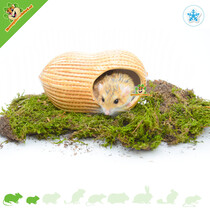
Cute peanut-shaped ceramic house for mice and dwarf hamsters. Cool to the touch, glazed, and easy to clean. Ideal as a small hiding place or cool spot.
Read more
The terracotta house is designed in the shape of an underground hole. But perhaps the biggest advantage of this house is the nail-wearing property of the rough surface. Because small rodents are active and curious, climbing and ...
Read more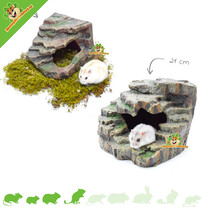
Resin hideout with a rock look for mice, dwarf hamsters, hamsters, and gerbils. Beautiful for hamsterscaping, gerbilscaping, and natural decor.
Read more
Polystyrene rock cave with an open bottom for mice, dwarf hamsters, hamsters, and gerbils. Beautiful as a hiding place in a natural setting or hamsterscaping.
Read more- Voor 17 uur besteld, dezelfde dag verzonden!
- Rodent specialist since 2011
- Dispatched from our own stock
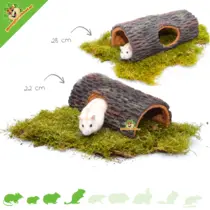
Brown resin tree trunk for a natural interior. Ideal as a hiding place and climbing object for mice, dwarf hamsters, hamsters, and gerbils.
Read more
Spacious resin skull cave with an open bottom and two openings. Naturally creepy eye-catcher for hamsterscaping, gerbilscaping, and small rodents.
Read more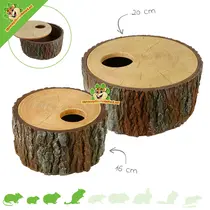
Resin tree trunk hideout with removable roof for mice, dwarf hamsters, small hamsters, and gerbils. Available in two sizes.
Read more
Natural-looking log house for mice and dwarf hamsters. With a hiding place, climbing structure, and two snack indentations at the top. Great for hamsterscaping.
Read more- Voor 17 uur besteld, dezelfde dag verzonden!
- Rodent specialist since 2011
- Dispatched from our own stock

Flexible willow bridge measuring 22 x 10 cm for mice, dwarf hamsters, and gerbils. Can be used as a bridge, tunnel, hiding place, step, or natural divider in the enclosure.
Read more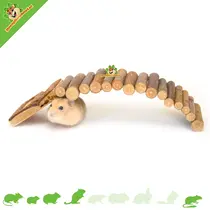
Bendable willow ladder/bridge of 27 cm for mice, dwarf hamsters, hamsters, gerbils, and degus. Can be used as a bridge, hiding place, stepping stone, wall, or gnawing material.
Read more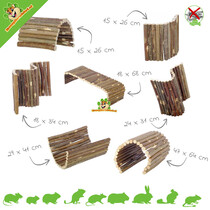
You can really go in any direction with this fun Hazelnut Bridge! The bridge can be easily bent, so it can be used as:
Read more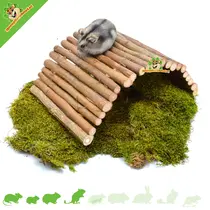
Flexible willow bridge measuring approx. 28 × 17 cm. Can be used as a bridge, tunnel, hiding place, stepping stone, or small landscaping wall for small rodents.
Read more- Voor 17 uur besteld, dezelfde dag verzonden!
- Rodent specialist since 2011
- Dispatched from our own stock

Bendable willow bridge of 55 cm for mice, hamsters, gerbils, rats, and degus. Can be used as a bridge, tunnel, hiding place, low wall, or natural gnawing material.
Read more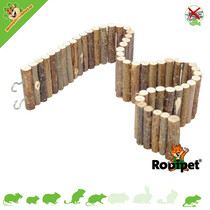
This hazelnut bridge from Rodipet is particularly suitable for small rodents. The bridge actually has no function for larger rodents. Thanks to the nice length of approximately 63 cm, you can go in any direction with the bridge. The bridge can be used as
Read more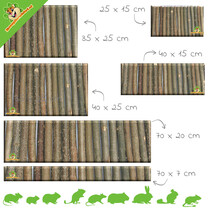
Flexible willow bridge in multiple sizes. Can be used as a bridge, tunnel, shelter, stepping stone, or natural barrier for rodents and rabbits.
Read more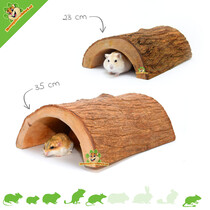
Robust mahogany tree bark tunnel in 23 and 35 cm. For hiding, exploring, climbing, gnawing, and natural furnishing for hamsters, gerbils, rats, and degus.
Read more- Voor 17 uur besteld, dezelfde dag verzonden!
- Rodent specialist since 2011
- Dispatched from our own stock
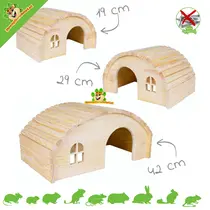
Nail-free wooden igloo house with two exits and an open bottom. Available in 19, 29, and 42 cm. Suitable as a shelter for various rodents.
Read more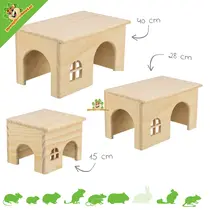
Sturdy wooden log house made of untreated spruce with an open bottom, flat roof, and two entrances. Available in three sizes for different rodents.
Read more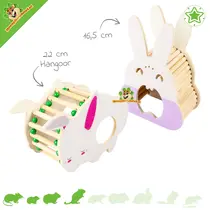
Rabbit-shaped wooden playhouse for mice, dwarf hamsters, small hamsters, and gerbils. With an open bottom and available in two sizes.
Read more
TV-shaped wooden playhouse of approx. 19 cm for mice, dwarf hamsters, and gerbils. Fun as a hiding place, playful house, and landscaping accent.
Read more- Voor 17 uur besteld, dezelfde dag verzonden!
- Rodent specialist since 2011
- Dispatched from our own stock
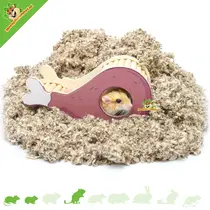
Wooden playhouse in the shape of a drumstick, approx. 20 cm, for mice, dwarf hamsters, and gerbils. Great as a hiding place, pathway, and playful landscaping accent.
Read more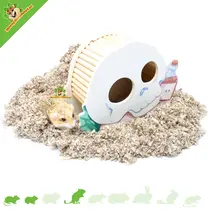
Skull-shaped wooden playhouse of approx. 24 cm for mice, dwarf hamsters, and gerbils. Fun as a hiding place, playhouse, and Halloween decoration.
Read more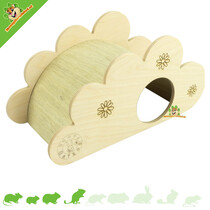
Decorative wooden bush house of approx. 27 × 13 × 13 cm with an open bottom and an entrance of Ø 7 cm. Nice as a hiding place for mice, dwarf hamsters, hamsters, and gerbils.
Read more
HayPigs cardboard playhouse for rodents who love to hide, gnaw, and destroy. With multiple openings, an open base, and a spacious design for fun and shelter.
Read more
Gerbil houses – hideaways & multi-room houses for digging, resting, and sleeping together
 Good gerbil houses do two things at once: they provide your gerbils with a safe hiding place and they support natural behaviors like tunneling and burrowing . Gerbils are social animals that like to sleep together, but also occasionally choose their own spot. Therefore, a combination of one spacious (multi-room) house plus additional hiding places works best in practice.
At DRD Rodent Shop® , you'll find a selection of houses suitable for gerbils: sturdy, safe, and logically designed in a habitat with deep bedding. Specialists in rodents and rabbits since 2011 .
Preferably choose a multi-room house that is large enough for the group to nest together.
Tip: Multiple rooms = more natural castle feeling.
Houses with more than one entrance help gerbils to "pass" each other and provide a choice of routes.
Combine tunnels →
Gerbils love to gnaw. Wood and sturdy natural materials are often more suitable than thin plastic.
Rodent material →
Gerbil houses – quick selection guide
A good foundation for most gerbil groups: one large (multi-room) house + one or two additional hiding places . This allows them to sleep together and escape when they need a bit of peace and quiet.
1) Multi-room houses (recommended as a "main house")
- Mimics the idea of a castle : multiple rooms, often with a removable roof.
- Handy for checking nesting material without destroying everything.
2) Wooden & tree trunk houses (rodent-friendly)
- Suits gnawing behaviour and gives a natural appearance.
- Combine with additional gnawing material to direct the “demolition urge”.
3) Ceramics & terracotta (stable and pleasant to use)
- Sturdy, stable and often easy to clean.
- Nice as an extra hiding place or a “cooler” resting place (depending on the location in the enclosure).
Tip : Provide gerbils with multiple hiding places along their routes. This way, they won't have to sprint through the enclosure.
What is a good gerbil house?
- Spacious enough for sleeping together (gerbils like to lie against each other).
- Multiple entrances or logical flow (helps with group dynamics).
- Strong and safe without sharp edges or loose splinters.
- Practical : preferably with a removable roof or inspection facility.
How many and how big should gerbil houses be?
As a guideline, choose at least one large house for the entire group and add one or two additional hiding places . In larger groups, more choice often makes things calmer, as animals can move around. When choosing the size, pay particular attention: can they lie down comfortably together without being crammed?
Materials: What's Best for Gerbils?
- Wood / natural wood : rodent-friendly and natural; ideal as a base.
- Log houses : sturdy, natural and popular in "gerbilscaping".
- Ceramics & terracotta : sturdy, stable and often easy to clean.
- Grass/hay/straw houses : fun to demolish; expect them to be gone faster.
- Plastic : Avoid it for real rodents; if it is used, choose only a very sturdy, safe variety and check regularly for gnawing damage.
Placement & gerbil scaping: how to make it logical
- Create a proper digging zone with deep ground cover and place (part of) the house in/against that zone.
- Combine hiding places with tunnels and an elevated route via platforms and ladders .
- Always keep a sand bath separate and stable: gerbil sandbox .
Checklist – setting up gerbil houses
✔ 1 large (multi-room) house as a base for the group.
✔ 1–2 additional hiding places for choice and rest.
✔ Preferably multiple entrances/routes.
✔ Offer gnawing material to encourage gnawing behavior.
✔ Place houses stably (especially with deep ground cover).
✔ If you have any doubts about behavior or group tension, consult a veterinarian or an experienced shelter/gerbil owner.
Safety
Check houses regularly for splinters, sharp edges, or gnawing damage. Choose sturdy wood, ceramic, or terracotta over thin plastic. Clean without harsh chemicals and let everything dry thoroughly before returning it to the enclosure.
FAQ – gerbil houses
What are the best gerbil houses?
In practice, multi-room houses (as the main house) plus additional shelters work best. Pay attention to space, safety, and preferably multiple entrances.
Do gerbils gnaw houses to pieces?
Gerbils like to chew. This is normal behavior. Therefore, choose chew-friendly materials and always offer extra chewing material .
How do I clean wooden houses?
Spot clean where necessary and let dry thoroughly. If a wooden house starts to smell after a while, a urine spray is often used.
✔ Multi-room houses and shelters for gerbils
✔ Wood, ceramic and terracotta – practical & safe
✔ Specialist since 2011
Order before 5 PM, shipped the same day | Delivered from our own stock | Specialist since 2011

