Polski


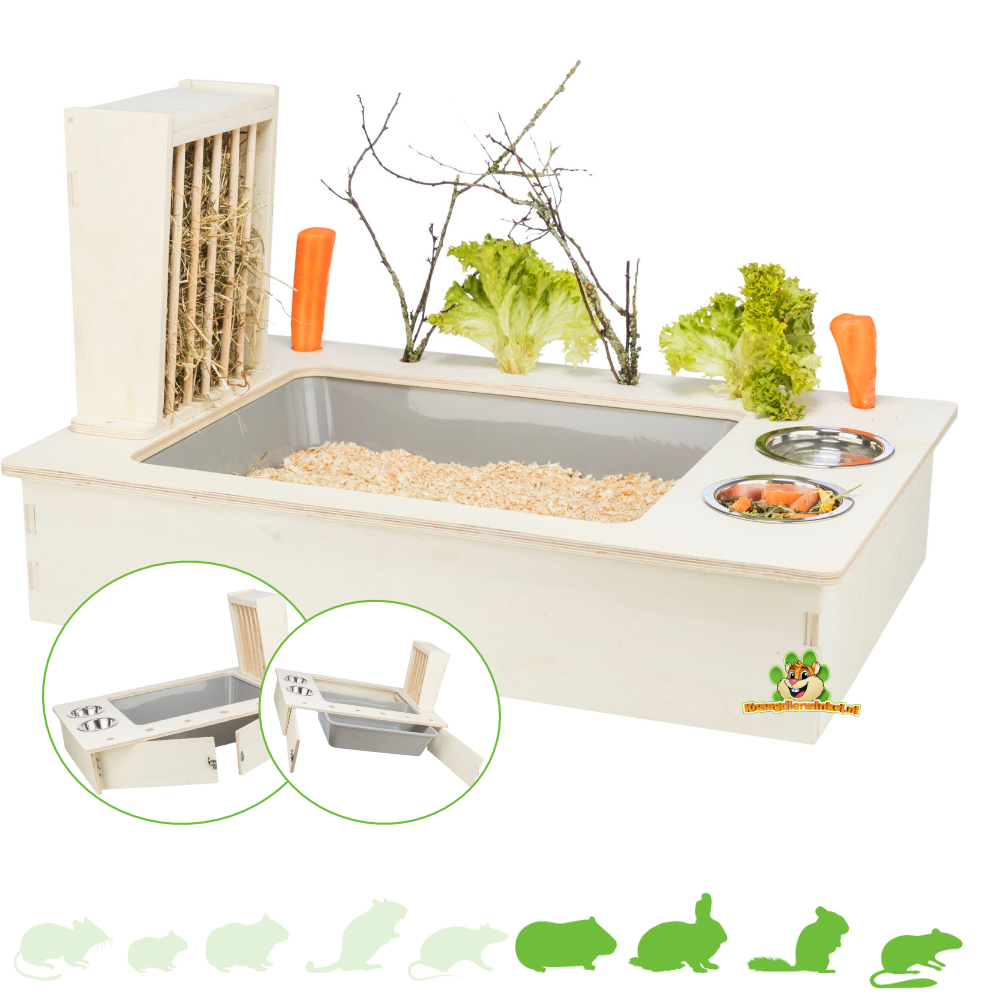
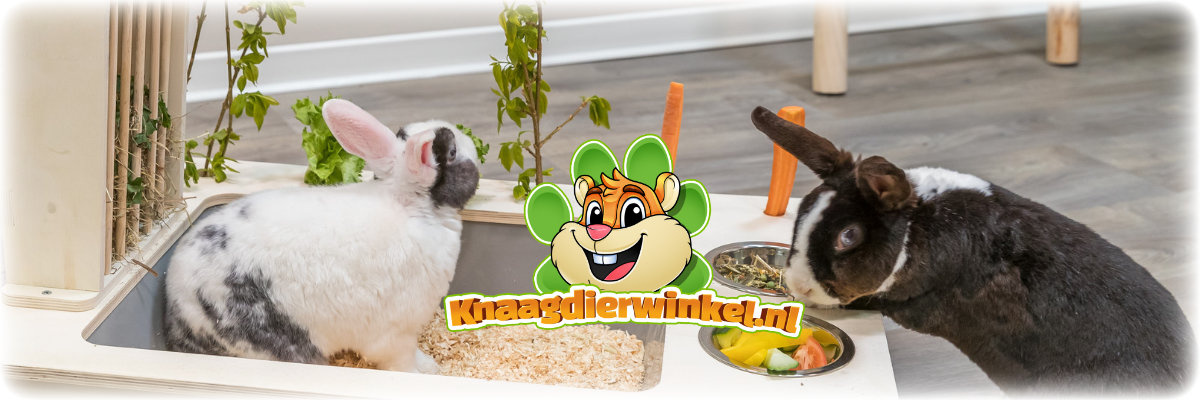
Guinea Pig & Rabbit Feeding Station 70 cm


- Dispatched from our own stock
- Personal & expert advice
- Always 100% rodent-friendly
- In stock soon!
Trixie Guinea Pig & Rabbit Feeding Station 70 cm
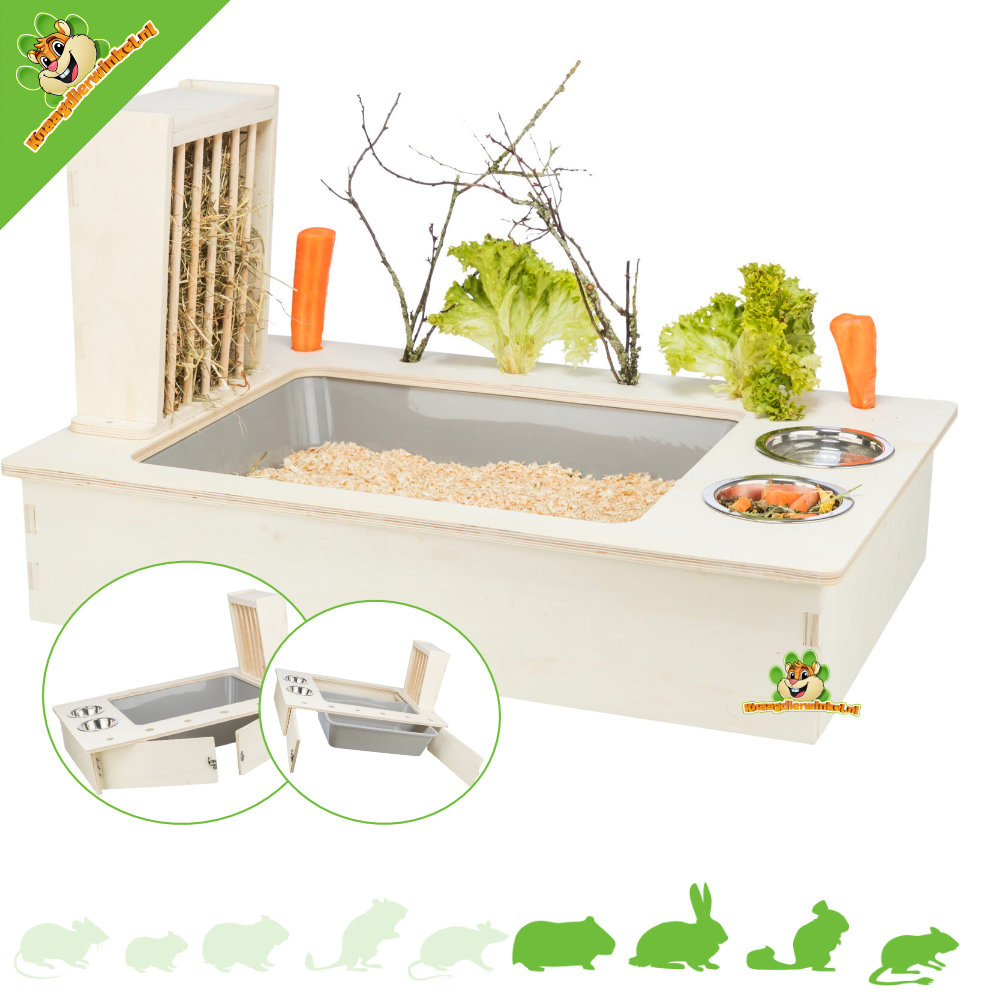
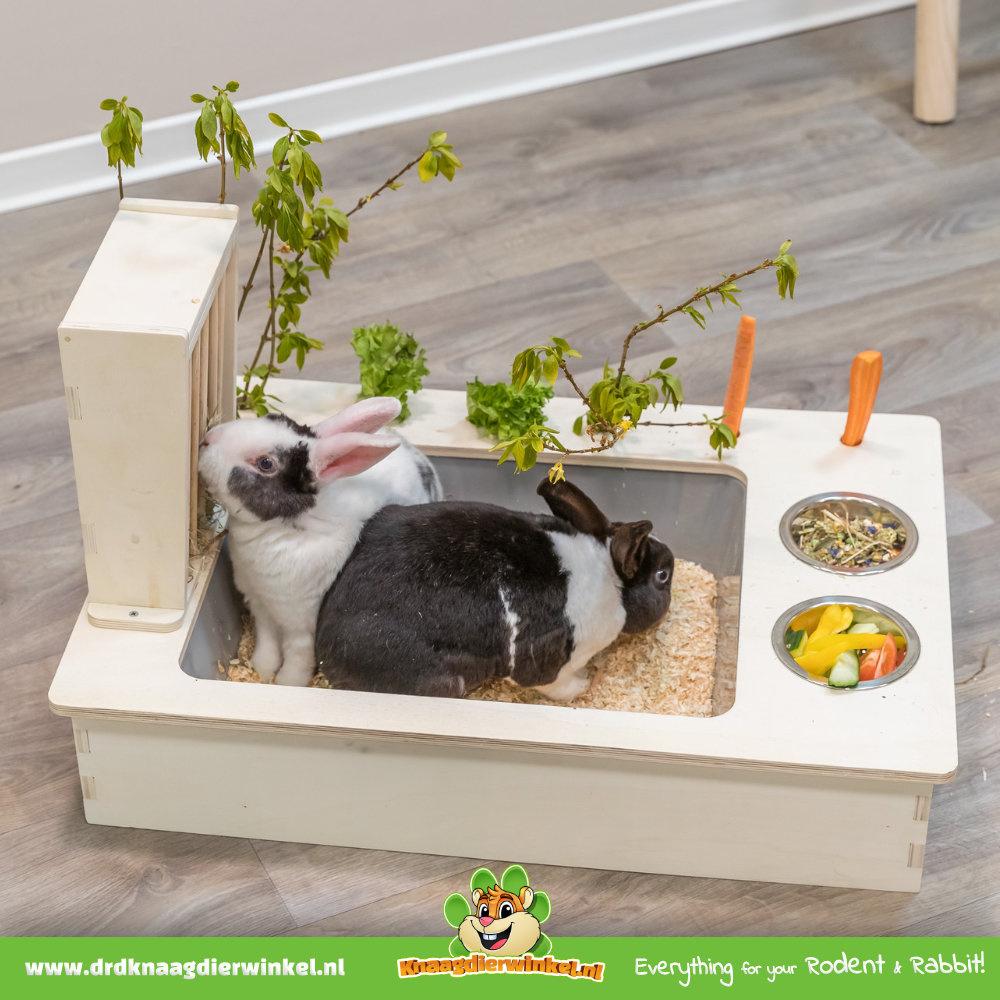
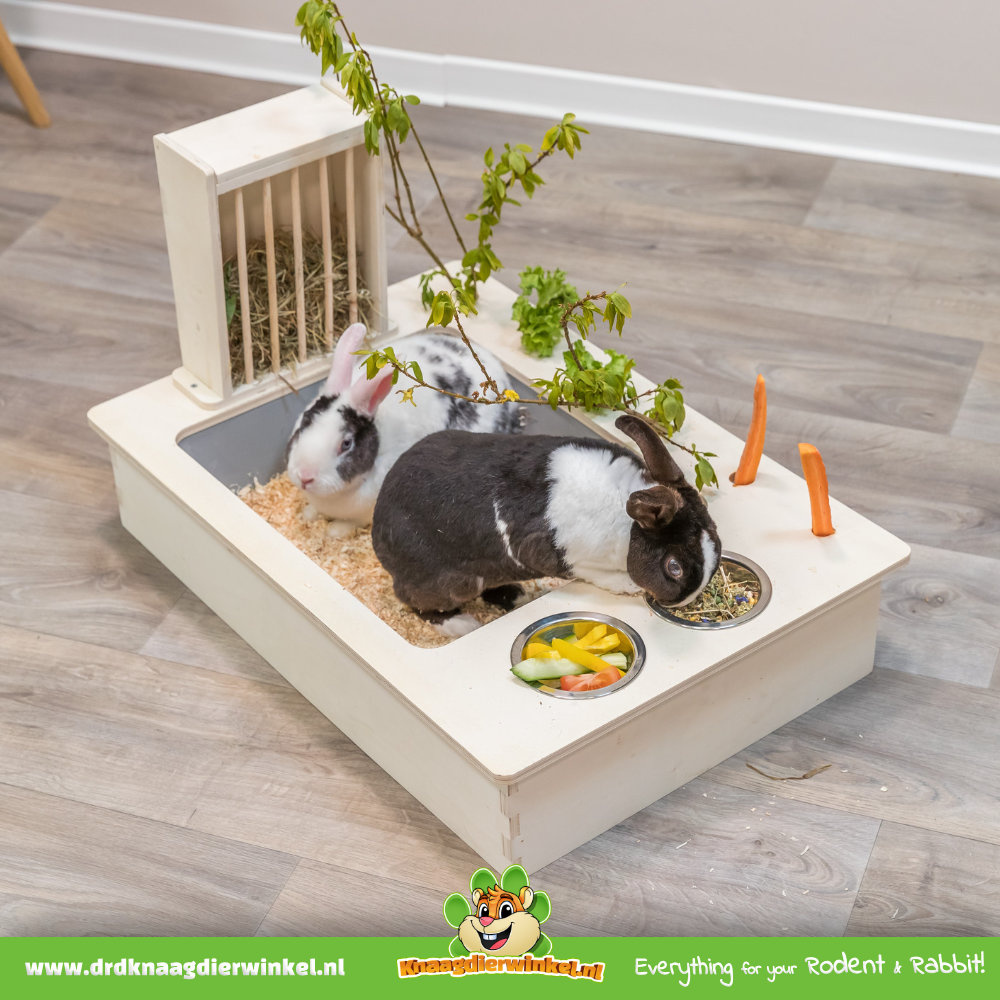
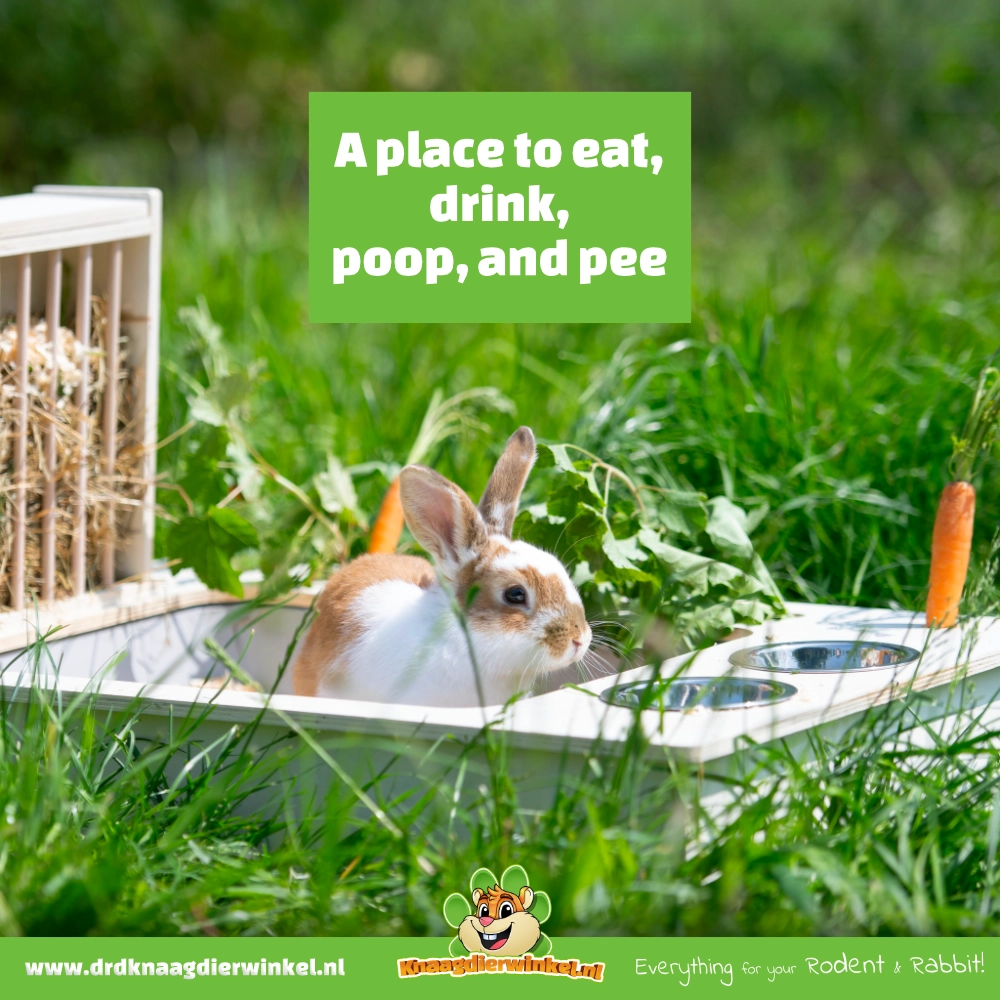
The Trixie Guinea Pig & Rabbit Feeding Station 70 cm is a spacious wooden feeding station that allows you to neatly bring together hay, food, water, and a toilet area. This makes the feeding area more organized, neater, and more practical for daily use. This is especially handy for guinea pigs and rabbits, as they often defecate and urinate in the spot where they eat a lot of hay.
DRD chooses these types of products not only because they look good, but above all because they help to design the enclosure more smartly. A good hay corner is one of the most important places in the enclosure for guinea pigs and rabbits. With this feeding station, you immediately turn it into a complete care zone: hay at the top, a toilet or bedding zone underneath, and space for food and water bowls.
In short
- Spacious wooden feeding station for guinea pigs and rabbits.
- Dimensions: approx. 70 × 47 × 41 cm.
- Combines hay, feed, water, and a toilet area in one place.
- Handy to set up a permanent hay corner.
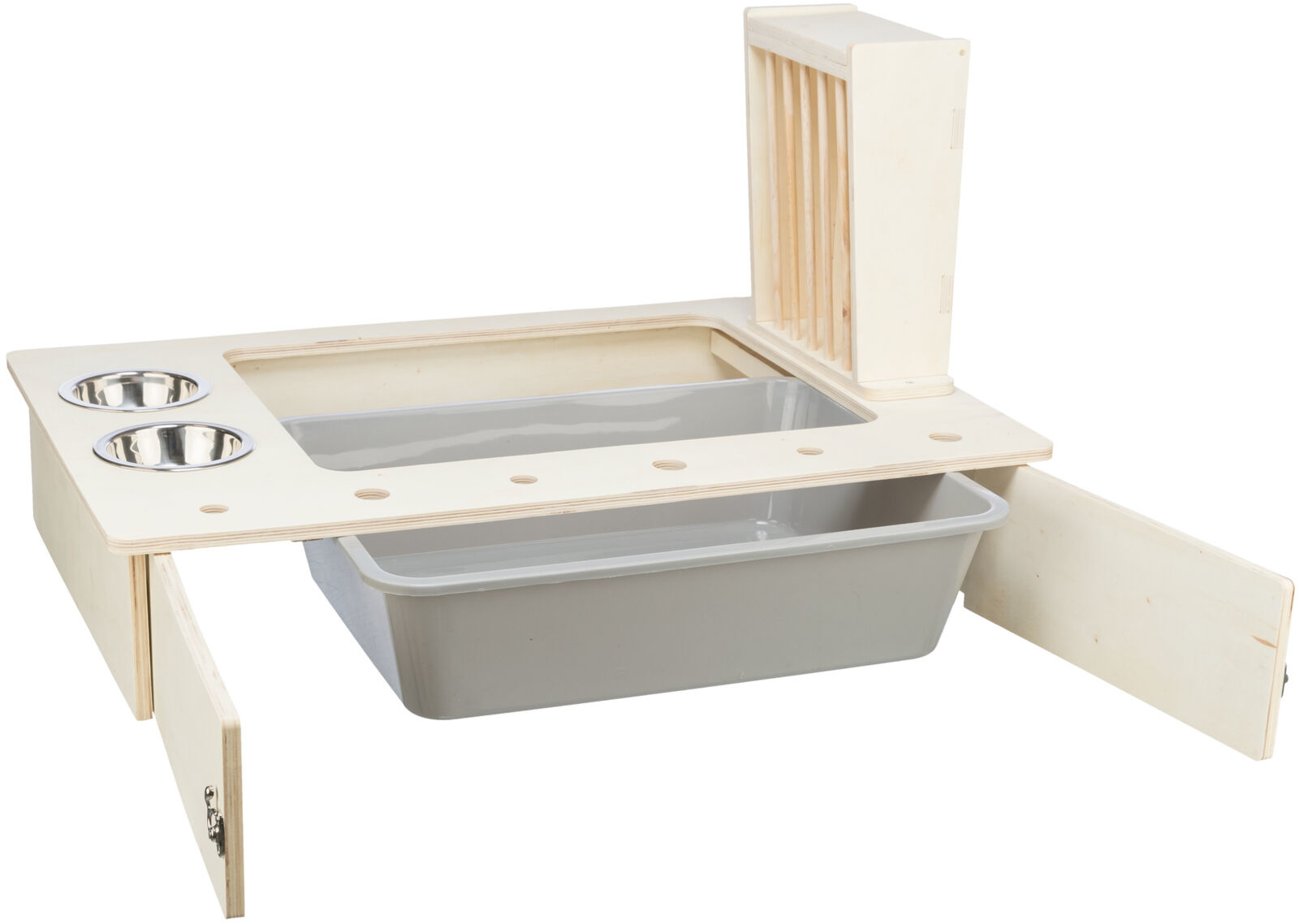
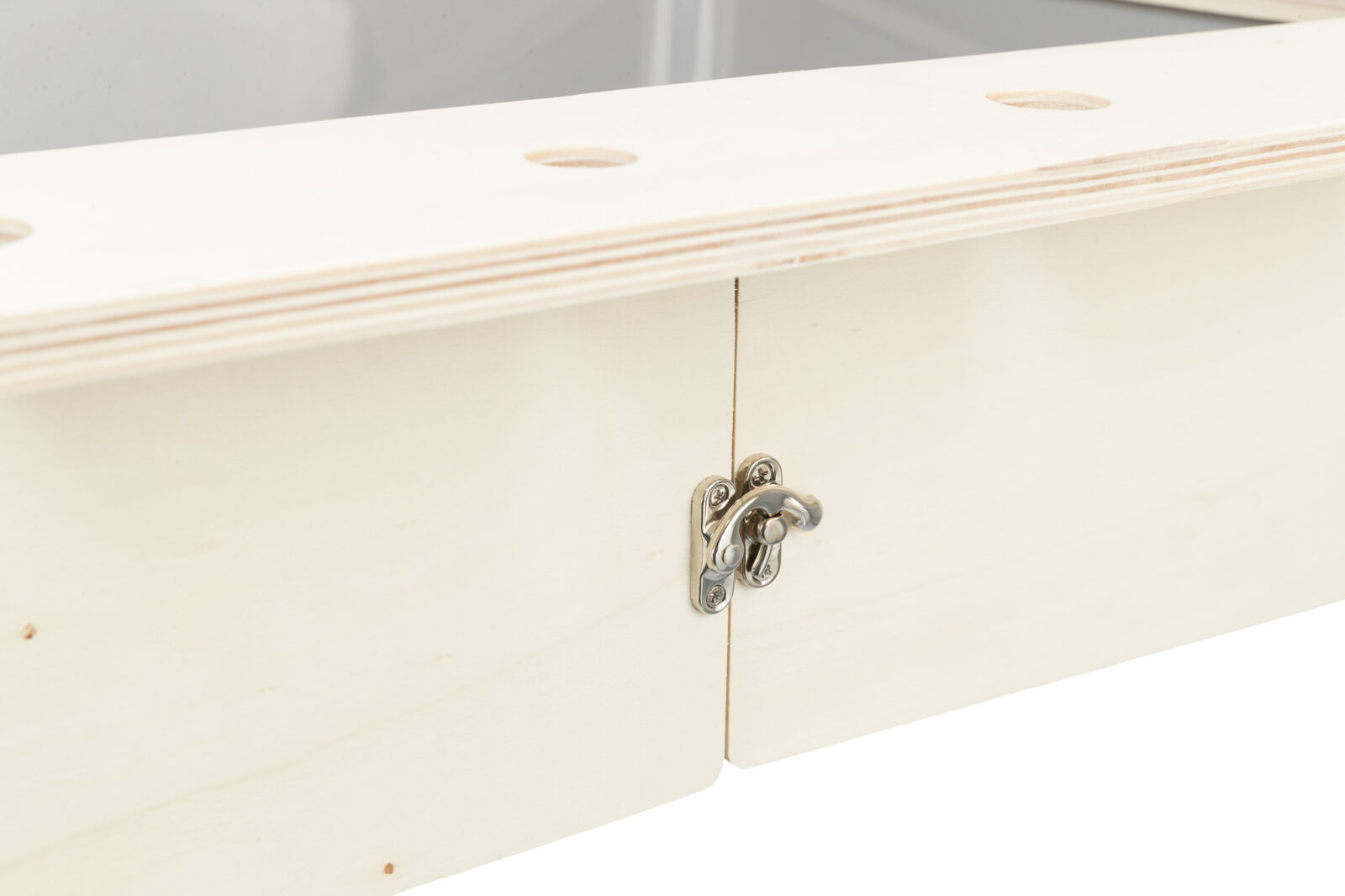
- With space for absorbent bedding or toilet bedding under the hay rack.
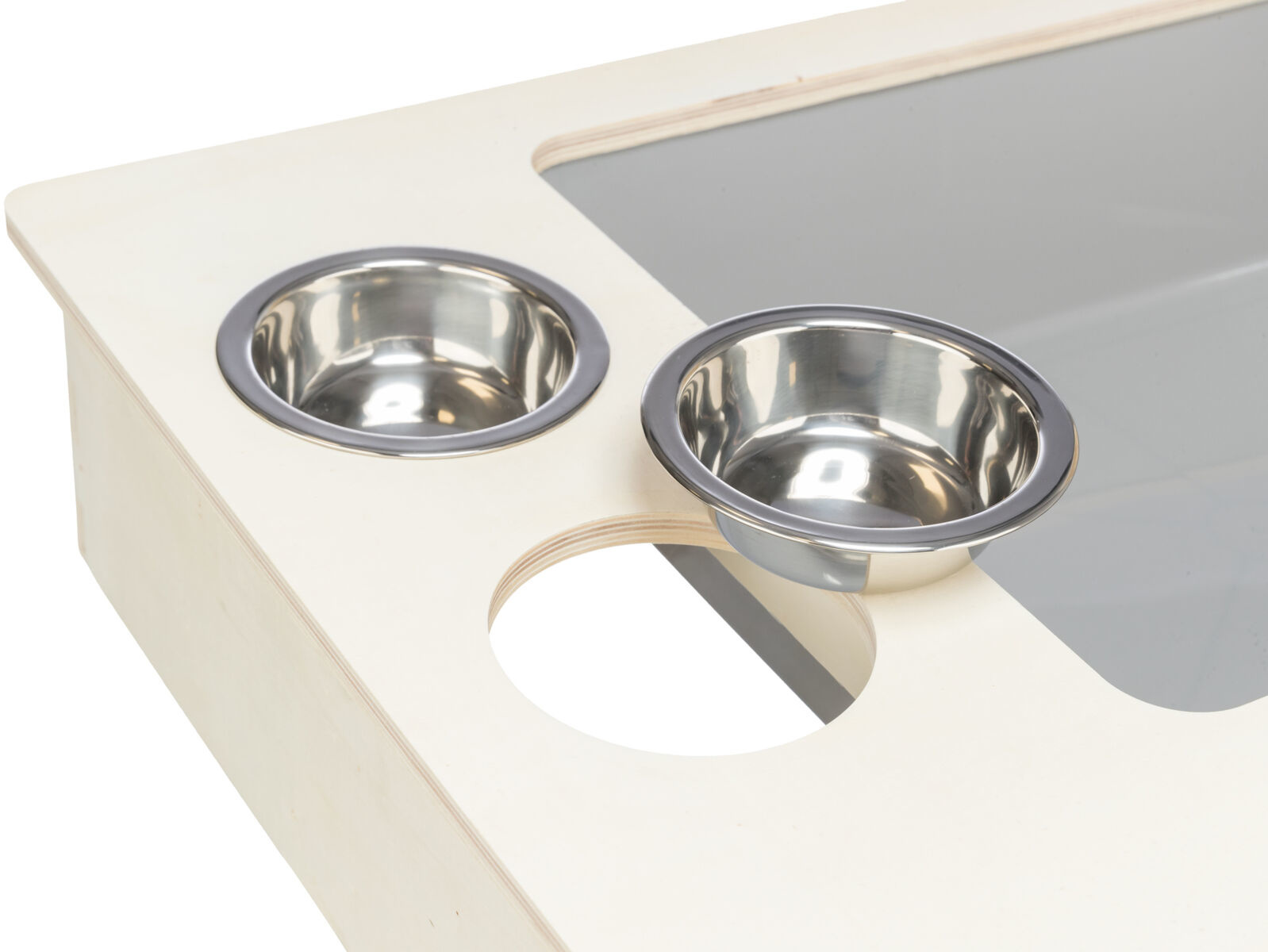
- Cutouts for food and water bowls.
- Also interesting for chinchillas and degus when they do not gnaw intensively on the wood.
Pros
✔ Combines hay, feed, water, and toilet area
✔ Helps create a neat and organized hay corner
✔ Practical for guinea pigs and rabbits who like to eat and poop by the hay
✔ Generous size of approx. 70 × 47 × 41 cm
✔ Cutouts for food and water bowls
✔ Beautiful wooden look for a calm, well-maintained interior
Why choose a feeding station?
For guinea pigs and rabbits, hay is the place where much of their daily activity comes together. They often spend a long time eating there, search through the hay, sit there for a moment, and regularly use the spot as a toilet area. As a result, a separate hay rack, separate toilet, and separate feeding area can quickly become a bit messy. A feeding station, on the other hand, brings these functions together in an organized manner.
You can use an absorbent layer, toilet bedding, or suitable floor covering under the hay rack. This way, you catch many droppings and puddles in the spot where they often end up anyway. This doesn't make the enclosure "clean by itself," but it does help to organize the busiest care area more logically.
For you as an owner, it is primarily practical: you can see more quickly if there is still hay, the food and water areas are together, and you can refresh the toilet zone in a targeted manner. For your animals, it provides a fixed, recognizable place in the enclosure where food, hay, and rest come together.
For which animals is the Feeding Station suitable?
- Guinea pig: very suitable as a complete hay and feeding corner. Guinea pigs eat a lot of hay and often defecate around the hay corner, making a toilet area under the hay rack very practical.
- Rabbit: suitable as a spacious food and hay corner, provided the size suits your rabbit and enclosure. This feeding station can be particularly handy in a rabbit room, run, or spacious indoor setup.
- Chinchilla: may be suitable in terms of size, but only if your chinchilla does not heavily destroy the wood. Chinchillas are strong gnawers, so check the feeding station regularly.
- Degu: may be suitable in size for larger groups, but degus are true gnawers. Use this product only if you can properly monitor whether the wood remains intact and the feeding station remains stable and is not gnawed on.
For small rodents such as mice, dwarf hamsters, hamsters, and gerbils, this feeding station is far too large and unsuitable for the way they use their enclosure. For rats, this product does not make sense as a feeding station; rats have different food, water, litter box, and enrichment needs.
Use for guinea pigs
For guinea pigs, this feeding station is particularly useful as a permanent hay corner. Fill the hay rack generously with good hay and use an absorbent layer at the bottom, such as toilet bedding or a bedding material that absorbs moisture well. Because guinea pigs often defecate while eating hay, this allows you to catch a large portion of the mess in one place.
Place the feeding station in an easily accessible spot in the guinea pig cage or C&C run. Ensure there is sufficient space around it so that guinea pigs can pass each other and do not get trapped. When keeping groups, always provide multiple eating and hiding places so that each animal can eat peacefully.
Use for rabbits
For rabbits, the feeding station can serve as a nice, permanent hay and toilet area. Rabbits eat a lot of hay and often like to use a toilet near the hay rack. By combining these functions, you make daily care more organized.
Pay close attention to the size and setup for rabbits. The feeding station must be stable and easily accessible. Do not use it as the sole resting or hiding place, but rather as a feeding and care zone within a larger enclosure, run, or rabbit room.
For use with chinchillas and degus
In terms of size, this feeding station could also be interesting for chinchillas and degus, but gnawing behavior is the most important consideration here. Both animal species may gnaw intensively on wood. As a result, the feeding station may wear out faster than with guinea pigs or rabbits.
If you use the feeding station for chinchillas or degus, regularly check that the edges, hay rack, openings, and support parts are still in good condition. If the wood becomes sharp, loose, or unstable, remove the product from the enclosure. Good hay remains important for these animals, but the setup must also withstand their strong gnawing behavior.
How do you set up the feeding station?
Set up the feeding station as a clear care zone. This keeps things organized for you and recognizable for your animals.
- Hay rack: fill the rack with clean, dust-free, and palatable hay.
- Toilet area: use absorbent bedding, toilet bedding, or another suitable layer under the hay rack.
- Feeder: place a stable feeder in the designated recess.
- Water bowl: use a suitable water bowl and check daily if it is clean.
- Extra enrichment: optionally use the side openings or edges for a small amount of gnawing material, vegetables, or herbs.
Always use snacks, vegetables, and fruit appropriate for the animal species. For guinea pigs and rabbits, consider leafy greens or herbs. For chinchillas and degus, it is better to choose hay, dried herbs, or leaves instead of sugary products.
View the feeding station in use
In this video, you can see how the feeding station can be used. Use the video primarily as inspiration for your own hay corner, toilet area, and feeding spot.
Why a toilet under the hay rack?
Guinea pigs and rabbits spend a lot of time near their hay. As a result, droppings and urine often end up in exactly that area. A toilet zone under or near the hay rack is therefore very logical. You are not working against your animal's behavior, but rather using it to design the enclosure more smartly.
This can help make cleaning more targeted. Instead of having loose droppings and wet spots everywhere, you can refresh the busiest area more often. This can provide a much better overview, especially in a C&C run, guinea pig enclosure, or rabbit room.
Cleaning and maintenance
Check the toilet area daily and replace wet or dirty bedding in a timely manner. Remove any remaining hay that has become wet or dirty. You can check food and water bowls daily and clean them when necessary.
- Refresh the toilet area regularly.
- Remove wet or soiled hay in a timely manner.
- Check food and water bowls daily.
- Clean wooden parts as dry as possible.
- Use moisture only when necessary and let the wood dry thoroughly.
- Check the wood regularly for wear and gnawing damage.
Animal welfare label
This feeding station bears the Tierschutz-Kennzeichen. This is an Austrian animal welfare label for products that have been positively assessed by the Fachstelle für tiergerechte Tierhaltung und Tierschutz. The assessment considers legal regulations, animal welfare, practical application, and the suitability of the product.
For you as an owner, this provides extra reassurance: the product is not only designed as a convenient feeding station, but has also been evaluated from the perspective of animal-oriented use.

Dimensions and specifications
Dimensions: approx. 70 × 47 × 41 cm
Suitable for: guinea pig, rabbit, chinchilla* and degu*
Use: feeding station, hay rack, toilet area, feeding area and water area
Please note regarding *: chinchillas and degus can gnaw heavily; check the product very carefully for wear and tear around these animals.
Good to know
- Offer only under supervision.
- Check regularly for wear, gnawing damage, loose parts, and sharp edges.
- Change the toilet area and wet bedding on time.
- Remove wet or soiled hay.
- Use matching food and water bowls that fit well in the recesses.
- For chinchillas and degus, only use when you can properly control their gnawing behavior.
- Not intended as a shelter or primary residence, but as a feeding, hay, and toilet station within a larger enclosure.
Frequently Asked Questions
For which animals is this feeding station suitable?
The feeding station is primarily suitable for guinea pigs and rabbits. In terms of size, it may also be suitable for chinchillas and degus, but with these animals, you must pay extra attention to gnawing behavior and wear and tear.
Why is there a toilet area under the hay rack?
Guinea pigs and rabbits often defecate in the spot where they eat hay. By creating a toilet area under the hay rack, you utilize this natural behavior to make the enclosure more organized and easier to keep clean.
Is the feeding station suitable for guinea pigs?
Yes, this feeding station is very practical for guinea pigs. It combines hay, food, water, and a toilet area in one place. Just make sure there is enough space and possibly multiple food or hay stations within a group.
Is the feeding station suitable for rabbits?
Yes, the feeding station can be suitable for rabbits if the size suits your rabbit and enclosure. Use it as a food and hay corner within a spacious enclosure, run, or rabbit room.
Is the feeding station suitable for chinchillas and degus?
In terms of size, it may be suitable, but chinchillas and degus often gnaw intensively. Therefore, check regularly whether the wood is wearing down too quickly, becoming sharp, or becoming unstable.
What type of bedding should I use in the toilet area?
Use an absorbent, suitable bedding or toilet bedding. For guinea pigs, consider a highly absorbent toilet bedding or a separate potty area. For rabbits, you can choose toilet bedding suitable for rabbit litter boxes.
Is this feeding station a shelter or a little house?
No, this is not a primary enclosure, nor is it a full-fledged shelter. It is a feeding, hay, and toilet station that you place within a larger enclosure, C&C run, rabbit run, or rabbit room.

Useful shopping links
- Guinea pig hay racks
- Hay rack for rabbits
- Guinea pig toilets
- Rabbit toilets
- Guinea pig bedding
- Rabbit toilet bedding
- Guinea pig food bowls
- Food bowls for rabbits
- Guinea pig drinking bottles & water bowls
- Rabbit drinking bottles & water bowls
- Guinea pig hay
- Rabbit hay
- Ask DRD for personal advice.
✓ Specialist since 2011 • personal & expert advice • delivered from our own stock
| Size (approx): | 70 × 47 × 41 cm |
| Suitable for: | Rodent, Guinea Pig, Rabbit, Chinchilla*, Degu* |
| Particularities: | - |
| Safety Information: | Offer only under supervision. Check regularly for wear and tear |