Polski

Rat Digging Box – Digging & Sniffing Enrichment for Tame Rats (Natural, Play Box or Bio Bin)
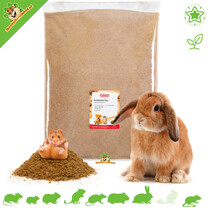
Clean play sand for rodents and rabbits. This special sand is washed, free of contamination and TÜV certified. The sand is slightly moist and contains a small amount of clay, making it pleasant to dig.
Read more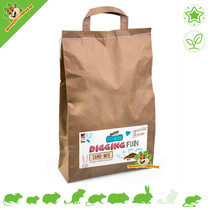
Play sand mix for digging pits, providing fun and enrichment for small pets. Great for use in a digging pit or DigginBox and also suitable as a substrate for fresh plants.
Read more
Organic coconut fiber humus for hamsterscaping, gerbilscaping, digging zones, and plant zones. Apply 7–8 times and is free of peat and fertilizers.
Read more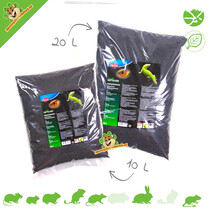
Organic humus for digging zones, planting zones, and natural landscapes. Great for hamsterscaping, gerbilscaping, ratscaping, and rabbit digging boxes.
Read more- Voor 17 uur besteld, dezelfde dag verzonden!
- Specialist sinds 2011
- Delivery from our own stock
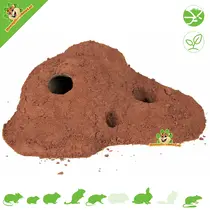
Digging sand with clay for natural landscaping, hamsterscaping, and gerbilscaping. Stays in place better near tunnels and burrows. 5 kg is approx. 5 liters.
Read more
Coconut & Coir 25 Liters as a natural bedding gives the rodent habitat a very natural look. Besides its appearance, it's dust-free and absorbs moisture quickly and easily. It doesn't mold, making it ideal for outdoor use.
Read more
Trixie rodent grass/cat grass to grow yourself. Great as a fresh nibble, sniffing spot, and natural enrichment for rodents and rabbits.
Read more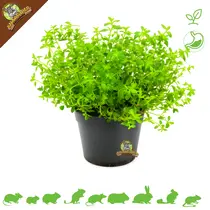
The aroma of the thyme herb plant alone benefits the respiratory tract of both humans and animals. The delightful thyme scent is refreshing.
Read more- Voor 17 uur besteld, dezelfde dag verzonden!
- Specialist sinds 2011
- Delivery from our own stock
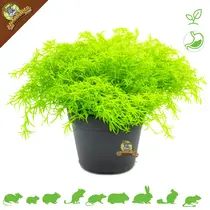
Delicious fresh chamomile for rodents and rabbits. Rodents also frequently encounter chamomile in the wild and enjoy its natural flavor.
Read more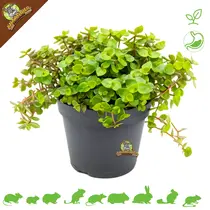
The vitamin plant, also known as the tortoise plant, is a tasty and healthy addition to your rodent or rabbit's daily diet! This plant is also excellent for decorating their enclosure and, especially, for food enrichment.
Read more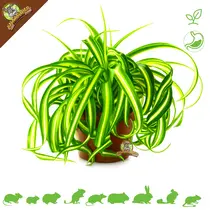
The botanical name Chlorophytum is derived from the Greek terms chloros = yellowish-green and phyton = plant. The green lily is not only a beautiful houseplant but also popular with cats and rodents because of its sturdy leaves. Even birds and terrarium i
Read more
The delightful scent of this plant is almost reminiscent of lemon ice cream! The name "melissa" is derived from the Greek word for honeybee (Melitta).
Read more- Voor 17 uur besteld, dezelfde dag verzonden!
- Specialist sinds 2011
- Delivery from our own stock
Delicious fresh dandelion is a favorite food for rodents and rabbits. Dandelion is part of the natural diet of many rodents, just as it is eaten in the wild.
Read more
The compact-growing blood sorrel 'Little Red Pixie' is also very attractive because of its red veins. However, sorrel does require a special diet. The smaller the rodent, the smaller the portion should be. Place the plant in the enclosure for short period
Read more
The wild strawberry is native throughout Europe and northern Asia. In the wild, it grows preferably in light deciduous and coniferous forests. It is a herbaceous, perennial, and evergreen plant, usually 5 to 25 cm tall and therefore smaller than the commo
Read more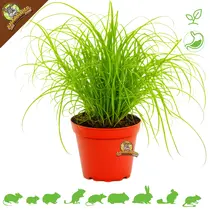
Delicious organic cat grass for rabbits, guinea pigs, hamsters, turtles, reptiles, cats, and ornamental birds. This cat grass is a tasty and healthy addition to your rodent's daily diet!
Read more- Voor 17 uur besteld, dezelfde dag verzonden!
- Specialist sinds 2011
- Delivery from our own stock
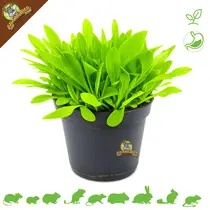
The Plantain is a robust native meadow plant and a valuable plant for rodents, birds, turtles and reptiles.
Read more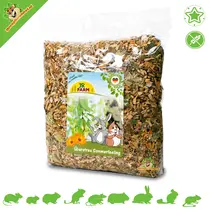
Flowery natural top layer with deciduous wood, coniferous wood, birch leaves, marigold, and mallow. Ideal as a foraging layer, play layer, or extra structure in the enclosure.
Read more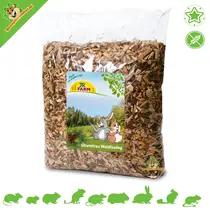
Natural forest-like top layer with hardwood, hardwood bark, softwood, and pine cones. Ideal as a play layer, sniffing layer, and foraging layer.
Read more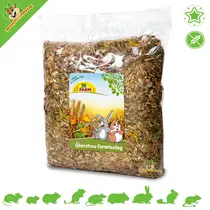
Natural top layer of wood, mountain meadow hay, oat plant, wheat ears, and marigold. Ideal as a foraging layer, play layer, or extra structure in the enclosure.
Read more- Voor 17 uur besteld, dezelfde dag verzonden!
- Specialist sinds 2011
- Delivery from our own stock

Dried moss for hamsterscaping and gerbilscaping. Ideal as a natural decorative layer, an accent around tunnels, platforms, and hiding places, or as a soft texture in a scape.
Read more
Thanks to this sieve shovel, the sand is sieved in no time and all excrement is removed. The shovel has a pleasant handle made of plastic. The sieve itself is made of stainless steel.
Read more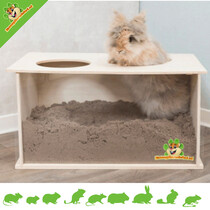
58 cm wooden digging box for dwarf rabbits and small rabbits. With two entrances and exits, a plexiglass viewing window, and a lid to better contain the bedding.
Read more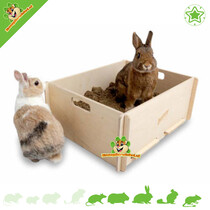
Digging, digging, digging – that's a rabbit's most natural and favorite activity! And that's exactly what they do in the spacious DiggingBox from bunnyNature! Here, they can indulge in their natural behavior to their heart's content and simply "be a bunny
Read more
Rat Digger – Rooting, Sniffing and Searching as Daily Enrichment
Rats are curious, intelligent, and love variety. A rat digging box (also called a sniffing box or digging box) is a simple way to encourage natural behavior: rooting, sniffing, digging, and foraging. You can create a "search and play area" in minutes—in the cage or during off-leash time—without having to rebuild the entire enclosure.
At DRD Rodent Shop® , you'll find practical materials for digging pits and (natural) digging mixes suitable for rat enclosures. Specialists in rodents and rabbits since 2011.
Sprinkle some treats among the light filling and let your rats search. Perfect for beginners and a quick variation.
Play & Forage →
Coconut fibre/humus and structural material create a fine soil for rooting and pushing.
View excavator bucket products →
Add cork, moss, or natural hiding places for routes, textures, and extra challenge.
Ratscaping →
Choosing a rat digging bucket – quick selection guide
First choose your goal: do you mainly want to search/forage (sniffing box) or do you also want to actually root and dig (digging box with substrate)?
- Snuffelbak (low-threshold): light filling + a few small snacks or seeds. Ideal for daily variety.
- Digging bucket (more "soil feel"): coconut fibre/humus as a base + structure (e.g. coconut chips/moss) for a pleasant digging effect.
- Sand/search zone (firmer): use only suitable sand (not powdery) and keep it dust-free.
Tip : Hide some of the food in the digging bucket. This way, you combine digging enrichment and foraging into a single routine.
What is a rat digger?
A digging box is a separate container (or deep container insert) that you fill with diggable or sniffable material. Your rats can safely root around in it, move the material, follow scents, and search for rewards. This provides mental stimulation, helps prevent boredom, and is also fun to watch.
Filling & mixing: what often works well?
- Coconut fiber or humus : a popular base for a natural digging pit. Add structure for extra "body."
- Coconut chips /natural sprinkles: make the mix lighter and more interesting to work with.
- Moss or natural decoration (functional): provides texture and “search spots”.
- Suitable sand (heavier, not powdery): can be used as a separate area. Avoid dusty varieties if your rats are sensitive.
- Sniffing stuffing (paper/cardboard): ideal as a “snack search box” and quick to refresh.
Want fun digging and a fresh cage? Combine a digging bucket with a dust-reducing bedding in the main enclosure.
How to set up a bucket (practical & rat-proof)
- Choose a sturdy container with sufficient height so that the material does not end up everywhere.
- Start dry and organized ; only add extras (moss, plants, or structure) later when you see how your rats interact with it.
- Hide treats : Use small pieces of treats or a handful of herbs and seeds for a search.
- Place wisely : in the cage on a stable level, or during free-range time in the rat run .
Maintenance – how to keep your bucket fresh
Scoop out visible urine/wet spots daily and remove any leftover fresh food. Change (part of) the litter as soon as it remains damp or develops a strong odor. A sniffing box with paper or cardboard is quickest to change; a natural digging mix can often be partially changed.
Safety
Introduce new materials slowly and observe how your rats interact with them. Preferably choose low-dust bedding, especially for rats with sensitive respiratory systems. Check the litter box for sharp edges and remove any loose, unsuitable parts immediately. If there are any noticeable changes in behavior or condition, consult a veterinarian.
Checklist – Getting your rat trap right the first time
✔ Sturdy container with high edge (less mess).
✔ Dust-free filling that suits your purpose (sniffing or digging).
✔ Hide rewards: small snacks or seeds.
✔ Place the litter box stable (cage or run) and supervise the first sessions.
✔ Spot clean daily, partially refresh periodically.
FAQ – rat digger
Is a digging bucket suitable for every rat?
In practice, yes: some rats are released immediately, others need a little more time. Start small with a sniffing box and gradually build up.
How deep should an excavator bucket be?
A shallow container is ideal for sniffing. If you want more of a "digging" experience, choose a deeper container with a higher rim so you can offer more substrate.
Which filling is the most practical?
Paper/cardboard is quickly replaceable and ideal for foraging. Coconut fiber/humus (with texture) provides a natural "soil experience."
Can I put a bucket in the cage?
Yes, provided it's securely positioned. Many owners also use the digging bucket as an activity in the run during off-leash time.
✔ Enrichment that rats actually use: rooting, sniffing, searching
✔ Can be combined with ground cover, ratscaping and foraging
✔ Specialist since 2011
Order before 5 PM, shipped the same day | Delivered from our own stock | Specialist since 2011