 Polski

Guinea pig cage and spacious guinea pig enclosures

The original C&C® 4x2 guinea pig cage from the UK with Coroplast base tray. Spacious, modular, and expandable. Suitable as a full-fledged primary enclosure for guinea pigs according to LICG guidelines.
Read more
Extra spacious modular C&C guinea pig cage 5x2 of approximately 180 × 75 cm with Coroplast base. Beautiful main setup for 2 to 3 guinea pigs.
Read more
Extra large original C&C® guinea pig cage 5x2 with spacious loft 2x2 from the UK. Modular, expandable, and ideal as a spacious primary enclosure for multiple guinea pigs according to LICG guidelines.
Read more
Spacious C&C loft 2x2 of approximately 70 × 70 cm with ramp and connectors. Ideal as an extra hay corner, resting area, or enrichment spot in a C&C guinea pig cage.
Read more- Voor 17 uur besteld, dezelfde dag verzonden!
- Rodent specialist since 2011
- Dispatched from our own stock

Modular indoor C&C run of approx. 140 × 70 × 35 cm. Suitable as a spacious guinea pig cage for 2 guinea pigs, expandable with separate panels and can be combined with a separate bottom cover.
Read more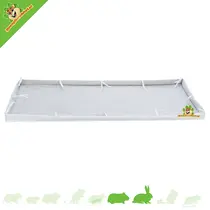
Water-repellent floor cover of approx. 140 × 70 cm for the Indoor C&C Run. Protects the floor, provides more grip for guinea pig paws, and makes the run tidy and more comfortable.
Read more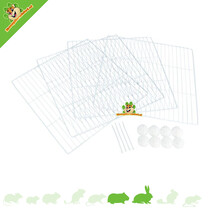
This is a loose lattice panel for the Wire Cube enclosure. The panel is made of powder-coated plastic and metal lattice.
Read more
Set of 4 solid panels of approx. 35 × 35 cm for the Indoor C&C Run. Handy for expansion, resting corners, higher edges, and more shelter in the guinea pig cage.
Read more- Voor 17 uur besteld, dezelfde dag verzonden!
- Rodent specialist since 2011
- Dispatched from our own stock
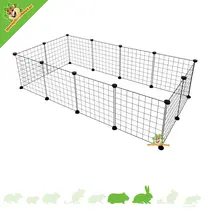
Modular wire cube cage/run measuring 140 × 70 × 35 cm for guinea pigs and rabbits. Flexible assembly and expandable with extra panels.
Read more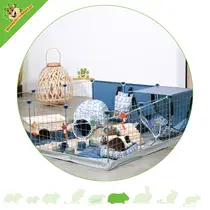
Modular guinea pig enclosure measuring 105 x 105 cm with low walls, floor mat, and protective netting. A nice base for 2 guinea pigs and easily expandable with extra panels.
Read more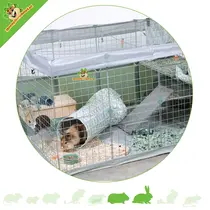
Modular Zolux Neolife indoor enclosure measuring 140 x 105 x 70 cm with floor mat, protective net, panels, clips, and door. For guinea pigs and dwarf/small rabbits.
Read more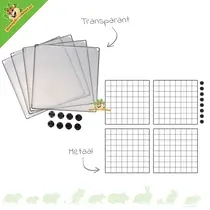
Expansion kit for the Wire Cube Cage Peter 140 cm. Handy for creating extra space, an extra corner, or a higher edge. Available in transparent and metal.
Read more- Voor 17 uur besteld, dezelfde dag verzonden!
- Rodent specialist since 2011
- Dispatched from our own stock
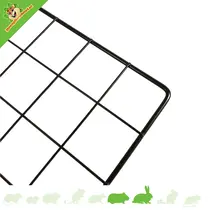
Loose C&C rack of approximately 35 × 35 cm for original C&C® Cage wire cube cages. Handy for expanding, modifying, repairing, or adding extra partitioning.
Read more
Separate connector for original C&C® Cage wire cube cages. Handy for expanding, modifying, or replacing. Fits C&C racks, lofts, and cages.
Read more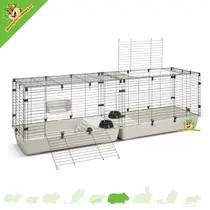
Extra-long 200 cm guinea pig cage with 2 platforms, 2 food bowls and hay rack. Practical to use, easy to arrange and can be assembled without tools.
Read more
Buying a guinea pig cage – choose a spacious enclosure that is really right for your guinea pigs
 A good guinea pig cage is more than just a place your guinea pigs fit. Guinea pigs are social ground animals that need space to walk, eat hay, hide, pass each other, and live together peacefully. Therefore, when choosing a guinea pig cage, we look primarily at floor area, a practical layout, safe walking routes, and sufficient space for hay, houses, water, food, and dry resting areas.
At DRD Knaagdierwinkel®, you will find guinea pig cages and enclosure solutions designed for spacious and practical keeping, such as C&C guinea pig cages , wire cube enclosures, and expandable solutions. This allows you to better tailor the space to your guinea pigs and your own care routine.
When it comes to a guinea pig cage, it’s not just about the dimensions on paper. The main question is: is there still enough room to move around after placing guinea pig houses , tunnels , hay , water, and food? Can you clean wet spots easily? And can your guinea pigs avoid each other without getting stuck? These are exactly the choices DRD helps you with. Specialists since 2011.
Quick links:
Answer first | Which size? | Which guinea pig cage? | Setting up | Bedding & hygiene | Males & groups | Where to place? | Checklist | FAQ
Answer first: which guinea pig cage do you choose?
Choose the most spacious enclosure possible for guinea pigs, with plenty of usable floor space. Guinea pigs are ground-dwelling animals, so a long, wide cage is more valuable than a high one. For two guinea pigs, a minimum floor area of 1.6 m² is often recommended. Larger is preferable, especially for males, groups, or active animals.
✔ Choose floor area rather than height.
✔ Ensure there is room to walk, eat, take shelter, and move out of the way.
✔ Use multiple houses or tunnels, preferably with two exits.
✔ Create a practical hay corner, potty area, and dry resting spots.
C&C cages and wire cube enclosures are popular because they can be arranged in a spacious, modular, and practical manner.
A spacious guinea pig cage gives your guinea pigs more opportunities to walk, scratch, and spread their wings.
Multiple routes, houses, and feeding areas help prevent guinea pigs from blocking each other.
A good layout with a hay corner, urination zone, and dry resting areas makes maintenance much more manageable.
What size guinea pig cage do you need?
When choosing a guinea pig cage, you look at the internal dimensions and the usable floor area. Height is less of a factor, as guinea pigs primarily move across the floor. A second level or loft can be useful as an extra space, but it does not replace spacious basic floor space.
✔ For two guinea pigs, a minimum floor area of 1.6 m² is often maintained, for example 200 × 80 cm.
✔ Extra floor space is needed for every additional guinea pig.
✔ With two teddy bears, more space is often especially important to prevent tension.
✔ Calculate using the internal dimensions of the cage, not the external dimensions or just the product name.
In practice, bigger is often better, because shelters, hay, water, and feed also take up space.
Guinea pig cage selection guide → | Guinea pig runs and enclosures →
Which guinea pig cage suits your situation?
The best guinea pig cage depends on the space you have at home, the number of guinea pigs, the group composition, and how you plan to maintain the enclosure. A cage must not only be large enough but also be logically organized and easy to keep clean.
Suitable for spacious indoor enclosures, customization, and expansion. You can decide where the hay corner, resting area, and potty zone go.
Handy when you want to build flexibly or expand an existing guinea pig cage with extra running space.
A permanent run is nice when your guinea pigs get safe extra space. Look for a wide, safe transition and a floor that is easy to keep clean.
Guinea pig cage assortment → | Guinea pig cage accessories →
Setting up a guinea pig cage: what goes in it?
A guinea pig cage only works well when the layout is right. Guinea pigs need to be able to hide, eat together, step back, grab hay, and walk calmly through the enclosure. So don't fill it completely, but create logical zones.
✔ Multiple houses or shelters, preferably with two exits.
✔ Tunnels or bridges to create safe routes and shelter.
✔ A spacious hay corner or multiple hay areas where guinea pigs can eat at the same time.
✔ Water and food in places that are not easily blocked.
A clear pee zone or hay corner with extra absorption for easier cleaning.
Guinea pig houses → | Guinea pig tunnels → | Guinea pig hay → | Guinea pig hay racks →
Floor, pee pads, and cleaning in the guinea pig cage
The bedding determines how much work you have to do on the enclosure and how comfortable your guinea pigs are. Guinea pigs often have designated urination spots, especially near hay corners, houses, and resting places. By cleverly arranging these zones, the cage stays drier and is easier to clean.
Handy when you want to scoop out wet spots in a targeted manner and easily keep track of zones.
They provide a firm, soft surface and combine well with pee mats in wet areas.
Handy for persistent urination spots, under the hay rack, or for long-haired guinea pigs.
Guinea pig bedding → | Guinea pig floor mats and pee pads → | Guinea pig litter boxes → | Cleaning a guinea pig cage →
Guinea pig cage for males, females, and groups
The right guinea pig cage also depends on the combination. Two sows, a neutered boar with sows, or two boars can all have different space requirements. Especially with boars, extra space, multiple routes, and preventing blockages are important.
✔ Use multiple houses and tunnels, preferably with two exits.
✔ Do not create narrow passages where one guinea pig can block the other.
✔ Distribute hay, feed, and water across multiple locations for groups.
✔ Ensure that every guinea pig can eat and rest without constantly having to compete.
When dealing with tension, look not only at behavior but also at the layout of the cage.
Pairing guinea pigs → | Guinea pig language → | Guinea pig play and foraging →
Where do you put a guinea pig cage?
The location of the guinea pig cage makes a big difference. Place the enclosure in a quiet, well-lit, and draft-free spot, but not in direct sunlight. Guinea pigs can be startled by unexpected movements from above. A place where you can approach them calmly from the side often works better.
✔ Place the cage in a draft-free location and out of direct sunlight.
✔ Avoid loud noises, vibrations, and busy walking routes.
✔ Ensure that you can easily clean, feed, and change the water.
✔ Watch out for heat in the summer and cold or drafts in the winter.
Choose a place where your guinea pigs are part of the household, but can rest peacefully.
Guinea pig summer products → | Guinea pig winter products →
Common mistakes when choosing a guinea pig cage
At first glance, a guinea pig cage seems readily suitable, but in practice, problems often lie in insufficient floor space, an awkward layout, or too few resting places.
✔ Choosing a cage that is too small because the packaging says “suitable for guinea pigs”.
✔ Prioritize height or floors over floor area.
✔ Use only one house or one narrow exit for multiple guinea pigs.
✔ Filling everything up, leaving no good walking space.
✔ Do not create a clear hay corner or urination zone.
Placing the cage in a drafty, warm, busy, or impractical location.
Smartly combine a guinea pig cage with the right categories
A guinea pig cage only becomes truly good when the basics are right and the setup plays a part. Therefore, think not only about the enclosure itself, but also about the bedding, hay, water, food, hiding places, tunnels, hygiene, and enrichment.
Guinea pig food and nutrition → | Guinea pig drinking bottles and water bowls → | Guinea pig food bowls → | Guinea pig cushions and baskets →
DRD makes the choice: a guinea pig cage must provide space and peace.
At DRD, we select guinea pig cages not only based on size, but also on practical use. A good enclosure helps your guinea pigs move around, hide, eat hay, live together, and relax. At the same time, it must be easy for you to clean and logically arranged.
The strength lies in a spacious base, clear zones, and smart combinations of houses, tunnels, bedding, pee mats, hay, and water points.
Checklist – buying a guinea pig cage
✔ Does the cage have enough floor space for the number of guinea pigs?
✔ Is there enough walking space left after placing houses, hay, and water?
✔ Are there multiple hiding places, preferably with two exits?
✔ Can guinea pigs pass each other without getting stuck?
✔ Is there a clear hay corner and a practical potty area?
✔ Can you easily clean the bottom and keep it dry?
Is the cage in a quiet, draft-free, and practical location?
Good to know
A spacious guinea pig cage helps with exercise, group calm, hygiene, and daily checks. Do you notice tension in the group, frequent blocking, wet spots, reduced movement, or restlessness? Then look not only at behavior, but also at the size, layout, and furnishing of the enclosure.
Would you like to read up on general background information about guinea pigs and housing? Then also check out the LICG guinea pig information at licg.nl.
FAQ – frequently asked questions about guinea pig cages
Which guinea pig cage is suitable for two guinea pigs?
Choose a spacious enclosure with plenty of floor space for two guinea pigs. For indoor use, a minimum of 1.6 m² is often recommended. Larger is preferable, especially if you want to properly place houses, hay, water, and resting spots.
Is a C&C cage suitable for guinea pigs?
Yes, a C&C cage is very suitable provided you create sufficient floor space and place the panels securely. The advantage is that you can expand the cage modularly and organize it practically.
What is better: a guinea pig cage or a run?
A spacious enclosure with a permanent, always-accessible run is often ideal. A separate run is handy as an addition, but it only really counts when your guinea pigs have safe and regular access to it.
Does a guinea pig need a high cage?
No, guinea pigs primarily need floor space. They are ground-dwelling animals and not true climbers. A loft or upper floor can provide extra variety, but the ground floor must remain spacious.
How many houses should there be in a guinea pig cage?
Provide multiple hiding places. Ideally, each guinea pig should have its own spot with extra choice. Houses with two exits are useful, as a guinea pig cannot be trapped.
What kind of bedding do you use in a guinea pig cage?
That depends on your enclosure and cleaning routine. Loose bedding, floor mats, pee pads, and litter boxes can all work. It is important that the floor is dry, comfortable, and easy to keep clean.
Where do you place the hay corner in a guinea pig cage?
Place the hay corner in a spot where multiple guinea pigs can eat at the same time. Take urination spots into account, as guinea pigs often urinate around hay. A pee mat, litter box, or extra absorbent bedding can be useful.
Which guinea pig cage is suitable for males?
Extra space is important for boars. Choose a spacious cage with multiple routes, multiple hiding places, multiple food and hay areas, and as few narrow passages as possible.
Can you expand a guinea pig cage?
Yes, C&C cages and wire cube runs in particular are easy to expand. This allows you to adapt the enclosure to your space, group size, and layout.
What do you combine with a guinea pig cage?
Combine a guinea pig cage with bedding, floor mats, pee pads, houses, tunnels, hay, hay racks, food bowls, drinking bottles or water bowls, litter boxes, and cleaning supplies.
✔ Buy a guinea pig cage with practical selection guide for size, C&C, run, base, and interior
✔ Easy to combine with houses, tunnels, hay, bedding, pee mats, and water points
✔ Specialist since 2011, delivered from our own stock
Ordered before 17:00, shipped the same day | Delivered from our own stock | Specialist since 2011
