Polski



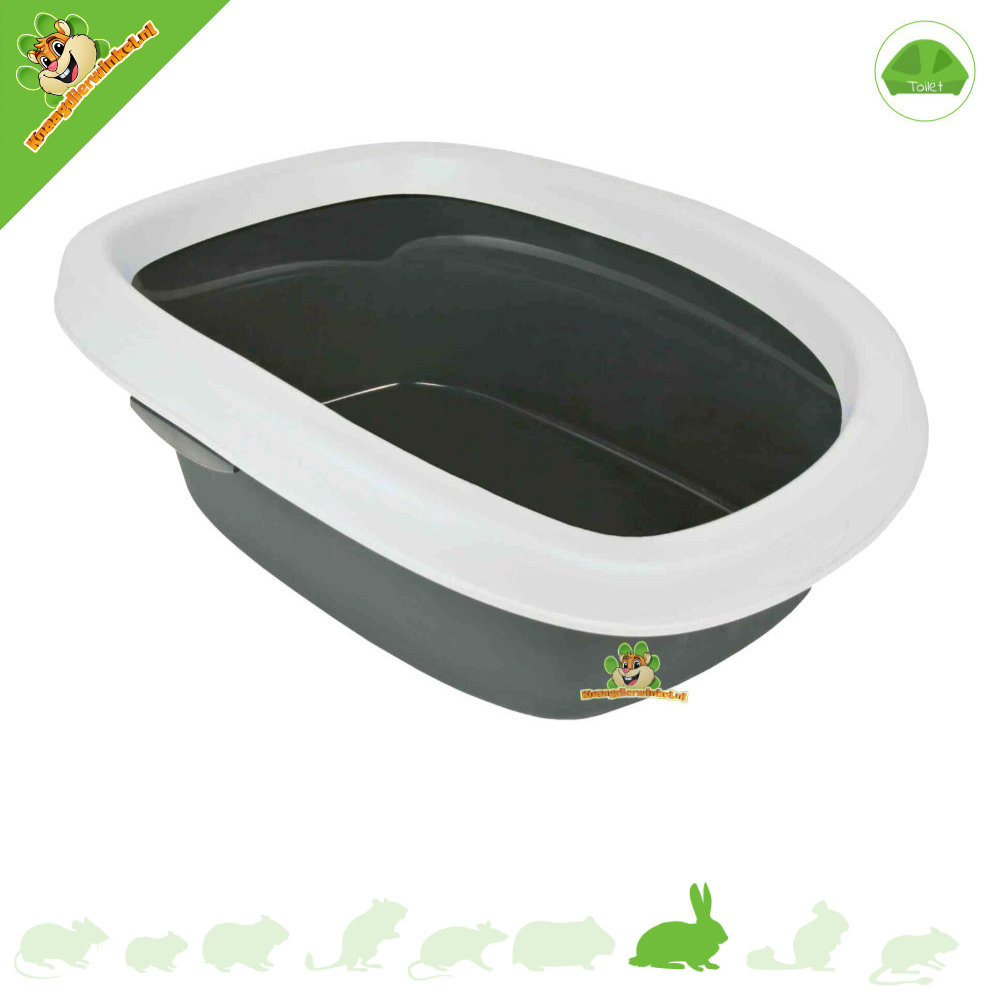
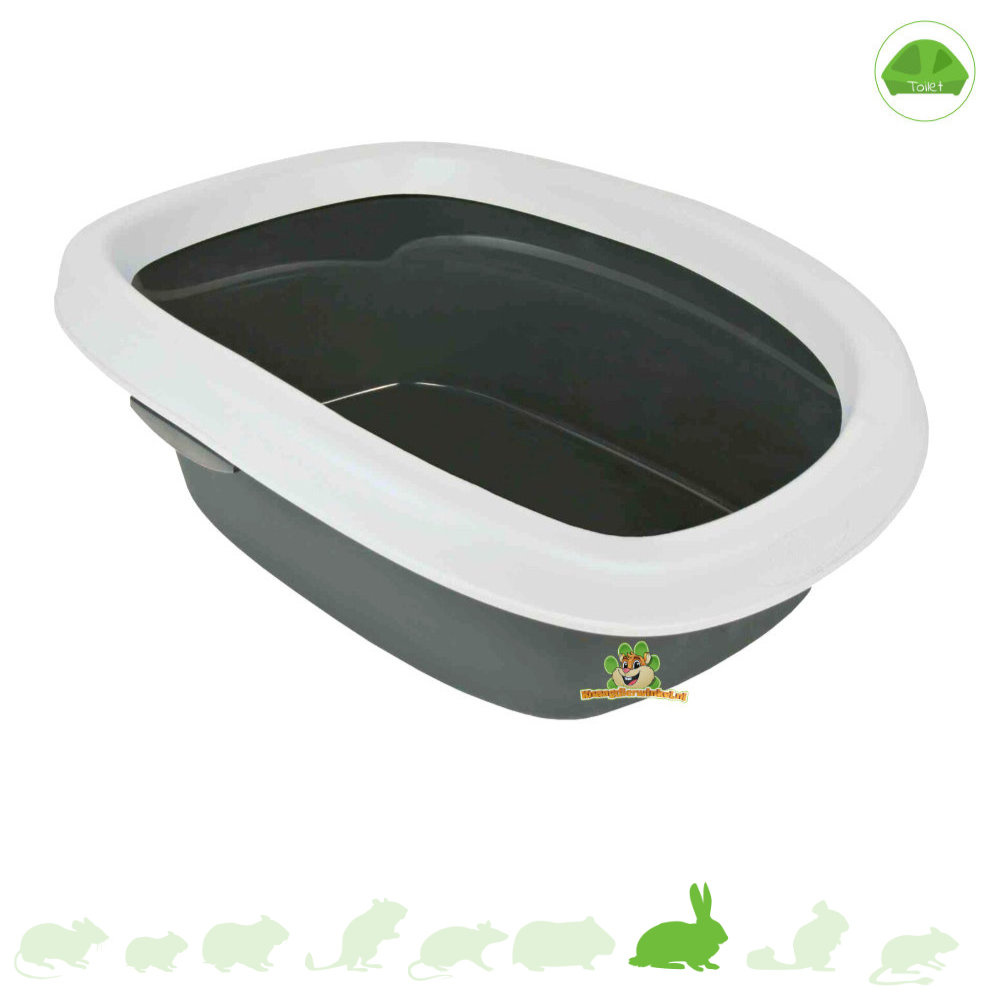
Rabbit toilet with rim 43 cm
- Dispatched from our own stock
- Personal & expert advice
- Always 100% rodent-friendly
- Ordered before 5 p.m., shipped the same day!
Trixie Rabbit Toilet with Rim 43 cm
The Trixie Rabbit Toilet with Rim 43 cm is a spacious litter box for rabbits and larger rodents. Thanks to the raised rim, litter stays contained better and the immediate area around the toilet remains tidier. This makes this toilet very convenient in a rabbit enclosure, rabbit room, run, or larger indoor setup.
DRD selects toilets primarily based on practical use: does the animal fit comfortably in the toilet, does the filling stay in place, and is the toilet easy to clean? This model measures approximately 31 × 43 × 14 cm, offering more space than small corner toilets. This is particularly pleasant for rabbits, as they like to have plenty of room while eating, defecating, and urinating.
In short
- Spacious toilet with a raised rim.
- Dimensions: approx. 31 × 43 × 14 cm.
- Suitable for rabbits and larger rodents.
- The rim helps keep the toilet fill better contained.
- Useful for potty training and designated toilet spots.
- Practical to combine with hay, a hay rack, or a feeding corner.
- To be filled with absorbent toilet paper or toilet bedding.
Pros
✔ Generous size of approx. 31 × 43 × 14 cm
✔ Raised rim to prevent toilet waste from spilling
✔ Helps keep the toilet area more organized and cleaner
✔ Practical for rabbits that urinate and defecate in a fixed spot
✔ Great to combine with hay, hay rack, or hay corner
✔ Easy to empty and refill

- Absorbs urine quickly and helps reduce odors.
- Makes the toilet easier to keep clean.
- Handy for the daily routine: remove wet spots, top up, and you're done.
- Choose a filling that absorbs well.
- Fill the toilet with a clear absorbent layer.
- Remove wet spots daily and top up where necessary.
Why choose a rabbit toilet with a rim?
Rabbits often choose a regular toilet spot themselves. A spacious toilet helps keep that spot clean and tidy. By placing a litter box at their favorite urination and defecation spot, you can make daily cleaning easier and avoid having to change the entire surface every time.
The raised rim is especially useful for animals that like to dig, turn, or push litter out with their hind legs. The rim keeps litter better contained, keeping the area around the litter box tidier. This is pleasant in a rabbit room, C&C setup, run, or indoor enclosure.
Moreover, a litter box with a rim provides a clearly defined area. This helps many owners recognize the litter zone: this is where the absorbent padding is kept, this is where daily checks are performed, and where you can optionally add a hay rack or hay corner.
For which animals is this toilet suitable?
- Rabbit: very suitable as a spacious litter box in an enclosure, run, rabbit room, or indoor setup. Due to its size, many rabbits can sit comfortably in the toilet.
- Guinea pig: can be suitable as a large toilet or hay corner for guinea pigs, especially when you want to create a place where eating hay and pooping come together.
- Larger rodents: depending on size, behavior, and setup, the toilet can also be used as a spacious litter box or absorbent corner.
For small rodents such as mice, dwarf hamsters, hamsters, and gerbils, this toilet is usually not a logical toilet. They often use sand baths, litter trays, or digging zones that are better suited to their size and behavior. For rats, a lower rat toilet or corner toilet can often be more practical than this higher rabbit toilet.
Use for rabbits
For rabbits, a litter box often works best in the spot where they naturally prefer to urinate and defecate. Therefore, do not simply place the box in a random spot, but first observe where your rabbit chooses its favorite corner. Place the litter box with absorbent filling there.
Many rabbits enjoy eating hay while defecating. That is why a toilet under or next to a hay rack often works very well. You then create one logical grooming area: eat hay, use the toilet, and quickly check daily to ensure everything remains clean and dry.
- Place the litter box at your rabbit's favorite toilet spot.
- Use an absorbent toilet filler.
- Preferably combine the toilet with a hay corner or hay rack.
- Remove wet spots daily.
- Completely change the litter as soon as the filling is saturated.
Use for guinea pigs
Guinea pigs usually do not become house-trained like rabbits, but they often poop and urinate frequently in places where they eat hay and rest. Therefore, a large litter box can also be useful for guinea pigs as a hay corner or absorbent feeding area.
For example, place hay near or above the litter box so that many droppings and urine particles end up in one place. This makes daily cleaning easier. For guinea pigs, it is important that entry remains easy and that the rim is not too awkward for older, small, or less mobile animals.
Which toilet filler do you use?
Use a filling in a toilet that absorbs moisture well and is easy to keep clean. Consider toilet litter or pellets suitable for rabbits and rodents. The goal is not to thickly fill the entire enclosure, but to create an absorbent zone inside the toilet.
Suitable options include Corbo , Back 2 Nature , or Cotton & Pellets . Be sure to choose a filling that suits your animal, your enclosure, and how often you want to change the litter.
How much toilet paper do you put in?
Fill the litter box with a clear absorbent layer. A layer of approximately 3 to 5 cm is practical for many situations. For animals that urinate frequently or for multiple animals, you can fill it slightly more generously, as long as the litter box remains easily accessible.
The filling must be able to absorb urine well, but the toilet does not need to be filled to the rim. Too much filling can actually be worked out more quickly. It is better to fill practically: sufficient absorption, but still neat and easy to clean.
Potty training a rabbit: here's how to start gently
Litter training rabbits works best when you align with your rabbit's behavior. Rabbits often choose a fixed spot themselves. Place the litter box there and, if desired, put some droppings or a small amount of used litter in the new box. This helps your rabbit smell where the litter box is intended more quickly.
- First, observe where your rabbit urinates or poops on its own.
- Put the toilet in that spot.
- Use absorbent toilet paper.
- If necessary, place a few droppings in the litter box as a form of identification.
- Clean up accidents outside the toilet calmly.
- Don't expect a perfect result in one day; routine helps.
Not every rabbit uses a litter box completely neatly, but many rabbits do learn to do most of their urine and droppings in one spot. This makes the enclosure cleaner and daily care easier.
Combining toilet with hay
For rabbits and guinea pigs, a toilet under or next to a hay rack is often very practical. These animals enjoy eating hay and produce a lot of droppings precisely at those times. By cleverly combining hay and a toilet, you catch a lot of mess in one place.
Make sure the hay stays clean and doesn't get wet. Hang a hay rack or hay sack so that your animal can eat in a relaxed manner, but the hay doesn't end up right in the wet litter. This way, you create a nice, organized hay and toilet area.
Cleaning and maintenance
A toilet works best when you check it briefly daily. Remove wet spots and heavily soiled litter, and top up when necessary. When the entire filling is saturated, empty the toilet completely and clean the bowl.
- Remove wet spots daily.
- Refill with clean toilet paper when necessary.
- Empty the toilet completely as soon as the filling is saturated.
- Clean the rim and bottom if dirty.
- Let the toilet dry before refilling.
- Check the bin regularly for wear, cracks, or sharp edges.
Dimensions and specifications
Product: Rabbit toilet with rim 43 cm
Brand: Trixie
Dimensions: approx. 31 × 43 × 14 cm
Use: toilet bowl, toilet zone, or spacious absorbent corner
Suitable for: rabbits and larger rodents
Special features: raised rim, generous size, suitable for toilet filling
Good to know
- Check regularly for wear, cracks, or sharp edges.
- Use an absorbent litter suitable for rabbits and rodents.
- Remove wet spots daily for a fresher toilet area.
- Place the toilet in a spot where your pet can easily get in and out.
- For older or less mobile animals, a lower entry can be more comfortable.
- Use the toilet as part of a larger stay, not as separate accommodation.
Frequently Asked Questions
For which animals is the Rabbit Toilet with Rim suitable?
This toilet is particularly suitable for rabbits. Additionally, it can be used for larger rodents or as a spacious hay and toilet area for guinea pigs, depending on the layout and ease of access.
How big is this rabbit toilet?
The toilet has dimensions of approx. 31 × 43 × 14 cm.
Why does this toilet have a rim?
The raised rim helps to keep litter better in the litter box. This is useful for animals that twist, dig, or push litter out.
What kind of filling do you use in a rabbit toilet?
Use an absorbent litter suitable for rabbits and rodents. Consider, for example, Corbo, Back 2 Nature, or Katoen & Korrel.
How often should you change the toilet?
Remove wet spots daily and completely change the litter as soon as it is saturated. How often this is necessary depends on the number of animals, the litter, and usage.
Can this toilet stand under a hay rack?
Yes, that is actually often handy. Rabbits and guinea pigs poop a lot while eating hay. Just make sure to place or hang the hay rack so that the hay stays clean and doesn't get wet.
Is this toilet suitable for small rodents?
For small rodents such as mice, dwarf hamsters, hamsters, and gerbils, this toilet is usually too large and not logical as a toilet. Smaller litter boxes, sand baths, or digging zones are often more suitable for these animals.
Useful shopping links
- Rabbit toilets
- Rabbit toilet bedding
- Toilet filler for rodents and rabbits
- All toilets
- Guinea pig toilets
- Hay racks for rabbits
- Rabbit hay
- Rabbit cleaning products
- Ask DRD for personal advice
✓ Specialist since 2011 • personal & expert advice • delivered from our own stock
| Size (approx): | 31 × 43 x 14 cm |
| Suitable for: | Rodents, Rabbits |
| Particularities: | - |
| Safety Information: | Offer only under supervision. Check regularly for wear and tear |