 Polski

Rabbit Health: prevention, parasites, care & support





- Voor 17 uur besteld, dezelfde dag verzonden!
- Rodent specialist since 2011
- Dispatched from our own stock




- Voor 17 uur besteld, dezelfde dag verzonden!
- Rodent specialist since 2011
- Dispatched from our own stock





Rabbit Health – prevention, support and practical help for home
Rabbit health starts with observing carefully, acting promptly, and having the right products on hand when extra support is needed. In this category, you will find health products for rabbits, such as products for parasites, myiasis, environmental hygiene, force-feeding, feeding syringes, vitamins, eye care, and grooming aids.
At DRD Knaagdierwinkel®, we view health not as a separate product group, but as part of daily care. Good rabbit hay , appropriate rabbit food , a clean enclosure, a dry litter box, and daily checks help you notice changes more quickly. Health products can provide support, but do not replace a rabbit-specialist veterinarian for health issues.
✓ In short: this category helps you with prevention, daily check-ups, and practical support regarding your rabbit's health.
✓ Choose health products based on the situation: parasites, myiasis risk, dietary support, vitamins, or care assistance.
✓ Is your rabbit not eating, not producing droppings, lethargic, or do you see maggots, wounds, or signs of pain? Then contact a veterinarian immediately.
Quick links:
Why health? · What will you find in this category? · Prevention & check-ups · Parasites & environment · Myiasis · Force-feeding & support · Healthy foundation · When to see a vet? · Useful shopping routes · FAQ
For prevention
Products related to parasites, myiasis, hygiene, and daily checks help you be prepared.
For support
Force-feeding, feeding syringes, and care aids are handy when your rabbit temporarily needs extra help.
Choose faster
This category groups products by product role, so you can more quickly see what suits your situation and your rabbit.
Why rabbit health requires extra attention
Rabbits often show discomfort subtly. A rabbit that eats less, moves less, sits more quietly, or produces different droppings may already indicate that something is wrong. That is why daily checks are so important. Not just when you notice a problem, but as a fixed routine.
Health products can help with prevention, care, and support. Think of products for parasite control, myiasis risk, eye care, skin care, condition, or temporary supplementary feeding. The right product choice always depends on what you observe, how your rabbit behaves, and whether there is a condition requiring a veterinarian.
Health starts with
✓ Check daily if your rabbit is eating well.
✓ Examine droppings for quantity, size, shape, and structure.
✓ Keep the hindquarters clean and dry, especially in warm weather.
✓ Keep the enclosure clean, dry, and well-ventilated.
✓ Take changes in behavior, posture, appetite, or coat seriously.
Read more: Rabbit not eating · Rabbit droppings · Rabbit checklist
What can you find in this Rabbit Health category?
This category is structured around situations you might practically encounter as a rabbit owner. Not every product is intended for daily use. Some products are mainly useful for being prepared, while others are used for specific areas of concern or following advice from a veterinarian.
Assortment in this category
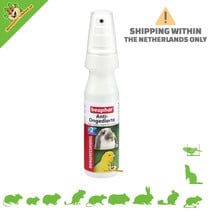
✓ Parasite products: products for mites, scabies, fleas, lice, or other unwanted pests.
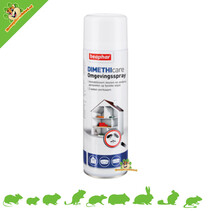
✓ Environmental products: sprays and aids for housing, environment, and resting areas.
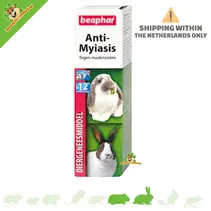
✓ Myiasis products: products suitable for extra attention around fly strike and warm periods.
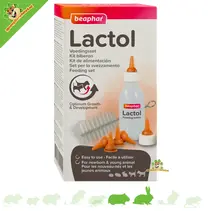
✓ Force-feeding and feeding syringes: for support with temporary supplementary feeding, usually after consultation or instruction.
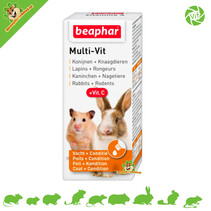
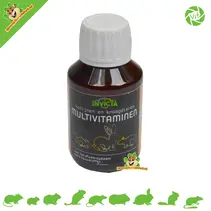
✓ Vitamins and fitness products: supplementary products for specific situations, not as a substitute for good basic nutrition.
✓ Eye, skin, and wound care: care aids for additional support where appropriate.
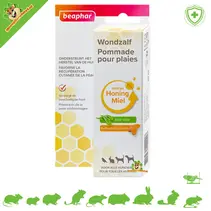
Examples in this category include anti-parasite products, anti-myiasis products, mite and environmental sprays, force-feeding products for herbivores, feeding syringes, eye care products, honey ointment, and vitamin/conditioning products.
Prevention and daily checks
Prevention starts with a fixed routine. Check on your rabbit briefly every day: is your rabbit eating well, does it come forward as you are used to, are the droppings normal, is the coat clean, and does the behavior feel familiar? By doing this daily, you will notice sooner when something changes.
Many health problems become apparent sooner when you know what is normal for your rabbit. For example, some rabbits eat enthusiastically right away, while others are calmer. Some rabbits lie stretched out a lot, while others sit alert more often. It is precisely this individual pattern that provides stability.
Daily health check
✓ Does your rabbit eat hay, pellets, and any greens as normal?
✓ Are there enough normal droppings?
✓ Is the hindquarters clean, dry, and free of sticky poop?
✓ Is the coat calm, without bald patches, scabs, or sores?
✓ Is your rabbit moving as you are used to?
✓ Are the toilet, resting area, water area, and hay corner clean and easily accessible?
Parasites, mites, and the environment in rabbits
Parasites can manifest through itching, scabs, bald patches, scales, restlessness, excessive scratching, or changes in the coat. The environment also plays a role: resting places, rugs, bedding, litter boxes, and hiding places are part of daily hygiene.
Always use products for parasites and the environment according to the instructions on the packaging. Do you see clear symptoms, sores, severe itching, scabs, bald patches, or does the problem keep recurring? Then it is wise to have your rabbit examined by a veterinarian so that it becomes clear exactly what is going on.
Be careful regarding parasites and the environment
✓ Check coat, ears, skin, hindquarters, and pressure points regularly.
✓ Clean the toilet and wet spots on time.
✓ Always use products appropriate to the animal species, weight, and instructions for use.
✓ Treat the environment only with products intended for that purpose.
✓ Contact a veterinarian in case of clear skin problems.
Handy to combine with: Rabbit Cleaning Products · Rabbit Toilets · Rabbit Toilet Bedding
Myiasis in rabbits: be extra vigilant in warm weather
Myiasis is also known as maggot infestation. Extra checks are important, especially in warm weather, for outdoor rabbits, older rabbits, rabbits with sticky droppings, urine stains, or a dirty hindquarters. Products for myiasis can be part of preventive care, but they never replace daily checks.
The basics remain: clean hindquarters, dry resting spots, a clean litter box, good nutrition, normal droppings, and prompt action when something deviates. Do you see maggots, wounds, wet spots in the coat, lethargy, or signs of pain? Then this is not a situation to wait it out at home.
Myiasis check in rabbits
✓ Check the hindquarters daily in warm weather.
✓ Watch out for sticky poop, urine stains, wet coat, and dirty resting spots.
✓ Keep the toilet, bedding, and resting areas dry and clean.
✓ Pay extra attention to older, sick, long-haired, or less mobile rabbits.
✓ Do you see maggots or wounds? Contact a veterinarian immediately.
Read more: Myiasis in rabbits · Rabbits in summer · Rabbits Summer products
Force feeding, feeding syringes, and eating assistance
Force-feeding for herbivores, rescue feed, and feeding syringes are products you can use when a rabbit temporarily needs support with eating. This is preferably done after consulting a veterinarian or when you have received clear instructions.
A rabbit that is not eating is always a serious signal. Therefore, do not wait when your rabbit stops eating, produces fewer droppings, is lethargic, or shows signs of pain. Force-feeding is a tool within proper care, not a substitute for examination or treatment.
Good to be prepared
✓ Force-feeding or rescue feed for herbivores.
✓ A feeding syringe to administer small portions in a controlled manner.
✓ A quiet place where you can safely support your rabbit.
✓ Clear instructions from your veterinarian regarding quantity and frequency.
✓ In the meantime, continue to pay close attention to appetite, droppings, posture, and behavior.
Read more: Rabbit isn't eating · Rabbit droppings · What does a rabbit eat?
The healthy foundation: hay, nutrition, hygiene, and exercise
Health is strongly linked to the daily basics. Plenty of hay, appropriate nutrition, sufficient exercise, clean litter boxes, dry resting places, and peace and quiet in the living environment help your rabbit function well. Products from this category therefore make the most sense when they are part of a complete care routine.
Space also plays a role. A rabbit that can move around sufficiently, has easy access to hay and water, has a comfortable litter box, and can retreat safely is easier to observe. You notice more quickly if eating habits, droppings, posture, or behavior change.
Assessing a healthy foundation
✓ Is good hay always available?
✓ Is the food suitable for rabbits and your animal's situation?
✓ Is the toilet area clean, dry, and clearly recognizable?
✓ Does your rabbit have enough room to move around and lie down stretched out?
✓ Can you easily tell on a daily basis if eating, droppings, and behavior are normal?
When should you always call a veterinarian?
Health products are intended for prevention, care, and support. They are not intended to resolve obvious symptoms of illness at home yourself. With rabbits, acting quickly is important, as small changes can sometimes become serious rapidly.
Are you unsure whether something is a normal care situation or a medical problem? Then err on the side of caution and contact a veterinarian specializing in rabbits. You certainly do not want to wait in cases of not eating, reduced droppings, signs of pain, or a risk of myiasis.
Contact a veterinarian if your rabbit
✓ Not eating or clearly eating less than normal.
✓ Produces no, fewer, or abnormal droppings.
✓ Appears sluggish, quiet, breathless, or in pain.
✓ Has diarrhea, sticky stools, or a dirty hindquarters.
✓ Has sores, maggots, swellings, scabs, or bald patches.
✓ Suddenly moves, chews, breathes, or behaves differently than you are used to.
Useful shopping routes for rabbit health
Rabbit health is inextricably linked to nutrition, hay, hygiene, enclosure, and daily care. Therefore, it helps to combine this category with the right basic products and information pages.
Cleaning products
For toilet, accommodation, resting places, and daily hygiene.
Summer products
For warm periods, cooling, and extra attention for outdoor rabbits.
Learn more about health, food, and daily check-up
Would you like to first better understand what you are seeing in your rabbit? Then read on in our information pages about food, droppings, summer, care, and the basic checklist. This way, you not only choose a product but also have a better understanding of when home support is appropriate and when veterinary care is necessary.
Rabbit not eating · Rabbit droppings · What does a rabbit eat? · Rabbits in summer · Rabbit checklist
Frequently asked questions about rabbit health
Which health products are useful for rabbits?
That depends on your situation. Many owners find it useful to have products for prevention, hygiene, parasite control, force-feeding, and a feeding syringe at home. In case of clear symptoms, a rabbit-specialist veterinarian remains important.
When do you force-feed a rabbit?
Force-feeding can be used when a rabbit temporarily needs support with eating, usually after consultation with a veterinarian. A rabbit that is not eating or producing few droppings should always be taken seriously.
What do you do if your rabbit isn't eating?
Contact a rabbit-specialist veterinarian immediately. Not eating, eating less, or not producing droppings can quickly become serious in rabbits. Force-feeding can provide support, but it does not replace veterinary care.
How do you reduce the risk of myiasis in rabbits?
Check your rabbit daily, especially in warm weather. Keep the hindquarters clean and dry, remove wet bedding, watch for sticky droppings, and ensure a clean litter box and dry resting places.
Are vitamins routinely necessary for rabbits?
Vitamins are not routinely necessary when the basics are good. Good hay intake, appropriate nutrition, and daily care remain the most important factors. Use vitamin products primarily consciously, in specific situations, or on advice.
How do you recognize parasites in a rabbit?
Watch out for itching, excessive scratching, scabs, bald patches, flakes, restlessness, or changes in the coat. Because skin problems can have various causes, veterinary advice is advisable for clear or recurring symptoms.
What is included in a daily health check?
Observe appetite, hay intake, droppings, posture, movement, coat, hindquarters, drinking area, toilet use, and general behavior. By doing this daily, you will notice more quickly when something is different from normal.
Can health products replace a veterinarian?
No. Health products are intended for prevention, care, and support. In case of loss of appetite, lethargy, signs of pain, shortness of breath, maggots, wounds, diarrhea, or a clear change in behavior, contact a veterinarian.
Rabbit Health at DRD Knaagdierwinkel®
At DRD Knaagdierwinkel®, you will find health products for rabbits suitable for prevention, daily check-ups, and practical support. From parasite products and myiasis products to force-feeding, feeding syringes, vitamins, and grooming aids: we help you choose based on product role, application, and the well-being of your rabbit.
✓ Health products for prevention, hygiene, and support conveniently grouped together
✓ Practical to combine with hay, feeding, cleaning, grooming, and care
✓ Selection aid for parasites, myiasis, force-feeding, vitamins, and daily checks
✓ Specialist since 2011
✓ Delivered from our own stock
