 Polski

Guinea pig herbs: dried herbs, flowers, leaves, branches & roots
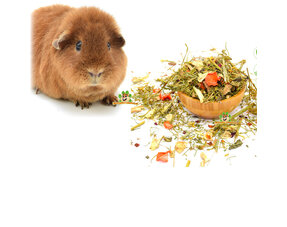



Choosing guinea pig herbs: scent, texture, and variety alongside hay and guinea pig food
 Guinea pig herbs are a great addition to the daily diet. You use them primarily for scent, texture, variety, and foraging. Think of dried herbs, leaves, flowers, roots, branches, and stems that you can mix into the hay, offer loose, or use in a snuffle mat, treat board, or foraging area.
Hay always remains the basis of guinea pig nutrition. Suitable guinea pig food supplements the daily diet, and vitamin C deserves consistent attention. You should use herbs, flowers, and leaves alongside this consciously: small, varied, and suitable for your guinea pigs.
At DRD Knaagdierwinkel®, we view herbs as part of the overall feeding routine. They make hay more interesting, add more scent, and provide quiet foraging moments. This way, guinea pig herbs become not just “something tasty,” but a practical way to combine eating, sniffing, and exploring. Specialist since 2011.
✓ Dried guinea pig herbs, leaves, flowers, roots, branches and stems
✓ Can be used as hay topping, foraging extra, or small reward
✓ Combines well with hay, guinea pig food, snacks, pellets, and forage products
✓ Selected by DRD Knaagdierwinkel® – Specialist since 2011
Quick links
In short • Types of guinea pig herbs • Which herbs do you choose? • Herbs in hay • Herbs & foraging • Fresh herbs • Build up gradually • Handy combinations • FAQ
In short: what do you use guinea pig herbs for?
Guinea pig herbs are used as a supplement alongside hay and guinea pig food. They are particularly suitable for making hay feeding more interesting, adding more scent and texture, and allowing guinea pigs to search quietly. Just a small amount of herbs mixed into the hay can be enough to turn eating into a sniffing experience.
Herbs are not a substitute for hay, guinea pig food, or vitamin C. Nor should they be used as a solution for health problems. View herbs primarily as natural variation: something to discover, smell, nibble on, and use specifically when foraging.
It is better to give herbs in small, deliberate amounts rather than large quantities at once. This keeps the basics clear, prevents guinea pigs from receiving too many extras, and allows you to clearly see which types your guinea pigs enjoy eating.
As a hay topping
Scatter a small amount of herbs through or over the hay to encourage sniffing.
For foraging
Use herbs in a sniffing mat, snack board, tunnel route, or small search spots.
As a change
Gently alternate with leaves, flowers, roots, stems, or fresh herbs.
Species of guinea pig herbs, leaves, flowers, and roots
Within guinea pig herbs, you can distinguish different product roles. Some products are light and leafy, while others are more fragrant, floral, stemmy, or even firmer to nibble on. By understanding these roles, you can more easily choose what suits your guinea pigs.
Dried guinea pig herbs
Loose herbs and mixes for hay, bedding, foraging, and small reward moments.
Dried guinea pig leaves
Light, fragrant leaves to mix with hay or to give as a small forage extra.
Dried guinea pig flowers
Flowers add color, scent, and variety to hay, herb mixes, and foraging moments.
Dried herb roots
Firmer herb components for nibbling, exploring, and variety in texture.
Dried branches and stems
For natural structure, nibbling, and variety alongside houses, tunnels, and hay.
Guinea pig herbal toys
Herbs incorporated into play or chew products for extra activity and discovery.
Which guinea pig herbs do you choose?
Choose guinea pig herbs based on how you want to use them. Do you want to make hay more appealing? Then light herbs, leaves, or flowers are handy. Do you want more of a chewable texture? Then roots, branches, or stems are a better fit. Do you mainly want foraging? Then you can use small herb mixes or pellets in a snuffle mat or treat board.
| Goal | Often a suitable choice | Why? |
|---|---|---|
| Making hay more interesting | Dried herbs, leaves or flowers | Adds fragrance and variety without changing the base. |
| Search quietly | Herb mix, leaf mix or small pellets | Easy to scatter in a sniffing mat or foraging area. |
| More chewy texture | Roots, branches and stems | Provides firmer texture and more activity. |
| Variety alongside snacks | Leaf, flower, or herb snacks | Light and easy to dose as a small extra. |
| Fresh variation | Fresh guinea pig herbs or plants | For pet owners who want to offer fresh plants alongside dried products. |
Mix guinea pig herbs into hay.
One of the handiest ways to use guinea pig herbs is as a topping on hay. Sprinkle a small amount of herbs, leaves, or flowers through the hay and let your guinea pigs forage for themselves. This way, hay remains the base, and you use herbs to make the hay-time more interesting.
This works especially well for guinea pigs that like to sniff or are a bit pickier with hay. Please note: herbs should not replace hay. If a guinea pig suddenly eats less hay, produces fewer droppings, or chews differently, investigate diet, teeth, and health further.
Guinea pig hay
The basis of every guinea pig food and ideal for combining with small herbal moments.
Guinea pig hay racks
For a clearly defined hay corner where you can offer herbs in a well-controlled manner.
Guinea pig food selection guide
For the correct ratio of hay, guinea pig food, vegetables, herbs, and snacks.
Guinea pig herbs for foraging
Herbs are very suitable for foraging. You can scatter them in small quantities over a snuffle mat, treat board, hay corner, tunnel route, or between bedding in a dry spot. This way, your guinea pig has to sniff, search, and choose.
When keeping multiple guinea pigs, it is wise to distribute herbs across several locations. This prevents one guinea pig from eating everything or claiming a spot. Small foraging sessions spread throughout the enclosure are often calmer than one large pile of herbs in a single spot.
✔ Sprinkle herbs in small pieces and spread them out.
✔ Use dry spots for snuffle mats and treat boards.
✔ Combine herbs with hay instead of replacing hay.
✔ Create multiple search spots for multiple guinea pigs.
✔ Remove leftovers if they get wet or dirty.
Fresh guinea pig herbs and plants
In addition to dried herbs, you can also choose fresh guinea pig herbs or plants. Fresh herbs provide a different scent, texture, and experience than dried products. Offer them gradually and see how your guinea pigs react.
Fresh herbs are especially nice as a temporary, refreshing addition. Give them clean, in appropriate quantities, and remove anything that isn't eaten before it wilts or gets dirty. Introduce new varieties gradually, just as you would with vegetables.
See also: Fresh guinea pig herbs and Guinea pig vegetable list .
Gradually introduce new herbs
Guinea pigs differ in their preferences. One guinea pig may eat along immediately, while another needs to get used to new scents and textures. Therefore, always start with a small amount. Do not immediately give many different new types at once, so that you can clearly see what your guinea pig likes and how it reacts to it.
During the build-up phase, monitor appetite, hay intake, and droppings. If anything clearly changes, stop the new addition and continue observing calmly. In case of loss of appetite, lethargy, diarrhea, signs of pain, or no droppings, contact a veterinarian.
DRD makes its choice: herbs with a clear role
At DRD, we view guinea pig herbs primarily as smart enrichment. They make hay more interesting, provide more scent and texture, and help turn eating into a quiet foraging moment.
That is why we look not only at which herbs are available, but especially at how you use them: as hay topping, as a foraging supplement, as chewing material, or as a small moment of contact. In this way, every product gets a clear place within the care of your guinea pigs.
Handy to combine with guinea pig herbs
Feed & hay
Guinea pig hay • Guinea pig food and nutrition • Guinea pig pellets • Guinea pig food selection guide
Variety & snacks
Fresh guinea pig herbs • Guinea pig snacks • Guinea pig herbal snacks • Guinea pig snacks dried vegetables
Foraging & setup
Guinea pig play and foraging • Guinea pig tunnels • Guinea pig houses • Guinea pig hay racks
Information & daily check
Guinea pig vegetable list • Guinea pig droppings • Guinea pig not eating • Vitamin C for guinea pigs
Checklist – using guinea pig herbs properly
✓ Use herbs as a supplement, not as a staple food.
✓ Keep hay and suitable guinea pig food as a daily basis.
✓ Introduce new herbs gradually and give small amounts.
✓ Scatter herbs through hay or use them when foraging.
✓ Give multiple guinea pigs multiple small search spots.
✓ Remove residues that become wet, dirty, or old.
✓ Do not use herbs as a substitute for veterinary advice for complaints.
Important to know
Guinea pig herbs are intended as supplementary nutrition and enrichment. We do not make medical claims regarding herbs and do not recommend them as a treatment for ailments. In case of illness, loss of appetite, diarrhea, pain, lethargy, or abnormal droppings, consulting a veterinarian is the appropriate step.
Only give herbs, plants, leaves, flowers, branches, and roots intended as animal feed. Preferably do not use plants or branches found in the garden, roadside, or in nature, as you do not always know if they are safe, clean, or untreated.
Frequently asked questions about guinea pig herbs
Can guinea pigs eat herbs?
Yes, suitable herbs can be given as a supplement alongside hay and guinea pig food. Give herbs in small, varied portions, and introduce new types gradually.
Are herbs a staple food for guinea pigs?
No, herbs are not a staple food. Hay remains the most important daily basis, supplemented with suitable guinea pig food and daily attention to vitamin C.
How do you give guinea pigs herbs?
You can mix herbs into the hay, scatter them loosely, use them in a sniffing mat, or distribute them over several small search spots in the enclosure.
How many herbs can a guinea pig have?
Give small amounts as a supplement. The exact amount depends on the product, your guinea pigs, and the rest of their diet. Always start slowly and observe how your guinea pig reacts.
Can you mix herbs into hay?
Yes, that is a practical way to make hay more interesting. Use a small amount of herbs, leaves, or flowers and ensure that hay remains the base.
What is the difference between herbs, leaves, and flowers?
Herbs primarily provide fragrance and variety, leaves are often light and suitable for scattering, and flowers add color and scent. Roots, branches, and stems offer more of a chewable texture.
Are fresh herbs suitable for guinea pigs?
Fresh herbs can be suitable as a refreshing addition. Give them clean, in appropriate quantities, and remove any leftovers before they wilt or become dirty.
Can you use herbs for foraging?
Yes, herbs are very suitable for foraging. Scatter them, for example, in a snuffle mat, snack board, hay corner, or tunnel route, so that your guinea pig can search quietly.
Are herbs good for health problems?
Herbs are intended as a supplement and enrichment, not as a treatment. In case of symptoms such as loss of appetite, diarrhea, pain, lethargy, or abnormal droppings, contact a veterinarian.
What do you combine with guinea pig herbs?
Combine guinea pig herbs with hay, guinea pig food, guinea pig pellets, snacks, foraging products, tunnels, houses, hay racks, and the guinea pig food selection guide.
✓ Guinea pig herbs, leaves, flowers, roots, branches, and stems for variety and foraging
✓ Can be used as a supplement to hay, guinea pig food, and daily enrichment
✓ Practical to combine with snuffle mats, treat plates, tunnels, houses, and hay racks
✓ Ordered before 5 PM, shipped the same day
✓ Specialist since 2011
✓ Delivered from our own stock
Unsure which herbs best suit your guinea pigs and feeding routine? Feel free to contact us via our contact page . We are happy to help you.
