 Polski

Guinea Pig Food & Nutrition – For a Healthy and Happy Guinea Pig



Choosing guinea pig food & nutrition: hay, pellets, vitamin C and smart variety
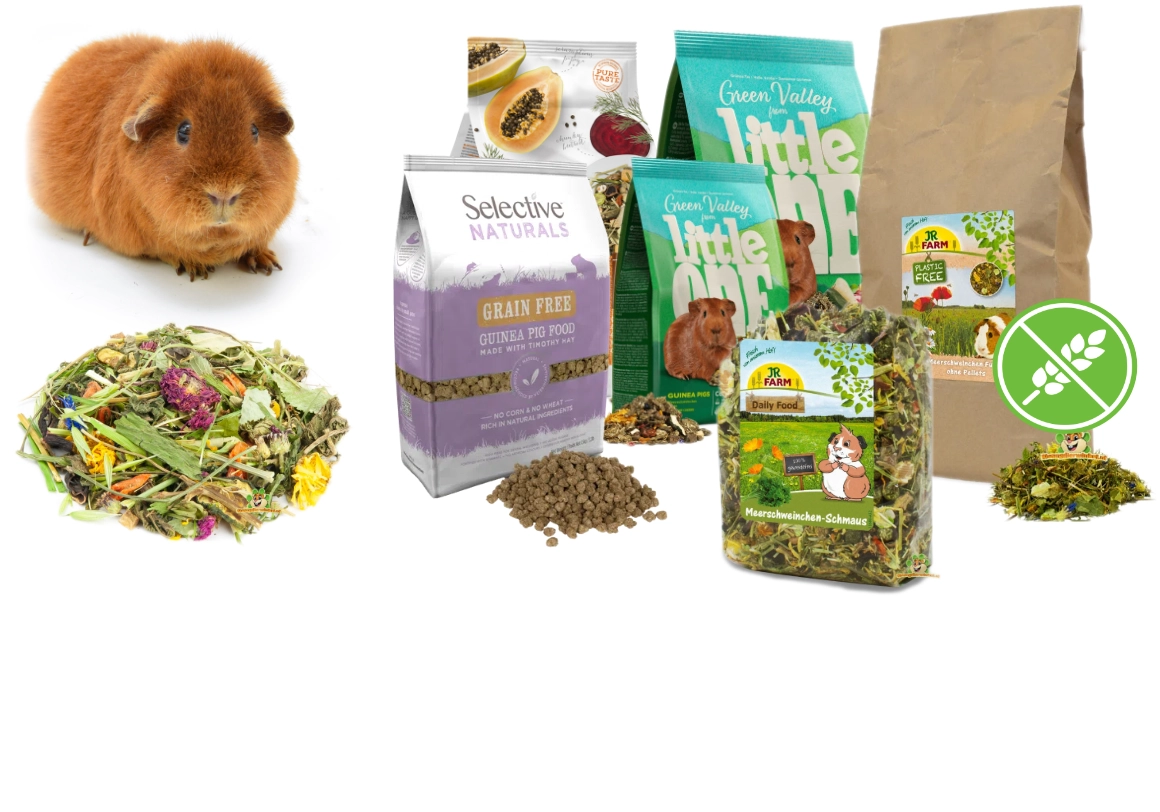 Good guinea pig nutrition does not start with one bag of food, but with a complete daily routine. Guinea pigs always need plenty of guinea pig hay , supplemented with suitable guinea pig food, daily attention to vitamin C, clean drinking water, and small amounts of suitable vegetables, herbs, or snacks as a supplement.
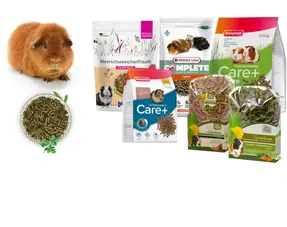
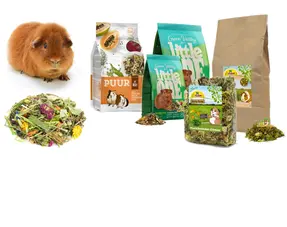
In this category, you will find various types of guinea pig food and complementary foods: from complete all-in-one kibble and pellets to Selective guinea pig food, natural mixes, grain-free options, and specialty or force-feeding. Which choice suits you best depends on your guinea pigs, their eating habits, age, condition, hay intake, and your daily routine.
At DRD Knaagdierwinkel®, we view guinea pig food as part of the bigger picture. Food should not only be “tasty,” but also logically fit alongside hay, vitamin C, vegetables, herbs, droppings control, and dental health. This way, you are not just choosing any food, but a foundation that is right for your guinea pigs. Specialist since 2011.
✓ Guinea pig food, pellets, all-in-one kibble, Selective, grain-free and natural food
✓ With clear routes for selective eating, vitamin C, vegetables, droppings, and teeth
✓ Hay always remains the foundation; guinea pig food provides targeted supplementation
✓ Selected by DRD Knaagdierwinkel® – Specialist since 2011
Quick links
In short • Types of guinea pig food • Which food suits you? • Vitamin C • Selective eating • Switching food • Specialty food • Droppings & teeth • Useful combinations • FAQ
In short: what is good guinea pig food?
Good guinea pig food is specifically intended for guinea pigs, should be served alongside plenty of hay, and takes into account their need for vitamin C. Guinea pigs cannot produce vitamin C themselves, which is why you should not choose general rodent food as a daily basis.
For guinea pigs that are picky eaters, all-in-one kibble or pellets are often practical. Each kibble has the same composition, preventing your guinea pig from picking only the tastiest pieces from the food bowl. Natural and mixed foods, on the other hand, can provide more aroma, texture, and variety, provided your guinea pig eats the mix well and in a balanced way.
The best choice therefore depends on your guinea pigs. Do they eat everything neatly? Then a natural or mixed diet might be suitable. Do they constantly leave parts behind? Then an all-in-one kibble or pellet is usually easier to manage.
Hay remains the basis
Guinea pig food supplements, but never replaces, the daily hay.
Vitamin C counts
Choose guinea pig-specific food and monitor vitamin C daily.
Eating habits determine choice
Picky eaters often require a different food base than guinea pigs that eat everything neatly.
Types of guinea pig food in this category
When it comes to guinea pig food, you can choose from various options. Think of complete kibble, pellets, Selective, natural mixes, grain-free food, and specialty food. Below, you can see which category suits which situation.
Guinea pig food
The basic route for complete guinea pig foods, pellets, kibble, and daily food.
All-in-one kibble & pellets
Practical for picky eaters, because every kibble has the same composition.
Supreme Selective guinea pig food
Well-known complete kibble with varieties such as Adult, Junior, Grain-free, and Botanicals.
Mixed & natural guinea pig food
For more scent, texture, plants, herbs, and foraging experience alongside a clear foundation.
Grain-free guinea pig food
For pet owners who want to consciously look at ingredients and grain-free formulations.
Special diet & force feeding
For times when your guinea pig needs support or supplementary feeding, preferably in consultation with a veterinarian.
Which guinea pig food suits your guinea pigs?
When choosing guinea pig food, don't just look at the brand or flavor, but especially at eating behavior. A food that looks good on paper only works well if your guinea pig eats it neatly and doesn't displace the hay base.
| Situation | Often a suitable choice | Why? |
|---|---|---|
| Your guinea pig is a picky eater | All-in-one kibble or pellets | Every chunk is the same, making sorting less of an issue. |
| You are looking for a recognizable, stable base. | Selective or complete pellets | Predictable feeding and easy dosing. |
| Your guinea pig eats mixes neatly. | Mixed or natural guinea pig food | More aroma, texture, and variety possible. |
| You want to feed grain-free consciously. | Grain-free guinea pig food | Pay attention to the big picture, not just “grain-free”. |
| Your guinea pig is eating less or needs supplementary feeding. | Special diet or force feeding | Preferably use on the advice of a veterinarian and always look for the cause. |
Would you like to learn more first? Then check out the guinea pig food selection guide .
Vitamin C in guinea pig food
Guinea pigs cannot produce vitamin C themselves. Therefore, it is important that their daily diet takes this into account. Special guinea pig food contains vitamin C, but the amount can decrease if a bag is left open for a long time or is not stored properly.
Therefore, store guinea pig food in a dry, cool, and tightly sealed place. It is preferable to buy a package that suits your consumption so that the food does not remain open unnecessarily long. In case of doubt, illness, recovery, pregnancy, growth, or reduced appetite, it is advisable to consult a veterinarian regarding vitamin C.
✓ Always choose guinea pig-specific food.
✓ Store food in a well-sealed, dry, and cool place.
✓ Check if your guinea pig actually eats the food.
✓ Use vitamin C supplementation specifically, not simply as a replacement for a good basic diet.
Read more: Vitamin C in guinea pigs and view Vitamin C Guinea Pig products .
Selective eating: when to choose all-in-one guinea pig food?
Selective eating means that a guinea pig primarily picks the tastiest parts from the food bowl and leaves other parts behind. As a result, the food bowl appears empty or “eaten,” while your guinea pig may not be getting everything the food is intended to provide.
For picky eaters, all-in-one guinea pig food is often a smart choice. Because every kibble has the same composition, feeding becomes more manageable. Do you still want to offer variety? It is better to use herbs, flowers, or foraging products alongside the base, in small quantities and distributed carefully.
Useful routes: All-in-one guinea pig food , Guinea pig herbs , and Guinea pig playing and foraging .
Switching to different guinea pig food
Do not switch to new guinea pig food suddenly. Guinea pigs have sensitive digestive systems and need to adjust to changes. Gradually mix the new food with the old food and keep hay, vegetables, and treats as consistent as possible during this period.
| Period | Distribution | NB |
|---|---|---|
| Day 1–2 | 75% old feed / 25% new feed | Check appetite and droppings. |
| Day 3–4 | 50% old feed / 50% new feed | Keep vegetables and extras simple. |
| Days 5–7 | 25% old feed / 75% new feed | Watch out for soft droppings or eating less. |
| Then | Completely new food | Keep checking if your guinea pig is eating hay properly. |
Special food and force-feeding for guinea pigs
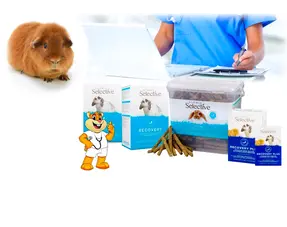
Specialty food and force-feeding are not a normal daily basis for healthy guinea pigs. They are intended for specific situations, for example when a guinea pig is not eating enough independently, needs to recover, or requires temporary support.
Is your guinea pig not eating or clearly eating less? Then do not wait. Supplementary feeding can be important, but the cause must also be assessed. Consider pain, dental problems, stomach issues, illness, or stress. Therefore, preferably use force-feeding in consultation with a veterinarian.
✔ Not eating or eating much less is an important signal in guinea pigs.
✔ Special dietary care provides support but does not replace an investigation into the cause.
✔ Work calmly, hygienically, and according to product advice.
✔ Contact a veterinarian in case of doubt or rapid deterioration.
View: Guinea pig special diet and force feeding , Guinea pig not eating and Guinea pig teeth .
Check diet: hay, droppings, weight, and teeth
You don't judge guinea pig nutrition solely by the food bowl. Also look at hay intake, droppings, weight, eating speed, chewing behavior, and general activity. A guinea pig that eats less hay, produces different droppings, or starts eating slowly often shows that something is changing.
Normal droppings are usually firm, dry, and fairly uniform in shape. Are they becoming smaller, softer, or fewer in number? Then pay extra attention to hay, feed, vegetables, water, and teeth. If there is no eating, no droppings, or signs of pain, contact a veterinarian.
Daily nutrition check
✓ Is your guinea pig still eating hay well?
✓ Does your guinea pig eat the guinea pig food completely or selectively?
✓ Are the droppings normal in shape, size, and quantity?
✓ Is the weight stable during regular checks?
✓ Does your guinea pig chew normally and not drop food?
✓ Is your guinea pig alert and active as you are used to?
Read more: Guinea pig droppings , Guinea pig teeth and Guinea pig food selection guide .
DRD makes the choice: nutrition as a system, not as a separate bag of feed
At DRD, we view guinea pig nutrition as a system. Hay, guinea pig food, vitamin C, vegetables, herbs, snacks, water, droppings, and teeth all belong together. Only when that foundation is right can you properly assess which food truly fits.
That is why we direct you not only to products, but also to selection aids. This allows you to choose better: all-in-one for selective eating, natural food for conscious variety, grain-free when that suits your preference, and special nutrition when support is needed.
Convenient to combine with guinea pig food
Nutritional basis
Guinea pig hay • Guinea pig food • All-in-one chunks and pellets • Supreme Selective guinea pig food
Variety & foraging
Mixed and natural guinea pig food • Guinea pig herbs • Fresh guinea pig herbs • Guinea pig snacks • Guinea pig play and foraging
Vitamin C & Health
Vitamin C in guinea pigs • Vitamin C Guinea Pig • Special diets and force-feeding • Guinea pig not eating
Feeding spot & daily check
Guinea pig food bowls • Drinking bottles and water bowls • Guinea pig vegetable list • Guinea pig droppings • Guinea pig teeth
Checklist – choosing guinea pig food right
✓ Is the food specifically intended for guinea pigs?
✓ Will hay remain the daily staple?
✓ Does the food suit your guinea pig's eating habits?
✓ Does your guinea pig eat the food completely or selectively?
✓ Do you pay attention to vitamin C and the shelf life after opening?
✓ Are you introducing new food gradually?
✓ Monitor your daily hay intake, droppings, weight, and appetite?
Good to know
Guinea pig food is a supplement to hay, not a replacement for it. Ensure that your guinea pigs eat plenty of hay daily, receive guinea pig-specific food, and get enough vitamin C.
Is your guinea pig eating less, stopping eating, leaving hay untouched, losing weight, chewing differently, or producing fewer droppings? Then contact a veterinarian.
Frequently asked questions about guinea pig food and nutrition
What is the best guinea pig food?
The best guinea pig food is specifically intended for guinea pigs, should be eaten alongside plenty of hay, and takes vitamin C into account. For selective eaters, all-in-one kibble or pellets are often practical.
Why shouldn't a guinea pig be given general rodent food?
Guinea pigs have specific nutritional needs and cannot produce vitamin C themselves. Therefore, general rodent food is not a good daily basis for guinea pigs.
What is better: all-in-one guinea pig food or mixed food?
All-in-one guinea pig food is convenient for picky eaters, as every kibble has the same composition. Mixed or natural food can provide more variety when your guinea pig eats the mixture well and in a balanced way.
How much guinea pig food do you give per day?
Always follow the product information on the packaging. Additionally, look at hay intake, weight, condition, droppings, and eating behavior. Hay remains the foundation.
Does guinea pig food always contain vitamin C?
Special guinea pig food usually contains vitamin C, but the amount can decrease if the food is left open for a long time. Therefore, store guinea pig food in a dry, cool, and tightly sealed place.
When should you choose grain-free guinea pig food?
Grain-free guinea pig food suits owners who want to be mindful of the ingredients. However, pay attention to the big picture: hay, guinea pig food, vitamin C, vegetables, and extras must make sense together.
How do you switch to new guinea pig food?
Gradually mix the new feed into the old feed and build this up over several days. Keep hay, vegetables, and supplements as consistent as possible during this period.
When do you force-feed guinea pigs?
Force-feeding is used when a guinea pig is not eating enough on its own, preferably in consultation with a veterinarian. Not eating is an important warning sign in guinea pigs.
Why are droppings important in guinea pig nutrition?
Droppings provide practical information about hay intake, eating, and bowel function. Fewer, smaller, soft, or no droppings are signals to take a closer look.
What do you combine with guinea pig food?
Combine guinea pig food with plenty of hay, vitamin C, suitable vegetables and herbs, food bowls, water bowls or drinking bottles, and daily checks of droppings and appetite.
✓ Guinea pig food and nutrition for daily use, picky eaters, variety and support
✓ With all-in-one kibble, Selective, natural food, grain-free guinea pig food and specialty food
✓ Logically combined with hay, vitamin C, vegetables, herbs, droppings, and dental checkups
✓ Ordered before 5 PM, shipped the same day
✓ Specialist since 2011
✓ Delivered from our own stock
Unsure which guinea pig food is best for your guinea pigs? Feel free to contact us via our contact page . We are happy to help you decide.
