Polski

Chinchilla Platforms & Ladders – aluminum, wooden corner platforms, bridges and stairs
- Voor 17 uur besteld, dezelfde dag verzonden!
- Rodent specialist since 2011
- Dispatched from our own stock


Chinchilla platforms & ladders – use the height in the cage safely and intelligently with DRD Rodent Shop®
Chinchillas are true climbers and jumpers: in a well-designed enclosure, they enjoy perching higher, moving from platform to platform, and taking breaks in between. With chinchilla platforms, corner platforms, bridges, and ladders, you can create a logical route through the cage and turn "free height" into a pleasant, safe living space. In this category, you'll find chew-resistant aluminum platforms, sturdy wooden platforms, and handy connectors. As specialists in rodents and rabbits since 2011, we select products that work well in practice: stable, easy to install, and suitable for encouraging your chinchillas to climb. Want to offer plenty of entertainment in addition to platforms? Then also check out our chinchilla chewing supplies .
A durable base in the cage: sturdy, hygienic and ideal for active climbers who like to nibble on "everything".
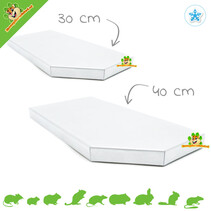
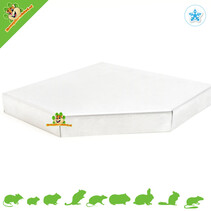
Aluminum platform → | Aluminum corner shelf →
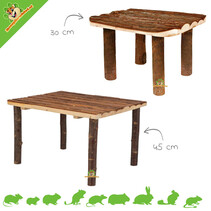
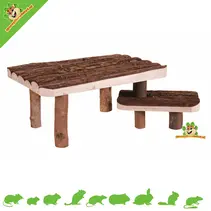
Natural and atmospheric, perfect as an extra rest stop or stop along your route. Note: Wood is attractive to gnaw (normal behavior).
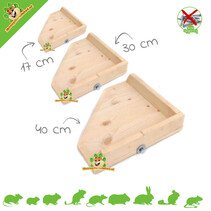
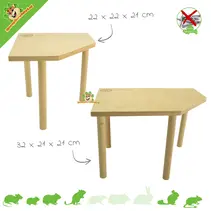
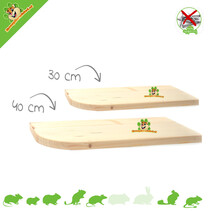
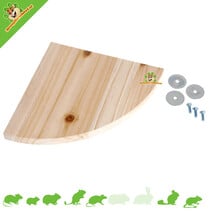
Getzoo corner shelf → | Elmato plateau 40 cm →
Build a safe climbing route with connections between levels. Ideal for preventing large jumps and making your cage "readable."
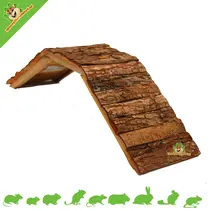
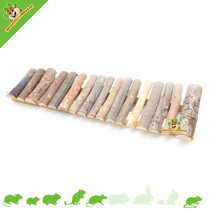
Hugro Trapeze Ladder → | Trixie bridge with bark →
Combine climbing with relaxing: a sturdy platform on top, a comfortable hangout at the bottom. It's handy to transform one corner into a rest area.
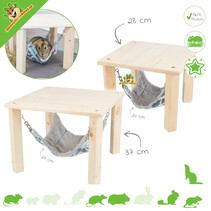
Platform with hammock →
Why platforms and ladders in a chinchilla cage?
Platforms give chinchillas a clear overview and choices: they can sit at a certain height, eat quietly, or move actively from place to place. By creating multiple levels, you maximize the use of the cage and create a varied habitat. A combination of resting points (platforms) and connections (ladders/bridges) works particularly well in practice: your chinchilla can then determine its own movement, without creating a single "difficult jumping point."
Which type of chinchilla tray suits your interior?
Many customers search for " chinchilla platform " or " chinchilla corner platform " and primarily want: a sturdy installation, a logical walking surface, and a durable route. Looking for a durable base ? Then choose aluminum, for example, a straight platform or a corner platform. Prefer a more natural look ? Then wooden platforms and bridges are a nice addition. Tip: start with 1-2 large anchors (fixed platforms) and then build up with smaller steps.
Building routes: how to make it safe and fun
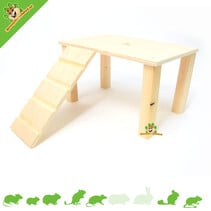
Think in "steps" instead of one high jump. For example, place a corner platform as a waypoint, connect it with a ladder or bridge, and then add an additional resting point. This creates a climbing route through the cage. Want extra variety? Combine a straight plank with a bridge (like the Farmers Bridge 70 cm ) or choose a staircase as a clear "access" (like the Wooden Staircase Color 50 cm ).
How do you use this?
✔ First choose where you want your “fixed points”: a large shelf and/or a corner shelf.
✔ Connect levels with a ladder/bridge, so your chinchilla doesn't have to jump to one tricky point.
✔ Check that everything hangs or lies stably and that the route feels logical (step-by-step).
✔ Offer sufficient gnawing material so that gnawing behavior has a suitable outlet.
✔ Check your equipment weekly for wear and tear and replace parts when necessary.
Checklist
✔ At least 2 rest points at different heights (preferably several rather than one very high point).
✔ At least 1 connection (ladder/bridge) to make the route logical.
✔ Utilizing corners? Choose a corner shelf (space-saving and practical).
✔ Add a comfort zone? Consider a platform with a hammock as an extra resting spot.
✔ Think about distractions: always combine furnishings with sufficient gnawing and activity material.
Safety
✔ Place platforms and ladders so that there are no large drop depths; use steps.
✔ Check regularly for wear and instability, especially with intensive use and gnawing behavior.
✔ Ensure that routes cannot tilt or shift during jumping and running.
✔ Replace parts when they are visibly worn or no longer feel stable.
FAQ
What's better: aluminum or wood?
Aluminum is ideal if you want a durable, gnaw-resistant base. Wood is beautiful and natural, and a great alternative as a waypoint or route, but can wear out faster due to gnawing. Many customers combine both for the best result.
How many platforms does a chinchilla need?
Focus on at least two to three clear resting points at different heights and add at least one ladder or bridge to connect levels. This way, you create a route instead of one high "island."
My chinchilla jumps on everything—how do I make the cage quieter?
Make the route step by step: more intermediate platforms, a clear ladder/bridge as a connection, and fixed rest zones (for example, a corner platform). This often helps make movement predictable and clear.
✔ Platforms, corner platforms, bridges and ladders for a complete climbing route
✔ Selection aid for a logical, safe arrangement of the height in the cage
✔ Specialist since 2011
Order before 5 PM, shipped the same day | Delivered from our own stock | Specialist since 2011