Polski



Outdoor Bird Window Feeder for Garden Bird
- Dispatched from our own stock
- Personal & expert advice
- Always 100% rodent-friendly
- Ordered before 5 p.m., shipped the same day!
Trixie Outdoor Bird Window Feeder for Garden Birds
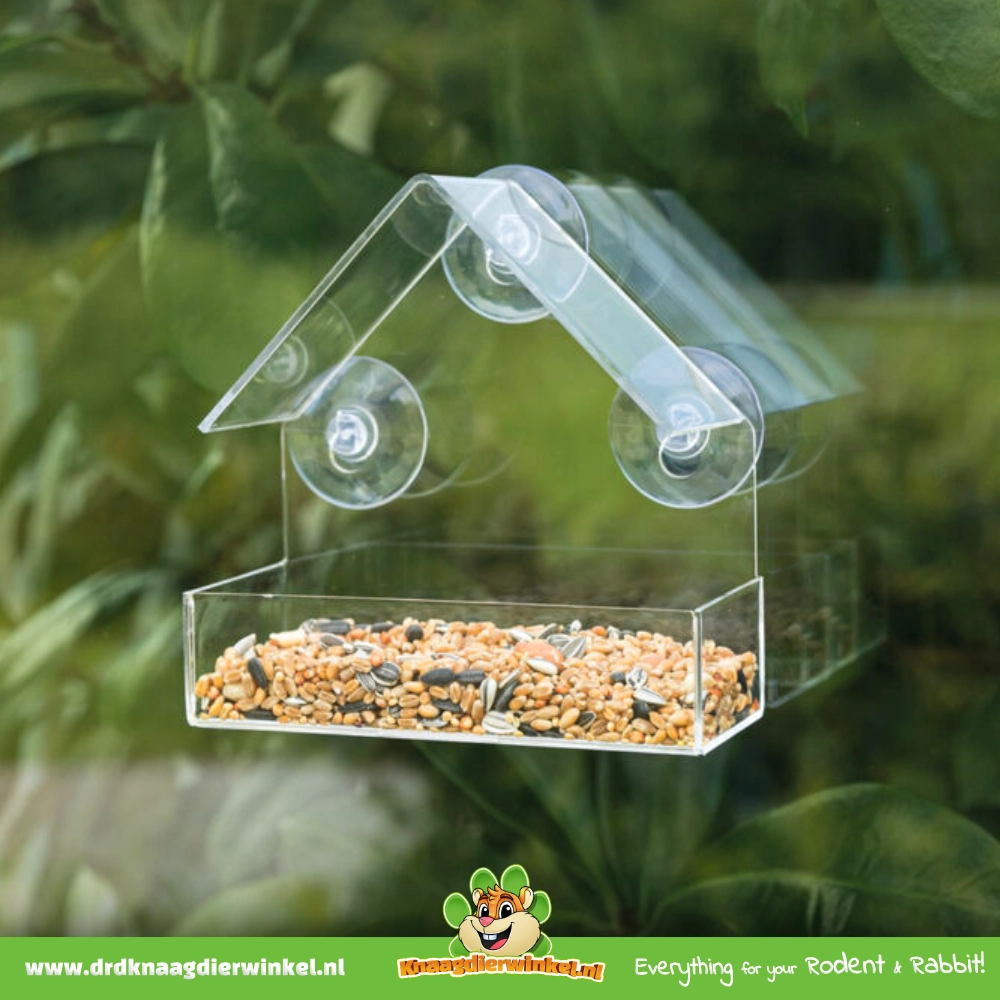
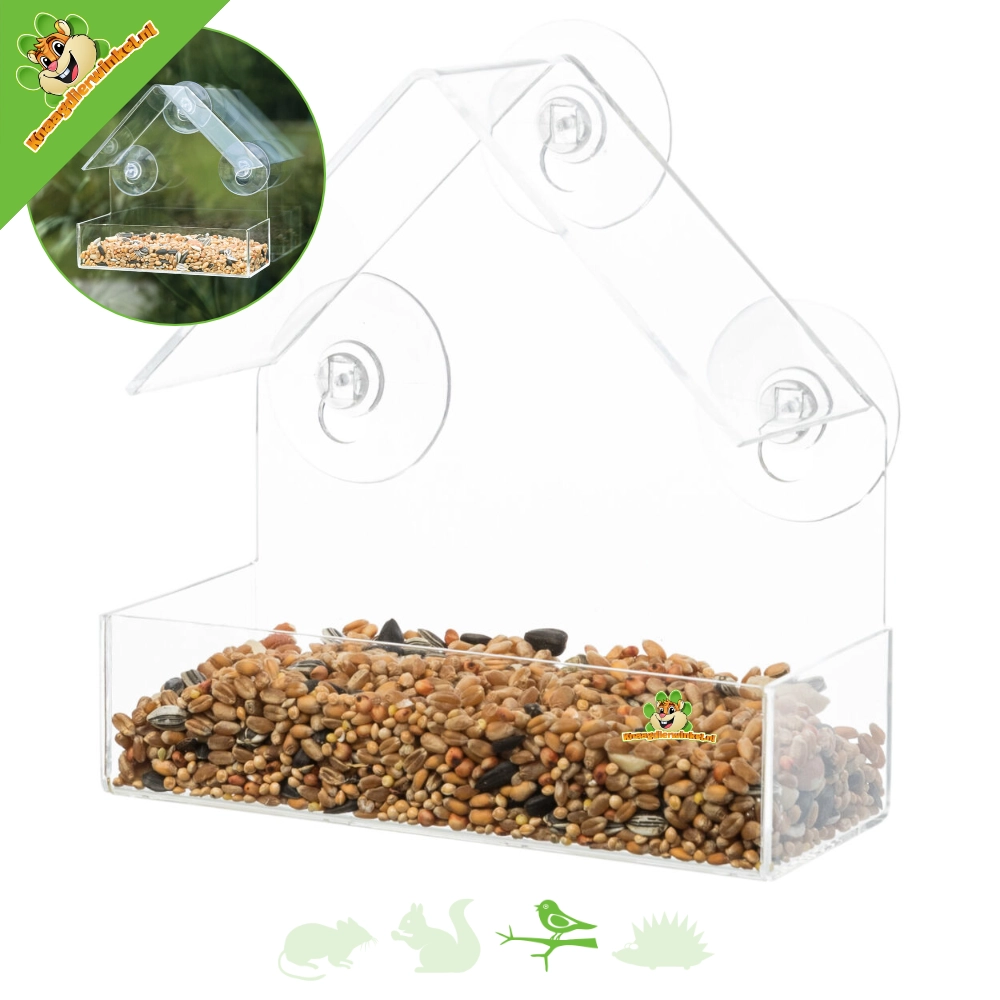
With the Trixie Outdoor Bird Window Feeder, you literally bring garden birds closer to home. You attach this compact feeder to a window or smooth glass surface with suction cups, so you can feed and observe outdoor birds up close.
DRD chooses these types of products because they beautifully combine feeding and observation. You provide garden birds with an accessible feeding spot, and at the same time, you can enjoy their behavior, colors, and brief visits to the window. This also makes this window feeder fun for families, children, bird lovers, and anyone with limited garden space.
In short
- Window feeder for wild birds and garden birds.
- Capacity/dimensions according to specifications: 225 ml / approx. 15 × 6 × 15 cm.
- Made of plastic.
- With suction cups for attachment to windows or glass.
- Space-saving: ideal when you have limited garden space.
- Great for bird watching from home.
- Easy to refill and check.
- Regularly check that the suction cups are securely attached.
Pros
✔ Feed and watch birds from home
✔ Easy to attach with suction cups
✔ Compact size of approx. 15 × 6 × 15 cm
✔ Content of approx. 225 ml
✔ Handy for windows, balconies, apartments, and small gardens
✔ Great for observing garden birds
! Regularly check that the holder is clean, intact, and securely attached
Why choose a window feeder?
A window feeder is ideal when you want to feed garden birds but do not have a large garden or a separate feeding pole. You attach the holder directly to the window, providing birds with a small feeding spot in a place that is clearly visible to you.
That makes feeding not only practical but also very enjoyable to watch. You see which birds stop by, how they eat, and how quickly they learn to find a new feeding spot. Especially in autumn, winter, and early spring, an extra feeding spot in the area can be attractive to garden birds.
The holder is compact, making it suitable for balconies, apartments, small gardens, or windows where you cannot fit a large bird feeder.
For which birds is this feeder suitable?
The Outdoor Bird Window Feeder is intended for garden birds and outdoor birds that can eat small portions of food from an open feeding area. Think of common garden birds that like to come and get seeds, kernels, or suitable outdoor bird food.
- Tits: curious birds that often quickly discover new feeding spots.
- Sparrows: enjoy eating at accessible feeding spots, especially when they feel safe.
- Finches: enjoy seeds and may find a window feeding station interesting.
- Robins: may sometimes come to have a look when the spot is quiet and open.
- Other small garden birds: depending on your environment, season, and the food you offer.
Exactly which birds you see depends on your living environment, the time of year, and the type of food. Place the holder quietly and give the birds some time to discover the new feeding spot.
Where do you place the window feeder?
Attach the feeder to the outside of a clean window or smooth glass surface. Choose a spot where you can see the birds clearly, but where the holder is also secure. A quiet window often works better than a window directly behind which there is a lot of activity all day long.
- Choose a clean, smooth window or glass surface.
- Clean the window thoroughly before attaching the suction cups.
- Press the suction cups firmly.
- Choose a spot that is sheltered from strong winds whenever possible.
- Hang the holder so that you can easily refill and clean it.
- Regularly check whether the suction cups are still firmly attached.
Tip: slightly dampen the window and the suction cups when attaching. Suction cups usually adhere better to a clean, smooth surface.
What can you put in the feeder?
Use food suitable for garden birds. Preferably choose outdoor bird food, a seed mix, or small portions that stay in the holder well. It is better to refill a small amount regularly than to let food remain wet or stale for a long time.
- Outdoor bird seed mix.
- Sunflower seeds or other suitable seeds.
- Small portions of birdseed for garden birds.
- Seasonal food suitable for wild birds.
Do not use moldy, wet, or spoiled food. Remove leftovers promptly, especially in rainy weather or when the food has become visibly dirty.
Getting birds used to a window feeder
Garden birds may need some time to trust a new feeding spot. That is normal. Hang the feeder in a quiet place, fill it with familiar food, and leave it hanging for a few days without moving it frequently.
As soon as one bird discovers the spot, more often follow. Birds observe each other closely and learn where to find safe food. Calmness, repetition, and a clean feeding area help with this.
Safe feeding at the window
A window feeder offers a wonderful view of birds, but windows can sometimes be confusing for them. Therefore, place the feeder deliberately. When birds land very close to the window, the chance of sudden impacts is often smaller than when they fly into the window from a greater distance. Nevertheless, it remains good to observe their behavior.
- Check if birds land and fly away safely.
- Hang the holder firmly and straight.
- Prevent the holder from coming loose due to dirt, rain, or frost.
- If birds fly into the window, consider using window stickers or subtle window markings.
- Place the holder out of reach of cats whenever possible.
- Temporarily remove the holder during storms or very strong winds.
Cleaning and maintenance
A feeding station for garden birds must be kept clean regularly. Food remnants, moisture, and bird droppings can accumulate. By cleaning the holder, the feeding station remains fresh and attractive to birds.
- Remove old food residues regularly.
- Clean the holder when dirt or deposits are visible.
- Let the holder dry thoroughly before adding new food.
- Check the suction cups for dirt, drying out, or damage.
- Check the holder regularly for cracks or wear.
- Replace the holder if it is damaged or no longer hangs securely.
Use in different seasons
A window feeder can be beneficial all year round, but its use varies by season. During cold periods, birds often have a greater need for energy-rich food. During warm or wet periods, it is especially important to offer small portions and remove leftover food quickly.
- Autumn and winter: handy for energy-rich outdoor bird food when natural food sources are scarcer.
- Spring: feed judiciously and keep the feeding area clean.
- Summer: offer small portions, prevent spoilage, and clean more often in the heat.
- Rainy weather: check if the feed remains dry and fresh.
Dimensions and specifications
Product: Outdoor Bird Window Feeder
Brand: Trixie
Capacity/dimensions: 225 ml / approx. 15 × 6 × 15 cm
Material: plastic
Mounting: suction cups for windows or smooth glass surfaces
Use: window feeder, bird observation, and feeding garden birds
Suitable for: wild birds and garden birds
Good to know
- Use only on a sturdy, clean, and smooth window surface.
- Regularly check whether the suction cups are still securely attached.
- Check regularly for wear, cracks, and damage.
- Remove the holder during storms, strong winds, or if it does not remain securely attached.
- Clean the holder regularly and remove old food residue.
- Use only food that is suitable for wild birds and garden birds.
- Be aware of cats and other predators in the area.
- Replace the holder if it is damaged or no longer stays securely in place.
Frequently Asked Questions
For which birds is the window feeder suitable?
The window feeder is suitable for outdoor birds and garden birds that can eat small portions of food from an open feeder.
How big is the Outdoor Bird Window Feeder?
The specifications mention a capacity/dimensions of 225 ml / approx. 15 × 6 × 15 cm.
How do you attach the window feeder?
Clean the window thoroughly, press the suction cups firmly onto the glass, and check that the holder is securely attached before adding food.
Can the feeder be mounted on any window?
The holder works best on a smooth, clean, and flat window or glass surface. Suction cups may not adhere as well to rough, dirty, or damp surfaces.
What kind of food can go in it?
Use food suitable for garden birds, such as outdoor bird food, seed mixes, or small portions of suitable seeds and kernels. Remove old or wet food in time.
How often should you clean the holder?
Clean the holder regularly and remove old food residue. It is advisable to clean it more often during wet, warm, or busy weather.
Do the suction cups always stay in place?
Suction cups can loosen over time due to dirt, temperature fluctuations, or moisture. Therefore, regularly check whether the holder is still firmly attached.
Is this window feeder suitable for a balcony?
Yes, if you have a suitable window or smooth glass surface. Especially on balconies or in apartments, a window feeder can be a nice, space-saving solution.
Useful shopping links
- DRD Bird Shop®
- Outdoor bird products
- Garden bird products
- Bird snacks
- Garden animals
- Ask DRD for personal advice
✓ DRD Vogelwinkel® • personal & expert advice • delivered from our own stock
| Size (approx): | 225 ml / 15 × 6 × 15 cm |
| Suitable for: | Garden birds/Wild birds |
| Particularities: | - |
| Safety Information: | Offer only under supervision. Check regularly for wear and tear |