Polski



Hay Bale with Flowers 500 grams
- Dispatched from our own stock
- Personal & expert advice
- Always 100% rodent-friendly
- Ordered before 5 p.m., shipped the same day!
- Customer service from 09:00 to 18:00
Trixie Hay Bale with Flowers 500 grams
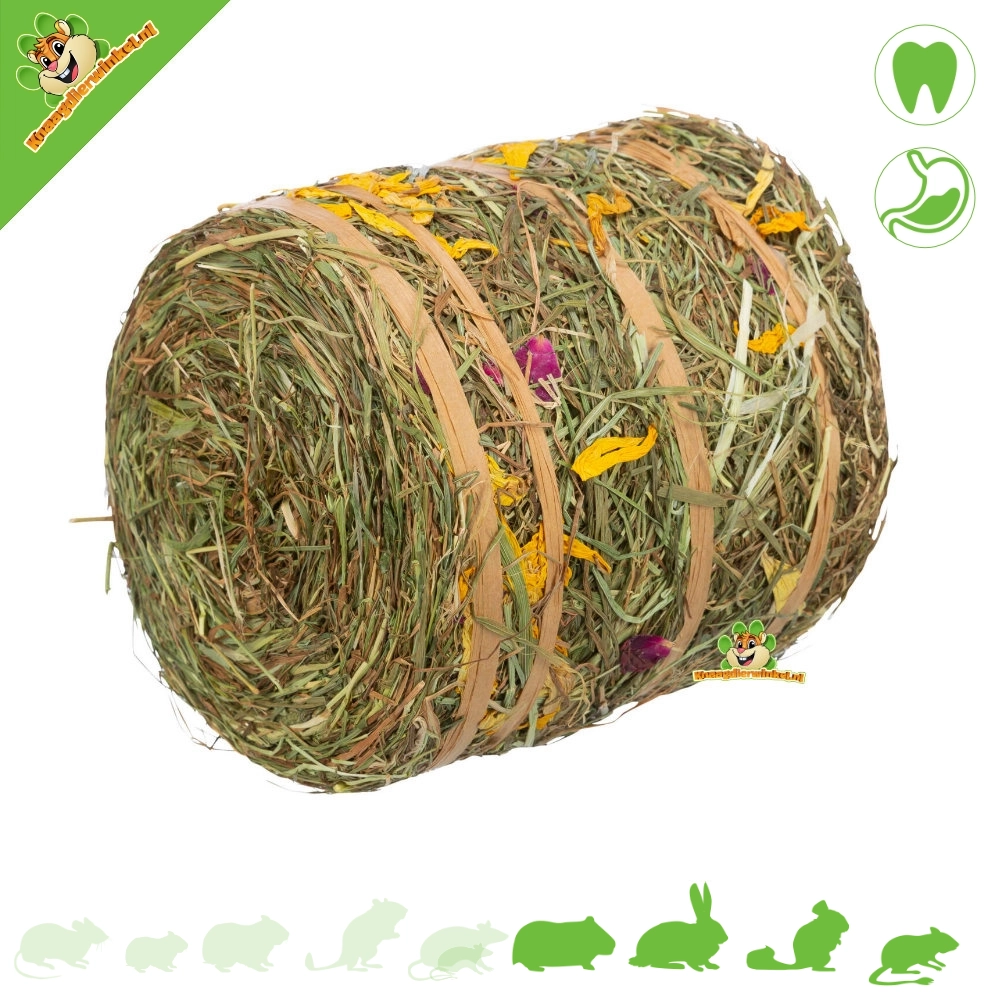
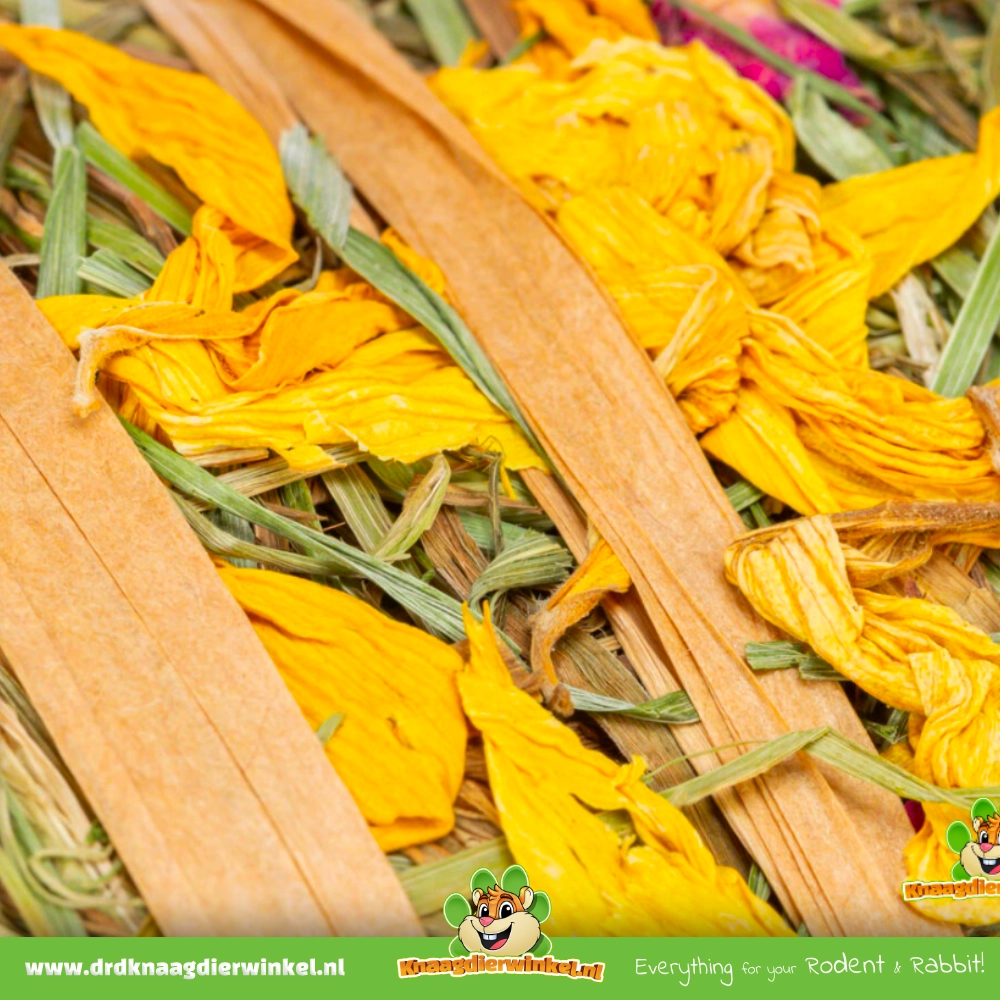
The Trixie Hay Bale with Flowers 500 grams is a compact hay bale with blossoms, specially designed for larger herbivorous rodents and rabbits. The bale consists of hay with flowers and is wrapped in an edible fiber band. This keeps the hay neatly together, while allowing your animal to pull, pluck, nibble, and explore it to their heart's content.
DRD selects these types of hay products primarily for animals for which hay plays a truly important role in their daily care. Think of guinea pigs, rabbits, chinchillas, and degus. For these animals, the hay bale is a nice, fiber-rich supplement alongside their regular daily hay. For small rodents such as mice, dwarf hamsters, and hamsters, this bale is usually too large and unsuitable; in practice, they make much less use of it.
In short
- Compact hay bale with flowers.
- Contents: approx. 500 grams.
- Composition: hay and blossom.
- Wrapped with an edible fiber band.
- For larger herbivorous rodents and rabbits, such as guinea pigs, rabbits, chinchillas, and degus.
- Usually too large for small rodents and not the most suitable choice.
- A nice addition alongside the regular daily hay.
Pros
✔ 100% natural hay product with blossom
✔ Rich in fiber and suitable for herbivorous animals
✔ Compact shape, so the hay stays neatly together
✔ Provides extra nibbling and foraging fun
✔ Multiple animals can eat from the bale at the same time
✔ Especially suitable for guinea pigs, rabbits, chinchillas, and degus
Why choose a hay bale with flowers?
A hay bale provides hay in a different way than a loose hay cluster or hay rack. Because the hay is packed together compactly, animals have to do more plucking, pulling, and searching. This makes eating hay more active and interesting. Animals that eat a lot of hay daily, such as guinea pigs, rabbits, chinchillas, and degus, can derive a lot of pleasure from this.
The added flowers provide variation in scent, texture, and taste. This makes the hay bale particularly attractive as an alternative to regular hay. For guinea pigs and rabbits, this can be nice in a spacious hay corner or run. For chinchillas and degus, the hay bale is especially interesting as a fiber-rich snack and foraging supplement.
Because multiple animals can eat from the hay bale at the same time, this product is also convenient for herds or groups. You can lay the bale down, place it upright in a spacious corner, or loosen it in a controlled manner and scatter parts of it around. This allows you to decide whether to use it primarily as a hay bale, a chewing object, or foraging material.
Is this hay bale a substitute for regular hay?
No, this hay bale is intended as supplementary hay enrichment. For guinea pigs, rabbits, chinchillas, and degus, clean and easily accessible hay remains the basis daily. You add the hay bale to this for variety, nibbling fun, and extra activity.
Therefore, use the hay bale alongside the regular hay. This way, you can be sure that your animal always has enough loose hay, while the hay bale provides an extra interesting activity in the enclosure.
Does the hay bale provide enrichment?
Yes, this hay bale provides dietary enrichment for herbivorous animals that enjoy eating hay and plucking at it. Your animal has to make an effort to pull the hay loose itself. This stimulates searching, pulling, nibbling, and exploring, making haymaking less predictable.
You can also lay the hay bale on its side so that it rolls slightly when your animal pushes at it. This makes it more stimulating, especially for curious guinea pigs and rabbits. If you want to keep things a bit quieter, place it in a corner, hay rack, shallow dish, or on a designated hay spot.
For which animals is the Hay Bale with Flowers suitable?
- Guinea pig: very suitable as supplementary hay enrichment. Guinea pigs eat a lot of hay daily and can pluck, pull, and nibble at the bale together.
- Rabbit: suitable as an extra hay supply alongside regular hay. Place the bale in a spacious hay corner, run, or rabbit room so that your rabbit can access it easily.
- Chinchilla: suitable as a fiber-rich hay supplement and nibbling activity. Always offer clean regular hay alongside the bale.
- Degu: suitable as supplementary hay enrichment. Degus can nibble on the bale and pull the hay loose. Check regularly that the bale remains clean and dry.
This hay bale is usually not suitable for mice, dwarf hamsters, and hamsters. The bale is large, hay plays a different role for these animals, and in practice, they often do little with it. For these small rodents, it is better to choose loose tufts of hay as nesting or landscaping material, or more compact products that are better suited to their size.
For gerbils, the bale can occasionally be fun to pull apart, as gerbils enjoy destroying, digging, and moving material. However, this is not the primary target audience for this product. The hay bale is best suited for larger herbivorous animals that truly eat hay daily.
We do not include this hay bale as a target group for rats. Rats do not need a hay bale or hay rack for daily care, and hay is not recommended as standard for rats due to their sensitivity to dust. For rats, it is better to choose low-dust bedding, digging boxes with suitable materials, tunnels, hammocks, Ratscaping, and foraging toys.
How do you present the hay bale?
Place the hay bale in a dry, clean spot in the enclosure. A hay corner, run, shallow tray, or sturdy corner is ideal. Check daily to ensure the hay bale remains clean and dry. If the bale becomes wet or dirty, remove the soiled part.
- Offer the hay bale alongside regular daily hay.
- Place it in a dry place, not in a toilet area.
- Loosen it a little if your animal has difficulty reaching the hay.
- Scatter small tufts around for extra foraging.
- Remove wet, trampled, or soiled parts in a timely manner.
- Check if multiple animals can eat together peacefully.
Would you like to use the hay bale as an extra activity? Then place it temporarily in a pen or in a safe outdoor area. This way, it remains a fun change of pace and you can clearly see how your animals interact with it.
Hay bale or hay rack?
A hay rack is useful for offering hay in an organized manner daily. A hay bale, on the other hand, provides more activity and engagement. Animals can eat from multiple sides simultaneously and have to put in a bit more effort to dislodge the hay. As a result, a hay bale is particularly interesting as a supplement to the daily hay feeding area.
For guinea pigs and rabbits, you can combine both effectively: a fixed hay rack or hay corner for unlimited hay, and the hay bale as extra enrichment. For chinchillas and degus, you can use the bale as variety alongside their normal hay supply.
Composition and analysis
Composition: hay, blossom
Analysis: not specified by the manufacturer
Contents: approx. 500 grams
Type: complementary feed
Not for: food-producing animals
Good to know
- Use this hay bale as a supplement alongside your regular daily hay.
- Especially suitable for larger herbivorous rodents and rabbits.
- Check daily that the bale remains clean and dry.
- Remove wet, dusty, or dirty parts.
- Place the hay bale in a dry place and not in a toilet area.
- For small rodents, this hay bale is usually too large and unsuitable.
- For gerbils, the bale can occasionally be fun to pull apart, but this is not the primary target group.
- For rats, a hay bale is not a logical choice for daily care.
- Not intended for food-producing animals.
Frequently Asked Questions
For which animals is this hay bale with flowers suitable?
This hay bale is particularly suitable for larger herbivorous rodents and rabbits, such as guinea pigs, rabbits, chinchillas, and degus. For these animals, hay fits well into their daily care, and a hay bale can provide extra nibbling and foraging fun.
Can this hay bale replace regular hay?
No, use the hay bale as a supplement. Guinea pigs, rabbits, chinchillas, and degus also need clean, easily accessible hay daily. The hay bale mainly makes the offering more varied.
Is the hay bale suitable for mice, dwarf hamsters, or hamsters?
Usually not. For mice, dwarf hamsters, and hamsters, the bale is large and not really suitable for how they use hay. Loose tufts of hay or more compact landscaping materials are often more logical for these animals.
Can a gerbil use this hay bale?
A gerbil might occasionally enjoy pulling the bale apart, but the hay bale is not specifically intended for gerbils. For gerbils, digging material, tunnels, cork, hay as landscaping material, and smaller enrichment products are often more suitable.
Is this hay bale suitable for rats?
No, rats do not need hay bales for daily care. Because rats have sensitive airways and hay can be dusty, we prefer other forms of enrichment for rats, such as low-dust bedding, digging boxes, tunnels, and foraging toys.
What is the best way to present the hay bale?
Place the hay bale in a dry, clean spot in a hay corner, run, or spacious feeding area. Check daily to ensure it remains clean and remove any wet or soiled parts.
Why are there flowers in the hay bale?
The blossoms add extra variety in scent, texture, and taste. This makes the haymaking moment more interesting and appealing as a supplement to regular hay.
Useful shopping links
- Hay for rodents and rabbits
- Hay bales and chunks
- Herbal hay
- Guinea pig hay
- Rabbit hay
- Chinchilla hay & herbs
- Degoe hay & herbs
- Hay racks
- Ask DRD for personal advice.
✓ Specialist since 2011 • personal & expert advice • delivered from our own stock
| Content (approx): | 500 gram |
| Composition: | Hey, Blossom |
| Analysis: | - |
| Promotes Foraging: | Yes, by scattering around |
| Suitable for: | Rodents, Pig, Rabbit, Chinchilla, Degu |
| Type: | supplementary pet food |
| Particularities: | - |
| Disclaimer: | Not for food producing animals |