 Polski

Guinea pig runs and enclosures for indoors and outdoors



- Voor 17 uur besteld, dezelfde dag verzonden!
- Rodent specialist since 2011
- Dispatched from our own stock

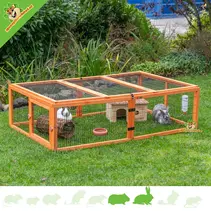

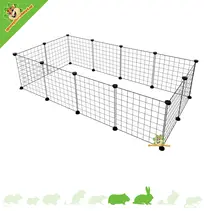
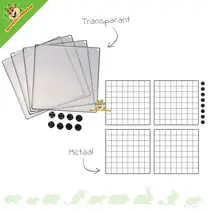
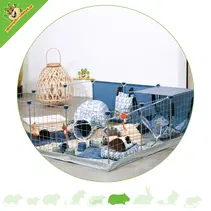
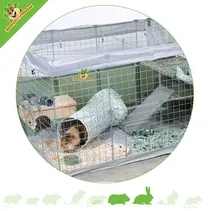
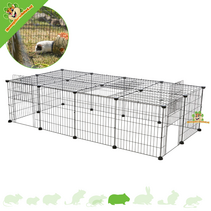
Choosing guinea pig runs & enclosures: extra space, runs, and safe zones
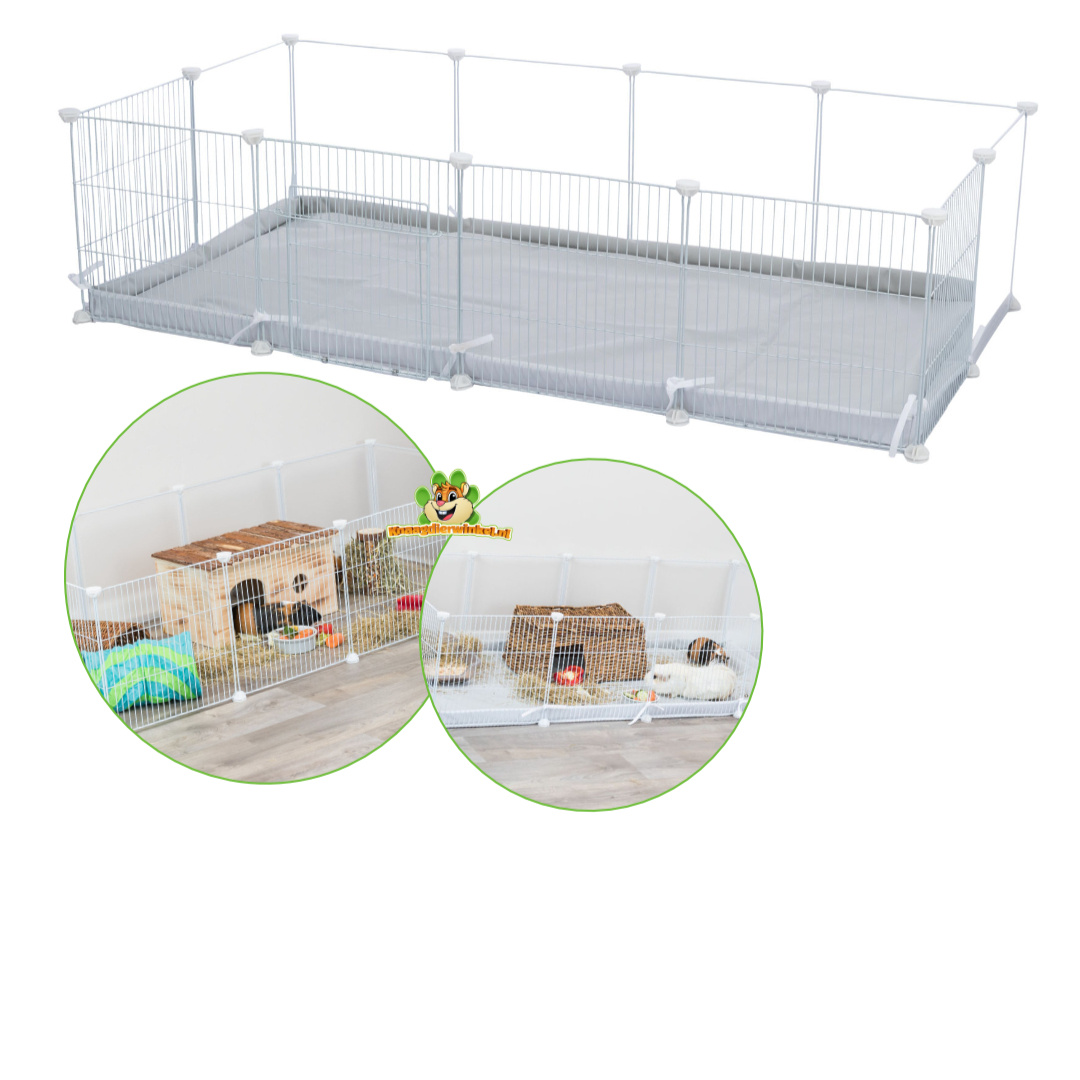 A guinea pig run or enclosure gives your guinea pigs extra space to walk, sniff, and sit temporarily in a safe, enclosed area. Think of an indoor run, wire cube run, extension, temporary enclosure, or a safe run next to the permanent guinea pig cage.
A run is particularly valuable when used logically. For daily housing, a spacious, stable, and well-furnished enclosure remains important. Additionally, a run can serve as extra walking space, a neutral bonding area, a temporary cleaning spot, a safe run, or a practical extension to a C&C guinea pig cage .
At DRD Knaagdierwinkel®, we look at runs and enclosures as they are actually used. Is there enough floor space? Can guinea pigs avoid each other? Is the run stable? Can you easily place hiding places, hay, water, and a dry floor? And is the whole thing practically easy to keep clean? This way, you choose not only a run that fits in your home or garden, but above all, an enclosure that is right for your guinea pigs. Specialist since 2011.
✓ Guinea pig runs, wire cube runs, extensions and temporary enclosures
✓ For extra space, safe run-out, connecting, cleaning, or temporary fencing
✓ Combines well with C&C cages, bedding, houses, tunnels, hay, and pee pads
✓ Selected by DRD Knaagdierwinkel® – Specialist since 2011
Quick links
In short • Why a run? • Types of runs • Which run do you choose? • Setting up a run • Indoor run • Outdoor run • Bonding & temporary housing • FAQ
In short: when do you use a guinea pig run?
You use a guinea pig run for extra space, exercise, temporary fencing, or as a safe zone during cleaning, bonding, or grooming. A run is especially useful when you want to give guinea pigs more room to move without letting them roam freely through the room.
For permanent housing, first look at the permanent enclosure. A run can be a nice addition to this, but it does not automatically replace a spacious guinea pig cage with a good floor, hay corner, water, hiding places, and exercise routes.
Choose a run that remains stable, is easy to install, and suits your situation. You consider different factors indoors than outdoors. Indoors, you focus primarily on floor protection, grip, and a practical layout. Outdoors, you pay extra attention to supervision, temperature, predators, poisonous plants, moisture, and escapes.
Extra walking space
A run gives guinea pigs more space to walk, sniff, and explore.
Temporary safe zone
Handy for cleaning, grooming, weighing, coupling, or temporarily setting aside.
Smart expansion
Wire cubes and panels are handy when you want a flexible layout or to expand.
Why extra space is important for guinea pigs
Guinea pigs are active ground-dwelling animals that enjoy walking, sniffing, eating, hiding, and maintaining contact with other guinea pigs. Extra space makes it easier to create different zones: a hay corner, resting areas, open roaming space, tunnels, and a place for water and food.
Space is especially important when keeping multiple guinea pigs. Guinea pigs enjoy living together, but they also want to be able to move around. A run or spacious enclosure helps create more routes, multiple hiding places, and less pressure on one spot.
Read also: Guinea pig cage selection guide , Pairing guinea pigs and Guinea pig language .
Types of guinea pig runs and enclosures
Within guinea pig runs and enclosures, you can distinguish different types. One product is primarily intended as a temporary run, while another serves as an extension, enclosure, or larger habitat. Therefore, first consider the purpose for which you want to use the run.
| Type | Goes well with | What do you look out for? |
|---|---|---|
| Indoor run | Extra run, temporary stay, cleaning and care | Pay attention to floor protection, stability, and grip. |
| Wire cubes | Flexible layout, expansion, and integration with C&C systems | Check panel spacing, height, connections, and sturdiness. |
| Expansion kit | Enlarge existing run or wire cube enclosure | Does the system fit with what you already have? |
| Larger accommodation | Larger permanent establishment or temporary accommodation | Look at floor area, ease of cleaning, and layout. |
| Outdoor run | Short supervised outdoor moments | Watch out for predators, sun, heat, cold, moisture, grass, and escaping. |
Which guinea pig run or enclosure do you choose?
The right choice depends on what you use the run for. Do you want extra space next to the permanent cage? Then a foldable or modular run is handy. Do you want to enlarge the permanent enclosure? Then a C&C-style extension often fits better. Do you want to create a bonding area? Then you mainly need a good overview, space, and multiple escape routes.
| Goal | Often a suitable choice | Why? |
|---|---|---|
| Extra interior space | Indoor run or wire cube run | Quick to install and flexible layout. |
| Expand C&C | Wire cube panels or expansion kit | Suitable for modular construction and later adaptation. |
| Cleaning | Temporary run with non-slip floor | Your guinea pigs are safe while you clean the enclosure. |
| To link | Spacious neutral run | Provides an overview, routes, and space to avoid each other. |
| Short moments outdoors | Stable outdoor run under supervision | Only suitable when environment, temperature, and safety are correct. |
Setting up a guinea pig run: what needs to go in it?
A run only becomes truly usable when it is properly set up. Simply placing panels is not enough. Guinea pigs need shelter, grip, hay, water, and resting places. Especially in an open run, many guinea pigs feel more comfortable when there are multiple hiding places and tunnels.
✔ Lay down a non-slip and, if necessary, absorbent surface.
✔ Place multiple open shelters or tunnels.
✔ Ensure there is hay in a fixed, easily accessible location.
✔ Offer water when the run is used for a longer period.
✔ Keep walking routes clear, especially with multiple guinea pigs.
Use guinea pig indoor run
An indoor run is ideal for extra run-out, temporary fencing, and grooming moments. Pay particular attention to the floor indoors. Smooth floors offer little grip and can feel unsettling. Carpet, on the other hand, can absorb dirt or be chewed on. A washable mat, pee pad, or temporary bedding can therefore be useful.
Also check the surroundings. Guinea pigs must not be near cables, houseplants, small objects, toxic materials, or places where they can disappear behind or under. Set up the enclosure stably and ensure that panels do not slide easily.
Ground mats & pee pads
For grip, protection, and catchment of pee spots during walks.
Guinea pig toilets
Handy for designated potty spots in a temporary run or exercise area.
Guinea pig cage accessories
For practical accessories for organization, fastening, and daily use.
Guinea pig outdoor run: only when the conditions are right
An outdoor run can be nice for short moments outside, but requires much more supervision than an indoor run. Guinea pigs must not be kept in direct sunlight, heat, cold, drafts, rain, or on wet ground. There must always be shade, shelter, and supervision.
Outdoors, pay extra attention to predators, cats, dogs, birds, escapes, poisonous plants, sprayed grass, damp soil, and temperature. Never leave a run unattended outdoors. Also check that the run is standing firmly and cannot be lifted, pushed over, or undermined.
✔ Use an outdoor run only under supervision.
✔ Always ensure shade, shelter, and fresh air without drafts.
✔ Check the grass, plants, and soil before putting guinea pigs outside.
✔ Avoid contact with predators, cats, dogs, and wild animals.
✔ Bring guinea pigs indoors immediately in case of heat, cold, rain, wind, or restlessness.
Seasonal routes: Guinea pig summer products and Guinea pig winter products .
Use run for bonding, cleaning, or temporary accommodation
A run is very useful as a neutral space when bonding guinea pigs. Choose a spacious, open area with plenty of hay, multiple open hiding places, and sufficient routes. It is best to avoid small houses with only one entrance, as a guinea pig is more likely to get stuck.
A run is also practical during cleaning. Your guinea pigs can sit safely separately while you clean the permanent cage. Lay down a non-slip surface, have hay and water ready, and provide hiding places so that the temporary area doesn't feel too exposed.
Read more: Bonding guinea pigs , Cleaning a guinea pig cage and Guinea pig transport box .
Run or fixed guinea pig cage: what is the difference?
A permanent guinea pig cage or C&C enclosure is set up for daily life: hay, water, food, bedding, hiding places, resting zones, and exercise space remain permanently available. A run is often more flexible and temporary. You use it as extra space, an exercise area, an extension, or a safe enclosure.
Do you want to use a run as part of the permanent housing? Then take a critical look at floor area, flooring, stability, access, ease of cleaning, and layout. If in doubt, use the Guinea Pig Cage Selection Guide .
Guinea pig cage
For permanent accommodation, furnishing, and on a daily basis.
C&C guinea pig cages
For modular accommodations with great freedom of layout and expansion possibilities.
C&C ground cover
For practical flooring solutions in modular enclosures and run configurations.
Keeping guinea pig runs and enclosures clean
A run remains more pleasant when it is easy to keep clean. For indoor runs, use a washable or absorbent surface and remove wet spots, old hay, and vegetable scraps promptly. For permanent enclosures, consider bedding, urine spots, the hay corner, and resting areas.
For outdoor use, clean and dry the run before storing it. Check panels, joints, latches, and bottom sections regularly. A run that wobbles, rusts, develops sharp edges, or closes poorly is not pleasant or reliable to use.
Guinea pig cleaning products
For hygiene around the run, toilet areas, floor, and accessories.
Guinea pig bedding
For absorbent zones in permanent enclosures and temporary run setups.
Cleaning the guinea pig cage
For practical explanations regarding the cleaning routine, wet spots, and hay corners.
DRD chooses: space that works practically for animal and owner
At DRD, we view runs and enclosures not as separate panels, but as part of the guinea pig setup. Space is only valuable when your guinea pigs can move around, hide, eat, and avoid each other safely.
That is why we look at the big picture: floor area, stability, flooring, hiding places, hay, water, ease of cleaning, and supervision. This way, a run becomes not a standalone purchase, but a smart addition to daily care.
Convenient to combine with guinea pig runs and enclosures
Residence & Extension
Guinea pig cage • C&C guinea pig cages • Guinea pig platforms and ladders • Guinea pig cage accessories
Soil & hygiene
Guinea pig bedding • C&C bedding • Guinea pig floor mats and pee pads • Guinea pig cleaning products
Decor & tranquility
Guinea pig houses • Guinea pig tunnels • Guinea pig cushions and baskets • Guinea pig hay racks
Behavior & preparation
Pairing guinea pigs • Guinea pig language • Guinea pig transport box • What do you need for guinea pigs?
Checklist – choosing a guinea pig run or enclosure
✓ Is the run spacious enough for the purpose for which you use it?
✓ Is the run stable and can the panels not easily slide?
✓ Is there grip and protection on the ground?
✓ Are there multiple open shelters, tunnels, and escape routes?
✓ Are hay and water available when the run is used for longer periods?
✓ Is the environment free of cables, poisonous plants, predators, and escape routes?
✓ Can you easily clean the run and store it properly after use?
Important to know
Do not simply use a run as a replacement for a well-equipped permanent enclosure. For daily housing, floor space, stability, flooring, hay, water, hiding places, companions, and ease of cleaning remain important.
Use an outdoor run only under supervision and only when temperature, shade, safety, flooring, and environment are appropriate. Guinea pigs must not be kept in direct sunlight, heat, drafts, cold, rain, or unsafe outdoor conditions.
FAQ – frequently asked questions about guinea pig runs and enclosures
What do you use a guinea pig run for?
You use a guinea pig run for extra space to run, as a temporary enclosure, for cleaning, grooming, bonding, or safely fencing off. A run provides extra space and a good overview when properly set up.
Can a guinea pig run be used as a permanent cage?
That depends on size, stability, base, interior design, and daily use. For permanent housing, the enclosure must be spacious, safe, clean, and fully furnished. If in doubt, use the guinea pig cage selection guide.
What should be in a guinea pig run?
Ensure grip, hay, water for prolonged use, multiple open shelters, tunnels, and sufficient free movement space. For temporary runs, the setup may be simple, but not bare or unsafe.
Is an indoor run useful for guinea pigs?
Yes, an indoor run is useful for extra exercise, cleaning, grooming, or temporary fencing. Pay attention to floor protection, grip, stability, and a safe environment free of cables or poisonous plants.
Can guinea pigs live in an outdoor enclosure?
This is only possible under good conditions and under supervision. Pay attention to shade, temperature, dry soil, predators, escapes, poisonous plants, sprayed grass, and weather changes.
Can you use a run to bond guinea pigs?
Yes, a spacious, neutral run can be very suitable for pairing. Provide hay, open hiding places, tunnels, a clear view, and sufficient escape routes.
What kind of bedding do you use in a guinea pig run?
Indoors, you can use ground mats, pee mats, fleece, temporary ground cover, or another non-slip surface. Outdoors, check the grass, soil, moisture, and safety very carefully.
How do you clean a guinea pig run?
Remove droppings, wet spots, old hay, and vegetable residue. Clean panels, base, and accessories when necessary, and let everything dry thoroughly before storing or reusing.
Are wire cube runs suitable for guinea pigs?
Yes, wire cube houses can be useful because you can arrange or expand them flexibly. However, always check panel spacing, height, connections, sturdiness, and the base solution.
What do you combine with guinea pig runs and enclosures?
Combine a guinea pig run with houses, tunnels, hay, hay racks, water bowls, floor mats, pee pads, bedding, cleaning products, guinea pig cage accessories, and a guinea pig cage selection guide.
✓ Guinea pig runs and enclosures for extra space, outdoor run, bonding, and temporary fencing
✓ Indoor runs, wire cube runs, extensions and larger enclosures
✓ Practical to combine with C&C cages, bedding, houses, tunnels, hay, and pee pads
✓ Ordered before 5 PM, shipped the same day
✓ Specialist since 2011
✓ Delivered from our own stock
Unsure which run or enclosure best suits your guinea pigs and situation? Feel free to contact us via our contact page . We are happy to help you decide.
