 Polski

Rodent cages: terrariums, C&C, wire cages and wooden cages

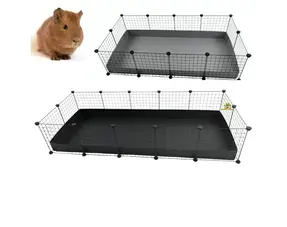
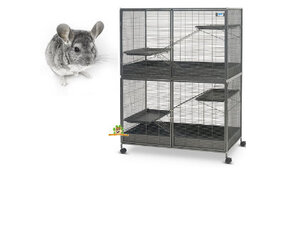
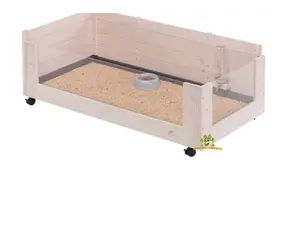
Rodent cages: terrariums, C&C, wire cages and wooden enclosures
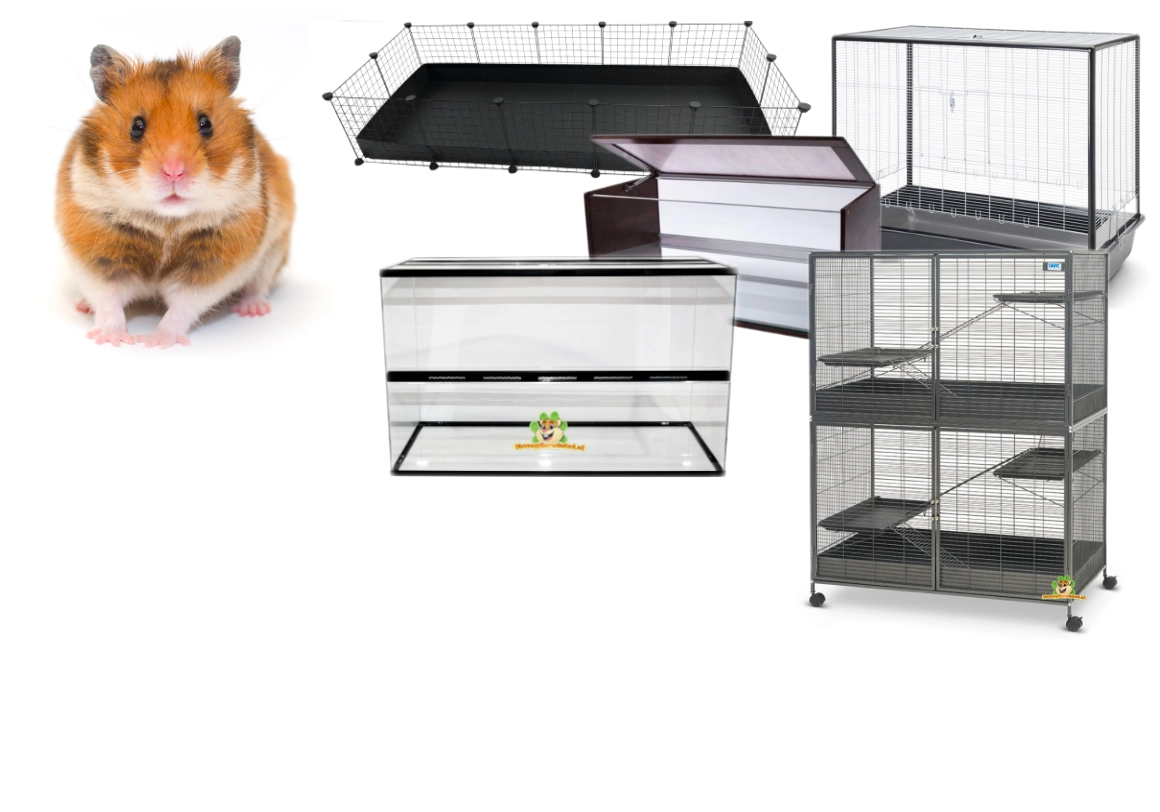 Are you looking for a suitable rodent cage ? In this category, you will find various types of enclosures for rodents: from terrariums for deep bedding and landscaping, C&C® wire cube cages for spacious, modular setups, and wire cages for animals that utilize height and routes, to wooden rodent cages with a warm, tranquil appearance.
When it comes to cages, DRD looks not only at the external dimensions but, above all, at the match between the animal, its behavior, and daily care. A hamster or gerbil requires digging depth, a rat uses height and pathways, a guinea pig primarily needs a lot of floor space, and chinchillas and degus require sturdy levels with robust furnishings. This way, you don't choose just any cage, but an enclosure that truly suits the animal and your care routine.
In short
✓ Terrariums are especially strong for hamsters, dwarf hamsters, gerbils, and aquascaping with deep bedding.
✓ Wire cages are particularly interesting for climbers such as rats, chinchillas, and degus, provided the size and bar spacing are correct.
✓ C&C® cages are modular and popular for guinea pigs and spacious floor-level setups.
Quick links
Subcategories | Which cage do you choose? | By animal species | Size & space | Setting up the cage | Maintenance | Combining | Checklist | Good to know | FAQ
Terrarium
For animals that dig, graze, and need peace and quiet. Ideal for deep bedding, sand zones, and natural landscaping.
C&C® Wire Cube Cages
Modular wire cube cages that you can configure and expand. Especially popular for guinea pigs and spacious, uncluttered floor layouts.
Cages
Wire cages for animals that use height, platforms, hammocks, and routes. Pay extra attention to bar spacing, doors, and fall heights.
Wooden Rodent Cages
Wooden enclosures with a warm appearance. Perfect if you are looking for a quiet, home-like setup with a good view of your animals.
Which rodent cage do you choose?
You choose the best rodent cage not only based on size, but primarily on behavior. An animal that likes to dig needs a different enclosure than an animal that climbs. A ground-dwelling animal benefits more from floor space than from high levels. And a smart, active animal needs an enclosure that is sturdy, easy to keep an eye on, and easy to enrich.
For hamsters and gerbils, a terrarium is often a strong choice because it allows for more in-depth use of bedding, tunnels, and natural furnishings. For rats, wire cages are often the logical choice, as rats utilize height, platforms, hammocks, and climbing routes. For guinea pigs, floor space is more important than height; therefore, C&C® cages and spacious floor-level enclosures are often practical. For chinchillas and degus, it is all about substantial height, good ventilation, and robust furnishings.
In addition, pay attention to practical care. Can you easily access the food, water, litter box, and hiding places? Can you clean the cage easily? Can you see the animal without having to open up the entire enclosure? A good cage makes life better for your animal and makes your daily care easier.
Rodent cage by animal species
Hamsters and dwarf hamsters
A spacious terrarium is often very suitable for hamsters and dwarf hamsters, as you can create a deep burrowing layer, sand bath, running wheel, tunnels, houses, and natural routes. Pay attention to sufficient ventilation, a secure lid solution, and enough floor height for hamsterscaping. Also view hamster cages and hamsterscaping .
Gerbils
For gerbils, a terrarium or gerbilarium with plenty of digging depth is usually the most logical basis. Gerbils actively dig, gnaw, and build. Therefore, choose an enclosure with sturdy materials, good ventilation, and room for deep bedding, sand, and natural furnishings. Also check out gerbil cages and gerbilscaping .
Mice
Mice enjoy using cover, routes, nesting material, and climbing opportunities. With wire cages, bar spacing is especially important because mice are small and fast. A good mouse enclosure offers sufficient hiding places, an airy interior, and safe routes with no risk of escape. Also view mouse cages .
Rats and pygmy rats
For rats, spacious wire cages with height, platforms, hammocks, tunnels, and good doors are often very practical. Rats are smart, strong, and social, so choose sturdy and spacious. With dwarf rats, the size can vary between individuals because it is still a relatively new variant; therefore, always choose cage, bar spacing, houses, exercise wheels, and tunnels based on the actual size and build of the animal. Also view rat cages , dwarf rat cage , and Ratscaping .
Guinea pigs
For guinea pigs, floor space is more important than height. Guinea pigs are social ground animals that need space to walk, hide, eat hay, and pass each other. C&C® cages are popular because they are modular, well-organized, and expandable. Also view guinea pig cages and C&C guinea pig cages .
Chinchillas and degus
Chinchillas and degus require a sturdy, spacious enclosure with height, multiple levels, good ventilation, and robust furnishings. Chinchillas are sensitive to heat and moisture, so placement and air circulation remain important. Degus gnaw frequently and are active; therefore, choose sturdy material and check regularly for wear. Also view chinchilla cages and degu cages .
Rabbits
Are you looking for an enclosure for rabbits? Then pay particular attention to floor space, permanent room to move around, run space, and a practical hiding place. For rabbits, we have separate routes such as rabbit cages , rabbit runs, and outdoor enclosures .
Size, spacing and bar spacing
With cages, “it fits” is not enough. Your animal must be able to move, hide, eat, drink, and exhibit natural behavior. Therefore, always consider usable space: floor area, digging depth, height, walkways, platforms, doorways, and room for furnishing. A larger cage is only truly valuable when you can organize that space logically and safely.
For wire cages, bar spacing is an important selection criterion. Small animals such as mice and young animals can escape through openings that pose no problem for larger animals. For rats, dwarf rats, chinchillas, and degus, however, you should also pay attention to sturdiness, closures, and material, because these animals can be active, intelligent, and powerful.
When choosing terrariums, consider ventilation, lid or grate, access, floor height, and weight. A terrarium with a high base rim is ideal for deep substrate, but it must remain easily accessible for cleaning, daily checks, and safely placing heavy decorations.
Setting up a rodent cage properly
A good cage only becomes truly valuable through its layout. Think in terms of zones: a resting area, feeding area, drinking area, toilet or sand zone, digging zone, movement route, and foraging area. For diggers, create depth and structure. For climbers, create safe routes with platforms and hanging spots. For ground-dwelling animals, create low, open zones with plenty of hiding places.
Combine the cage with suitable bedding & nesting material , cage furnishings , natural decor , and play & foraging . This creates an enclosure that is not only beautiful but also works logically.
For diggers
Work with deep bedding, tunnels, cork, sand zones, and stably placed houses.
For climbers
Create safe routes with platforms, ladders, hammocks, tunnels, and fall-breaking crossings.
For soil animals
Focus on floor space, low shelters, hay corner, drinking point, toilet area, and quiet walking routes.
Maintenance and daily check
A cage should not only be spacious and beautiful, but also practical to keep clean. Large doors, good access, removable parts, and clearly organized zones make daily care much easier. You want to be able to check wet spots, leftover food, drinking points, and hiding places without disturbing the entire enclosure every time.
For terrariums, primarily check ventilation, moisture, floor zones, and accessibility. For wire cages, pay attention to platforms, hammocks, closures, and fall heights. For C&C® cages, check connectors, coroplast, rim height, bedding, and any extensions. For wooden cages, pay extra attention to moisture, gnawing damage, and ease of cleaning.
Combines nicely with rodent cages
Cage setup
Houses, tunnels, running wheels, platforms, drinking points, and feeding areas make the cage functional.
Natural design
Cork, bamboo, willow, bark wood, and natural paths provide structure and enrichment.
Playing & foraging
Make the cage more active with searching, sniffing, destroying, rolling, or puzzles.
Checklist: choosing a rodent cage
✓ Does the enclosure suit the animal: burrower, climber, or ground-dwelling animal?
✓ Is there enough usable space for furnishing, movement, and daily care?
✓ Is the bar spacing correct for small animals, young animals, or active climbers?
✓ Is there sufficient ventilation and is the enclosure not in a draft or direct sunlight?
✓ Can you easily reach food, water, hiding places, toilet areas, and bedding?
✓ Can you limit fall heights with platforms, tunnels, hammocks, or safe crossings?
✓ Does the material suit your animal's gnawing behavior and strength?
Good to know about rodent cages
Size is important, but layout too
A spacious cage only works well when your animal can actually use the space. Consider walking routes, hiding places, digging depth, platforms, safe transitions, and practical grooming zones.
Ventilation varies by type of accommodation
A wire cage ventilates differently than a terrarium or wooden enclosure. For each type, pay attention to air circulation, humidity, temperature, and placement in the house.
Check closures and weak points
Smart and strong animals can discover doors, flaps, or weak points. Therefore, regularly check latches, grilles, connectors, corners, and gnaw marks.
A country retreat is a unique choice
Are you looking for a permanent spot for guinea pigs or rabbits outdoors? Then take a look at Outdoor Enclosures , as keeping them outdoors requires extra attention to shelter, dryness, shade, and safety from predators.
Frequently asked questions about rodent cages
Which rodent cage is the best?
The best rodent cage depends on the species and behavior. Hamsters and gerbils often benefit greatly from a terrarium with deep bedding. Rats like to use height and routes. Guinea pigs primarily need a lot of floor space.
What is better: a terrarium or a wire cage?
A terrarium is often useful for burrowers like hamsters and gerbils, because you can work deeper with bedding. A wire cage is often more practical for climbers like rats, chinchillas, and degus, because you can utilize height and platforms.
For which animals are C&C® cages suitable?
C&C® cages are particularly popular for guinea pigs because they offer a large floor area and a modular layout. Always choose based on size, bar spacing, sturdiness, and how you intend to use the cage.
What should you look for in a hamster cage?
Pay attention to sufficient floor space, digging depth, ventilation, a secure lid solution, space for a good running wheel, a sand bath, houses, and natural furnishings. A terrarium is a logical choice for many hamsters.
What should you look for in a rat cage?
Pay attention to space, height, bar spacing, sturdy doors, platforms, hammocks, routes, ventilation, and ease of cleaning. Rats are smart and active, so closures and fittings must be sturdy.
Which cage is suitable for dwarf rats?
When choosing dwarf rats, do not select based solely on the name "dwarf rat," but on the actual size, build, and activity level of your animal. Pay particular attention to bar spacing, climbing routes, houses, tunnels, and any exercise wheel size.
Is a wooden rodent cage practical?
A wooden cage can look beautiful and calming, but pay attention to moisture, ease of cleaning, and gnawing behavior. For strong rodents or animals that destroy a lot, sturdiness is especially important.
How do you properly set up a rodent cage?
Work with zones: resting area, feeding area, drinking area, digging zone, toilet or sand zone, and foraging area. Choose a layout that suits the animal: deep for diggers, high and safe for climbers, and low and spacious for ground-dwelling animals.
Buy a rodent cage at DRD Knaagdierwinkel®
At DRD Knaagdierwinkel®, you will find rodent cages for various animal species, enclosure types, and keeping methods. We select based on application: digging depth, ventilation, floor area, height, sturdiness, accessibility, interior design, and daily care.
Do you want to look further specifically? Then go to Terrariums , C&C® Wire Cube Cages , Cages , Wooden Rodent Cages , or combine with Cage Furnishings and Bedding & Nesting Material .
✓ Specialist in rodent cages, terrariums, and C&C® enclosures since 2011
✓ Carefully selected assortment: DRD chooses what is truly right for the animal, enclosure, and use
✓ Delivered from our own stock and shipped from the Netherlands to the Netherlands, Belgium, Germany, and other EU countries
