 Polski



Chewing Wood Fruit & Vegetable Toys




- Dispatched from our own stock
- Personal & expert advice
- Always 100% rodent-friendly
- Ordered before 5 p.m., shipped the same day!
- Customer service from 09:00 to 18:00
Trixie Chewing Wood Fruit & Vegetable Toys
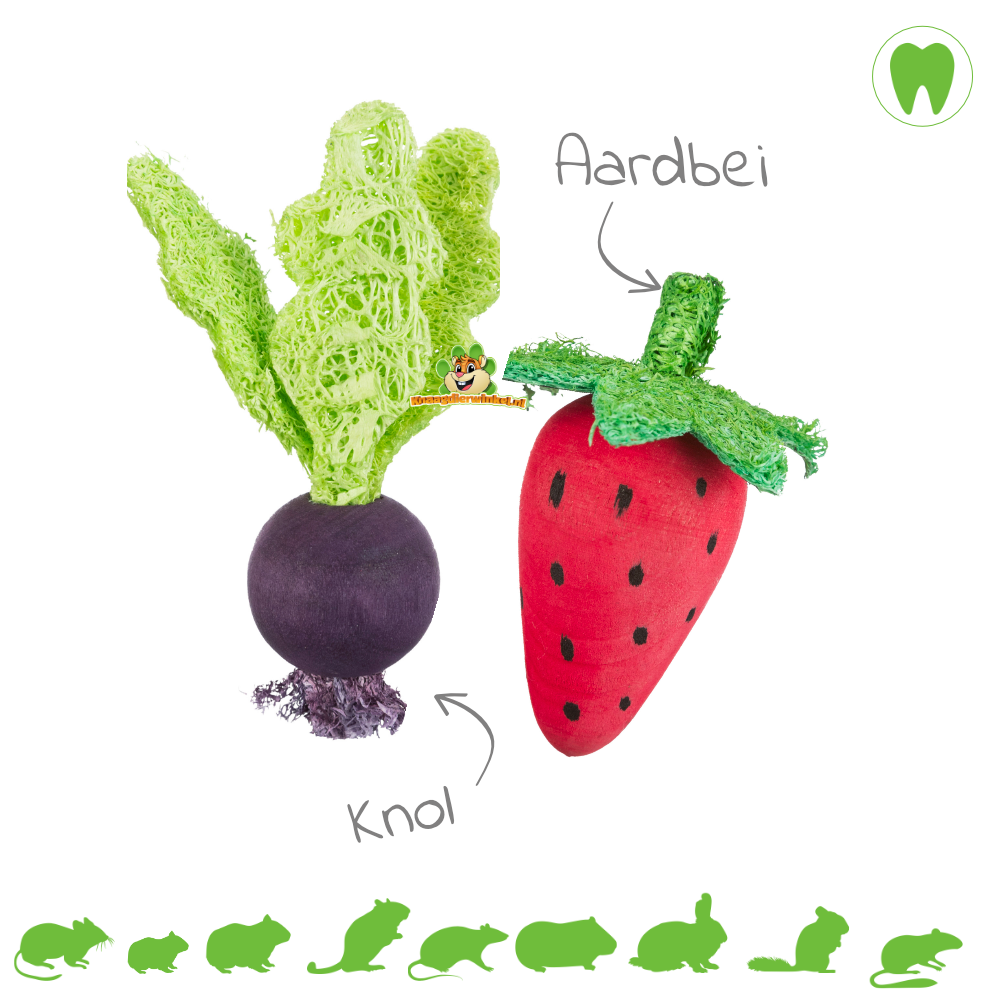
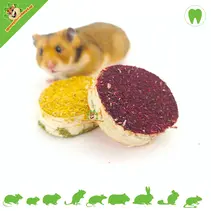
The Trixie Wood Fruit & Vegetable Chewing Toys are cheerful chewing and play elements made of wood and loofah. Thanks to their fun fruit and vegetable shapes, they immediately stand out in the enclosure, while at the same time providing something to nibble on, explore, and keep occupied.
DRD chooses gnawing material because it plays an important role in the daily enrichment of rodents and rabbits. Not every animal gnaws the same amount or at the same time, but it is nice to have suitable material available whenever the need to gnaw does arise. These toys combine wood with loofah, making them just a bit more varied than a regular wooden stick.
In short
- Natural chewing and playing material in the shape of fruit and vegetables.
- Material: wood and loofah.
- Variants: Apple, Turnip and Strawberry.
- Apple: approx. 5.5 × 9 cm, diameter approx. Ø 5.5 cm.
- Tuber & Strawberry: approx. 6/9 cm.
- The apple is delivered individually.
- The Tuber & Strawberry are delivered as a set.
- Suitable for mice, dwarf hamsters, hamsters, gerbils, rats, guinea pigs, rabbits, chinchillas, and degus.
Pros
✔ Made of wood and loofah
✔ Supports natural gnawing behavior
✔ Provides activity and variety during the stay
✔ Fun fruit and vegetable shapes
✔ Suitable for both small and larger rodents
✔ Nice as extra gnawing material alongside food, hay, and furnishings
Why choose gnawing wood and loofah?
Rodents and rabbits need material that they are allowed to explore, hold, move, and gnaw on. Wood provides firmness and a recognizable gnawing texture, while loofah has a lighter and fibrous structure. It is precisely this combination that makes these fruit and vegetable toys interesting.
Some animals gnaw very actively on gnawing wood. Other animals leave it lying there for a longer time and only pick it up later. That is normal. Gnawing behavior depends on need, taste, diet, other gnawing material, and the way the enclosure is set up.
Therefore, use these toys as part of a broader setup: good food, hay where appropriate for the species, hiding places, tunnels, bedding, foraging material, and various types of gnawing material. This way, you give your animal choice without making the enclosure unnecessarily cluttered.
What variants are there?
The Trixie Chewing Wood Fruit & Vegetable Toys are available in fun shapes. The Apple is supplied separately. The Turnip & Strawberry are supplied together as a set. This allows you to choose one eye-catching chew toy or a set with two different shapes.
- Apple: approx. 5.5 × 9 cm, diameter approx. Ø 5.5 cm. Nice as a separate gnawing and play element.
- Tuber & Strawberry: approx. 6/9 cm. Supplied together as a set, providing extra variation in shape and texture.
The shapes are intended as a playful design. The product is chewing material and a toy, not a staple food or vegetable snack. Therefore, offer it as enrichment alongside normal daily care.
For which animals are the Chewing Wood Fruit & Vegetable Toys suitable?
- Mouse: suitable as small gnawing and play material. Mice can investigate it, nibble on it, and use it as extra enrichment in the enclosure.
- Dwarf hamster: suitable as natural gnawing material. Place it in an easily accessible spot, for example near a house, tunnel, or feeding area.
- Hamster: suitable as a chew toy for hamsters. Hamsters can gnaw on it, move it, or use it as variety in the decor.
- Gerbil: very suitable as destruction and gnawing material. Gerbils enjoy working on materials, so check regularly how much the toy has been gnawed down.
- Rat: suitable as a small gnawing and play element. Rats can investigate it, carry it away, or use it during enclosure enrichment and Ratscaping.
- Guinea pig: suitable as gnawing material and extra activity. Guinea pigs can nibble on it whenever they feel the need.
- Rabbit: suitable as natural gnawing material. Rabbits can pick it up, push it away, or gnaw on it quietly.
- Chinchilla: suitable as gnawing and destroying material. Check regularly for small loose remnants.
- Degu: suitable as gnawing material for active rodents. Degus can modify the product quite quickly, so check regularly in between.
For small rodents
For mice, dwarf hamsters, hamsters, and gerbils, these toys serve as small, natural gnawing objects. Place the toy in a dry spot in the enclosure, for example near a trail, house, sand bath, or foraging area. This way, your animal can decide for itself when it wants to sniff, nibble on, or drag it around.
With gerbils, the toy can be taken apart more quickly because gerbils exhibit a lot of destructive behavior. This is actually part of the enrichment. However, do remove small, wet, or dirty remnants in time so that the enclosure remains tidy.
Use for rats
For rats, these fruit and vegetable toys serve as fun small gnawing and exploration elements. Rats are curious and may pick up loose materials, move them, or take them to a favorite spot. You can place the toy in the cage or offer it temporarily during safe outdoor roaming time.
For example, combine it with tunnels, digging boxes, hammocks, foraging toys, and Ratscaping . This way, you give rats multiple ways to explore their environment.
Use in guinea pigs and rabbits
For guinea pigs and rabbits, these toys are primarily intended as an extra chewing and activity element. Place the toy in a dry spot where your animal can easily reach it. Some animals will start playing with it immediately, while others will only find it interesting later.
For guinea pigs and rabbits, the basics naturally remain hay, good nutrition, sufficient space, and suitable hiding places. This gnawing wood is a nice addition to make the enclosure more varied and to allow room for natural nibbling behavior.
For use with chinchillas and degus
Chinchillas and degus are active gnawers. For these animals, the fruit and vegetable toys can be a nice way to nibble and destroy. The wood and loofah provide different textures, making the product more interesting than one type of material.
Check chinchillas and degus extra carefully for wear and tear. Remove small, loose, or dirty remnants and replace the toy if it is chewed down too much or is no longer clean.
Why do animals sometimes gnaw and sometimes not?
It is perfectly normal for an animal not to always gnaw on gnawing material with the same amount. One day a toy is interesting, the next day it is left lying there. That does not immediately mean that the product is defective. The need to gnaw varies per animal, per period, and per enclosure.
When teeth wear down properly due to food, hay, branches, or other gnawing material, an animal may be less active in working on a specific piece of wood. Nevertheless, it is valuable to have suitable gnawing material available. This way, your animal can choose for itself when it feels the need to gnaw.
Chewing wood is used as natural gnawing material. Because many rodents and rabbits have continuously growing incisors, it is pleasant to always have suitable material available to nibble on.
How do you offer this gnawing material?
You can simply place the chew toy loosely in the enclosure. Choose a dry, easily accessible spot. For animals that like to drag or collect, you can also deliberately place the toy in a spot where your animal can move it.
- Place the toy on a dry spot in the enclosure.
- Offer it in a varied way, so that it remains interesting.
- Combine with branches, tunnels, foraging toys, or other gnawing material.
- Check regularly if the toys are still neat.
- Remove small, wet, or soiled leftovers promptly.
Dimensions and material
Product: Chewing Wood Fruit & Vegetable Toys
Brand: Trixie
Material: wood and loofah
Variants: Apple, Turnip and Strawberry
Dimensions: Apple approx. 5.5 × 9 cm | Tuber & Strawberry approx. 6/9 cm
Diameter: Apple approx. Ø 5.5 cm
Delivery: Apple individually | Turnip & Strawberry as a set
Use: gnawing material, play material, and enclosure enrichment
Suitable for: mice, dwarf hamsters, hamsters, gerbils, rats, guinea pigs, rabbits, chinchillas, and degus
Good to know
- Offer only under supervision.
- Check regularly for wear and soiling.
- Remove small, wet, or dirty residue.
- Use this product as gnawing material and enrichment, not as a main food.
- Not every animal gnaws immediately; sometimes gnawing material only becomes interesting later.
- For strong rodents such as gerbils and degus, check very carefully in between.
- Replace the toy when it is chewed down too much or is no longer neat.
Frequently Asked Questions
For which animals are the Chewing Wood Fruit & Vegetable Toys suitable?
These chew toys are suitable for mice, dwarf hamsters, hamsters, gerbils, rats, guinea pigs, rabbits, chinchillas, and degus. However, always take into account the size of your animal and how actively it works on the chewing material.
What are the toys made of?
The toys are made of wood and loofah. This provides two different textures to nibble on and explore.
What variants are there?
There are fruit and vegetable shapes such as Apple, Turnip, and Strawberry. The Apple is delivered separately; the Turnip & Strawberry are delivered as a set.
Is this product food or a toy?
This product is chewing material and a toy. Use it as enrichment alongside normal food and daily care.
Why doesn't my animal gnaw on it right away?
That is normal. Some animals gnaw very actively on wood and loofah, while others only do so when they feel the need. Leave the product undisturbed and, if necessary, offer variety with other gnawing material.
Should I check the toy?
Yes, check the toy regularly for wear, small residue, and dirt. Remove it when it is wet, dirty, or too badly damaged.

Useful shopping links
- Chewing material for rodents
- Chewing wood
- Demolition toys
- Mouse gnawing material
- Hamster gnawing material
- Gerbil gnawing material
- Rat gnawing material
- Ratscaping
- Guinea pig gnawing material
- Chewing material for rabbits
- Chinchilla gnawing material
- Dego gnawing material
- Ask DRD for personal advice
✓ Specialist since 2011 • personal & expert advice • delivered from our own stock
| Material: | Wood & Foliage |
| Dimensions (approx): | Apple: 5.5 × 9 cm | Tuber & Strawberry: 6/9 cm |
| Diameter (approx): | Apple: ø 5,5 cm |
| Suitable for: | Rodents, Mouse, Dwarf Hamster, Hamster, Gerbil, Rat, Guinea Pig, Rabbit, Chinchilla, Degu |
| Particularities: | - |
| Safety Information: | Offer only under supervision. Check regularly for wear and tear |


Heel leuk!
mijn ratjes vinden dit soort houten speeltjes echt geweldig. ze zijn druk bezig met het verplaatsen door heel het hok