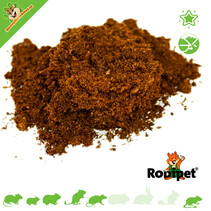
Polski



Desert sand 5 liters for hamsterscaping and gerbilscaping


- Buy 2 for €15,15 each and save 5%
- Dispatched from our own stock
- Personal & expert advice
- Always 100% rodent-friendly
- Ordered before 5 p.m., shipped the same day!
- Customer service from 09:00 to 18:00
Desert sand for hamsterscaping and gerbilscaping
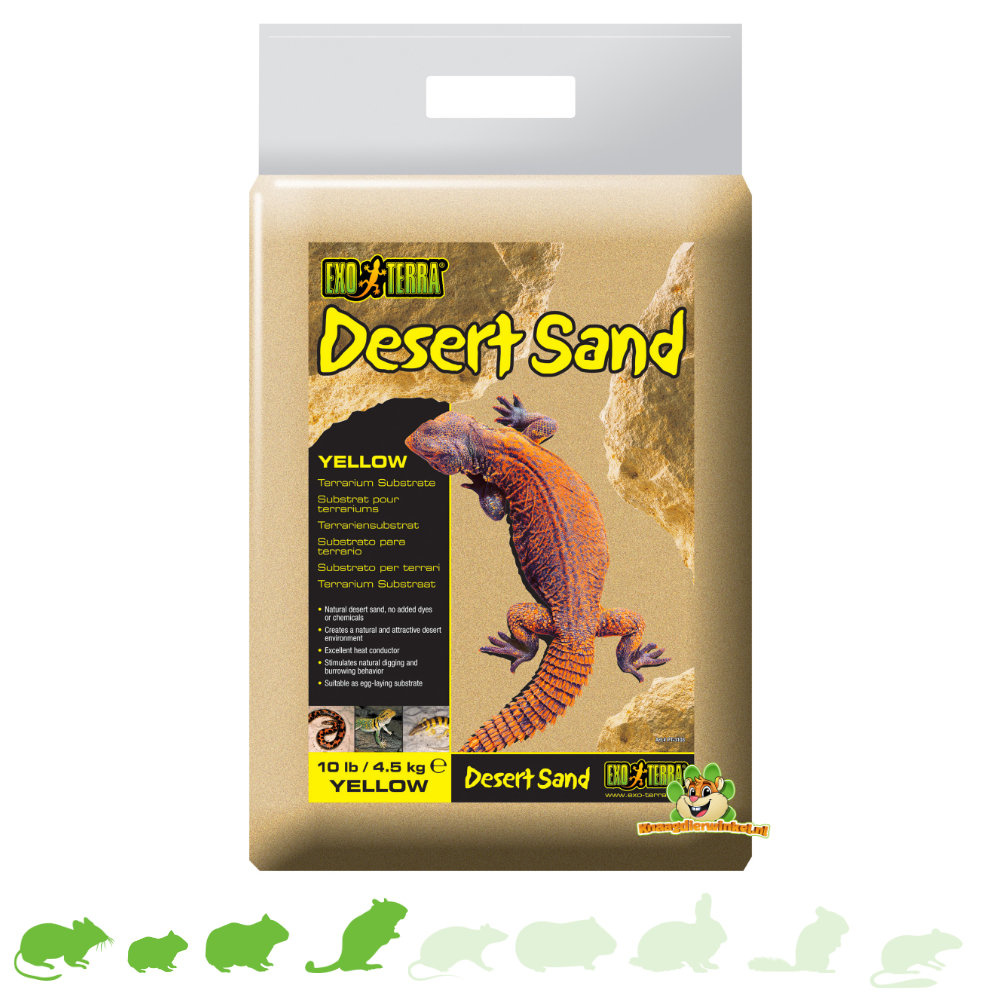
Desert sand is a decorative sand for small rodents such as mice, dwarf hamsters, hamsters, and gerbils. The sand is particularly beautiful as a color accent, sand zone, or natural-looking landscape element in a hamsterscape or gerbilscape. Thanks to its fine texture and unique colors, you can easily add more depth, contrast, and variety to the enclosure.
When it comes to sand, DRD considers not only its appearance but also its function within the design. Desert sand is not a rigid burrowing surface, but rather a beautiful, loose sand for animals that enjoy sniffing, foraging, digging, and discovering various surfaces. You can use it in a separate sandbox, a decorative corner, or as part of a natural scape with ground cover, cork, moss, branches, and hiding places.
In short
- Decorative desert sand for small rodents.
- Capacity approx. 5 liters / weight approx. 5 kg.
- Beautiful as a sand zone, color accent, or aquascaping layer.
- Suitable for mice, dwarf hamsters, hamsters, and gerbils.
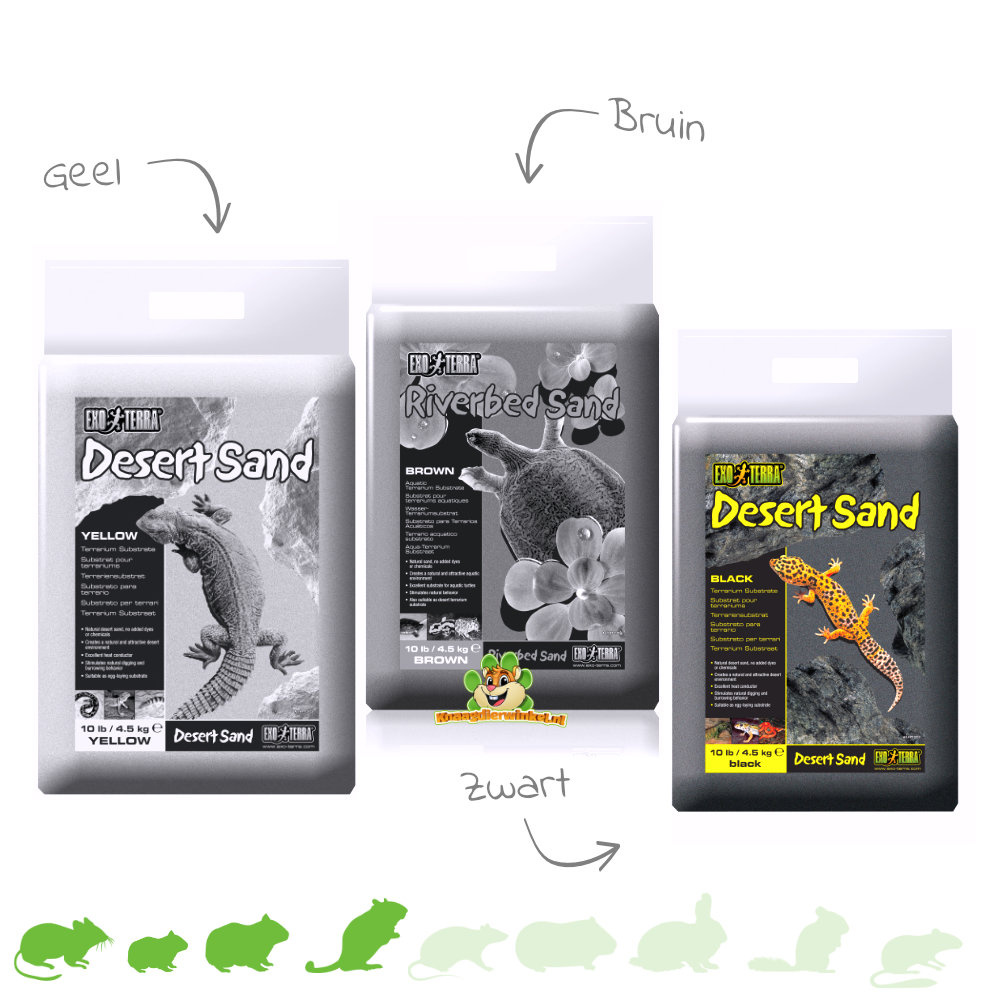
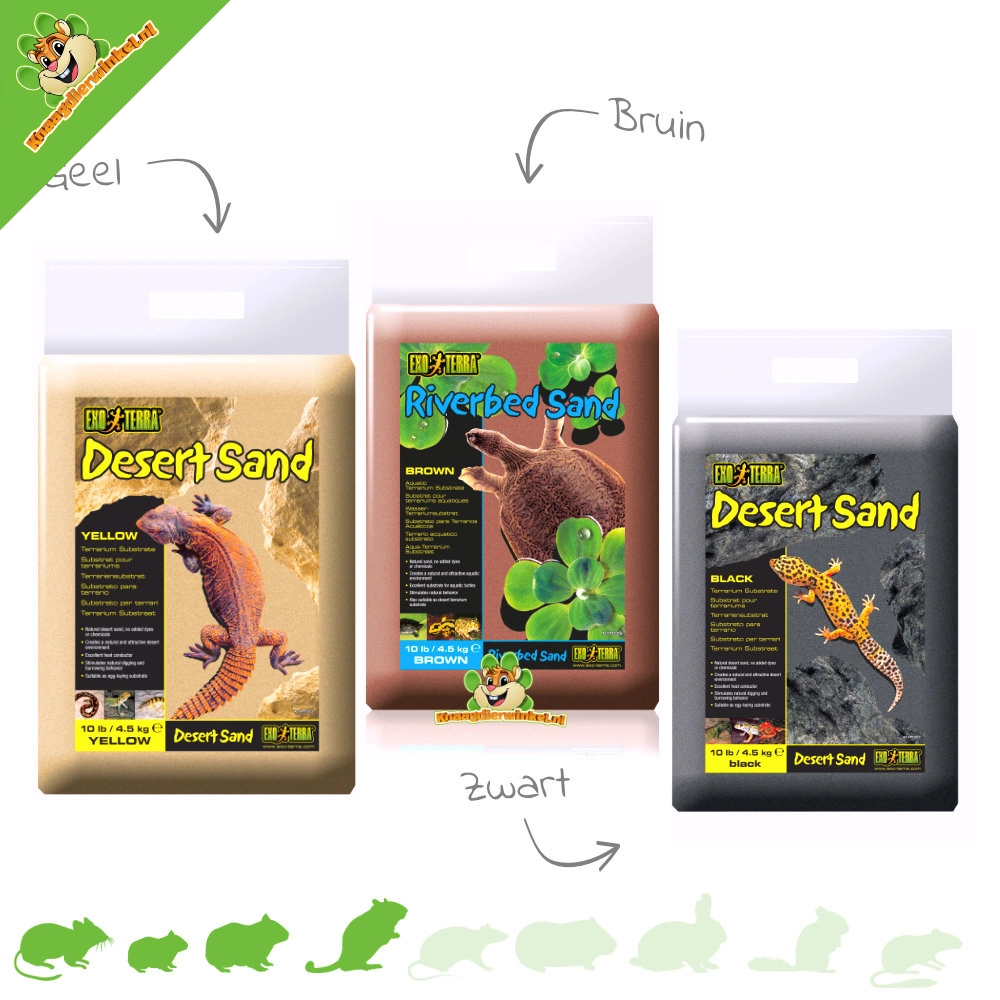
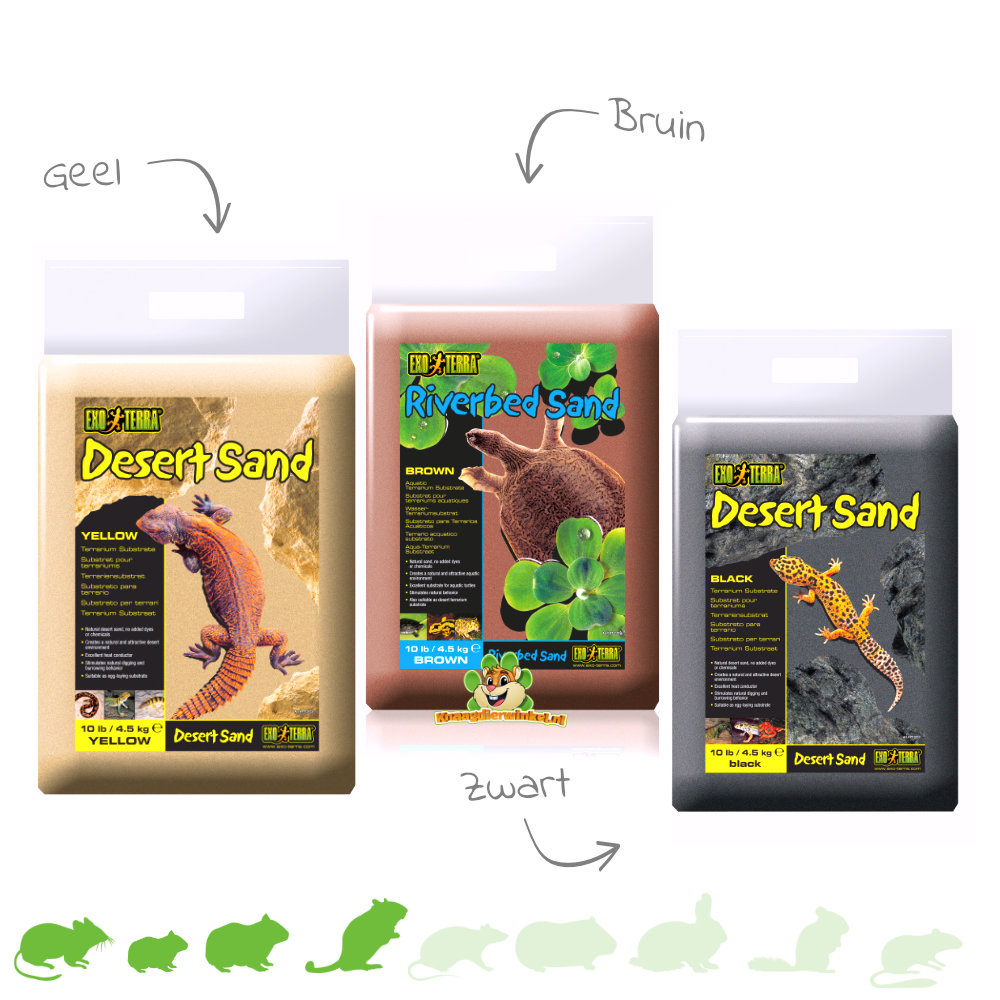
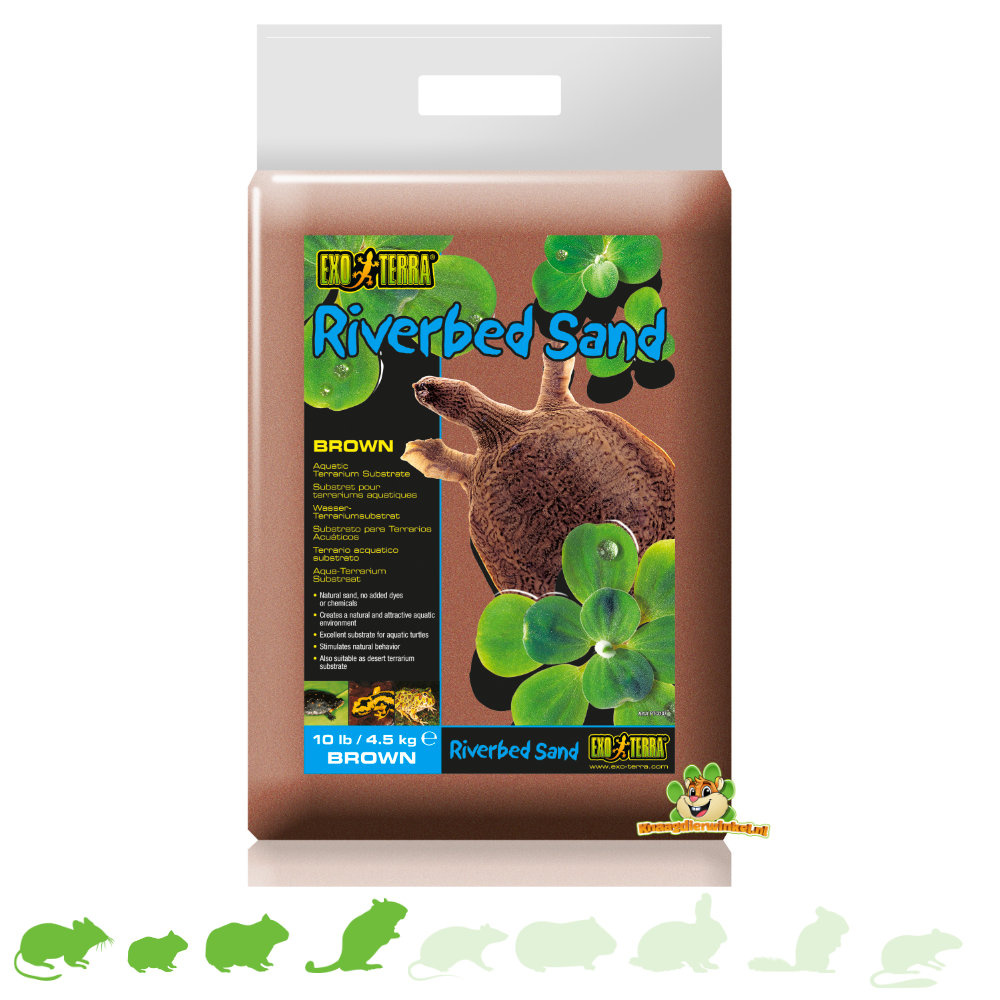
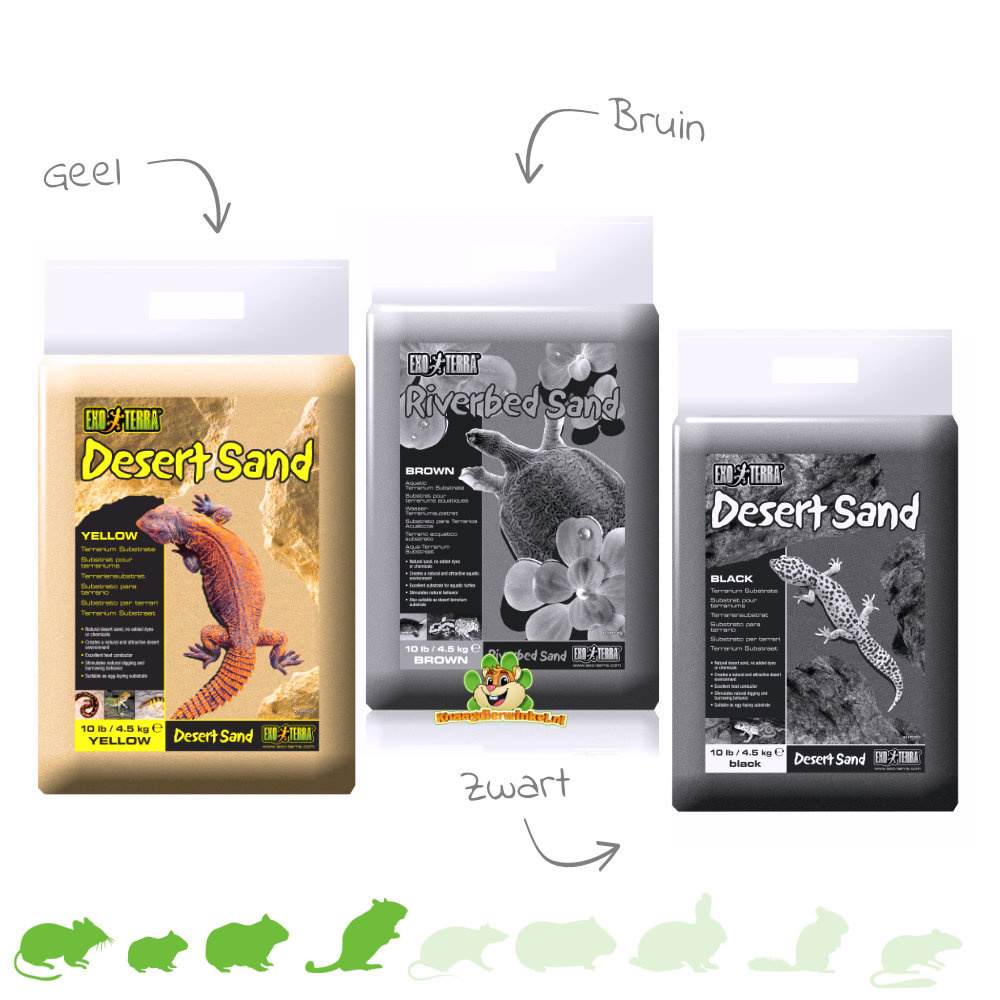
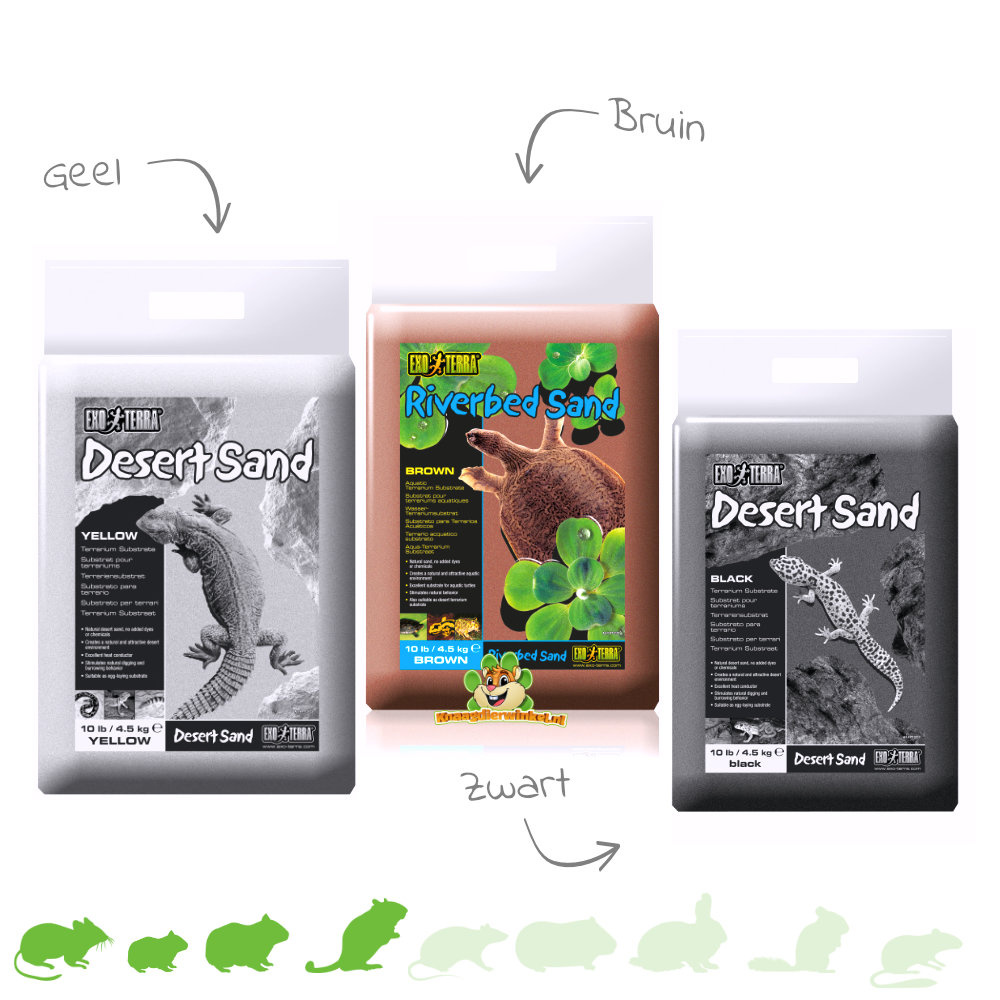
- Available in several natural color variations, such as red, brown, and black.
- Loose sand: suitable for digging and scratching, but tunnels do not remain stable in it.
✔ Adds color, contrast, and texture to a natural interior
✔ Great for Hamsterscaping and Gerbilscaping
✔ Can be used as a separate sand zone or decorative corner
✔ Interesting surface to sniff, forage, and discover
✔ Easy to combine with cork, moss, branches, houses, and ground cover
Why choose Desert Sand?
Desert sand is particularly interesting when you want to create an enclosure that is more natural and visually stronger. In a hamsterscape or gerbilscape, you often work with different zones: a digging area, a sand bath or sand corner, a feeding area, hiding places, and natural pathways. With desert sand, you can make such a sand zone more distinct while simultaneously adding a beautiful layer of color.
The texture feels different from ordinary bedding. As a result, the sand provides extra variety under paws and invites exploration. Animals can forage, dig, sniff, and make small tracks in it. Because tunnels do not remain stable in this sand, it is primarily used as a loose sand zone or decorative layer, not as a deep, stable digging substrate for tunnels.
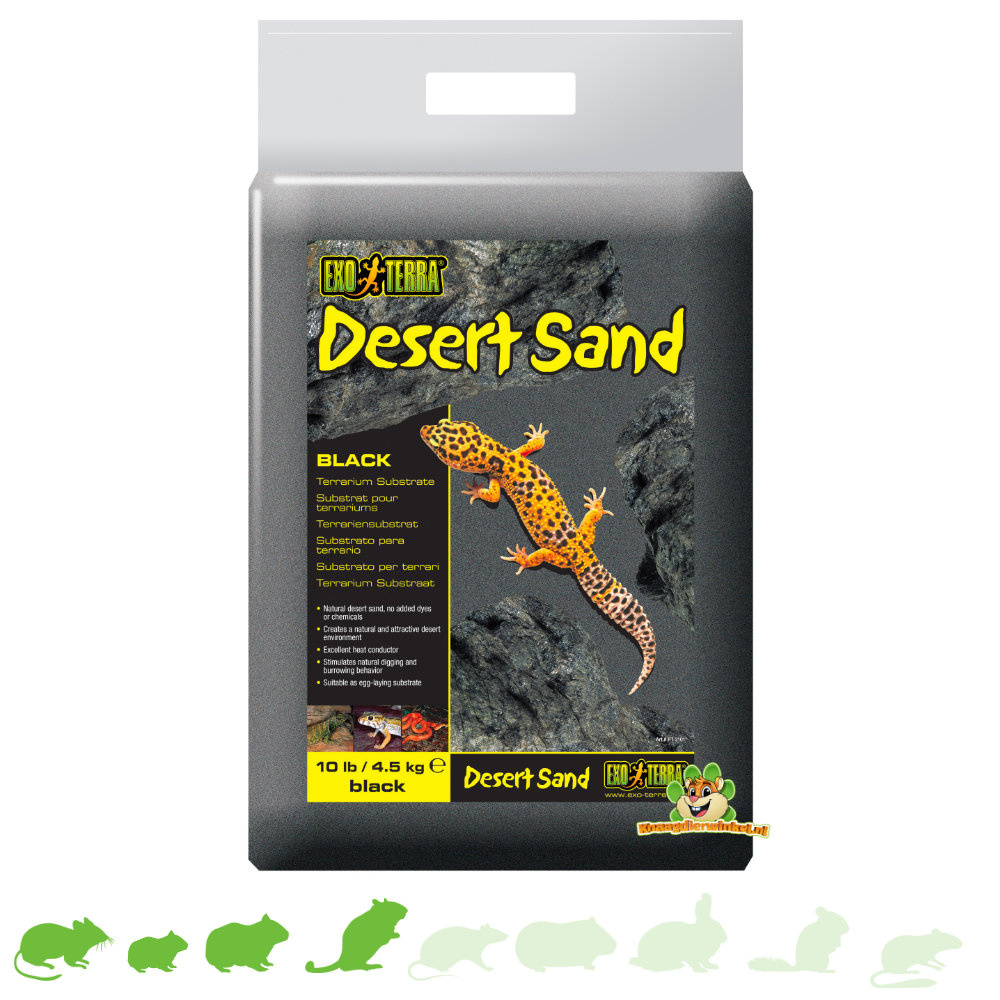
The color makes the product extra fun for scaping. Black desert sand, for example, provides a stronger contrast with light ground cover, cork, and moss. Brown or red desert sand, on the other hand, can complement a warmer, natural desert or forest-style decor beautifully. This way, you can create an enclosure that is not only functional but also very atmospheric.
For which animals is Desert Sand suitable?
- Mouse: suitable as a small sand zone or decorative substrate in a mouse enclosure. Mice can sniff, scurry, and leave tracks in it.
- Dwarf hamster: very suitable as part of a hamsterscape. Use the sand, for example, in a separate corner or sandbox, next to a sand bath, digging layer, and hiding places.
- Hamster: suitable as a sand zone or decorative landscaping material. For larger hamsters, ensure there is sufficient space around the sand area so that the animal can move around comfortably.
- Gerbil: suitable as a sand zone or color accent in a gerbilscape. Gerbils dig actively, so use desert sand primarily as a loose zone and combine it with other bedding for structure.
For dwarf rats, rats, guinea pigs, rabbits, chinchillas, and degus, we do not position this product as a standard sand bath or solid sand substrate. Rats do not need a sand bath for grooming, and fine sand may be less beneficial for their respiratory system. Guinea pigs and rabbits also do not need a sand bath like some other animal species. For chinchillas and degus, it is preferable to choose bath sand specifically suitable for grooming.
How do you use Desert Sand in the enclosure?
- Use the sand in a separate sandbox, bowl, corner, or low zone in the enclosure.
- Combine it with ground cover, cork, stones, moss, or natural decorations for a beautiful scape.
- Do not make the layer too deep when using it primarily as a decorative sand zone.
- Keep feeding and watering areas tidy so that unnecessary sand does not end up in them.
- Check the sand regularly and remove contaminated parts when necessary.
- Observe your animal during the first use so that you can see how the animal interacts with the sand.
For dwarf hamsters and hamsters, you can combine desert sand nicely with a sand bath, but view it primarily as landscaping sand or a sand zone. For daily coat care, a suitable sand bath with appropriate bath sand remains important. Desert sand is mainly intended to make the enclosure richer, more natural, and more interesting.
Hamsterscaping with Desert Sand
Hamsterscaping revolves around a layout that supports behavior: digging, hiding, foraging, hoarding, creating routes, and exploring different surfaces. Desert sand fits well with this as a separate zone. For example, you can use it to create a dark or warm-colored area next to a light digging substrate, a cork tunnel, or a ceramic house.
Because the sand has a loose structure, it remains pleasant to scratch and dig in, but it is not intended for making sturdy tunnels. If you specifically want a digging zone that is stable for tunnels, combine desert sand with another ground cover or choose a digging material that is better suited for that purpose.
Gerbilscaping with Desert Sand
Desert sand can also play a nice role in a gerbilscape. Gerbils love an active setup with digging layers, tunnels, wooden structures, and variety in substrate. A sand zone with desert sand can serve as a foraging area, a decorative layer, or a transition between different parts of the enclosure.
Because gerbils like to dig and can move their setup around, it is helpful to clearly delineate the sand zone with, for example, cork, wood, or a shallow dish. This keeps the scape more organized and prevents the sand from immediately mixing throughout the entire bedding.
Material and content
Desert sand consists of desert sand and is supplied in approximately 5-liter containers, weighing approximately 5 kg. The sand is available in several color variations, such as red, brown, and black. You can match the chosen color to the rest of the decor and the effect you wish to create.
A dark color often creates a strong contrast in a scape, while red and brown can appear warmer and more natural. By working with color zones, you make the enclosure visually more interesting without it becoming cluttered.
Good to know
Always check the sand before use and observe how your animal interacts with it during the first use. Some animals use a sand area very neatly, while others actively move the sand or mix it with the bedding. This is part of natural behavior, but it is good to monitor the area for a while in the beginning.
Do not use desert sand as the sole bedding for the entire enclosure. It works best as a separate zone or decorative layer in combination with suitable bedding, hiding places, tunnels, nesting material, and enrichment.
Frequently Asked Questions
Can animals make tunnels in Desert Sand?
They can dig and forage in it, but tunnels do not remain stable in this sand. Therefore, use it primarily as a sand zone or decorative landscaping sand.
Is desert sand the same as bath sand?
Desert sand is primarily intended as decorative sand and landscaping material. For animals that use a sand bath for coat care, it is preferable to choose a suitable bath sand intended for that purpose.
Which color should I choose?
That depends on your decor. Black provides a lot of contrast, brown looks warm and natural, and red can be beautiful in a desert-like or striking scape.
Can I mix desert sand with ground cover?
That is possible, but the sand often looks best in a separate zone. This way, the color accent remains visible and the area is easier to keep clean.
Useful shopping links
- Everything for Hamsterscaping
- Everything for Gerbilscaping
- Sand for rodents
- Sandboxes for rodents
- Bedding & nesting material
- Natural design
Desert sand is a great choice when you want to add more color, texture, and variety to an enclosure for mice, dwarf hamsters, hamsters, or gerbils. As a separate sand zone or decorative landscaping layer, it helps make the decor more natural, richer, and more interesting.
| Material: | Desert sand |
| Liter (approx): | 5 Liters |
| Weight (approx): | 5 kg |
| Suitable for: | Rodents, Mouse, Dwarf Hamster, Hamster, Gerbil |
| Particularities: | - |
| Safety information: | Observe the animal during initial use to see how it interacts with the bedding. Always check the bedding before use for possible irregularities. |