Polski



Rabbit House Grey-Green Asphalt Roof 50 cm for Guinea Pigs & Rabbits


- Dispatched from our own stock
- Personal & expert advice
- Always 100% rodent-friendly
- Ordered before 5 p.m., shipped the same day!
Rabbit house with grey-green asphalt roof 50 cm for guinea pigs and rabbits
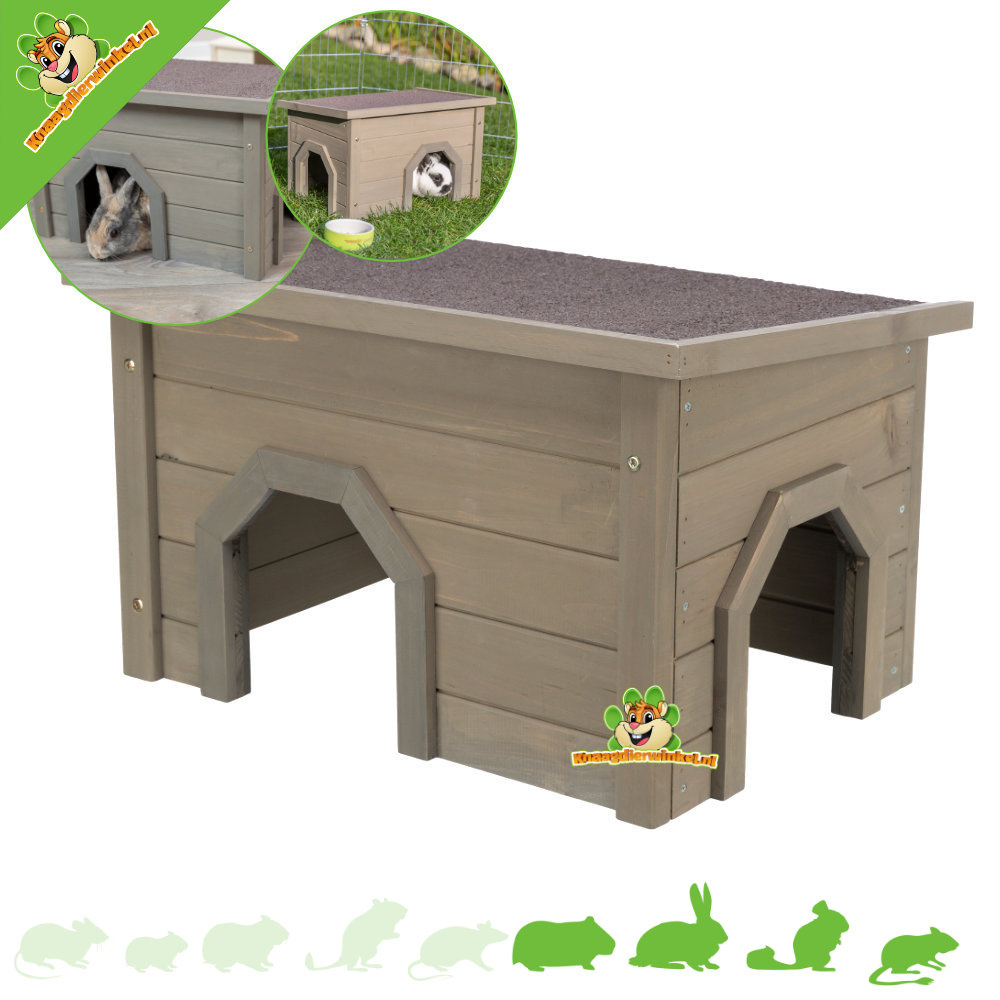
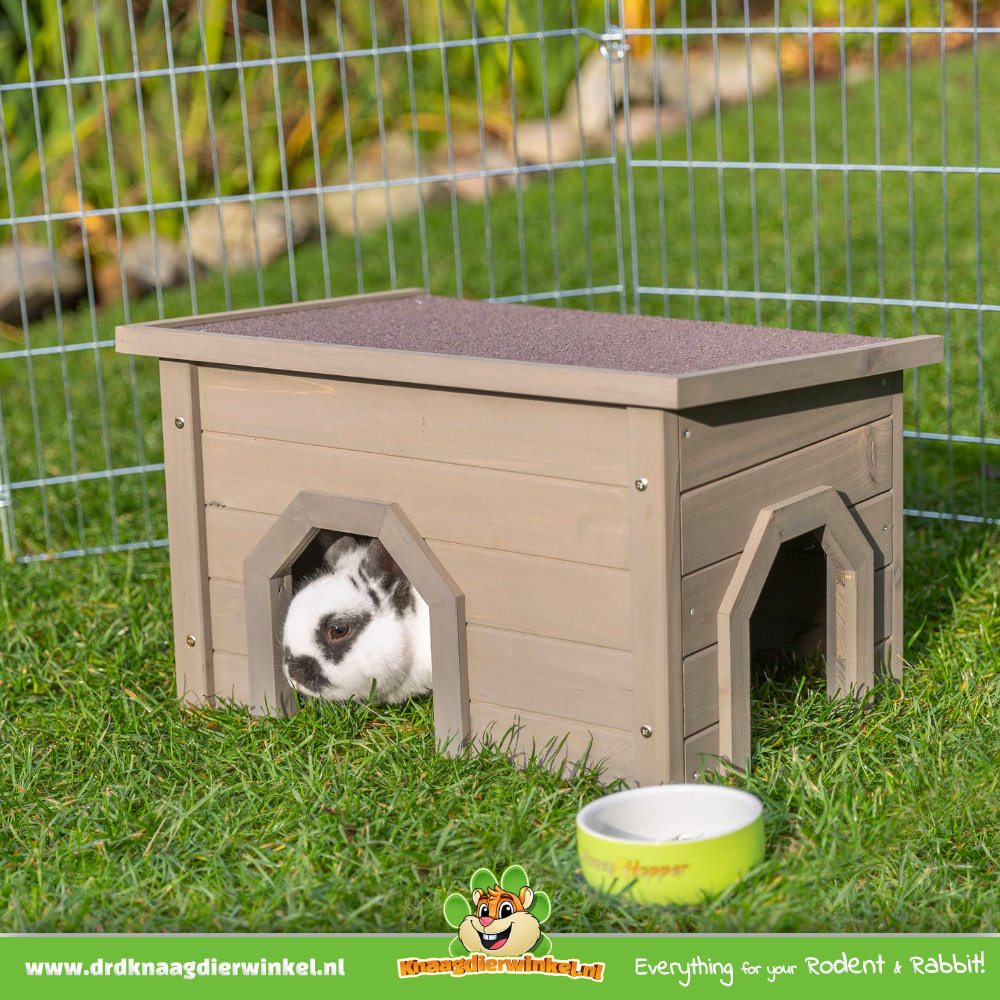
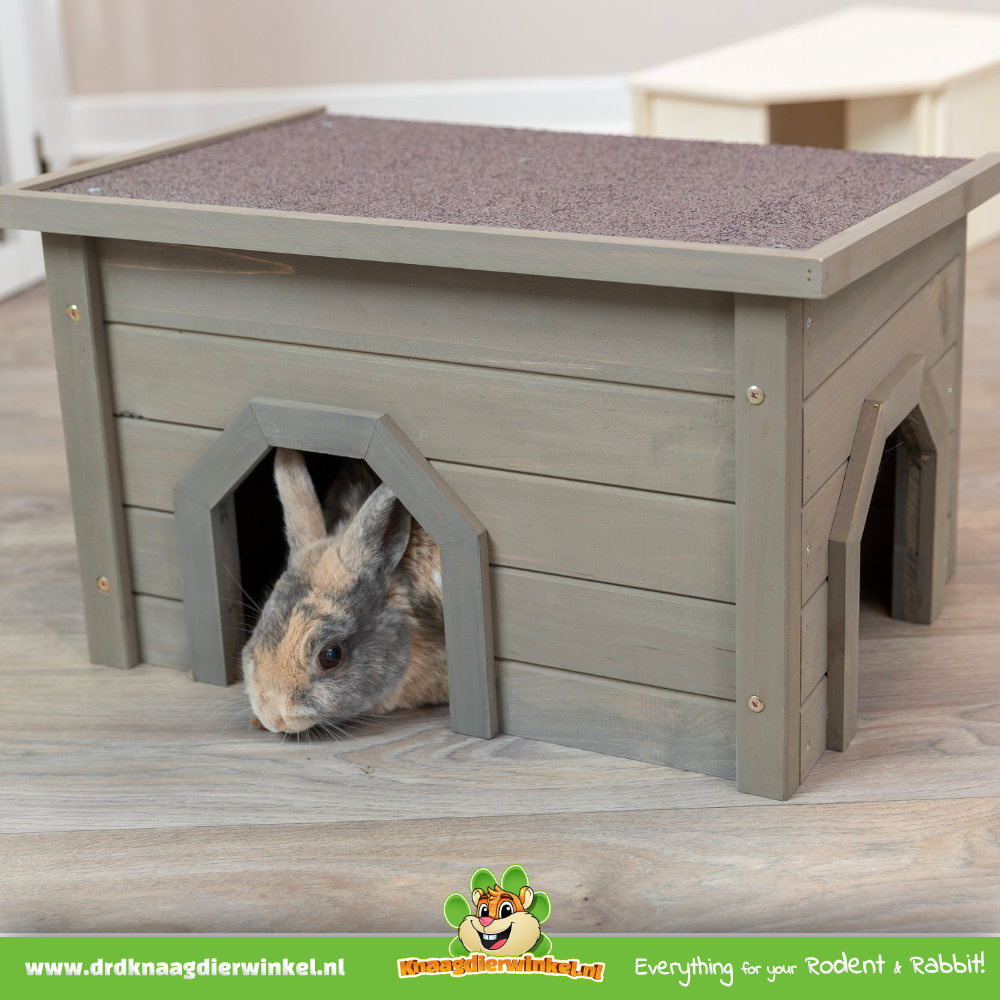
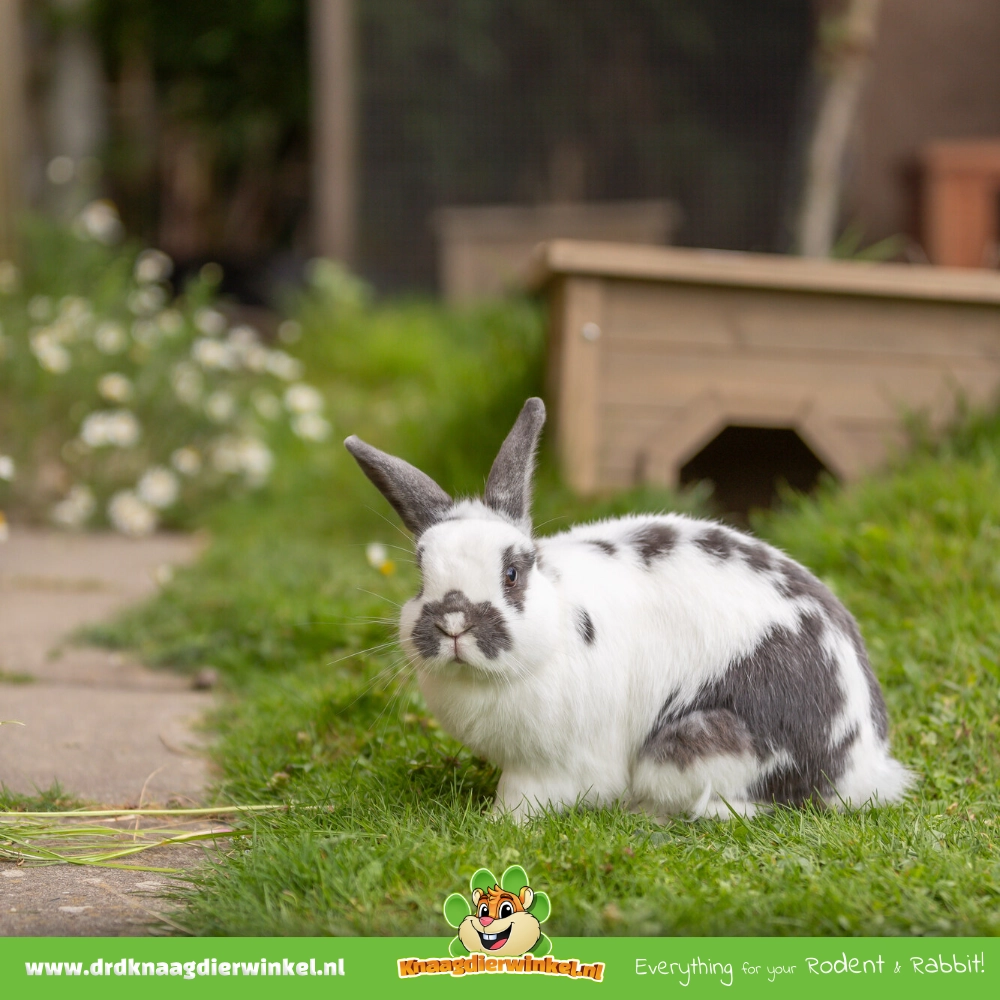
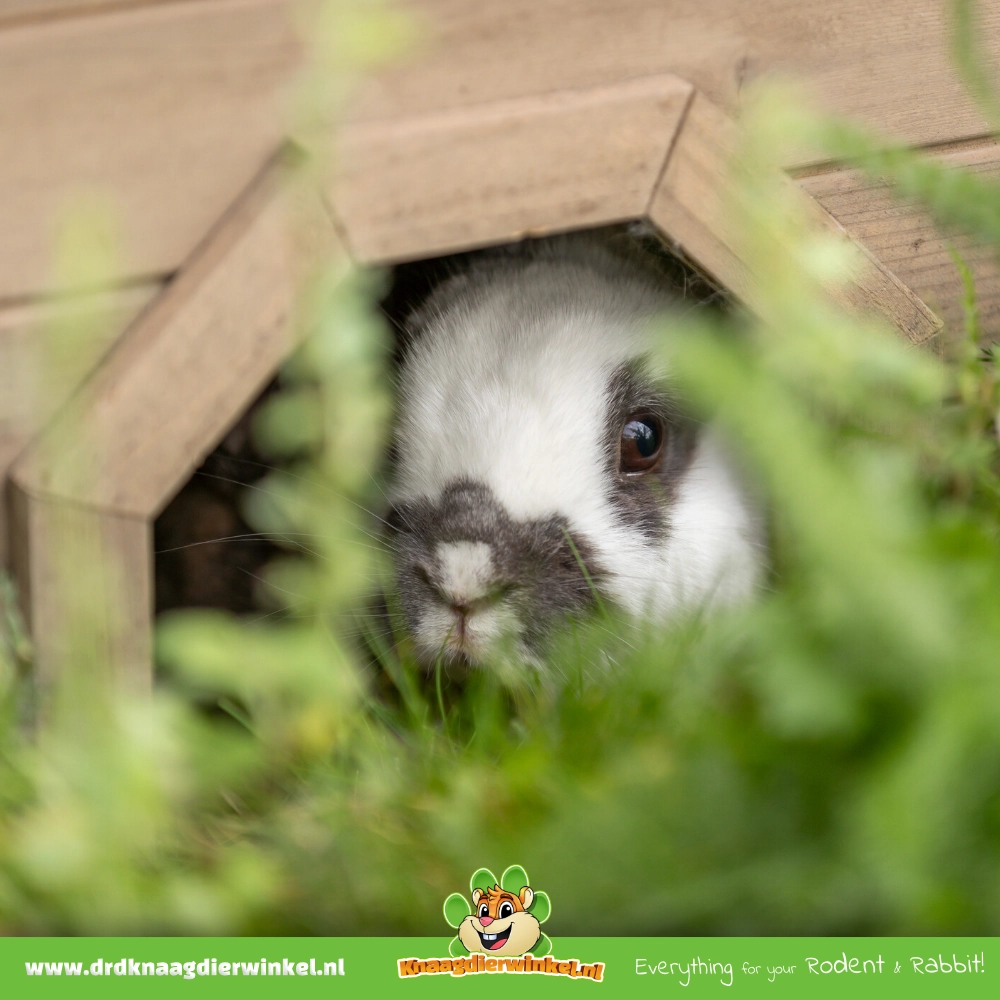
The Rabbit House with a grey-green asphalt roof 50 cm is a spacious wooden shelter for guinea pigs and rabbits. The house is made of stained pine wood, has an open bottom, and is equipped with two entrances. This allows animals to choose how they enter and exit the house, which is particularly pleasant for flight animals such as guinea pigs and rabbits.
When it comes to houses, DRD looks not only at the exterior but, above all, at their function within the enclosure. A good house provides shelter, peace, and a logical place to retreat for a moment. Due to its size, two entrances, and asphalt roof, this model is suitable as a shelter in a guinea pig enclosure, rabbit hutch, run, rabbit room, or sheltered outdoor area.
In short
- Wooden shelter with grey-green stain
- Dimensions approximately 50 × 37 × 30 cm
- Made of stained pine wood
- With an asphalt roof for extra protection from above
- Open ground, meaning the house stands directly on the subsoil
- With two entrances for a pleasant sense of escape and passage.
- Suitable for guinea pigs and rabbits
- Suitable for use indoors, in a run, or in a sheltered outdoor area.
Advantages of the Rabbit House with an asphalt roof
✔ Spacious wooden shelter of approximately 50 cm
✔ Two entrances, comfortable for guinea pigs and rabbits
✔ Open bottom for direct contact with ground cover, grass, or subsoil
✔ Grey-green stain for a calm, natural look
✔ An asphalt roof protects the roof better against moisture from above
✔ Suitable for indoors, runs, and sheltered outdoor areas
Why choose this wooden house?
Guinea pigs and rabbits are flight animals. They feel more comfortable when they have multiple sheltered spots where they can quietly retreat. A small house provides a good overview, security, and a fixed resting place in the enclosure or run.
This house has two entrances. This is important because it prevents animals from feeling locked up in a single enclosed space. A guinea pig or rabbit can enter through one side and exit through the other. This makes the house more accessible and quieter to use, especially when multiple animals live together.
The asphalt roof makes the house suitable for use in a sheltered outdoor spot or in a run. When used outdoors, however, always place the house on a dry, stable surface and regularly check that the wood remains properly dry. Wood stays beautiful longer when it is not constantly standing in wet soil or rainwater.
For which animals is this house suitable?
- Guinea pig: suitable as a spacious hiding place in an enclosure, run, or guinea pig room. The two entrances are convenient, as guinea pigs like to be able to move around and do not want to be confined in one direction.
- Rabbit: suitable as a shelter in a run, rabbit room, or sheltered outdoor area. For larger rabbits, always check that the interior space and doorways are comfortable for their body size.
For small rodents such as mice, dwarf hamsters, hamsters, and gerbils, this house is too large as a standard hutch. For rats and ferrets, this model is less logical as permanent housing; for these animals, it is better to choose furnishings that suit their way of climbing, sleeping, and using the space.
Two entrances for more peace and clarity
A house with two entrances aligns well with the behavior of guinea pigs and rabbits. They like to be able to choose where to enter and exit. This provides a better overview and prevents one animal from blocking the entrance.
This is especially nice for guinea pigs, as they like to be able to quickly dart away to a sheltered spot. For rabbits, a house with two openings works well in a run or rabbit room, because the house can also be used as a passageway or part of a route.
Are you using the house for multiple guinea pigs or a pair of rabbits? Then check carefully whether both animals can comfortably access the house and whether there are enough other resting places available. One house is nice, but multiple hiding options often provide more peace within the group.
Use indoors, outdoors, or in a run
This house can be used indoors, for example in a guinea pig or rabbit enclosure, but also in a run or sheltered outdoor area. Thanks to the asphalt roof, the top is better protected against moisture than a completely open wooden roof.
For outdoor use, placement remains important. Preferably, place the house on a dry, level spot and not in a wet corner where rainwater collects. Also, do not place the house in direct sunlight on hot days. A small house should provide shelter, but must not become too hot inside.
Do you use the house in an outdoor run? Then check regularly for moisture, mold, wear, and rodent damage. Wood is affected by the weather and requires more maintenance when it is outdoors.
Open bottom: natural and practical
The house has an open base. As a result, it stands directly on the surface, such as bedding, grass, sand, or a stable run floor. This feels natural and makes the house easy to install.
In an indoor enclosure, you can place the house on bedding. In a run, you can place it on a flat, dry surface. For guinea pigs, it can be nice to use extra dry bedding or a pee mat under or around the house, depending on where they like to lie or urinate.
In open soil, always check that the house is not sinking. If animals dig underneath it or displace a lot of bedding, the house may become tilted. If this happens, reposition it to ensure it is stable.
Using the roof as part of the interior design
The roof can also be used by some animals as an extra sitting or lookout spot. Rabbits, in particular, sometimes enjoy sitting in a slightly elevated place and surveying their surroundings. Walking on the roof can also contribute to the natural wear and tear of their nails.
Position the house so that the roof does not become a dangerously high fall point. Use the roof only as a logical part of a low, stable structure. Ensure that animals can easily get on and off and that there are no hard or sharp parts surrounding it.
For animals that like to gnaw on roof edges, extra inspection is important. Remove loose or damaged parts in time and replace the house when it is no longer safe.
Material & maintenance
The house is made of stained pine wood. The stain gives the house a grey-green appearance and helps make the wood more resistant to normal use. The asphalt roof provides better protection against moisture from above.
Preferably clean the house dry with a brush or cloth. If the house gets dirty, use a slightly damp cloth and let the wood dry completely before replacing it. Do not use harsh cleaning agents.
Regularly inspect the house for signs of gnawing, loose splinters, sharp edges, damp spots, damage to the roof, and wear on the wood. For outdoor use, extra inspection is advisable, especially after rainy periods.
Great to combine with
The Rabbit House with a grey-green asphalt roof fits well in a run, outdoor enclosure, or spacious indoor setting. You can combine it with:
- Rabbit houses
- Guinea pig houses
- Rabbit runs
- Guinea pig runs and enclosures
- Bedding for rabbits
- Guinea pig bedding
- Guinea pig floor mats and pee pads
- Ground mats for rabbits
Frequently Asked Questions
For which animals is this house suitable?
The house is suitable for guinea pigs and rabbits. Always choose based on body size, passageways, space, and use of the enclosure.
What are the dimensions?
The dimensions are approximately 50 × 37 × 30 cm.
What is the house made of?
The house is made of stained pine and has an asphalt roof.
Does the house have a bottom?
No, the house has an open base. As a result, it stands directly on ground cover, grass, or another stable surface.
Why are two entrances useful?
Two entrances give animals more choice and a better overview. They can enter or exit from two sides, which is especially pleasant for flight animals such as guinea pigs and rabbits.
Can this house be used outdoors?
Yes, the house can be used in a sheltered outdoor spot or in a run. However, place it in a dry, stable location and not in wet soil or direct sunlight for extended periods.
Can my rabbit sit on the roof?
Yes, the roof can be used as part of the setup provided the house is low and stable. Just make sure your rabbit can safely get on and off and that the roof does not become a dangerous falling point.
Is this house suitable for guinea pigs?
Yes, the house is suitable for guinea pigs. The two entrances are convenient, because guinea pigs like to be able to walk through and quickly get to a sheltered spot.
Is this house suitable for rabbits?
Yes, the house is suitable for rabbits. However, for larger rabbits, do check whether the interior space and doorways are suitable for the size of your animal.
How do I maintain the house?
Preferably clean the house dry and check regularly for moisture, rodent damage, splinters, and wear. Extra checks are important for outdoor use, especially after wet weather.
Useful shopping links
- Rabbit houses
- Guinea pig houses
- Rabbit runs
- Guinea pig runs and enclosures
- Bedding for rabbits
- Guinea pig bedding
The Rabbit House with a grey-green asphalt roof 50 cm is a great choice when you are looking for a spacious wooden shelter for guinea pigs or rabbits. Thanks to the two entrances, open bottom, stained finish, and asphalt roof, it fits nicely into a run, outdoor enclosure, or quiet interior design.
| Dimensions (approx): | 50 × 37 × 30 cm |
| Openings (approx): | ø |
| Material: | Pine wood (stained) |
| Open Bottom: | Yes |
| Suitable for: | Rodents, Guinea Pig, Rabbit, Chinchilla, Degu |
| Particularities: | - |
| Safety Information: | Offer only under supervision. Check regularly for wear and tear |