 Polski



Organic Humus for Hamsterscaping, Gerbilscaping & Ratscaping



- Dispatched from our own stock
- Personal & expert advice
- Always 100% rodent-friendly
- Ordered before 5 p.m., shipped the same day!
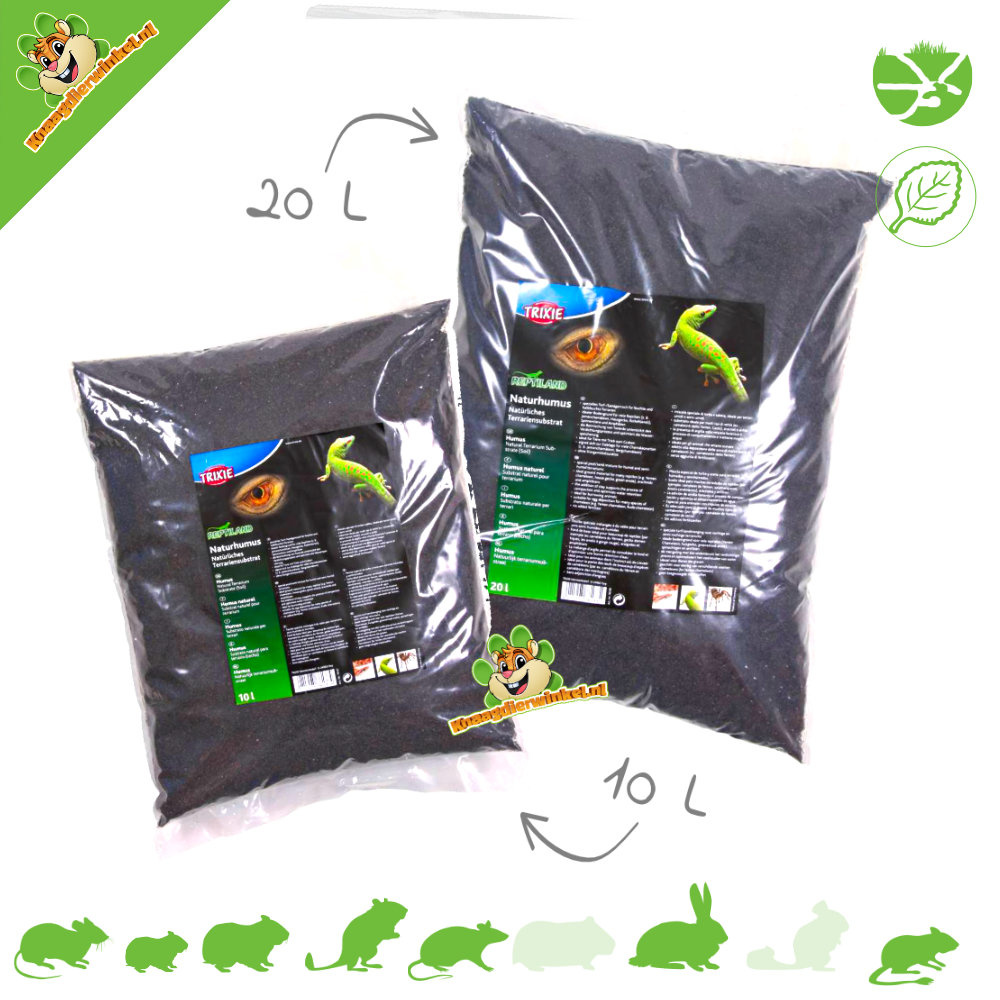
Trixie Organic Humus for hamsterscaping, gerbilscaping, and ratscaping
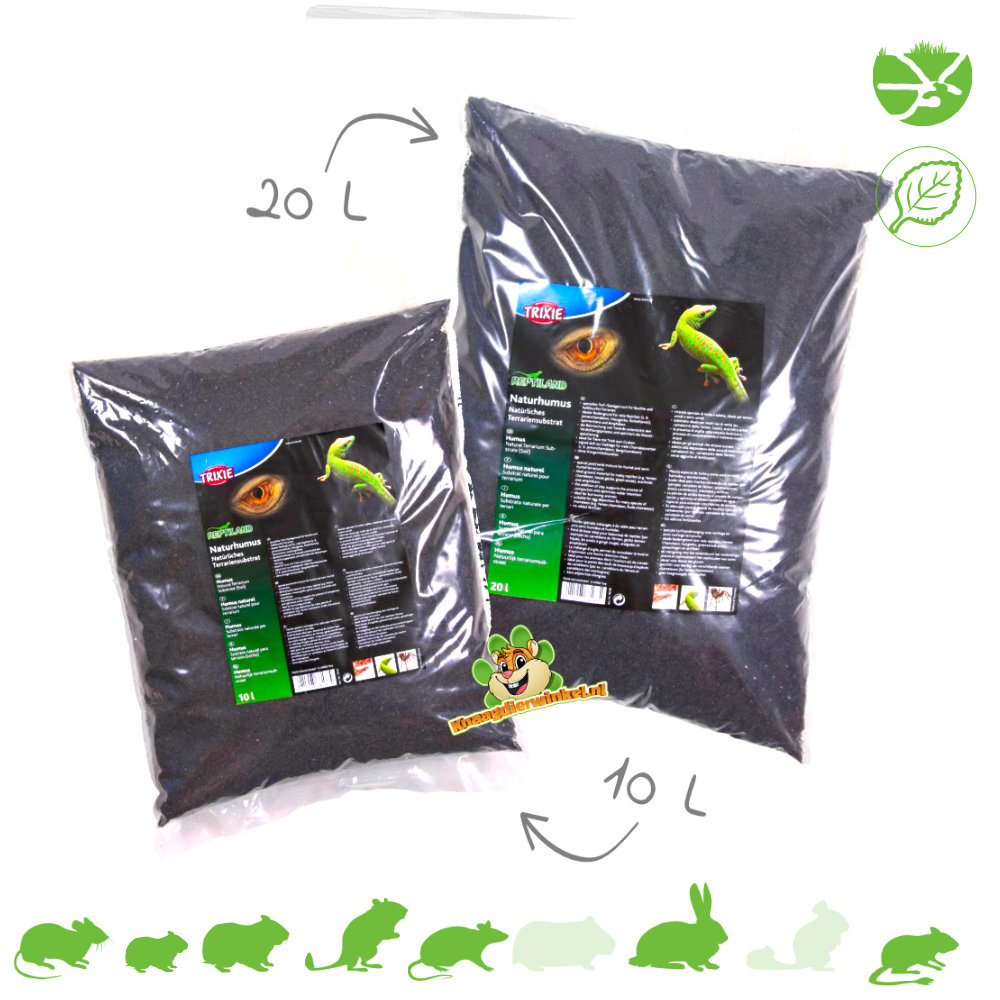
Trixie Organic Humus is a natural humus layer for digging zones, planting zones, and landscaping in the enclosure. The texture feels earthier than regular bedding, making it great for creating a separate corner where animals can sniff, dig, explore, or walk through.
This humus is a great fit for hamsterscaping , gerbilscaping, and ratscaping . You can use humus as a separate zone in the enclosure, for example, alongside a dry base substrate, sand, cork, moss, tunnels, or fresh plants. Humus can also be used as the sole bedding, but that requires a bit more experience with moisture, ventilation, and maintenance.
In short
- Organic humus for natural landscaping and digging zones
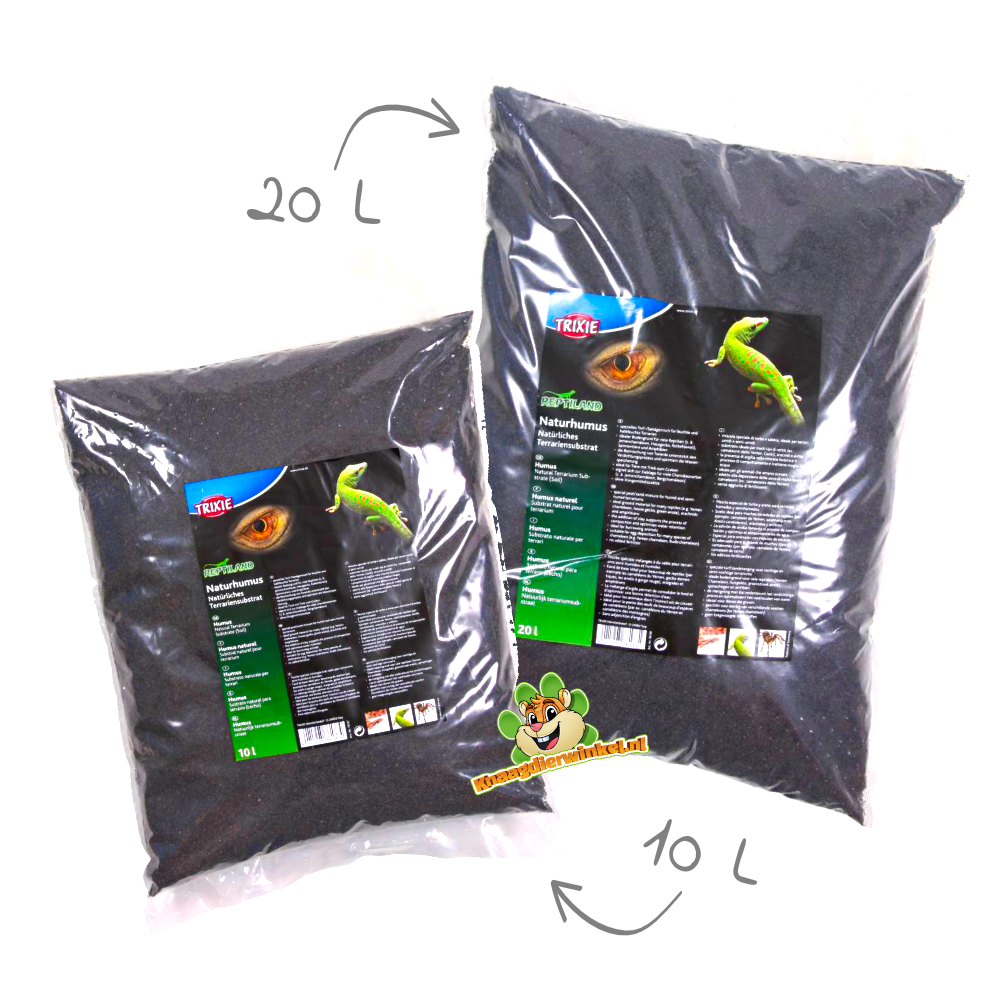
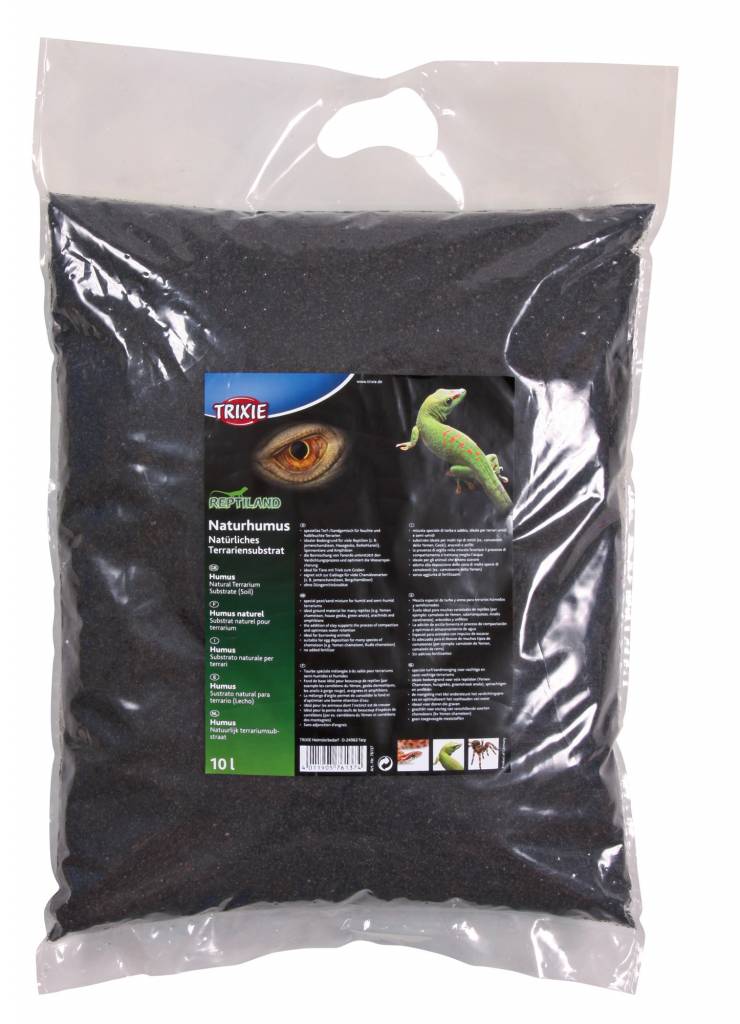
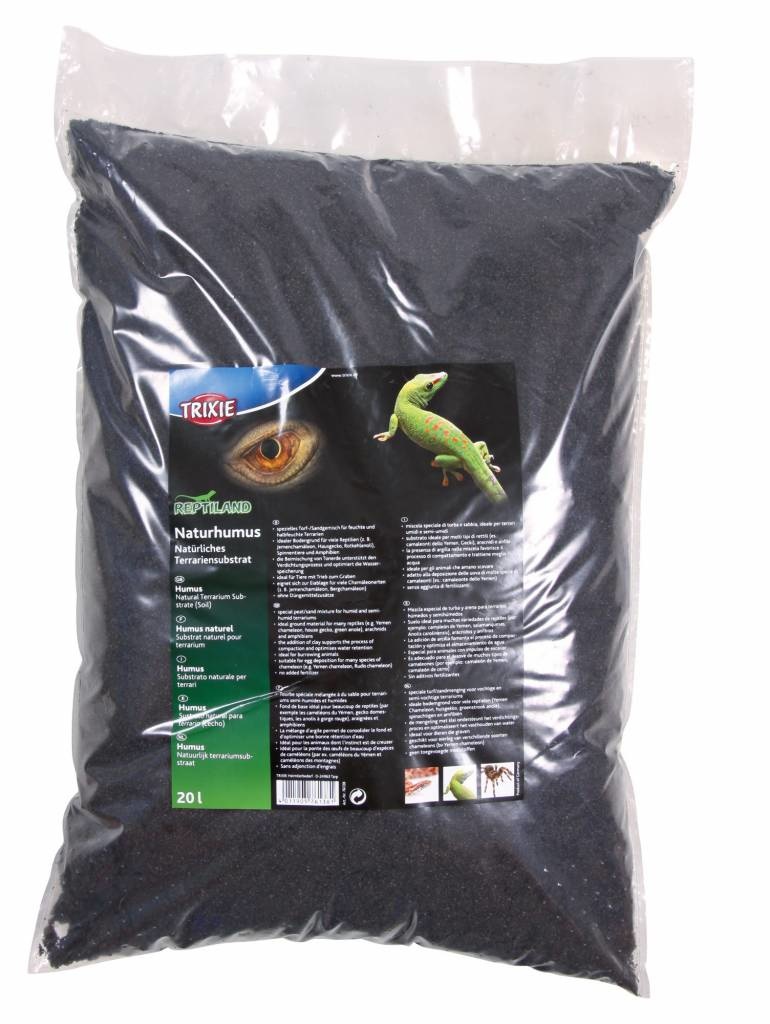
- Available in approx. 10 liters and 20 liters
- Suitable for mice, hamsters, gerbils, rats, and rabbits
- Great for hamsterscaping, gerbilscaping, and ratscaping
- Can be used as a digging bucket, humus corner, planting zone, or complete ground cover.
- Without added fertilizers
- For desert animals: allow to dry thoroughly before use
Pros of Trixie Organic Humus
✔ Natural peat/sand mixture for excavation and scaving zones
✔ Without added fertilizers
✔ Adding alumina helps with water storage
✔ Ideal for a natural digging corner, planting zone, or advanced scape
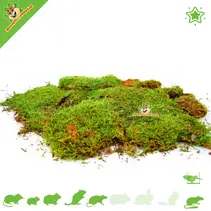
✔ Combines beautifully with moss , fresh plants , cork, and tunnels
Why choose organic hummus?
Humus gives an enclosure a natural soil structure. Whereas a dry base soil primarily provides volume, nesting behavior, and stability, humus creates an earthy layer in which animals can sniff, root, and explore. This makes it interesting as an extra zone in a natural design.
Are you starting with humus for the first time? Then we recommend starting with a separate digging box, digging zone, humus corner, or planting zone. This way, you can clearly see how your animal uses the humus, and the enclosure remains easy to monitor. You can then calmly keep an eye on moisture, odor, ventilation, and how often the layer needs maintenance.
Humus can also be used as the sole bedding, but this is primarily suitable for experienced pet owners. When furnishing the entire enclosure with humus, you must pay close attention to moisture, ventilation, odor, the stability of houses and tunnels, and timely maintenance. Therefore, a separate zone is usually the best first step.
For hamsters and dwarf hamsters, you can use humus as a separate corner in a hamsterscape. Think of a small area with humus, moss, cork, and a hiding place. Because many hamsters naturally come from drier regions, it is best not to use humus that is too wet for these animals. Allow the humus to dry thoroughly or become airy before placing it in the enclosure.
For gerbils, humus is nice as extra structure alongside a firm digging layer. Gerbils dig actively and often find variety in substrate interesting. Use humus for gerbils as a separate zone, as part of a natural scape, or as an advanced full bedding when you can effectively monitor moisture, ventilation, and stability.
For rats, humus can be very appealing in a ratscaping corner, plant zone, or digging box. Rats are curious and enjoy using their noses, paws, and teeth to explore their surroundings. When dealing with rats, do not use humus as a dusty or completely dry layer, but rather as a controlled, slightly earthy zone that remains clean and well-ventilated.
For rabbits, organic humus is especially fun in a separate digging box. It is not intended as standard bedding for the entire enclosure, but it can be an interesting digging spot where rabbits can burrow and keep themselves occupied.
How do you use organic humus in the accommodation?
- Preferably start with a separate digging bucket, digging zone, humus corner, or planting zone.
- Use humus as a structural layer alongside dry ground cover, sand, cork, moss, or tunnels.
- Do you want to use humus as the sole ground cover? Do this especially if you already have experience with humus, moisture control, and ventilation.
- Allow humus for desert and steppe-like animals to dry thoroughly or become airy first.
- Keep plant zones small and easily controllable.
- Regularly check that the humus remains clean and does not become too wet.
Humus should have a natural, earthy smell. If the humus becomes musty, too wet, acidic, or visibly dirty, replace the layer locally or completely. Ventilation is especially important in terrariums, deep scapes, and enclosed enclosures.
For which animals is organic humus suitable?
- Mouse: suitable as a small sniffing or digging zone. Do not use the humus too wet and check regularly.
- Dwarf hamster: suitable as a separate humus corner in a hamsterscape. Allow to dry thoroughly or become airy first.
- Hamster: suitable as a texture zone, sniffing corner, or digging corner. Do not place directly under a drinking area.
- Gerbil: suitable as extra landscaping and digging material. When keeping gerbils, carefully check that the enclosure is not undermined.
- Rat: suitable for ratscaping, plant zones, and controlled digging bins. Keep the zone clean, airy, and well-ventilated.
- Rabbit: suitable as material for a separate digging box. Not intended as standard bedding for the entire enclosure.
For guinea pigs, chinchillas, and degus, organic humus is usually less logical as standard bedding. For these animals, you generally prefer to choose bedding and furnishings that better suit their daily care, coat, and enclosure type.
Organic humus for hamsterscaping
In a hamsterscape, you primarily use humus as a separate zone. For example, create a small corner with humus, cork, dried moss, and a hiding place. This gives your hamster a natural sniffing area without the entire substrate immediately becoming damp or heavy.
- Start with a separate humus corner or digging zone.
- Humus as a complete ground cover is possible, but requires more experience.
- Allow humus to dry thoroughly for animals that require drier soils.
- Optionally combine with a firm, dry excavation layer.
- Check regularly for moisture, odor, and mold growth.
Organic humus for gerbilscaping
Gerbils are active diggers and can enjoy various bedding textures. Organic humus can be used as an extra digging or sniffing zone alongside a firm base layer. Because gerbils like to burrow, it is important that heavy items always stand on a stable surface and do not rest loosely on the humus or bedding.
- Use humus as a separate zone or mixed with suitable landscaping material.
- Humus can be used as a complete ground cover with experience, as long as ventilation, moisture, and stability are properly controlled.
- Ensure that tunnels, platforms, and houses are stable.
- Regularly check that the humus does not become too wet or too compact.
Organic humus for revetment
For rats, organic humus is particularly interesting as a plant zone, sniffing area, or digging box. Rats often enjoy burrowing, examining plants, and walking through different structures. Always use humus as a controlled zone for rats and pay close attention to ventilation and freshness.
- Preferably create a separate digging bucket or planting zone.
- Do not use the humus when it is dusty or bone dry.
- Check daily for damp spots, food residue, and odor.
- Replace the zone in time when it becomes dirty or musty.
- Combine with rat-proof tunnels, platforms, and foraging material.
Rats have sensitive airways. Therefore, do not use dusty bedding materials and ensure that a humus zone remains airy, clean, and well-ventilated.
Organic humus for rabbit digging boxes
For rabbits, you can use organic humus in a separate digging box. This provides a different texture than sand or straw and can be a nice enrichment for rabbits that enjoy digging and burrowing. Do not use it as full bedding in the enclosure, but as a designated activity.
- Use a sturdy, shallow box that your rabbits can easily get in and out of.
- Fill the container with a layer of humus in which they can dig.
- Check daily for droppings, urine, and wet spots.
- Replace the humus when it becomes dirty or too wet.
Combining humus with fresh plants
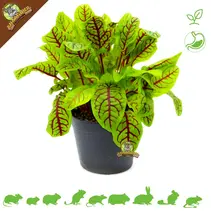
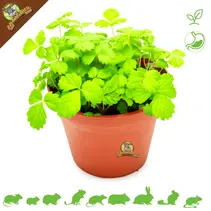
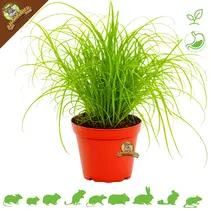
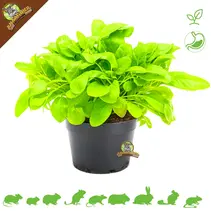
Organic humus is also suitable as a substrate for a small green corner in the enclosure. Fresh plants can be placed directly in a separate humus zone, so that the scape looks more natural and your animal has more to sniff and explore.
Create a planting zone with humus
Use a small, separate corner with humus, place the plant firmly, and water sparingly. Replace the humus when the plant zone becomes too wet.

Nice as a green accent in a natural scape.
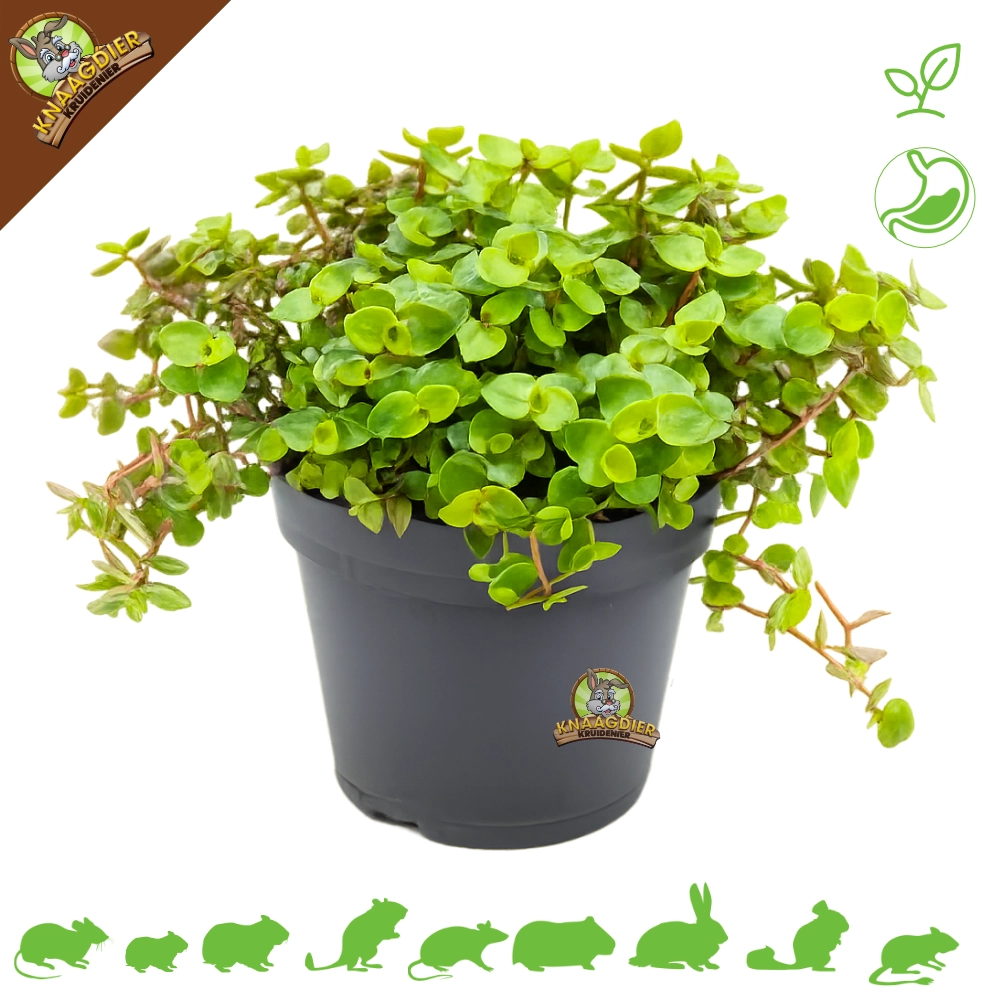
Nice to place in a humus corner as extra variety.
Also view all fresh rodent plants .
How much hummus do you need?
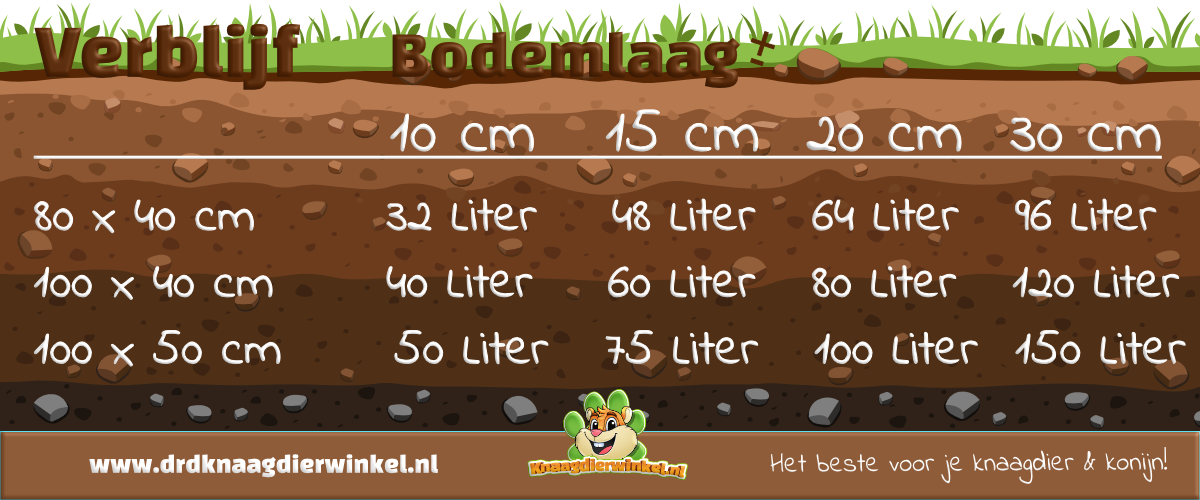
The amount of humus you need depends on the size of the zone and the desired layer thickness. For a small planting or sniffing corner, a small amount is often sufficient. For a larger digging zone, it is better to choose a larger variety.
Calculate simply: length × width × layer thickness in cm ÷ 1000 = number of liters. A corner of 40 × 25 cm with a layer of 10 cm therefore requires approximately 10 liters of humus.
- Small planting zone: often a part of the 10-liter variant is already enough.
- Humus corner or sniffing zone: the 10-liter variant is usually practical for this.
- Larger digging zone: choose the 20-liter variant or combine with other suitable bedding.
- Full floor coverage: calculate the volume based on length × width × desired layer thickness and take maintenance and ventilation into account.
Material, content and properties
- Material: peat/sand mixture
- Capacity: approx. 10 liters or 20 liters
- Weight: approx. 5 kg or 8 kg
- Properties: without added fertilizers
- Special feature: addition of alumina for water storage
- Use: digging zone, planting zone, complete bedding for advanced owners, hamsterscaping, gerbilscaping, ratscaping, and rabbit digging box
- Suitable for: mice, hamsters, gerbils, rats, and rabbits
- Note: for desert animals, let dry thoroughly first.
- Safety advice: observe your animal during first use and check the bedding for possible abnormalities before use.
Cleaning and maintenance
- Check the humus daily when your animal digs or urinates in it frequently.
- Remove wet or soiled spots locally.
- Replace the hummus when it smells musty, remains too wet, or is visibly dirty.
- Keep plant zones small and easily controllable.
- Always ensure adequate ventilation in the enclosure.
- Are you using humus as a complete ground cover? Then check moisture distribution, odor, stability, and ventilation extra carefully.
Humus should have a natural, earthy smell, but should not smell sour, musty, or moldy. If you have any doubts about the quality of the layer, it is best to replace it in time.
Good to know
- Preferably start with a separate digging bucket, digging zone, humus corner, or planting zone.
- Humus can be used as a complete bedding, but that is mainly suitable for experienced pet owners.
- For hamsters and gerbils: let the humus dry first if it is too moist.
- For rats: use humus clean, airy, and well-ventilated; not dusty or musty.
- Do not place humus directly under a water bottle or in a wet spot.
- Ventilation is important, especially in a terrarium or deep scape.
- For rabbits, humus is particularly suitable in a separate digging box.
- Always check for smell, texture, and possible abnormalities before use.
Frequently asked questions about Trixie Organic Humus
Is organic humus suitable for hamsterscaping?
Yes, organic humus is very nice as a separate zone in a hamsterscape. Do not use it too wet and ensure sufficient ventilation.
Is organic humus suitable for gerbilscaping?
Yes, gerbils can use humus as extra digging and landscaping material. For gerbils, make sure to check carefully that tunnels, houses, and platforms remain stable.
Is organic humus suitable for ratscaping?
Yes, organic humus can be nice for a ratscaping zone, planting zone, or digging box. Keep the humus clean, airy, and well-ventilated, as rats have sensitive airways.
Can I use organic hummus for rabbits?
Yes, organic humus can be used in a separate digging box for rabbits. Do not use it as standard bedding for the entire rabbit enclosure.
Can I plant seedlings in organic humus?
Yes, organic humus is suitable as a substrate for a small planting zone. Keep the planting zone easily controllable, water sparingly, and replace the humus when it becomes too wet.
Does organic humus need to dry first?
For animals that naturally require drier substrates, such as many hamsters and gerbils, it is advisable to let the humus dry thoroughly or become airy before using it in the enclosure.
Can I use organic humus as the sole ground cover?
Yes, that is possible, but it is primarily suitable for experienced owners. When using humus as a complete bedding material, you must pay close attention to moisture, ventilation, odor, the stability of houses and tunnels, and timely maintenance. Are you just starting out with humus? Then a separate digging box, digging zone, or humus corner is usually the best first step.
When should I replace the humus?
Replace the humus when it is wet, dirty, musty, or compacted. For a small planting or digging zone, you can often replace it locally. If you use humus as a complete ground cover, regular inspection of the entire layer is especially important.
Useful shopping links
- Hamsterscaping
- Gerbilscaping
- Ratscaping
- Rat burrow
- Rabbit digging box
- Humus
- Digging tunnels
- Fresh rodent plants
Combine Trixie Organic Humus with dry bedding, sand, moss, cork, tunnels, and optionally fresh plants. This way, you create a natural scape with various ground textures, more opportunities to sniff, and a nice digging or planting zone for your animal.
| Material: | Peat |
| Liter (approx): | 10 Liter | 20 Liter |
| Weight (approx): | ca. 5 kg | 8 kg |
| Suitable for: | Rodents, Mouse, Hamster, Gerbil, Rat, Rabbit |
| Particularities: | For desert animals. Let sand dry first. |
| Safety information: | Observe the animal during initial use to see how it interacts with the bedding. Always check the bedding before use for possible irregularities. |



Ik gebruik dit spul eigenlijk vooral om het te mengen met Trixie kokosblokken. Op deze manier creeër ik een fijne bodemmengeling voor mijn vogelspinnen die een meer fossoriale levensstijl erop na houden, of wanneer ze de sling fase nog niet uit zijn. Tunnels worden op deze manier goed behouden, en het ziet er grappig uit om een vogelspin met hoopjes van dit spul te sjouwen. En natuurlijk hadden mijn ratjes ook plezier met wat over was. Lekker graven, en uiteraard alles buiten de graafbak gooien en lekker troep maken. Dus ik gok dat zowel mijn spinnen als ratten het goed keuren :D!
Fijn product, niet te vochtig.
- Stevige verpakking, mooi zand
- Grote verpakking
Super fijn graaf materiaal! Mijn konijnen graven hier graag in. Zeker aanrader!
Blijft lang wat vochtig
- Fijn
- Blijft vochtig
De aarde is een beetje vochtig maar droogt op als het in het verblijf ligt. De hamsters vinden het heerlijk om in te graven en het ziet er ook heel gaaf uit in een natuurlijk verblijf!
Fijn product! Mijn hamsters vinden het geweldig :)
Mooie losse kwaliteit..niet al te vochtig als je de zak open maakt..gebruiksklaar.
Super voor een natuurlijk verblijf! Is een beetje wat de hamsters ook hebben in het wild! Tip: leg er gras zaadjes in en er komt vanzelf na 2 dagen gras!